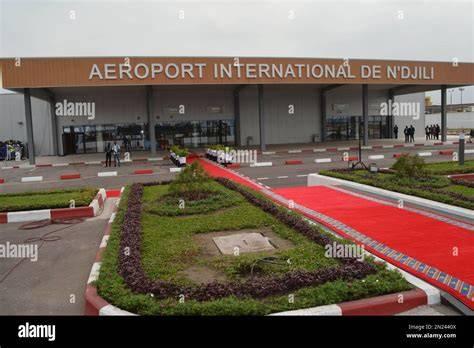
Emirates is preparing to expand its already extensive African network with a first-ever passenger service to Kinshasa, the capital of the Democratic Republic of Congo (DRC). The new route is scheduled to connect Dubai International Airport (DXB) with N’djili International Airport (FIH) from February 3, 2027, giving travelers a new nonstop option between one of the world’s major aviation hubs and one of Africa’s largest metropolitan areas.
The announcement is significant because Kinshasa has long represented one of the largest unserved markets in Emirates’ global network. Although the airline has built a formidable presence across Africa, passengers traveling between Dubai and Kinshasa have historically depended on connecting itineraries. Emirates’ arrival will therefore do more than add another destination to its route map; it will strengthen Dubai’s role as a gateway between Central Africa, Asia, the Middle East, and Europe.
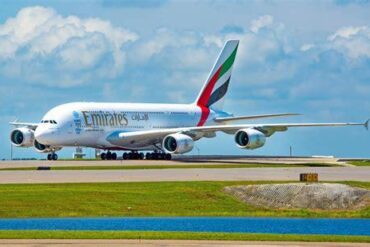
The new service also highlights the scale of Emirates’ long-haul operation. With a widebody-only fleet featuring the Airbus A380, Airbus A350-900, Boeing 777-200LR, and Boeing 777-300ER, the airline remains one of the world’s most important operators of long-distance passenger capacity. By March 2027, its scheduled passenger network is expected to encompass 143 airports, with Kinshasa becoming a particularly notable addition because of the city’s enormous population and previously limited nonstop connectivity from the Middle East.
Emirates Kinshasa Route: Dubai to FIH Begins in February 2027
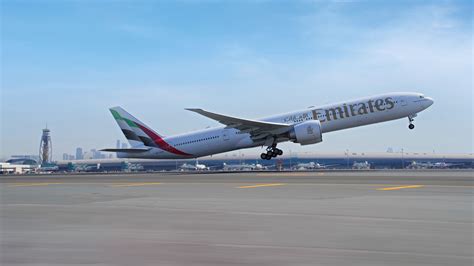
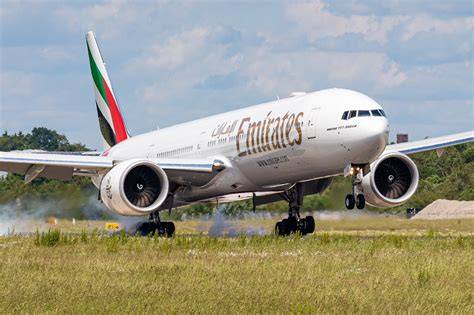
According to schedule information reported by Aeroroutes, Emirates plans to operate daily flights between Dubai and Kinshasa using the Boeing 777-300ER. The first departure from Dubai is scheduled for February 3, 2027, although the timetable and aircraft configuration remain subject to change before flights become available for booking.
The proposed February schedule calls for the Dubai-Kinshasa service to depart DXB at approximately 9:35 a.m., arriving in Kinshasa at 2:10 p.m. The return flight is scheduled to leave FIH at 5:50 p.m. and reach Dubai at 4:25 a.m. the following day. These timings are particularly useful for Emirates because they can be integrated into the airline’s carefully coordinated Dubai hub structure, allowing passengers from other regions to connect onward without requiring excessively long layovers.
Why Kinshasa Is an Important New Emirates Destination
Kinshasa’s appeal is rooted in the size of its local market. The metropolitan area is home to up to 17 million people, making it one of Africa’s largest urban centers. The Democratic Republic of Congo is also the continent’s second-largest country by area, creating substantial geographic and economic significance despite the country’s comparatively modest international air connectivity.
Booking data for the 12 months through May 2026 indicates that approximately 76,000 round-trip passengers traveled directly between Dubai and Kinshasa. Those passengers represented genuine point-to-point demand rather than travelers merely connecting through either airport. That makes Kinshasa one of the largest African markets from Dubai that Emirates had not yet served directly.
Before Emirates’ planned arrival, Ethiopian Airlines captured a large share of this traffic through its Addis Ababa hub. Roughly three-quarters of the connecting passengers reportedly traveled via Addis Ababa, illustrating both the strength of existing demand and the limited number of convenient alternatives. Emirates can now offer a significantly simpler proposition: one nonstop flight between Dubai and Kinshasa.
A Boeing 777-300ER Fits Kinshasa’s Long-Haul Demand
The choice of the Boeing 777-300ER is also strategically important. Emirates operates one of the world’s largest 777 fleets, and the aircraft’s combination of passenger capacity, range, and substantial belly-hold freight capability makes it well suited to markets where passenger demand is complemented by cargo flows.
Kinshasa is not simply a leisure destination. As the political and commercial center of the DRC, it generates demand from business travelers, government traffic, international organizations, expatriate communities, and passengers traveling onward to other continents. The 777-300ER’s cargo capacity could therefore become an important component of the route’s economics, particularly on a market where trade connections are potentially as valuable as passenger traffic.
Emirates Can Capture Traffic Beyond Dubai and Kinshasa
The route’s potential extends well beyond passengers whose journeys begin or end in the two cities. Emirates has built its business around connecting markets through Dubai, and Kinshasa provides another opportunity to funnel traffic between sub-Saharan Africa and Asia.
Existing traffic patterns suggest that Northeast Asia, particularly China, could become a major source of connecting passengers. Guangzhou is already among Kinshasa’s largest long-haul markets, with around 27,000 passengers, while Mumbai accounts for approximately 22,000. Those figures demonstrate why a Dubai connection could be commercially attractive.
Western Europe will also remain important. Kinshasa’s strongest long-haul markets include Paris and Brussels, reflecting the DRC’s Francophone heritage and historical links with Belgium. London and Geneva also generate meaningful traffic. Emirates does not need to capture all of these passengers to make the new route valuable; even a portion of this existing demand could provide a solid foundation for daily service.
Emirates’ Sub-Saharan Africa Network Reaches 19 Airports
The Kinshasa launch will push Emirates’ passenger network in sub-Saharan Africa to 19 airports, with as many as 26 daily departures from Dubai across the region. When flydubai is included, the two Dubai-based carriers will collectively serve 24 airports in sub-Saharan Africa.
That broader network is crucial to understanding why Kinshasa matters. Emirates is not adding an isolated destination; it is expanding an interconnected system designed to move passengers between Africa and major population centers across Asia, Europe, and the Middle East. Kinshasa’s location and local demand make it a natural addition to that strategy.
The new service also demonstrates how Emirates continues to use Dubai as a global connecting hub. With a daily schedule timed around its existing African departure and arrival banks, Kinshasa could quickly become another important link in Emirates’ worldwide long-haul network, connecting Central Africa with destinations far beyond the DRC.