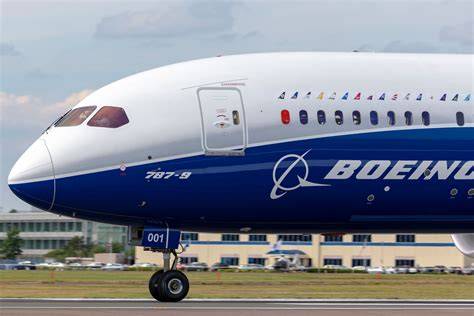
The Boeing 747 once ruled the very top of the range chart. The 747-200 and the short-fuselage 747SP opened the first true long-haul corridors, and the 747-400 pushed the envelope further with a range of 7,285 nautical miles (13,490 km). Yet every one of those giants seated upward of 400 passengers and drank fuel at a rate that only made sense when every cabin was packed. On the world’s most extreme city pairs, that arithmetic rarely closes. The Boeing 787-9 Dreamliner changed the equation by flying past 7,800 nautical miles (14,400 km) with a reasonable payload while carrying only 220 to 300 seats. Its twinjet layout and advanced engines mean it sips fuel next to the ultra-long-range airliners of the past, which is precisely why airlines keep handing it the longest nonstop missions on the planet. It is not the longest-legged airliner in service — that honor belongs to the Airbus A350 — but the 787-9 flies nearly as far on less fuel, a combination that explains its dominance on the routes below.
How The 787-9 Became The Default Ultra-Long-Haul Machine
The Dreamliner’s advantage is not raw range alone; it is the ratio of range to capacity and cost. A 400-seat 747 on a 16-hour sector demands enormous revenue to break even, and very few cities generate that demand consistently. The 787-9, by contrast, lets airlines right-size capacity to a route’s true traffic, then use its efficiency to stretch that route until it is genuinely nonstop. When a carrier like Qantas or United Airlines deploys the type on a marathon sector, it is betting that lower trip costs and a premium-weighted cabin can turn a thin, distant market into a viable one. That logic underpins every entry on this list, from the Pacific crossings that connect San Francisco to Singapore to the record-breaking link that finally joined Australia and Europe without a stopover.
7. San Francisco To Singapore: 7,340 Nautical Miles (13,593 km)
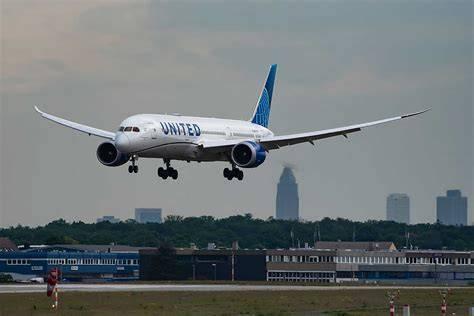
On June 1, 2016, United Airlines launched nonstop 787-9 service between San Francisco International Airport (SFO) and Singapore Changi Airport (SIN), ending a nearly three-year gap during which the United States and Singapore had no nonstop connection at all. United later added a second service from Los Angeles International Airport, but eventually canceled that route and instead added a second daily frequency from SFO — a schedule that has persisted to this day. It is not United’s longest route overall, but it is the carrier’s longest year-round service and its longest to Asia, and with two daily departures it ranks among United’s busier Asian corridors. The nighttime departure from SFO carries the prestigious UA1 flight number, a small signal of how highly the airline prizes the route.
United’s standard 787-9 layout seats 257 passengers, but earlier in 2026 the airline introduced a premium-heavy configuration with 64 Polaris Suites, 35 Premium Plus seats, and just 222 seats in total. SFO-SIN was the first international route to receive the new layout, and United now flies this subfleet on both of its daily Singapore services.
6. Sydney To Dallas/Fort Worth: 7,454 Nautical Miles (13,804 km)
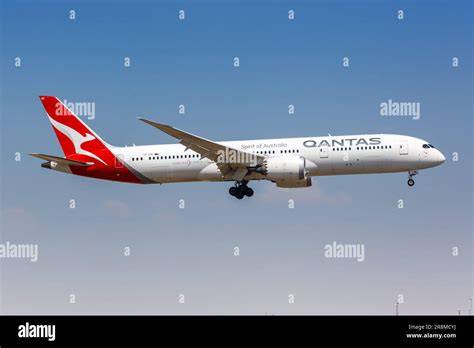
Sydney Kingsford Smith Airport (SYD) is Qantas’s primary hub, and Dallas/Fort Worth International Airport (DFW) is an immensely lucrative destination because it anchors the network of American Airlines. The two carriers operate a metal-neutral joint venture, effectively acting as a single entity on US-Australia services, which is what makes a sector this long commercially workable. Qantas currently flies the Airbus A380 daily on the route, but it also scheduled the 787-9 to DFW earlier in 2026. The two aircraft have very different strengths: the Dreamliner burns far less fuel than the A380, yet Qantas’s double-decker can earn significantly more revenue when its 485 seats are filled. When serving a partner’s hub with that kind of feed, the revenue math favors the giant. Qantas has not scheduled the 787-9 on SYD-DFW for the foreseeable future, a quiet signal that the A380 is doing its job despite its reputation for being too big and too thirsty.
| Qantas SYD-DFW Aircraft | Seats | Key Strength |
|---|---|---|
| Boeing 787-9 | 236 | Lower fuel burn, right-sized capacity |
| Airbus A380 | 485 | Maximum revenue when demand is strong |
5. Houston To Sydney: 7,470 Nautical Miles (13,834 km)
Launched in 2018, United’s nonstop from Houston George Bush Intercontinental Airport (IAH) to Sydney was, and remains, the longest nonstop route operated by any US airline. The carrier flies it daily from late October to March using the 787-9, and it now assigns the new 222-seat version to the service. Compared with the prior configuration, the refreshed Dreamliner swaps in about 16 more Polaris seats and 14 more Premium Plus seats while shrinking economy by 65 seats. United’s older layout carries 48 Polaris, 21 Premium Plus, 39 Economy Plus, and 149 Economy.
| United 787-9 Layout | Polaris | Premium Plus | Economy Plus | Economy | Total |
|---|---|---|---|---|---|
| Standard Polaris | 48 | 21 | 39 | 149 | 257 |
| Elevated Interior | 64 | 35 | 39 | 84 | 222 |
Only around 33 aircraft will receive the new configuration, making these planes exceptionally premium-heavy — exactly what an ultra-long-haul sector to Sydney needs. The 222-seat jets also feature United’s new Elevated Interior, including business suites with doors based on the Elevate Ascent seat and updated Collins Aerospace MiQ and Aspire seats in Premium Plus and economy, alongside substantially upgraded cabin technology.
4. Auckland To New York: 7,671 Nautical Miles (14,207 km)
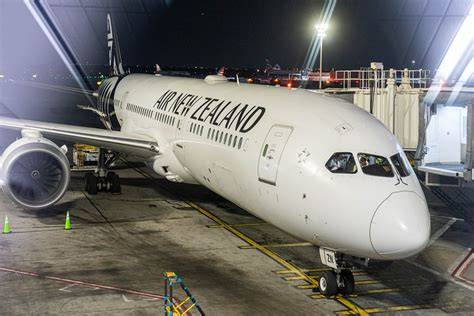
In September 2022, Air New Zealand launched nonstop flights between Auckland Airport (AKL) and New York John F. Kennedy International Airport (JFK), carrying the flagship NZ1 flight number. Operated three times weekly with a 272-seat 787-9, it is the longest nonstop service the airline operates and its flagship operation. The following year, Qantas joined the market, launching an AKL-JFK service whose aircraft and flight number originate in Sydney. That route has succeeded, with Qantas boosting frequencies using its 236-seat 787-9, while Air New Zealand has reportedly been losing money — operating fewer flights, with less feed and a less premium configuration.
| Air New Zealand 787-9 Layout | Business Premier | Premium Economy | Economy | Total Seats |
|---|---|---|---|---|
| Version 1 | 18 | 21 | 263 | 302 |
| Version 2 | 27 | 33 | 215 | 275 |
| Version 3 | 42 | 52 | 125 | 219 |
| Version 4 | 26 | 33 | 213 | 272 |
| Version 5 | 42 | 52 | 120 | 214 |
Air New Zealand is now taking delivery of new 787-9s in a premium-heavy layout with 42 business class seats, 52 premium economy seats, and just 219 seats in total, which should repair the operating economics on AKL-JFK. Whether that is enough to overcome its other structural disadvantages remains to be seen.
3. Perth To Paris: 7,702 Nautical Miles (14,264 km)
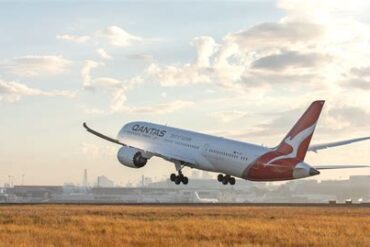
Qantas has transformed Perth Airport (PER) into a connecting hub for nonstop flights to Europe. It began with nonstop 787 service to London in 2018, added seasonal flights to Rome in 2022, and in 2024 launched nonstop flights between PER and Paris Charles de Gaulle Airport (CDG) — its third nonstop European route. Despite the close cultural and economic ties between Australia and Europe, the two continents were simply too far apart to be linked nonstop in the past. The 787-9 has the range to reach Europe from Perth, Qantas’s westernmost hub, while its size and fuel efficiency make relatively thin routes economically viable. Owing to conflict in the Middle East, Qantas cannot currently operate the departure leg nonstop because airspace restrictions stretch the sector beyond the Dreamliner’s capability, so the flight routes through Singapore; the return leg from CDG to PER still flies nonstop.
2. Melbourne To Dallas/Fort Worth: 7,814 Nautical Miles (14,472 km)
Melbourne Airport (MEL) is a secondary hub for Qantas, and local demand is strong because Melbourne is Australia’s second-largest city. Yet Melbourne sits further south and west than Sydney, adding significant distance — and therefore cost — to any North American service. Qantas launched MEL-DFW nonstop in 2022 using the 787-9, making it the longest route out of DFW and Qantas’s longest to the United States. What makes it particularly appealing is the American Airlines joint venture, which delivers enormous connecting feed in DFW to fill the cabin. Between the two partners, the network out of Dallas now covers Sydney and Melbourne on Qantas metal while American operates a winter seasonal route to Brisbane, giving DFW nonstop links to Australia’s three largest cities, plus American’s winter service to Auckland for local customers.
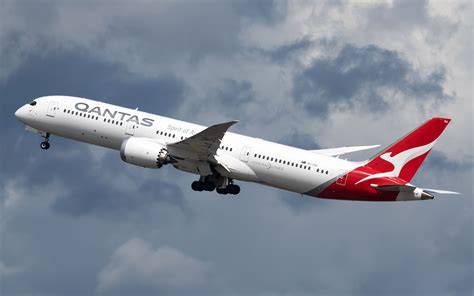
1. Perth To London: 7,829 Nautical Miles (14,499 km)
When Qantas announced nonstop flights between Perth and London Heathrow Airport (LHR) in late 2016, many saw it as a gamble. With flight times exceeding 17 hours, skeptics doubted passengers would choose a punishing nonstop over a comfortable stopover in Singapore or Dubai. In 2018, Qantas proved them wrong. The route, initially part of a flight originating in Sydney, was a major success: never before had Australia and Europe been connected nonstop, and the service outperformed much of the rest of Qantas’s network as travelers overwhelmingly chose to fly straight to London. Qantas later dropped the Sydney through-service, leaving PER-LHR as a standalone nonstop. Today, Middle Eastern airspace restrictions mean only the return segment flies nonstop, with the leg toward Heathrow stopping in Singapore.
Yet even this record route exposes the 787-9’s limits. Despite a modest 236-seat configuration, Qantas frequently has to restrict payload — and low fuel costs cannot generate profit when revenue is capped by weight limits. The carrier therefore plans to place its Project Sunrise Airbus A350-1000ULR on the Perth-London route in the future. The A350 carries only two additional seats but hauls significantly more payload and offers far greater premium capacity, making it the natural successor on the world’s longest 787-9 sector. Until then, the Dreamliner’s decade of Perth-London service stands as the clearest proof that a right-sized, fuel-efficient twinjet can do what a full-size jumbo never could.