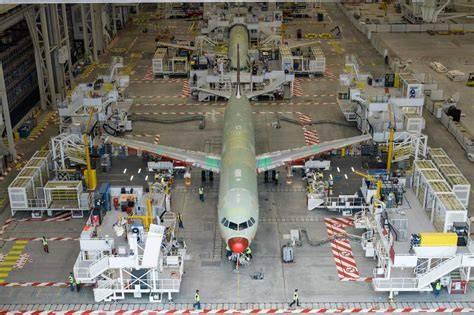
Airbus has quietly redrawn the map of American narrowbody manufacturing. With the October 13, 2025 inauguration of its second A320 Family final assembly line at the Mobile Aeroplex at Brookley campus, the European planemaker now runs three final assembly lines on Alabama soil: two dedicated to the A320 Family and exactly one building the A220. That two-to-one split is the single most revealing fact about how Airbus thinks about the United States. It tells you which aircraft pays the bills, which aircraft needs tariff protection, and how a European manufacturer intends to compete with Boeing on its home turf for the next decade.
The asymmetry is deliberate, not accidental. Mobile did not grow by cloning whatever sold best that quarter; it grew in phases, each one answering a specific commercial problem. Understanding why two lines chase the A320 Family while only one produces the A220 requires looking at the site’s buildout, the trade war that created the A220 line in the first place, the divergent production rates of the two programs, and the deep US backlog that gives Airbus the confidence to pour concrete in Alabama.
How Mobile Grew From One Line To Three
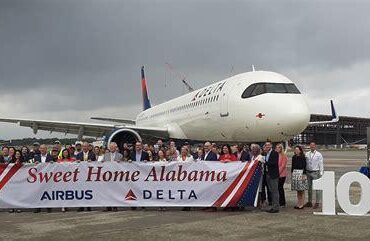
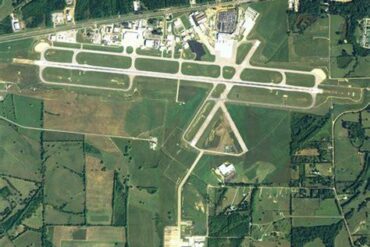
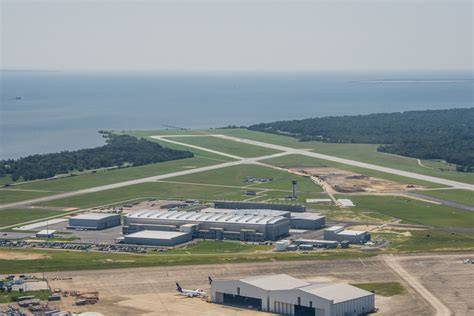
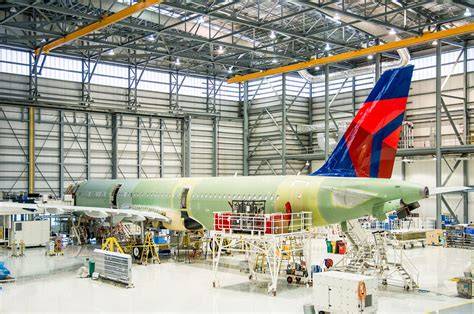
Airbus began assembling commercial aircraft in Alabama in 2015, when a single A320 final assembly line opened at the Mobile Aeroplex at Brookley, giving the company its first commercial production foothold in the United States. Four years later, in 2019, a dedicated A220 final assembly line joined the existing A320 operation, and the first Mobile-built A220 was handed over to Delta Air Lines in October 2020. That phased buildout turned a single-line plant into a multi-line narrowbody hub long before anyone spoke of “three lines,” and the October 2025 inauguration of the second A320 line completed the trio.
The October 2025 expansion was substantial. It added roughly 350,000 square feet of manufacturing, office, and logistics space along with about 1,000 additional jobs, as noted by Made In Alabama. Across the campus, the buildout incorporated more than a million square feet of A320 double-bay hangars and quad-bay hangars dedicated to the A220. With the new A320 line up and running, the Mobile facility now spans more than 2.5 million square feet and supports a workforce of more than 2,000 employees.
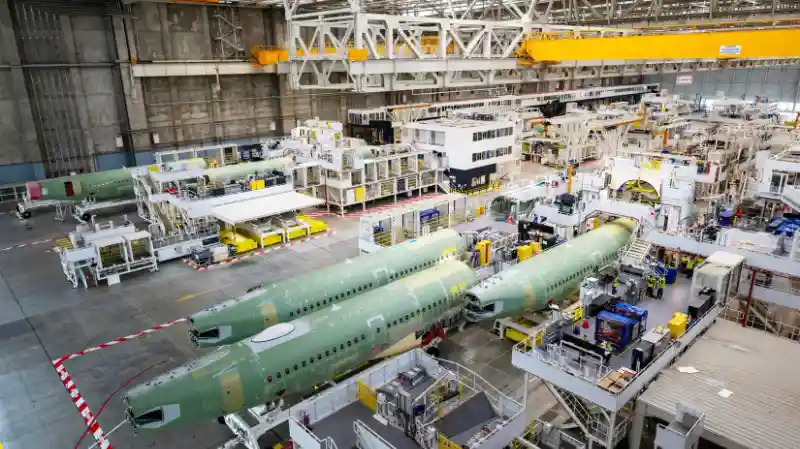
Taken together, a decade of additions transformed that single-line Alabama plant into a large-scale industrial complex capable of housing three distinct final assembly lines under one roof. Having double-bay and quad-bay hangars alongside 2.5 million square feet of operational space gives the site the scale to run parallel single-aisle production flows without crowding earlier assembly bays, and it is that layout, rather than any single building, that makes the two-to-one configuration workable.
The Trade Dispute That Put A220 Assembly In Alabama
The existence of an A220 final assembly line in Mobile traces directly back to the 2017 trade dispute in which Boeing filed a complaint against Bombardier over the C Series program, triggering steep proposed US import tariffs on Canadian-built aircraft. Rather than let tariff threats shut US customers out of the program, Airbus stepped in to take control of the C Series, later rebranded as the A220, and brought final assembly onto American soil in Alabama. Building A220 airframes domestically gave US carriers a pathway to take delivery without running into cross-border trade barriers.
Assembling A220s in Alabama also gave Airbus an industrial hedge alongside its main A220 final assembly line in Mirabel, Quebec, making Mobile and Mirabel the only two final assembly sites for the aircraft type. Even after trade duties were ultimately overturned, locating domestic final assembly in the United States supported the program within a core commercial market and shielded US deliveries from future trade friction. For Airbus, having both Canadian production in Mirabel and an Alabama assembly line quickly became a permanent strategic asset, letting the company serve American-based airlines from inside the tariff wall while keeping the program closely integrated across North America.
That history explains why the A220 line exists in Alabama at all, and it also explains why the line has never been duplicated. The A220’s presence in Mobile is a defensive and architectural decision born of trade politics; it is not a volume bet. The A320 lines, by contrast, are pure commercial arithmetic, and that is exactly why the new capacity went there.
Why Two Lines Go To The A320 Family
Bringing a second A320 final assembly line online in Mobile tilts the site’s narrowbody production mix decisively toward the A320 Family, giving Airbus two dedicated A320 lines against a single line for the A220. The A320 Family sits at the core of narrowbody airline fleet plans worldwide, so adding a second domestic assembly line expands how many single-aisle aircraft Airbus can finish in the United States and not have to rely solely on overseas final assembly plants. Doubling A320 capacity in Alabama shortens the logistical path between factory completion and airline entry into service, and it lets American customers draw on domestic throughput for a proven aircraft family focused on main cabin and short- to medium-haul networks.
Running two A320 lines alongside one A220 line reflects clear operational specialization rather than an attempt to place equal volume across every aircraft type. Airbus matches its factory layout to the much larger commercial scale of A320 Family demand, concentrating twin final assembly lines on the platform where hundreds of unfilled slots sit. A third A220 line would add small-tier capacity the market cannot absorb quickly; a second A320 line adds capacity the market is already queuing for.
Ramping Up Production Rates Across Three Lines #Airbus-Production-Rates
Globally, Airbus has set its sights on reaching a production rate of 75 A320 Family aircraft per month in 2027, while targeting 14 A220 aircraft per month across its Mobile and Mirabel final assembly network in 2026. Pairing two A320 final assembly lines with a single A220 line in Mobile mirrors how sharply production scale diverges between the two programs. The A320 Family carries massive global volume requirements, whereas the A220 ramps up across a smaller single-aisle tier, and the Alabama footprint reflects that gap line for line.
Pacing a single A220 final assembly line alongside two A320 lines also highlights how industrial delays govern real-world delivery speed. Even when final assembly bays are in the right place, hitting monthly targets depends on keeping major components such as engines, cabin interiors, and aerostructures flowing smoothly from global suppliers into each assembly station. Any lag in component deliveries or line-side tooling can slow how quickly a single line or a dual-line setup turns out finished jets, which is why Airbus paces each program according to its production curve and supply-chain readiness rather than floor space alone. Over-allocating space to lower-volume builds would drag down the overall rate, and global delivery commitments would slip with it.
Made In The USA: Serving An 850-Aircraft Backlog
With more than 850 Airbus aircraft on order for US customers, domestic airline demand provides the commercial engine behind expanding final assembly capacity in Alabama. American carriers rely heavily on single-aisle jets to refresh aging fleets, grow regional and mainline networks, and support long-term fleet modernization across both major network airlines and low-cost operators, and a deep domestic order book gives Airbus strong visibility into steady US delivery pull over the coming years.
Against that backdrop, Airbus’ bigger ambition is for US carriers’ narrowbodies to eventually come from Mobile rather than rely on imported airframes. Aligning Alabama final assembly with American airline demand brings production closer to the end customer, helping streamline handovers, acceptance flights, and customer support across the United States. Even with only one line dedicated to the A220, domestic assembly positions Mobile as the centerpiece of Airbus’ US narrowbody delivery strategy, and the second A320 line is what makes that strategy scalable rather than aspirational.
From Humble Beginnings To True Ambition
Mobile was once just a single-line narrowbody operation, and now it is a deliberate two-to-one industrial split. Two A320 Family final assembly lines alongside one A220 line are designed to balance high-volume single-aisle scale with tariff-resilient domestic flexibility. By committing A220 production to Alabama after the 2017 trade dispute and expanding A320 assembly capacity in October 2025, Airbus has positioned its Gulf Coast campus to serve United States airline demand closer to home while keeping supply-chain pacing and cabin brand expectations aligned.
Looking ahead, the clearest benchmark for this strategy is how Mobile and the wider manufacturing network work together through the end of 2027, when Airbus aims to reach a monthly production rate of 70 to 75 A320 Family aircraft and stabilize at 75 alongside its ongoing A220 ramp-up and domestic backlog deliveries. Hitting those volume milestones without straining supplier flow or sacrificing cabin consistency will determine whether a two-line A320 and one-line A220 footprint in Alabama becomes the status quo for Airbus’ next decade in the United States.