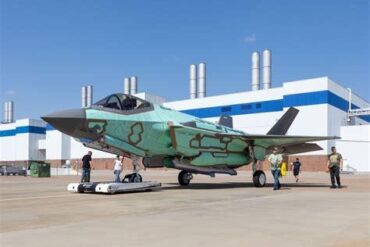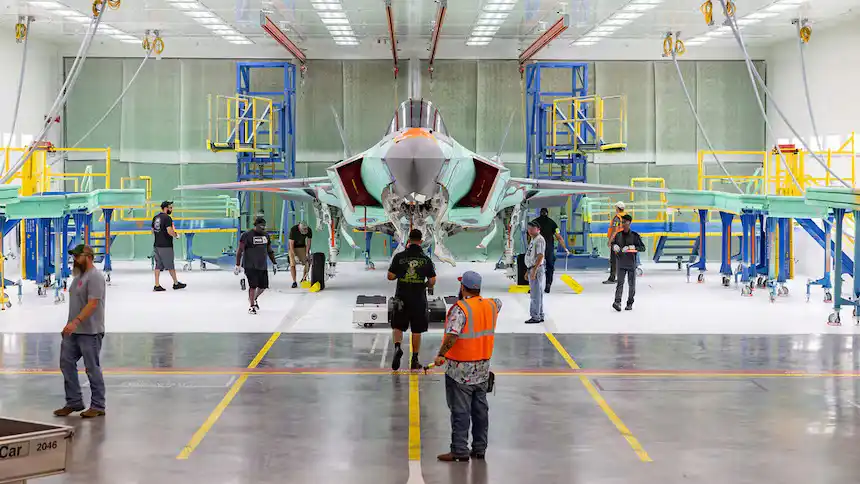
Canada’s first F-35A Lightning II has officially entered final assembly at Lockheed Martin’s Fort Worth, Texas facility, marking a tangible milestone in a defense program that remains politically and strategically under review in Ottawa. While questions persist over the long-term fate of Canada’s planned fleet of 88 fifth-generation stealth fighters, the physical reality on the factory floor tells a clearer, more immediate story: the Royal Canadian Air Force is preparing to receive a jet that will redefine its combat aviation for decades.
The start of final assembly signals the transition from components to a fully integrated aircraft, where fuselage sections, avionics, stealth coatings, and mission systems converge into a flyable warplane. For Canada, this moment carries symbolic weight. It demonstrates that, despite diplomatic friction with Washington and a government-ordered review of the broader procurement, the first aircraft is now past the point of abstraction and firmly embedded in the production pipeline.
The ceremony scheduled for February 2, 2026, attended by senior RCAF leadership, underscores that Canada remains an active participant in the F-35 Joint Strike Fighter program, even as policymakers weigh the strategic costs and benefits of completing the full order.
A Ceremony Heavy With Signal and Subtext
At the heart of the Fort Worth event is a ritual familiar to F-35 partner nations: the signing of the aircraft’s fuselage bulkhead. Lt-Gen. Jamie Speiser-Blanchet, Commander of the Royal Canadian Air Force, is slated to inscribe her name on the structure with a black pen, a gesture that symbolically transfers national ownership to the aircraft still taking shape on the line.
These ceremonies are standard practice for Lockheed Martin, yet Canada’s participation has drawn unusual attention. The timing coincides with an ongoing review initiated in March 2025, when Prime Minister Mark Carney ordered a reassessment of the planned acquisition amid escalating political tensions with the Trump administration in the United States. Despite that uncertainty, Ottawa has reaffirmed its intention to induct the 16 aircraft already paid for, even if the remaining 72 jets remain under scrutiny.
Canada’s Department of National Defence has described the event as highlighting “another production milestone,” carefully chosen language that balances institutional commitment with political caution. For the RCAF, however, the message is more straightforward: the aircraft is coming, and preparations are already well underway.
Production Momentum Versus Political Review
Canada signed a US$14.2 billion contract with Lockheed Martin in January 2023 to acquire 88 F-35A fighters in four tranches extending to 2032. The selection followed a prolonged competition under the Future Fighter Capability Project, where the F-35 ultimately prevailed over the Saab Gripen E, with the Dassault Rafale and Eurofighter Typhoon also evaluated earlier in the process.
The review announced in 2025 has not halted production activity for the initial tranche. Lockheed Martin’s Fort Worth line, which serves multiple allied customers, operates on long-lead timelines that are difficult to pause without significant financial and diplomatic consequences. As a result, Canada’s first aircraft has moved seamlessly into final assembly, with initial deliveries expected later in 2026.
This forward momentum places Ottawa in a familiar defense procurement dilemma. Cancelling or reducing future orders may satisfy short-term political objectives, but doing so after production has begun risks higher unit costs, reduced industrial participation, and weakened interoperability with allies.
Training, Infrastructure, and an Aircraft on the Way
Beyond the factory floor, the RCAF has already committed substantial resources to ensuring the F-35 can be absorbed smoothly into service. Canadian pilots are undergoing F-35 training, maintenance personnel are adapting to the aircraft’s highly digital support ecosystem, and infrastructure upgrades are in progress at selected bases to accommodate the jet’s unique requirements.
The F-35A represents a generational leap from Canada’s current CF-18 Hornet fleet. Its low observable design, advanced AN/APG-81 AESA radar, sensor fusion, and network-centric operations are intended to allow pilots to see, decide, and act faster than any previous Canadian fighter. These capabilities are particularly relevant to NORAD commitments and NATO operations, where information dominance increasingly defines air superiority.
Political Debate and Parliamentary Pressure
The production milestone has reignited debate in Ottawa. Conservative MP Jeff Kibble has been vocal in urging the government to proceed with the full acquisition, arguing that the F-35 is “the only aircraft capable of carrying out the operations required” by the RCAF and its allies. Speaking in the House of Commons, he framed the issue as one of operational necessity rather than political preference, emphasizing allied expectations and the air force’s stated requirements.
While the government has yet to disclose the findings of its review, many defense analysts believe Canada will ultimately proceed with the bulk of the purchase. The alternative options evaluated earlier would require reopening competitions, renegotiating industrial offsets, and accepting interoperability compromises at a time when allied integration is increasingly critical.
A Longstanding Pattern of American Aircraft
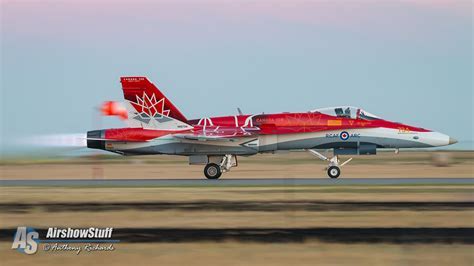
Canada’s potential continuation with the F-35 would not represent a departure from tradition, but rather a continuation of a decades-long reliance on U.S.-origin aerospace platforms. The RCAF’s current fighter, the CF-18, is itself a Canadian variant of the American F/A-18 Hornet, acquired in the early 1980s under the New Fighter Aircraft program.
The CF-18 has seen extensive combat and operational service, from the 1991 Gulf War to NATO operations over Yugoslavia in 1999 and Libya in 2011, alongside continuous NORAD alert duties. To extend the fleet’s life, Canada even acquired surplus Australian Hornets between 2017 and 2019, underscoring how deeply embedded the platform has been in Canadian air power.
Beyond Fighters: An Integrated U.S. Supply Chain
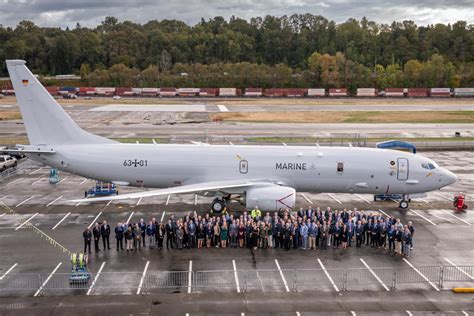
The RCAF’s dependence on American platforms extends far beyond fighters. The CP-140 Aurora, Canada’s primary maritime patrol and ISR aircraft, is based on the U.S. Navy’s P-3 Orion airframe, albeit with a uniquely Canadian avionics suite. After more than 40 years of service, it is now slated for replacement by the Boeing P-8A Poseidon, with deliveries expected to begin in 2026.
Canada’s air mobility capabilities tell a similar story. The CC-130J Super Hercules and CC-177 Globemaster III form the backbone of tactical and strategic airlift, both derived directly from American designs. In rotary-wing aviation, the CH-147F Chinook, built by Boeing, provides heavy-lift capability, while core training fleets rely heavily on U.S.-designed aircraft.
Even in unmanned systems, Canada has turned south. The acquisition of 11 MQ-9B SkyGuardian remotely piloted aircraft, signed in December 2023, further integrates Canadian defense capabilities with U.S. technology and supply chains.
The Strategic Reality Beneath the Review
Against this backdrop, the debate over the F-35 appears less about dependence and more about degree. Canada’s air force is already structurally intertwined with American aerospace ecosystems, from logistics and maintenance to doctrine and training. Introducing the F-35 would deepen that integration, but it would also ensure that Canada remains fully interoperable with its closest allies in an era defined by multi-domain operations and contested airspace.
Whether Ottawa ultimately confirms all 88 aircraft or settles for a reduced fleet, the first Canadian F-35 now taking shape in Fort Worth represents more than metal and composites. It embodies a strategic choice that Canada has made repeatedly over the past half-century: prioritizing operational effectiveness and allied integration, even when political winds complicate the path forward.
As final assembly continues and delivery approaches, the question facing Canada is no longer whether the F-35 is coming, but how fully the nation is prepared to commit to the future it represents.