Naval warfare has always pushed engineers to think beyond conventional limits. While most warships follow familiar patterns of hulls, engines, weapons, and aircraft systems, history has also produced vessels that looked more like science-fiction concepts than practical military machines. These strange warships were not created simply to appear unusual. Each one represented an attempt to solve a specific strategic problem, whether increasing speed, carrying heavier weapons, defending coastlines, or overcoming technological limitations.
From circular armored ships that resembled floating UFOs to enormous aircraft carriers made from a mixture of ice and wood pulp, these vessels demonstrate how far nations were willing to experiment during periods of intense military competition. Some became successful examples of innovation, while others proved that unusual ideas often come with serious engineering challenges.
The following four warships stand among the most bizarre naval projects ever created, showing the creativity, ambition, and occasional failures behind military ship design.
Boeing Tucumcari: The Hydrofoil Warship That Flew Above Water
During the Cold War, naval forces around the world searched for ways to create faster and more efficient combat vessels. One of the most unusual solutions developed by the United States Navy was the USS Tucumcari (PGH-2), a hydrofoil patrol boat designed to skim above the ocean surface rather than move through it.
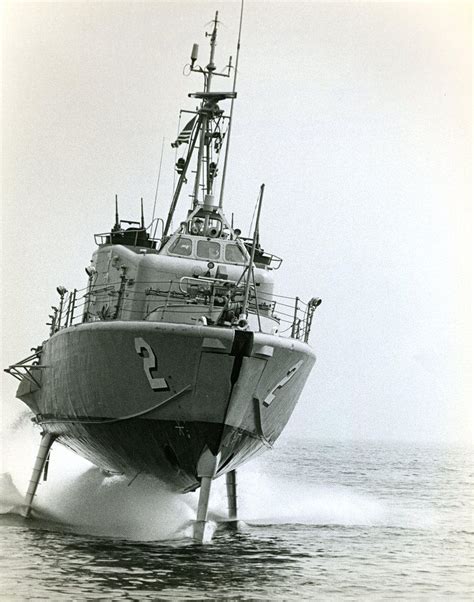
Unlike traditional ships that push against the water with large hulls, hydrofoil vessels use underwater wings called foils. As the ship accelerates, these wing-like structures generate lift, raising much of the hull above the waves. This dramatically reduces water resistance and allows the vessel to achieve much higher speeds.
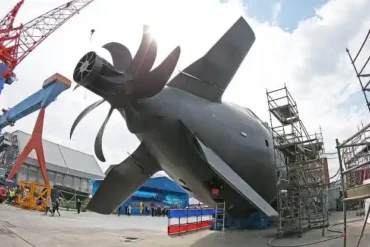
The Tucumcari looked less like a conventional warship and more like a heavily armed racing boat. Built by Boeing, the vessel featured a distinctive three-foil arrangement, with two rear foils and one forward foil in a canard configuration. Instead of traditional propellers, it relied on powerful water jets that pushed massive amounts of seawater behind the vessel.
The technology was impressive. The ship could travel at high speeds while maintaining excellent maneuverability, making it attractive for missions requiring rapid response. Entering service in 1968, the Tucumcari participated in Vietnam War operations before being used in NATO demonstrations that introduced allied navies to American hydrofoil technology.
However, the unusual design also created major problems. Hydrofoils required complex maintenance, and their performance advantages became less valuable during long ocean deployments. While they performed well in coastal environments, they struggled with the demands of open-water operations.
The Tucumcari eventually suffered severe damage after running aground in Puerto Rico during recovery operations. Although the Navy continued experimenting with hydrofoil technology, vessels like the Tucumcari were eventually abandoned because their operational costs outweighed their advantages.
Despite its short career, the ship remains an important example of Cold War experimentation. It represented a moment when naval engineers imagined that future warships might race across oceans by almost flying above the waves.
Novgorod: Russia’s Circular Floating Fortress
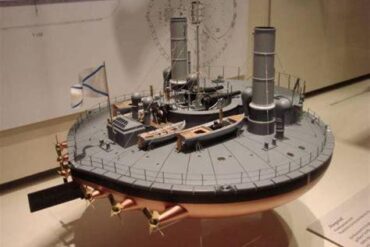
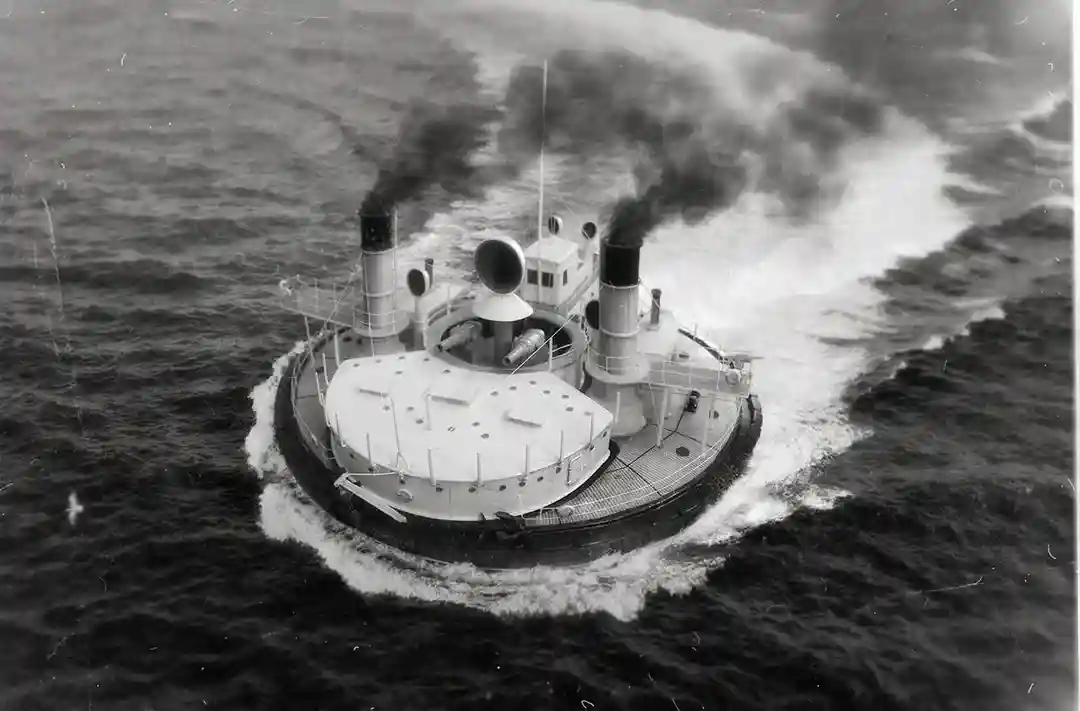
Few warships in history have looked as strange as the Russian Novgorod, a 19th-century armored vessel that appeared more like a floating platform from another world than a traditional battleship.
Built during the 1870s by Imperial Russia, the Novgorod was inspired by the success of low-profile armored ships known as monitors. These vessels were designed with minimal exposure above the waterline, making them difficult targets for enemy fire. The Russian Navy took this concept to an extreme by creating a completely circular warship.
The Novgorod had a diameter of approximately 101 feet and featured a flat deck with a rotating central turret carrying powerful naval guns. Its circular shape gave it an unusual advantage: the ship could absorb the recoil of extremely large weapons without suffering the same rolling problems experienced by conventional ships.
The idea was to create a heavily armored coastal defense vessel capable of protecting important ports. Instead of chasing enemy ships across the ocean, the Novgorod acted as a floating fortress stationed near shore. Its presence alone was intended to discourage hostile naval attacks.
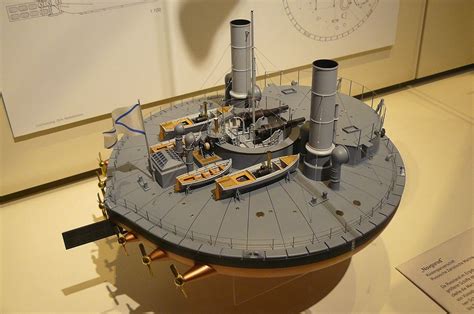
However, the unusual shape created serious weaknesses. Because the ship lacked a traditional pointed bow, it moved slowly through the water. Steering was difficult, and reports suggested that instead of smoothly changing direction, the vessel sometimes rotated in circles. Its extremely low profile also made it vulnerable in rough seas.
The Novgorod was never considered a successful warship in the traditional sense, but it fulfilled its defensive mission for several decades. It remained in Russian service until 1903 and became one of history’s most memorable examples of an idea that was technically fascinating but practically limited.
The vessel demonstrated an important lesson in naval engineering: solving one problem often creates another. The circular design improved stability for heavy guns, but it sacrificed speed and seaworthiness.
Independence-Class Littoral Combat Ship: The Modern Trimaran Warship
Not all strange warships belong to the distant past. The modern era has also produced unconventional naval designs, including the United States Navy’s Independence-class Littoral Combat Ship (LCS).
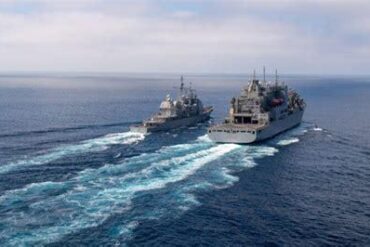
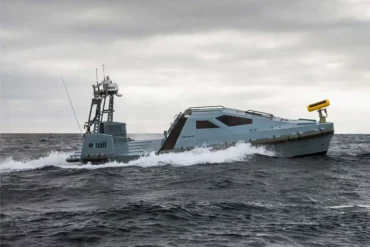
Unlike traditional warships built around a single large hull, Independence-class ships use a trimaran configuration. This means they have three separate hull sections: a central hull and two smaller supporting hulls on each side. The result is a vessel that looks more like an advanced passenger ferry or experimental racing craft than a military ship.
The unusual structure was created to improve speed, stability, and operational flexibility. The wide trimaran design provides a large internal area while reducing water resistance. This allows the Independence-class to reach speeds exceeding 44 knots, making it one of the fastest large combat vessels operated by the U.S. Navy.
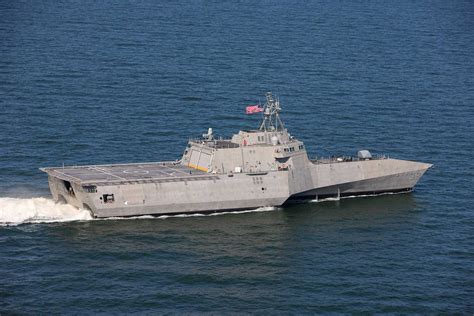
These ships were designed for littoral warfare, meaning combat operations close to coastal regions. Their missions include surveillance, mine countermeasures, anti-surface warfare, and rapid deployment.
Another unusual feature is their modular mission system. Instead of being built for one specific role, Independence-class ships can receive different equipment packages depending on the mission. This approach was intended to create a flexible fleet capable of adapting quickly to changing threats.
The design also created challenges. Maintaining advanced systems proved more complicated than expected, and debates emerged about the effectiveness and cost of the Littoral Combat Ship program. Some critics questioned whether these lightly armed vessels could survive against heavily equipped opponents.
Nevertheless, the Independence-class remains one of the most visually distinctive warships of the 21st century. Its trimaran shape represents a bold attempt to rethink what a modern naval combat vessel should look like.
Project Habakkuk: The Aircraft Carrier Made From Ice
Perhaps the strangest warship concept ever proposed was Project Habakkuk, a British World War II plan to construct a gigantic aircraft carrier made primarily from ice and wood pulp.
During the Battle of the Atlantic, German U-boats threatened Allied supply routes across the ocean. Aircraft were essential for defending shipping lanes, but existing aircraft carriers and land-based aircraft lacked the range needed to cover the vast areas of the Atlantic.
British inventor Geoffrey Pyke proposed an extraordinary solution: build a massive floating airbase using a special material called pykrete, a combination of ice and wood pulp. Unlike ordinary ice, pykrete was stronger and melted much more slowly.
The planned Habakkuk would have been enormous. Engineers envisioned a ship approximately 2,000 feet long and capable of carrying hundreds of aircraft. Its size would have exceeded even the largest modern aircraft carriers, creating a mobile island in the middle of the ocean.
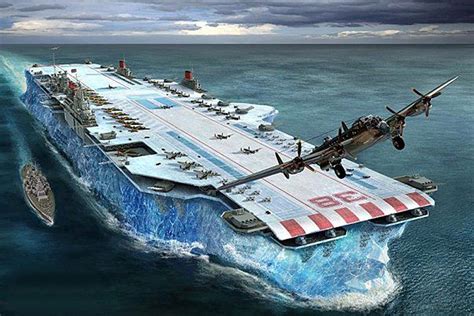
The concept attracted serious military interest because it offered a way to conserve valuable steel resources while creating an entirely new type of naval platform. A smaller experimental model was even built to demonstrate that the material could work.
However, technological developments eventually made the project unnecessary. Longer-range aircraft reduced the need for giant floating airbases, while conventional aircraft carriers became more practical and efficient. The enormous cost and engineering challenges also contributed to its cancellation.
Although Habakkuk was never completed, it remains one of the most ambitious naval concepts ever imagined. It showed that wartime innovation could extend far beyond traditional shipbuilding and into the realm of extraordinary engineering experiments.
The Legacy of the World’s Strangest Warships
The history of naval warfare is filled with examples of unusual designs created during moments of uncertainty and competition. The Tucumcari, Novgorod, Independence-class, and Habakkuk all attempted to challenge traditional ideas about what a warship could be.
Some succeeded in limited roles, while others became reminders of the difficulties involved in turning ambitious concepts into practical military tools. Yet even failed designs contributed valuable knowledge. Hydrofoils improved understanding of high-speed marine engineering, circular warships explored new approaches to weapon stability, trimaran vessels influenced modern naval architecture, and Habakkuk demonstrated the possibilities of unconventional materials.
The strangest warships in history are not simply curiosities. They represent moments when engineers and military planners were willing to imagine something completely different. In many cases, those experiments helped shape the future of naval technology, proving that even the most unusual ideas can leave a lasting impact.