Iran’s naval power sits at the crossroads of geography and strategy. With coastlines along the Persian Gulf, the Gulf of Oman, and the Caspian Sea, the Islamic Republic is not merely a continental state with maritime access; it is a nation whose security doctrine is deeply tied to controlling vital sea lanes, especially the Strait of Hormuz, through which a significant portion of the world’s oil supply flows. When tensions escalated during Operation Epic Fury in late February 2026, global attention snapped sharply toward one question: how many warships does Iran actually have, and how dangerous are they?
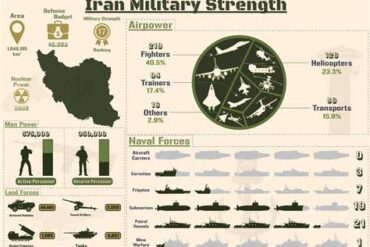
The answer is layered. Iran does not operate aircraft carriers or nuclear-powered super-submarines. It does not maintain a traditional blue-water navy on par with the United States or China. Yet to dismiss its fleet would be a strategic error. Iran fields a dual naval structure consisting of the Islamic Republic of Iran Navy (IRIN) and the Islamic Revolutionary Guard Corps (IRGC) Navy, and together they operate more than 145 military combat vessels, along with hundreds—possibly thousands—of smaller armed craft designed for asymmetric warfare.
Understanding Iran’s naval inventory requires separating conventional warships from fast-attack and irregular assets. The IRIN represents the traditional branch. The IRGC Navy embodies unconventional maritime warfare. Combined, they create a force tailored not for global dominance, but for regional denial and disruption.
Islamic Republic of Iran Navy (IRIN): Conventional Warship Inventory
The IRIN serves as Iran’s primary conventional naval force. As of 2025 estimates, it operates over 100 vessels and employs approximately 18,500 personnel. Ranked 35th out of 145 global naval forces in the 2026 Global Firepower report, the IRIN focuses on layered defense, intelligence gathering, and regional projection rather than deep-ocean carrier strike operations.
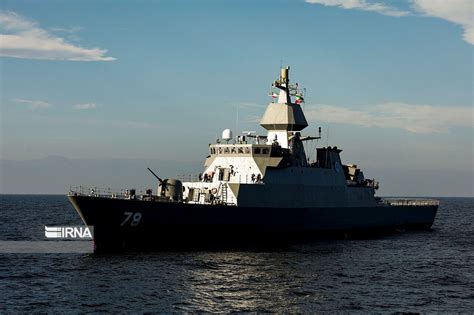
At the top end of its surface fleet are three modern destroyers, often associated with the Jamaran class. These ships are equipped with missile systems capable of anti-ship and surface-to-air engagements, along with electronic warfare and intelligence capabilities. While modest by Western standards, they represent a significant technological milestone for Iran’s domestic shipbuilding industry.
The fleet also includes seven frigates, many of which trace their origins to older British-built designs from the pre-1979 era, later modernized and supplemented by locally produced variants. Frigates serve as multi-role platforms—conducting patrols, escort duties, and missile operations.
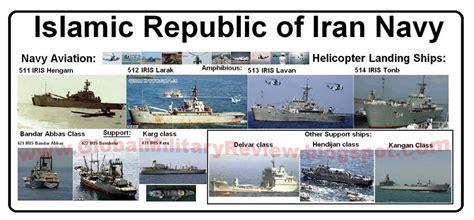
Supporting these larger vessels are corvettes, amphibious assault ships, and logistical support craft that enable sustained regional presence. Iran’s amphibious ships provide limited troop deployment capacity, a capability that becomes relevant in any scenario involving disputed islands or coastal defense operations.
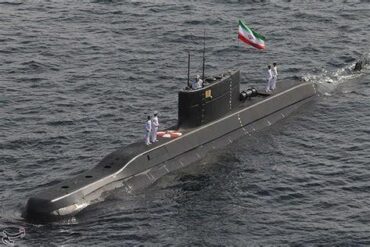
The IRIN submarine force deserves particular attention. It operates approximately 25 submarines, all diesel-powered. Though lacking nuclear propulsion, these submarines are optimized for shallow-water environments such as the Persian Gulf. The fleet includes:
- Tariq-class (Kilo-class) submarines, Russian-made third-generation vessels capable of launching cruise missiles, deploying naval mines, and engaging surface ships with torpedoes.
- Fateh-class submarines, domestically developed and suited for coastal defense missions.
- Ghadir and Nahang-class submarines, smaller platforms designed for ambush tactics in confined waters.
Diesel-electric submarines, while slower and shorter-ranged than nuclear ones, are exceptionally quiet when operating on battery power. In narrow waterways, stealth can outweigh raw speed.
The IRIN also operates 21 patrol vessels and at least one dedicated mine warfare ship, reinforcing Iran’s ability to disrupt maritime traffic. Mining the Strait of Hormuz remains one of Tehran’s most frequently cited contingency strategies.
In March 2026, U.S. leadership claimed that nine large IRIN vessels were sunk during Operation Epic Fury. Details remain unclear, and the exact classes affected have not been publicly verified. Even so, the IRIN remains a functioning and regionally influential naval force.
IRGC Navy: Asymmetric Maritime Warfare Power
If the IRIN represents traditional naval doctrine, the IRGC Navy represents strategic improvisation. Rather than attempting to match Western navies ship-for-ship, the IRGC has invested heavily in fast-attack craft, missile boats, drones, and swarm tactics.
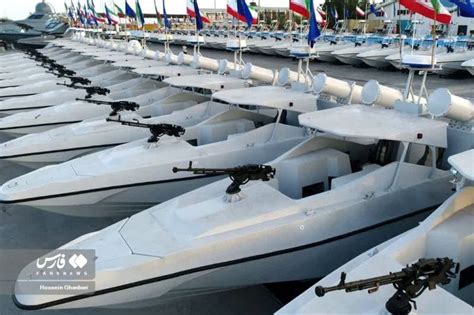
Estimates suggest the IRGC Navy operates at least 45 smaller warships, including:
- 10 Houdong missile boats
- 25 Peykaap II missile boats
- Five C-14 missile boats
- Ten MK13 boats
Beyond these structured assets lies the real multiplier: hundreds or even thousands of armed speedboats. Many of these vessels can be fitted with anti-ship cruise missiles, heavy machine guns, rockets, or naval mines. In 2025, reports highlighted a new high-speed Iranian craft capable of reaching 126.6 mph, armed with anti-ship missiles—a dramatic evolution in rapid strike capability.
Swarm tactics form the backbone of IRGC doctrine. Instead of engaging large warships in direct confrontation, the strategy is to overwhelm defensive systems by deploying numerous small, fast-moving boats simultaneously. Modern destroyers and cruisers possess sophisticated radar and missile defenses, but saturation attacks test those limits.
The IRGC Navy also received two Shahid-Soleimani-class stealth patrol catamaran corvettes in 2024. These vessels feature radar-reducing designs and carry missile systems, blending speed with improved survivability.
Reports from August 2024 indicated that over 2,600 missile and drone systems were delivered to Iranian naval forces. While allocation between IRIN and IRGC remains opaque, drone integration into maritime warfare is almost certain. Iran has demonstrated significant drone production capabilities in other theaters, and maritime deployment extends both reconnaissance and strike range.
Total Warship Count: A Clear Numerical Estimate
Combining both branches, Iran operates:
- 100+ vessels under IRIN
- 45+ combat vessels under IRGC Navy
- Hundreds or thousands of additional armed speedboats
This places the combined total at 145 or more formal military combat vessels, excluding smaller auxiliary and improvised craft. When counting all operational maritime assets, the real number of armed vessels is significantly higher.
Yet raw quantity tells only part of the story. Iran’s naval architecture is purpose-built for the geography it defends. The Persian Gulf is narrow, shallow, and crowded. Massive aircraft carriers have limited maneuverability there. Small, missile-equipped craft and quiet diesel submarines can exploit those constraints.
Strategic Significance of Iran’s Naval Strength
Iran’s navy is not designed to project power across oceans. It is engineered to deny access, impose risk, and complicate adversary planning within its maritime neighborhood. The Strait of Hormuz is less than 30 miles wide at its narrowest point. In such an environment, even smaller warships armed with modern missiles can alter the balance of risk.
The IRIN provides conventional backbone capabilities—destroyers, frigates, submarines. The IRGC Navy supplies speed, unpredictability, and saturation tactics. Together, they form a layered maritime defense network capable of challenging far larger fleets within confined waters.
In numerical terms, Iran does not rival global naval superpowers. In operational terms, however, its combination of over 145 combat vessels, diesel submarines, missile boats, stealth patrol craft, and mass-deployable speedboats makes it one of the most formidable regional naval forces in the Middle East. Quantity, geography, and doctrine intersect here in ways that transform modest hardware into strategic leverage.