The modern U.S. Navy commands a fleet of astonishing technological depth, where the line between science fiction and military reality has all but vanished. These vessels are not simply tools of warfare—they are floating laboratories, engineering marvels, and command centers operating in the most extreme conditions on Earth. In our strategic doctrine, technological supremacy is not a luxury—it’s an imperative. Across the globe’s oceans, the Navy must coordinate with space-based systems, engage in multiple mission profiles simultaneously, and remain invisible or invulnerable to hostile threats. In this pursuit, a handful of naval craft stand as paragons of complexity, blending innovation, brute power, and layered functionality. Here, we explore five of the most complex vessels to ever sail under the American flag.
Ford-Class Aircraft Carriers: An Electrifying Leap in Naval Aviation
The Ford-class aircraft carrier is more than an upgrade—it is a full reinvention of what a modern carrier can be. While it shares a visual silhouette with its Nimitz-class predecessors, under the deck it is a different beast entirely. Central to this transformation is the Electromagnetic Aircraft Launch System (EMALS), a revolutionary mechanism that replaced steam catapults. Capable of launching an aircraft every 45 seconds, EMALS enhances sortie rates and is far gentler on aircraft structures.
Yet, pioneering innovation brought complexity-induced turbulence. Early models, including the USS Gerald R. Ford, faced high-profile setbacks. The Advanced Weapons Elevators (AWEs), designed to ferry ordnance via electromagnetic lifts, were beset by malfunctions. Even the sewage system faltered, a reminder that even mundane systems must match the sophistication of nuclear-powered engineering.
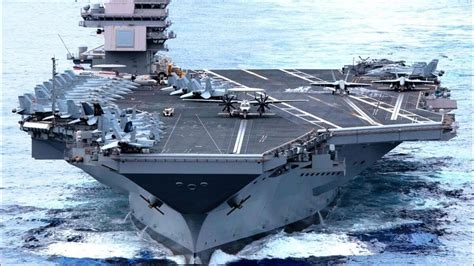
The AAG (Advanced Arresting Gear), replacing traditional hydraulic arrestors with water turbine tech, further complicated early operations. Nevertheless, the power generated by the twin A1B nuclear reactors—a staggering 600 MW—positions the Ford-class to accommodate future technologies like laser defense systems. At over 1,090 feet in length, these ships redefine overengineering in pursuit of naval dominance.
America and Wasp-Class Amphibious Assault Ships: Multi-Domain Mobility Platforms
Functioning as hybrid warships that blend carrier capability with marine deployment functionality, amphibious assault ships are among the Navy’s most tactically flexible platforms. The America-class, particularly its “Flight 0” configuration, eliminates the traditional well deck to maximize aviation fuel and hangar space. This design allows for extended operation of advanced aircraft like the F-35B Lightning II and MV-22 Osprey tiltrotors, offering a mobile force projection platform.
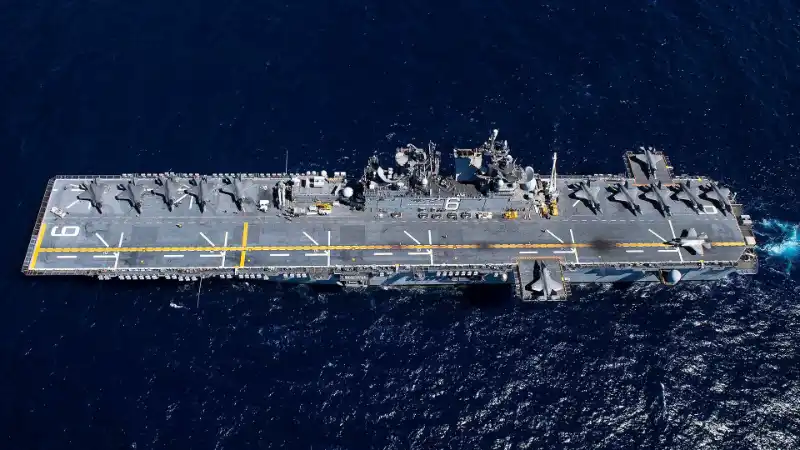
Later America-class variants, designated as “Flight 1”, reintroduce the well deck but maintain extensive aviation infrastructure by reshaping the superstructure. These ships operate LCACs (Landing Craft Air Cushion) and LCUs (Landing Craft Utility), enabling both rapid beachhead assaults and heavy vehicle deployment. The inclusion of Sea Sparrow missiles, Phalanx CIWS, and Rolling Airframe Missiles (RAM) ensures layered defense capabilities against aerial and missile threats.
Complemented by twin gas turbines producing 70,000 horsepower, plus auxiliary engines for near-shore maneuverability, these vessels are engineered for versatility in every domain—air, land, and sea.
Littoral Combat Ships: Modularity Meets Maritime Agility
Designed to operate where blue-water ships dare not tread, Littoral Combat Ships (LCS) are the Navy’s response to the unique demands of littoral (coastal) warfare. Despite sharing a name, the Independence-class and Freedom-class LCS are radically different in design philosophy. The Independence-class features a futuristic trimaran hull that delivers enhanced stability and flight deck area, while the Freedom-class adheres to a more conventional monohull approach.
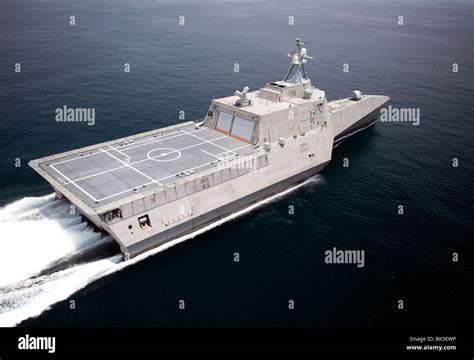
What unites them is their modular mission system. Each LCS can be rapidly reconfigured to tackle surface warfare, mine countermeasures, or anti-submarine operations by swapping out specialized mission packages. This dynamic adaptation is further enhanced by their ability to deploy Global Autonomous Reconnaissance Craft (GARCs) and unmanned submersible drones, enabling a high-tech, multi-pronged approach to intelligence gathering and threat neutralization.
These ships achieve speeds in excess of 40 knots, with precise figures classified. Agile, fast, and difficult to detect, LCS vessels redefine what a surface combatant can do in confined and contested waters.
Ohio-Class Submarines: The Underwater Leviathans of Nuclear Deterrence
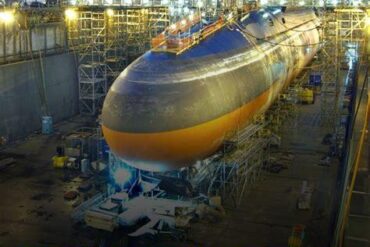
Submarines represent the apex of stealth, endurance, and strategic might. While the Virginia-class is the newest addition, the Ohio-class submarines remain unmatched in terms of complexity and payload diversity. Built initially as SSBNs (Ballistic Missile Submarines), four Ohio-class units were later reconfigured into SSGNs (Guided Missile Submarines), demonstrating the platform’s extraordinary adaptability.
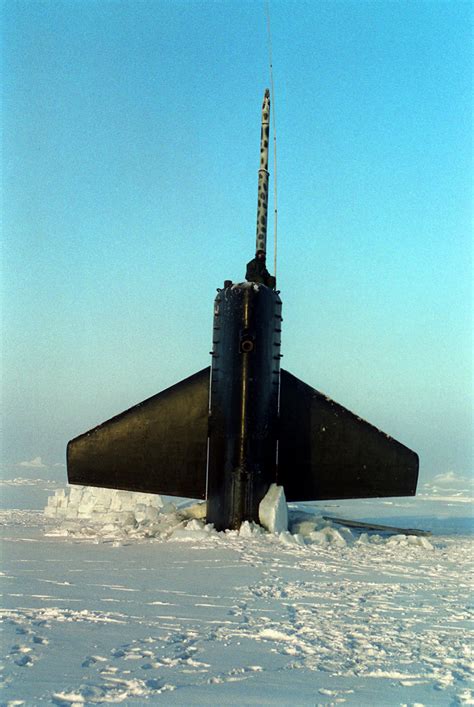
Each Ohio-class SSBN carries up to 20 Trident II D-5 missiles, each with multiple independently targetable reentry vehicles (MIRVs), despite having capacity for 24. This force constitutes a third of America’s nuclear triad. The SSGN conversions, meanwhile, can house up to 154 Tomahawk cruise missiles, making them floating arsenals for precision strike operations.
These leviathans displace over 17,000 tons and cruise silently at over 20 knots, powered by a single nuclear reactor driving one propeller. They can remain submerged for months, cloaked in near-total invisibility, capable of delivering either nuclear retaliation or tactical support without warning. In terms of multi-mission, nuclear-era engineering, nothing comes close.
Zumwalt-Class Destroyers: The Ghost Ships That Defied Convention
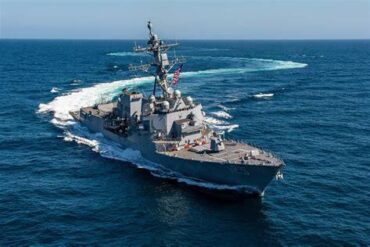
If the Ford-class reimagined carriers and the LCS redefined coastal warfare, then the Zumwalt-class destroyers attempted to rewrite every rule of naval architecture. Originally envisioned as a 32-ship stealth fleet, only three were ultimately built—DDG 1000, 1001, and 1002—as spiraling costs and design issues curtailed ambitions. Yet what was produced remains a technological marvel.
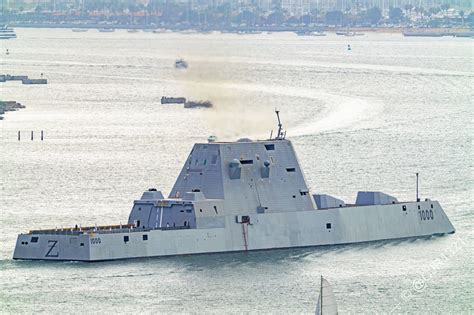
Shaped like an inverted wedge, the tumblehome hull dramatically reduces radar cross-section, giving the Zumwalt a ghostly profile on enemy sensors. Its Integrated Power System (IPS) delivers all-electric propulsion, channeling massive amounts of energy to drive motors, sensors, and eventually directed-energy weapons. Initially designed with Advanced Gun Systems (AGS) capable of precision GPS-guided rounds, the program faced a severe blow when the cost of each projectile exceeded $800,000—rendering the system impractical.
Despite these setbacks, the Zumwalt-class still houses 80 vertical launch cells, supports sophisticated radar arrays, and is now being refitted for hypersonic missile deployment. It remains an icon of naval ambition, illustrating both the promise and peril of disruptive design.
Conclusion: Naval Complexity as a Strategic Asset
Each vessel discussed above embodies a different facet of the U.S. Navy’s commitment to maintaining absolute superiority—on, above, and beneath the seas. From the futuristic catapults of the Ford-class carriers to the stealth geometry of the Zumwalt, these ships are not only complex; they are reflections of a doctrine where technical supremacy is synonymous with deterrence and dominance. With missions stretching from tactical coastal skirmishes to global strategic warfare, their complexity is not a weakness—it is a necessity. Their existence ensures that the U.S. Navy remains not only a maritime force but a multidimensional technological titan, prepared for the unpredictable battles of tomorrow.