The Airbus A350-900 is widely associated with long-haul flying, premium cabins, and nonstop links between major cities on opposite sides of the world. Yet the aircraft’s busiest scheduled routes in 2026 reveal a much broader story. Some of its most intensively operated services are not ultra-long-haul flights at all. Instead, airlines are deploying the A350-900 on short domestic and regional sectors where enormous passenger demand makes a large, efficient widebody aircraft commercially attractive.
According to Cirium schedule data covering January through December 2026, seven Airbus A350-900 routes record more than 1,300 scheduled flights during the year. Together, they demonstrate how differently three major Asian airlines—Japan Airlines, Singapore Airlines, and Vietnam Airlines—use the aircraft. Japan Airlines dominates the upper end of the ranking with dense domestic services from Tokyo Haneda, while Singapore Airlines uses its A350-900 fleet extensively across Southeast Asia and Australia. Vietnam Airlines adds one of the world’s busiest domestic widebody operations with its Hanoi–Ho Chi Minh City service.
The numbers are striking because the A350-900 was designed primarily as a highly efficient long-range aircraft. Its composite structure, advanced aerodynamics, modern engines, and spacious twin-aisle cabin make it particularly effective on flights lasting many hours. Nevertheless, the economics of high-density markets can make the aircraft equally valuable on flights of only one or two hours. When passenger volumes are consistently enormous, the ability to move large numbers of travelers with fewer departures can outweigh the advantages of using smaller aircraft.
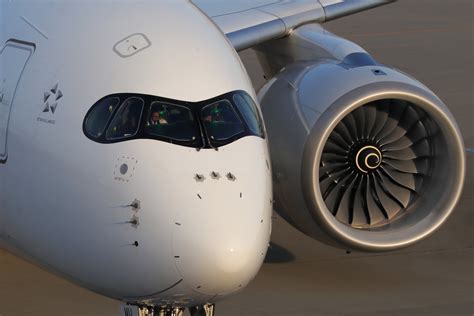
Top 7 Airbus A350-900 Routes in 2026
The 2026 ranking is led by three Japan Airlines domestic routes, followed by three Singapore Airlines international markets and one major Vietnam Airlines domestic connection. Tokyo Haneda–Sapporo takes the top position with 9,268 scheduled A350-900 flights, while Tokyo Haneda–Fukuoka follows with 8,442. Tokyo Haneda–Okinawa ranks third with 6,358 flights.
Further down the table, Singapore Airlines operates 4,355 A350-900 flights between Singapore and Jakarta and 2,900 between Singapore and Brisbane. Vietnam Airlines’ Hanoi–Ho Chi Minh City route records 2,685 flights, while Singapore–Hong Kong rounds out the seven-route ranking with 2,605 scheduled operations.
| Rank | Route | Airline | Scheduled A350-900 Flights in 2026 |
|---|---|---|---|
| 1 | Tokyo Haneda–Sapporo | Japan Airlines | 9,268 |
| 2 | Tokyo Haneda–Fukuoka | Japan Airlines | 8,442 |
| 3 | Tokyo Haneda–Okinawa | Japan Airlines | 6,358 |
| 4 | Singapore–Jakarta | Singapore Airlines | 4,355 |
| 5 | Singapore–Brisbane | Singapore Airlines | 2,900 |
| 6 | Hanoi–Ho Chi Minh City | Vietnam Airlines | 2,685 |
| 7 | Singapore–Hong Kong | Singapore Airlines | 2,605 |
The ranking also reveals an important trend in modern airline fleet planning. Aircraft type and route length are no longer directly connected. A350-900s can be found flying short domestic sectors because airlines increasingly evaluate aircraft according to seat demand, operating economics, schedule requirements, and customer expectations rather than simply the geographic distance between airports.
1. Tokyo Haneda–Sapporo: The Busiest Airbus A350-900 Route in 2026
At the top of the ranking is Japan Airlines’ Tokyo Haneda–Sapporo route, with an extraordinary 9,268 scheduled Airbus A350-900 flights during 2026. The total is divided equally between 4,634 departures from Haneda and 4,634 from New Chitose Airport, which serves the Sapporo metropolitan area in Hokkaido.
The route covers approximately 510 miles (820 kilometers) and normally takes around 90 minutes. That makes it an especially revealing example of how a sophisticated long-haul aircraft can become a workhorse on a relatively short sector. Rather than spending most of its time crossing oceans, JAL’s A350-900 can complete several domestic rotations in a single day while carrying substantial passenger volumes.
The demand behind the route is unusually diverse. Sapporo is Hokkaido’s largest city and a major economic center, generating year-round business and government travel. At the same time, Hokkaido is one of Japan’s most important tourism destinations. Winter brings enormous demand from travelers heading toward ski resorts and snow-covered landscapes, while spring and summer attract visitors interested in hiking, national parks, flower fields, seafood, and cooler weather.
The route’s seasonal profile is therefore highly attractive to an airline. Business traffic helps support demand during ordinary weekdays, while leisure traffic can produce powerful peaks during holidays and vacation periods. The combination means that aircraft capacity can remain productive throughout much of the year rather than depending exclusively on one passenger segment.
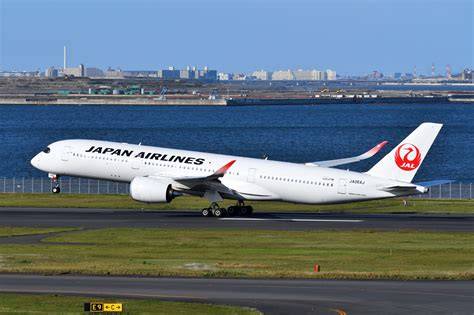
Japan Airlines has made the A350-900 a central part of its domestic fleet strategy, replacing older Boeing 777-200 aircraft on high-capacity routes. The decision reflects more than fuel efficiency. Passengers also gain a quieter cabin, larger overhead storage, modern entertainment systems, and improved cabin technology.
The approximately 90-minute flight may be short, but aircraft utilization is not. With thousands of scheduled flights across the year, even relatively small improvements in fuel consumption, maintenance requirements, and passenger experience can become significant at network scale. That makes Haneda–Sapporo an excellent demonstration of why the A350-900 can be economically compelling well outside the long-haul market.
2. Tokyo Haneda–Fukuoka: Japan Airlines’ Second Widebody Powerhouse
Japan Airlines occupies second place with 8,442 scheduled Airbus A350-900 flights between Tokyo Haneda and Fukuoka Airport in 2026. The schedule includes 4,221 flights in each direction, putting the route only a little behind Haneda–Sapporo while still operating at a remarkable frequency.
The distance is approximately 550 miles (885 kilometers), and the flight typically takes around 90 minutes to two hours depending on operating conditions. Fukuoka is the commercial gateway to Kyushu and one of Japan’s most important regional centers. Its proximity to the rest of East Asia also gives the city an international dimension that goes beyond its domestic role.
A major reason the route remains so busy is the concentration of economic activity between Tokyo and Fukuoka. The Japanese capital is the country’s dominant corporate and political center, while Fukuoka has developed into an increasingly important technology, startup, tourism, and business hub. The route therefore attracts corporate travelers, tourists, government passengers, students, and people visiting friends and relatives.
Rail competition is significant because Japan’s Shinkansen network provides a high-speed alternative. However, air travel remains extremely competitive for a market connecting Tokyo with Kyushu. Haneda’s convenient location within the Tokyo metropolitan area and Fukuoka’s proximity to the city center help make aviation attractive for passengers who place a premium on total journey time.
JAL’s A350-900 deployment also reflects the concentration of demand. A large widebody aircraft can provide substantial seat capacity while reducing the need to operate an even greater number of smaller aircraft movements. At the same time, passengers receive a modern aircraft that offers a noticeably different experience from older-generation equipment.
The route demonstrates that high-frequency domestic aviation can support widebody aircraft even when the flight itself is relatively short. For Japan Airlines, the A350-900 is not merely an international flagship. It has become an important tool for serving some of the airline’s most demanding domestic markets.
3. Tokyo Haneda–Okinawa: A350-900 Capacity Meets Japan’s Tourism Giant
Third place belongs to Tokyo Haneda–Naha, with 6,358 scheduled Airbus A350-900 flights during 2026. Japan Airlines schedules 3,179 flights from Haneda and the same number from Naha Airport in Okinawa.
At approximately 965 miles (1,550 kilometers), the route is considerably longer than the Haneda–Sapporo and Haneda–Fukuoka sectors. Flight time is generally around two and a half hours. That still places it firmly within domestic flying, but the greater distance gives the A350-900 additional opportunity to demonstrate its efficiency and passenger-comfort advantages.
Okinawa generates a unique blend of travel demand. The prefecture is one of Japan’s most important leisure destinations, with beaches, warm weather, diving, distinctive Ryukyuan culture, and resort infrastructure attracting visitors throughout the year. Yet the market is not exclusively tourism-driven. Okinawa also has a substantial resident population, military-related activity, government travel, and a growing local economy.
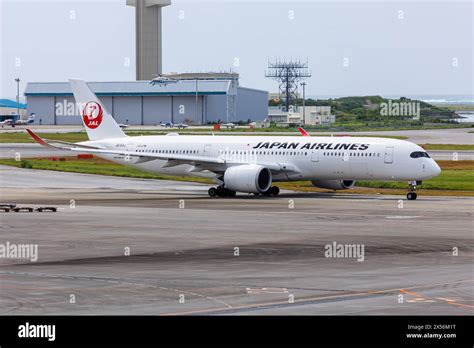
This mixture produces a strong market in which capacity matters. Japan Airlines’ A350-900 provides the airline with a large number of seats while offering passengers a modern cabin. The aircraft has become particularly important to JAL’s domestic fleet following its introduction in 2019, replacing older Boeing 777 aircraft on selected high-volume routes.
Haneda–Okinawa illustrates another important advantage of using an A350 domestically: fleet flexibility. An aircraft can operate a domestic rotation before or after an international mission, allowing the airline to extract more productive flying hours from an expensive long-haul asset. Rather than treating the A350 as an aircraft that belongs exclusively on intercontinental routes, JAL can deploy it where demand is strongest.
4. Singapore–Jakarta: A One-Hour A350-900 Workhorse
The fourth-ranked route is one of the most surprising. Singapore Airlines schedules 4,355 Airbus A350-900 flights between Singapore Changi and Jakarta Soekarno-Hatta International Airport in 2026. There are 2,178 departures from Singapore and 2,177 from Jakarta.
The cities are separated by roughly 550 miles (885 kilometers), and the flight typically lasts just over an hour. Yet this short international sector generates enough demand to support frequent A350-900 operations.
Singapore and Jakarta have exceptionally strong economic links. Singapore is a major source of investment into Indonesia, while Jakarta is home to multinational companies, financial institutions, regional headquarters, government organizations, and a huge consumer market. Business travelers therefore form an important component of the route, alongside leisure passengers and visiting-friends-and-relatives traffic.
The importance of Changi as a global connecting hub adds another layer. Some passengers boarding in Jakarta are not ultimately traveling to Singapore. They may be continuing toward Europe, North America, Australia, India, or another Asian destination. Consequently, the Singapore–Jakarta flight can function as one component of a much larger international journey.
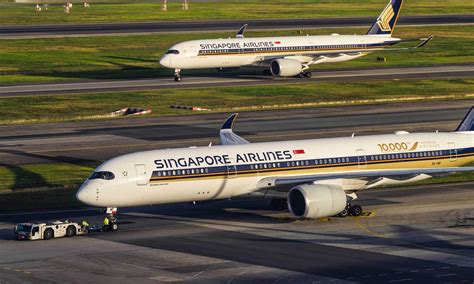
For Singapore Airlines, the A350-900 offers a useful balance of capacity, premium seating, cargo capability, fuel efficiency, and cabin quality. Operating the aircraft on a short sector may initially seem unusual, but high demand can make the strategy highly logical.
The route also demonstrates why airlines sometimes prefer larger aircraft over adding more departures. Airport slots are valuable, particularly at major hubs. A larger aircraft can move more passengers within existing operating windows, helping an airline maximize the value of scarce departure and arrival capacity.
5. Singapore–Brisbane: The Long-Haul A350-900 Benchmark
At number five, the ranking begins to look more like the traditional image of an A350 route. Singapore Airlines schedules 2,900 Airbus A350-900 flights between Singapore and Brisbane in 2026, with 1,450 flights in each direction.
The approximately 3,800-mile (6,100-kilometer) journey typically takes seven to eight hours. Unlike the short domestic and regional routes above it, this is a substantial long-haul operation where the A350-900’s original design philosophy becomes particularly relevant.
Australia has long been a major market for Singapore Airlines, and Brisbane has grown into an increasingly important destination. Queensland’s population, tourism industry, business community, and international connections generate strong demand. Singapore also functions as a major transfer point, allowing Brisbane passengers to connect with destinations throughout Southeast Asia, India, Europe, and beyond.
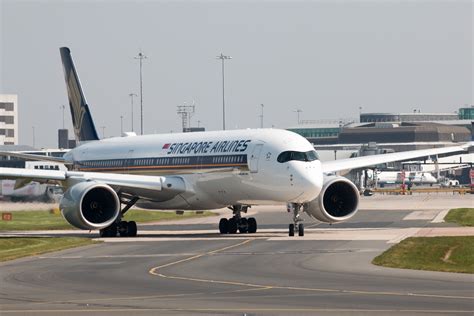
The A350-900 is especially well suited to the route because its range comfortably accommodates the mission while its efficiency helps support multiple daily frequencies. Passenger comfort is also valuable on flights approaching eight hours. The aircraft’s quieter cabin, larger windows, improved air quality, and lower cabin altitude can make a noticeable difference during a medium-to-long-haul journey.
Singapore Airlines’ deployment of the A350-900 on Brisbane services therefore represents the aircraft in its most conventional role. However, its position behind several short-haul routes reinforces the central finding of the 2026 ranking: frequency is driven by market demand, not simply by flight duration.
6. Hanoi–Ho Chi Minh City: Vietnam Airlines’ Domestic Widebody Giant
Vietnam Airlines takes sixth place with 2,685 Airbus A350-900 flights between Hanoi and Ho Chi Minh City during 2026. The schedule includes 1,345 flights from Hanoi and 1,340 from Ho Chi Minh City.
At roughly 720 miles (1,160 kilometers), the route typically takes slightly less than two hours. It connects Vietnam’s political capital in the north with its largest commercial and financial center in the south, making it one of the country’s most strategically important air corridors.
The route serves an exceptionally broad passenger base. Business travelers move between the country’s two largest economic centers, while tourists, government officials, students, and families generate additional demand. Vietnam’s expanding economy, rising incomes, and growing domestic tourism market have strengthened the underlying passenger base.
Vietnam Airlines’ use of the A350-900 on the route is also closely connected with fleet utilization. The carrier operates the aircraft on major international routes to destinations such as Europe and Australia, but domestic deployment allows these expensive widebodies to remain productive throughout their schedules.
For passengers, the arrangement can deliver a more premium experience than a conventional narrowbody service. For the airline, it provides additional seating and cargo capacity while giving the A350-900 a useful role between longer missions.
The Hanoi–Ho Chi Minh City route consequently stands as one of Southeast Asia’s clearest examples of widebody aircraft being used to solve a high-density domestic transportation problem.
7. Singapore–Hong Kong: Two Asian Aviation Hubs Linked by the A350
Rounding out the top seven is Singapore–Hong Kong, with 2,605 scheduled Airbus A350-900 flights during 2026. Singapore Airlines operates 1,302 flights from Singapore Changi and 1,303 from Hong Kong International Airport.
The route spans approximately 1,590 miles (2,560 kilometers) and takes just under four hours. It connects two of Asia’s most important financial and aviation hubs, creating strong demand from corporate travelers, tourists, and connecting passengers.
Competition is intense. Multiple airlines serve the market using aircraft ranging from Airbus A320-family narrowbodies to Boeing 777s and even Airbus A380s. Singapore Airlines therefore needs to balance capacity with the premium product expected by its customers.
The A350-900 provides an effective solution. Its cabin can support Business, Premium Economy, and Economy passengers while its operating economics remain attractive on a sector that is considerably shorter than the airline’s flagship services to Europe or North America.
For connecting passengers, aircraft consistency can also be valuable. A traveler arriving from Australia or Europe may continue through Singapore aboard an A350-900, maintaining a similar cabin environment over multiple sectors. That consistency is part of the broader premium-network strategy that has helped define Singapore Airlines.
What the 2026 A350-900 Route Ranking Reveals
The most important lesson from these seven routes is that the Airbus A350-900 has become far more versatile than its long-haul reputation suggests. Three of the seven busiest routes are domestic Japanese services, and another is a domestic Vietnamese trunk route. Several of the remaining international sectors are short enough to be completed in only a few hours.
Japan Airlines’ strategy is particularly revealing. The carrier has effectively transformed the A350-900 from a long-distance aircraft into a high-capacity domestic workhorse. With 9,268 flights on Haneda–Sapporo alone, the aircraft can accumulate extraordinary utilization while serving one of Japan’s most important passenger markets.
Singapore Airlines takes a different approach. Its A350-900 operations span short regional markets such as Singapore–Jakarta and Singapore–Hong Kong as well as substantially longer missions such as Singapore–Brisbane. That gives the airline considerable flexibility in matching aircraft capacity to demand.
Vietnam Airlines demonstrates the same principle on a national scale. The Hanoi–Ho Chi Minh City corridor is sufficiently busy to justify widebody capacity, allowing the carrier to use an aircraft designed for intercontinental flying on a domestic route of less than two hours.
Ultimately, the top seven Airbus A350-900 routes in 2026 are less about geographic distance than they are about airline economics. The A350-900 combines high capacity with excellent fuel efficiency, modern passenger amenities, long range, and operational flexibility. Those qualities allow airlines to deploy it wherever the numbers make sense.
The ranking also highlights a broader shift in aviation. Modern aircraft are increasingly judged by their ability to perform across an entire network rather than by one narrowly defined mission. On a 90-minute domestic flight, the A350-900 can provide capacity and efficiency. On an eight-hour international service, it can deliver the range and comfort expected from a flagship widebody. That versatility is precisely why the aircraft continues to play such an important role in airline fleet strategies.
With 9,268 flights on the busiest route alone, Japan Airlines’ Haneda–Sapporo operation sits in a category of its own. Yet the 8,442 flights to Fukuoka and 6,358 to Okinawa prove that this is not an isolated experiment. Across Asia, airlines are discovering that the A350-900 can be just as valuable on the world’s busiest short-haul corridors as it is above the world’s longest oceans.