The question of whether the Airbus A350-900 is more powerful than the Boeing 777-200ER sounds deceptively simple. Power, after all, feels like something that should be measured cleanly: bigger engines, higher thrust, stronger airplane. Aviation rarely cooperates with that kind of simplicity. What looks like a straightforward numbers game quickly turns into a story about changing design philosophies, evolving airline priorities, and a quiet redefinition of what “power” actually means in the modern jet age.
At first glance, the comparison seems unfair. These two widebody aircraft were born in different decades, shaped by different economic pressures, and optimized for different versions of long-haul flying. The 777-200ER, which entered service in the late 1990s, arrived at a time when airlines wanted brute strength: high payloads, long ranges, and the ability to muscle off runways in hot-and-high conditions with full fuel and cargo. The A350-900, certified almost two decades later, emerged into a world obsessed with fuel efficiency, emissions, noise reduction, and lifecycle cost.
That gap in philosophy is precisely why the question keeps coming back. Modern aircraft often feel more capable, even when the raw numbers say otherwise. The A350-900 climbs smoothly, cruises effortlessly for ultra-long distances, and does so while sipping fuel compared to older jets. To many observers, that looks like a new kind of power.
Understanding whether that impression matches reality requires stepping beyond slogans and marketing language and looking carefully at engines, airframes, airline operations, and real-world performance.
What “Power” Means in Commercial Aviation
In everyday language, power suggests strength or dominance. In aviation, the term is slippery. Engineers and pilots usually translate “power” into available engine thrust, particularly during takeoff and initial climb, when margins matter most. From that narrow perspective, more thrust equals more power, and comparisons are relatively easy.
Airlines, however, rarely think in such a single dimension. For them, power is inseparable from mission capability. An aircraft that can fly farther with less fuel, carry a meaningful payload, meet performance limits at constrained airports, and do so consistently and economically is, in practical terms, extremely powerful, even if its engines produce less maximum thrust.
This distinction is crucial. The 777-200ER was designed when excess thrust was seen as insurance. The A350-900 was designed when excess fuel burn became the real risk. Both approaches solve different problems, and both produce aircraft that excel in their intended environments.
The Short Answer, Stripped of Marketing
If power is defined strictly as maximum engine thrust, the answer is unambiguous. The Boeing 777-200ER is more powerful than the Airbus A350-900. Its engines produce higher maximum thrust, and no serious performance dataset contradicts this.
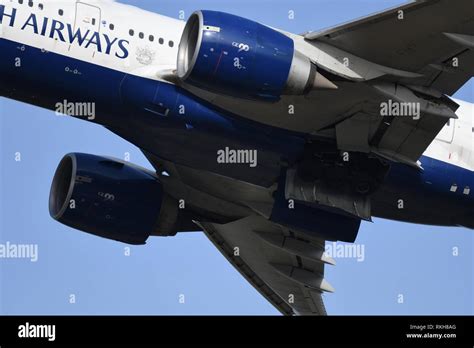
The 777-200ER typically flies with General Electric GE90 engines rated between 90,000 and 94,000 pounds of thrust, depending on the variant. That level of output made the aircraft one of the most muscular twinjets ever certified at the time of its introduction.
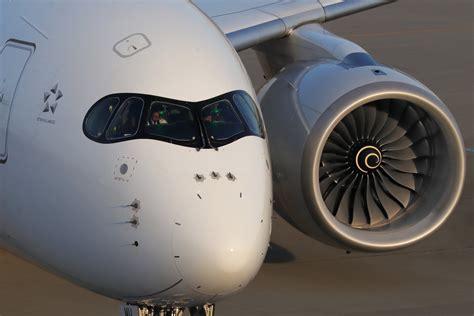
The A350-900, by contrast, uses the Rolls-Royce Trent XWB-84, producing roughly 84,000 pounds of thrust. That figure is impressive by modern standards but deliberately restrained. Airbus and Rolls-Royce did not chase higher numbers because they did not need to.
Yet this conclusion, while accurate, barely scratches the surface of why the A350 often feels more capable in airline service.
Engines: Brute Force Versus Intelligent Efficiency
The engines tell most of the story. The GE90 on the 777-200ER was revolutionary in the 1990s, not because it was subtle, but because it was enormous. Its massive fan diameter and high thrust rating allowed the 777 to lift heavy payloads from demanding airports with authority. Airlines valued that margin. It reduced operational compromises and expanded route options.
The downside was fuel burn. The GE90 was efficient for its era, but efficiency targets have moved dramatically since then. Noise standards, emissions limits, and fuel prices reshaped what airlines expect from an engine.
The Trent XWB reflects those new expectations. Rather than maximizing thrust, it maximizes specific fuel efficiency, meaning how much thrust it produces for each unit of fuel burned. Advanced materials, a very high bypass ratio, and finely tuned aerodynamics allow the A350-900 to achieve long-range performance without brute force.
From a pilot’s seat, the difference is subtle but real. The 777-200ER feels eager and forceful during takeoff. The A350-900 feels calm, deliberate, and relentlessly efficient. Both climb well. They simply get there by different philosophies.
Airframe Design and the Hidden Side of Power
Engines do not operate in isolation. The airframe wrapped around them determines how effectively thrust is converted into performance. This is where the A350-900 quietly gains ground.
The A350’s fuselage and wings are built largely from carbon-fiber composites, making the aircraft significantly lighter than older aluminum designs of similar size. Its wings feature advanced aerodynamics optimized for cruise efficiency, reducing drag across most of the flight envelope.
The 777-200ER, though robust and aerodynamically sound, reflects an earlier generation of design. Its heavier structure demands more thrust to achieve the same outcomes, especially over long distances.
As a result, the A350-900 can often match or exceed the 777-200ER’s range and payload performance per unit of thrust, which is why airlines perceive it as exceptionally capable despite lower engine ratings.

Real-World Proof From Airlines Operating Both Types
Theory becomes convincing when it survives contact with airline operations. Several carriers have flown both aircraft, providing a natural experiment in how power translates into daily performance.
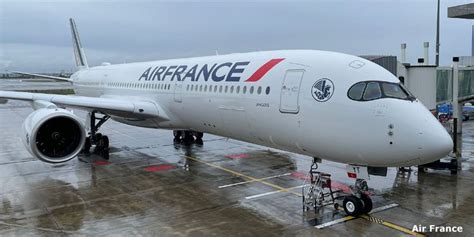
Air France offers a particularly clear example. The airline relied heavily on the 777-200ER for long-haul routes where payload flexibility and performance margins mattered. When the A350-900 entered the fleet, it was not treated as a downgrade. Instead, it replaced older widebodies precisely because it could handle comparable missions at far lower operating cost.
Pilots and planners noted that while the A350 lacked the raw thrust margin of the 777 in extreme conditions, it rarely needed it. Lower weight, better aerodynamics, and more efficient engines compensated almost entirely.
Singapore Airlines reached similar conclusions. After years of operating 777-200ERs on demanding routes, the carrier transitioned to the A350-900 for many missions. The result was improved fuel efficiency, reduced noise, and equal or better range performance, even though the installed thrust was lower.
These operational outcomes reinforce a key point: in modern airline service, effective power matters more than theoretical maximum thrust.
Comparing the Numbers Without Losing the Meaning
Numbers still matter, but they must be interpreted carefully.
The 777-200ER’s higher maximum takeoff weight reflects its older design priorities. It was built to carry more mass, supported by more thrust. The A350-900, lighter by design, needs less thrust to achieve similar mission outcomes.
This does not make the 777 obsolete or inferior. It makes it different. On routes involving extreme heat, short runways, or unusually heavy cargo loads, the 777-200ER’s brute strength remains valuable. On the majority of long-haul routes flown today, that excess capability often goes unused.
Power in the Context of the Wider Fleet
Looking beyond these two aircraft sharpens the picture. The Boeing 787 Dreamliner routinely flies ultra-long-haul routes with engines producing significantly less thrust than either the A350-900 or the 777-200ER. It succeeds because efficiency, not brute force, defines modern long-haul viability.
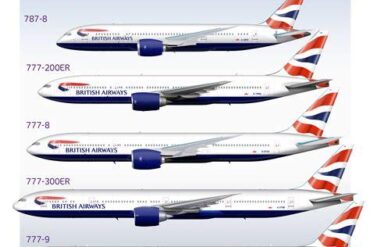
Even within the Boeing lineup, the contrast is instructive. The 777-300ER doubled down on thrust to support greater length and payload. The upcoming 777X attempts to balance that tradition with composite wings and improved efficiency, a tacit admission that raw power alone is no longer enough.
Seen against this backdrop, the A350-900 represents a midpoint. It retains enough thrust to satisfy demanding operators while fully embracing the efficiency-first philosophy that now dominates aircraft design.
Where the A350-900 Does Face Limits
Efficiency does not eliminate physics. There are scenarios where the A350-900’s lower thrust ceiling becomes noticeable. Operations from very hot-and-high airports at maximum payload can require more careful planning. The 777-200ER’s extra thrust margin offers flexibility in these edge cases.
This explains why some airlines kept 777-200ERs in service longer than expected on specific routes. Power, in its traditional sense, still has situational value.
Yet these cases are increasingly niche. For the majority of global long-haul operations, the A350-900’s performance envelope is more than sufficient, and its efficiency advantages dominate the equation.
So, Is the A350-900 More Powerful?
In strict mechanical terms, no. The Boeing 777-200ER remains more powerful, measured by maximum available thrust. That fact is clear, documented, and undisputed.
In practical airline operations, the answer becomes more nuanced. The Airbus A350-900 delivers comparable or superior mission performance with less thrust, lower fuel burn, and reduced environmental impact. By modern standards, that efficiency-driven capability is its own form of power.
The deeper truth is that aviation has changed its definition of strength. The A350-900 does not overpower the 777-200ER. It outthinks it. In doing so, it reflects an industry that now values intelligence, efficiency, and sustainability as much as raw force. In that sense, the A350-900 is not weaker at all. It is simply powerful in a way the 1990s never asked aircraft to be.