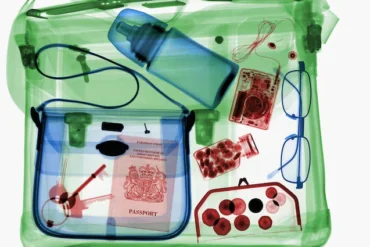
Air travelers have spent years learning the familiar rhythm of airport security: remove a laptop, separate liquids, place bags on the conveyor, and hope nothing inside attracts unwanted attention. For many passengers, the process has also contained a certain amount of uncertainty. An item could appear harmless on an X-ray image yet still trigger a manual inspection, while another object might pass through without attracting attention at all.
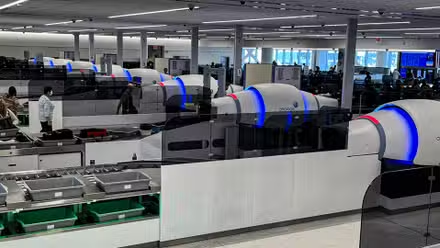
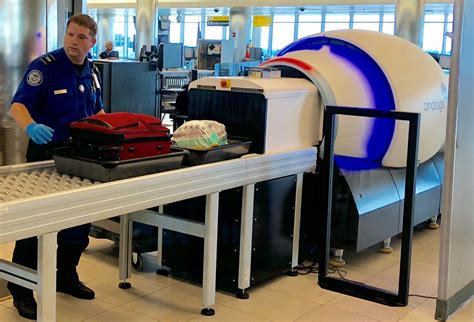
That margin for error is becoming smaller. The Transportation Security Administration (TSA) has been steadily replacing conventional checkpoint X-ray equipment with computed tomography, or CT, scanners capable of producing detailed three-dimensional images of carry-on luggage. The technology represents one of the agency’s biggest investments in checkpoint security, with contracts worth up to $1.3 billion covering more than a thousand machines.
The change is particularly significant for electronics and batteries. Power banks, which can look relatively ordinary when buried among cables, clothing, and other travel accessories, are subject to strict aviation rules because their lithium-ion batteries can pose a serious fire risk. For years, conventional screening technology and the sheer volume of passengers meant that some questionable items could escape closer scrutiny. CT scanners are making that increasingly difficult.
TSA’s $1.3 Billion CT Scanner Rollout Transforms Airport Security
The TSA’s investment in CT screening technology did not appear overnight. The agency began ordering its first CT systems in 2019, before expanding the program through major procurement contracts between 2021 and 2023. The combined value of those contracts could reach $1.3 billion if all available options were exercised, with the largest individual contract valued at as much as $781.2 million.
By April 2023, approximately 634 CT units had already been installed. The rollout has continued since then, reaching 1,162 machines at 296 airports by early July, according to the reference data. The scale matters because the TSA is not upgrading a handful of flagship airports. It is gradually changing the technology used at checkpoints throughout the United States.
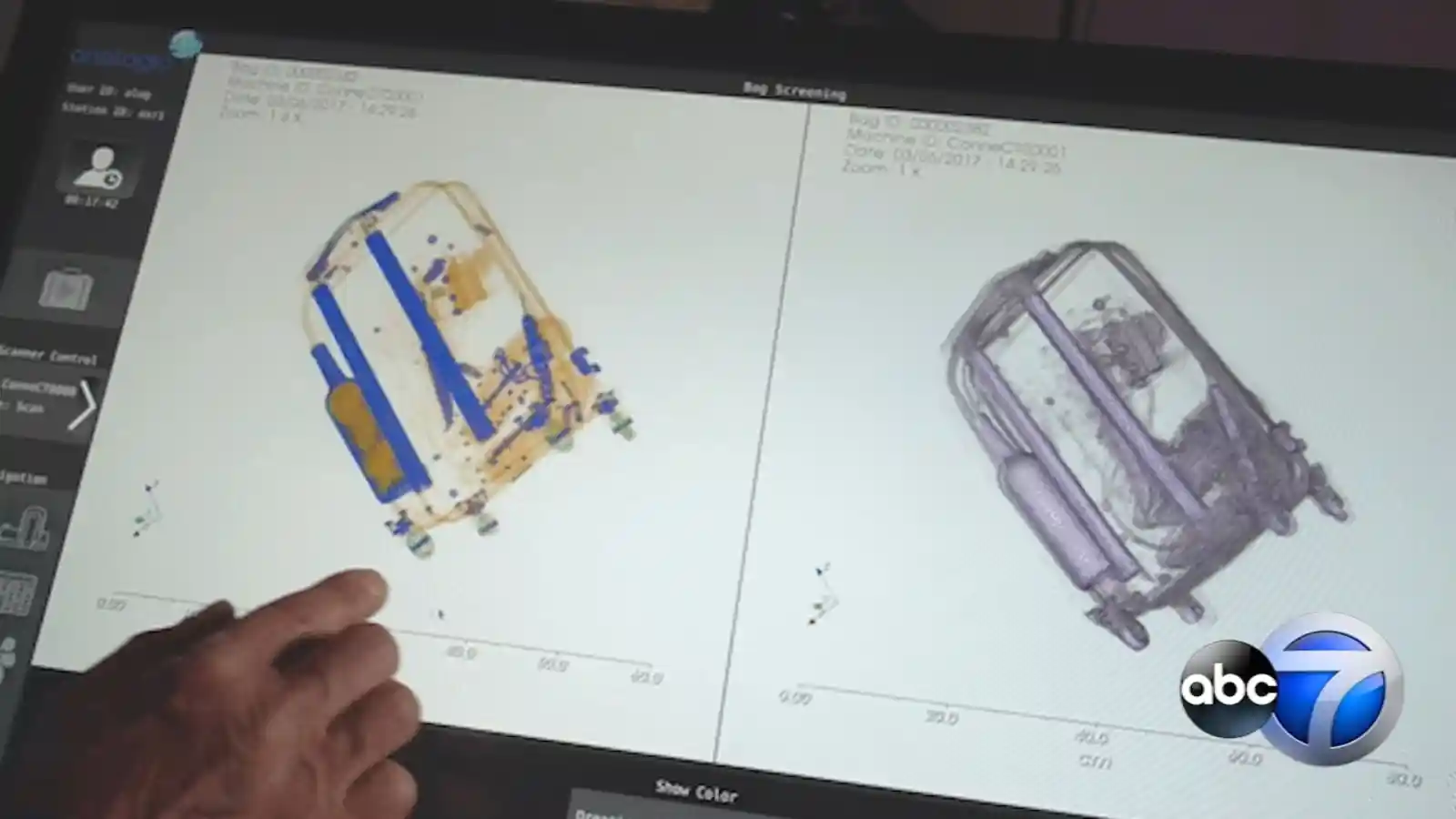
The fundamental difference is how these machines see luggage. Traditional checkpoint X-ray equipment generally produces a two-dimensional image, requiring officers to interpret overlapping objects and determine what may be hidden behind something else. A CT scanner instead collects hundreds of X-ray images while rotating around the bag. Those images are reconstructed into a detailed three-dimensional representation of the bag’s contents.
That additional dimension gives security officers something conventional X-rays cannot easily provide: the ability to manipulate the image. An officer can rotate the virtual bag, change the viewing angle, and examine objects from different perspectives without physically opening the luggage. What once looked like an ambiguous shape can become much easier to identify.
The TSA has described CT as its most consequential checkpoint technology. The agency’s objective is not simply to produce prettier images. It is to reduce the number of threats and prohibited items that can hide within crowded carry-on bags.
Why CT Scanners Can Spot Power Banks More Effectively
Power banks illustrate why the technological upgrade matters. A portable charger may not resemble an obviously dangerous object. It can look like another compact electronic accessory, particularly when surrounded by headphones, charging cables, laptops, tablets, and other devices.
The problem is that a power bank contains a battery, and spare lithium batteries are treated differently from many other consumer electronics under aviation regulations. The risk is not hypothetical. Lithium-ion batteries can experience thermal runaway, producing intense heat and potentially fire or smoke. In an aircraft cabin, where passengers and crew are confined inside a pressurized environment, a battery fire can become a serious emergency.
Conventional X-ray screening can identify many electronics, but overlapping objects can make interpretation more difficult. A CT system provides a much richer picture of what is inside the bag. Instead of asking an officer to mentally reconstruct an object from a flat image, the technology allows the officer to inspect its shape and position in three dimensions.
That does not mean every power bank will automatically be confiscated. Power banks are generally permitted in carry-on baggage when they meet applicable requirements, while spare lithium batteries and power banks are not permitted in checked baggage under FAA rules. Capacity limits and airline-specific restrictions can also apply.
The more important point is that CT technology makes enforcement more effective. A passenger who previously assumed an item would probably go unnoticed can no longer rely on the limitations of older screening equipment.
The Security Weaknesses That Helped Drive the Technology Upgrade
The TSA’s push toward CT screening also has a broader history. Earlier security testing exposed significant weaknesses in checkpoint screening. Reports from the Department of Homeland Security highlighted vulnerabilities involving screener performance, screening equipment, and procedures.
Undercover testing became especially embarrassing because investigators were able to attempt to move prohibited items through checkpoints. The reported failure rate exceeded 70 percent in one widely discussed assessment, even though that represented an improvement from an earlier test. The attempted items reportedly included fake firearms, knives, and explosives.
Those findings did not mean that millions of passengers were routinely walking through airports carrying dangerous weapons. They did, however, demonstrate that airport security is only as effective as the technology, procedures, and people operating it.
TSA Administrator David Pekoske subsequently discussed efforts to improve screening, including the deployment of CT technology. The logic was straightforward: if officers can obtain a more comprehensive view of a bag, they should have a better chance of identifying something concealed inside it.
The technology therefore addresses two problems at once. It improves the ability to identify genuine threats while potentially reducing unnecessary manual inspections. That combination is important because airport checkpoints process passengers on a remarkable scale.
More Than 900 Million Passengers Were Screened in 2025
The numbers explain why even a small improvement in screening technology can have enormous consequences. TSA statistics for 2025 show that the agency screened approximately 906.7 million passengers and around 2.1 billion carry-on bags.
The agency also recorded more than one million prohibited items discovered in carry-on luggage and 6,669 firearms at checkpoints. The busiest screening day of 2025 saw approximately 3.1 million passengers processed on November 30.
Those figures create an extraordinary operational challenge. Officers must make decisions quickly while examining an almost endless stream of bags containing thousands of different consumer products.
In that environment, technology that eliminates ambiguity can be extremely valuable. A conventional X-ray image may leave an officer wondering whether an unusual shape is an innocent electronic device or something requiring further investigation. A CT image can provide additional context.
This is where the statement from TSA employee and American Federation of Government Employees representative Johnny Jones becomes particularly relevant. He described the newer technology as the difference between seeing something that previously could remain hidden and seeing it clearly. The practical advantage is that CT reduces guesswork.
For travelers, however, that improvement has an unintended consequence: items that once slipped through may now be discovered.
Power Banks Are Not Newly Dangerous—They Are Easier to Detect
It is important not to confuse improved detection with a sudden change in the underlying rules. The rules governing power banks have existed for years.
The FAA requires spare lithium-ion and lithium-metal batteries, including power banks and charging cases, to be carried in carry-on baggage rather than checked luggage. Rechargeable lithium-ion batteries are generally limited to 100 watt-hours for standard passenger carriage, although certain larger batteries may be permitted with airline approval under specific conditions.
The reason is rooted in fire safety. If a lithium battery begins overheating in a passenger cabin, crew members can potentially identify and respond to the problem. A battery fire inside the cargo hold is much harder to detect and address quickly.
This explains why a passenger can legally carry a power bank onto an aircraft while being prohibited from placing the same spare battery in checked luggage.
The CT rollout does not suddenly make these regulations stricter. Instead, it gives the TSA a better mechanism for finding items that passengers may have packed incorrectly or misunderstood.
That distinction matters. The technology is not quietly inventing new restrictions. It is reducing the gap between what the rules say and what airport security can actually detect.
Why Travelers May Notice More Power Bank Confiscations
Passengers who have traveled for years may reasonably wonder why an item they carried through security repeatedly is suddenly attracting attention. The answer may be less dramatic than it appears.
Older screening systems had limitations. Bags were also processed at extraordinary speed, and officers had to interpret complicated images while maintaining passenger flow. An item that was technically prohibited could therefore pass through without being identified.
CT scanners change that equation.
The clearer images mean officers can identify individual objects more confidently. A power bank tucked beneath clothing or positioned alongside other electronics is less likely to disappear into visual clutter. If its characteristics raise a concern, an officer can examine the virtual image from multiple angles before deciding whether a physical inspection is necessary.

This is also why passengers should not interpret an earlier successful trip as evidence that an item is permitted. Getting through security is not the same thing as complying with the rules. A passenger may simply have benefited from a limitation in the screening process.
As CT deployment expands, that distinction becomes increasingly important.
The Passenger Experience Is Improving in Another Important Way
There is an irony to the CT rollout. The technology is making security more capable while simultaneously making some aspects of the checkpoint experience easier.
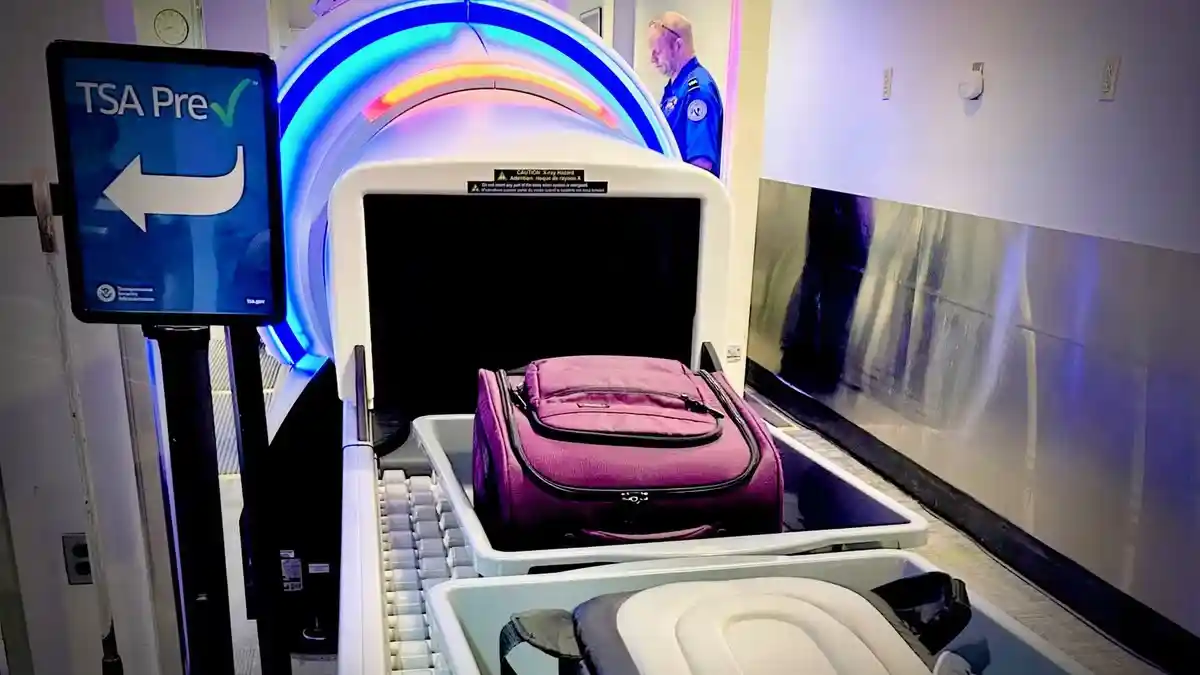
At many CT-equipped lanes, passengers no longer need to remove ordinary laptops and permitted travel-sized liquids from their carry-on bags. Instead, the scanner can examine the contents while they remain inside.
That can reduce the amount of unpacking and repacking passengers have to perform. It can also reduce congestion caused by travelers searching through bags for electronics or toiletries immediately before reaching the screening equipment.
In theory, fewer bags should also require manual inspection because officers can resolve more questions using the CT image itself. Whether that consistently translates into faster checkpoints depends on airport staffing, passenger volume, equipment availability, and local procedures.
The technology is therefore not a magic solution to every airport-security delay. But it does fundamentally change the information available to screeners.
The New Reality for Frequent Flyers
The most important lesson for travelers is simple: do not pack based on what airport security used to miss.
A power bank that made it through five previous trips without being questioned is not necessarily compliant. The same principle applies to batteries, electronic accessories, smart luggage, and other items whose rules may be less intuitive than those governing obvious weapons.
Frequent flyers should check current TSA and FAA guidance before packing, particularly when carrying unusually large batteries or multiple power banks. Airline policies should also be considered because carriers can impose additional requirements beyond baseline federal rules.
The CT rollout is ultimately about closing the gap between the contents of a passenger’s bag and what security officers can actually see. For years, conventional X-rays provided a useful but imperfect window into carry-on luggage. Three-dimensional CT imaging makes that window considerably clearer.
That is good news for aviation security, but it also means passengers have less room for accidental noncompliance.
CT Scanners Are Quietly Changing What Gets Through Security
The TSA’s multibillion-dollar investment is easy to overlook because most passengers experience it as little more than a new machine at the end of a conveyor belt. Yet the underlying change is substantial.
The agency is deploying technology designed to see through the complexity of modern carry-on luggage with far greater precision. In a world where travelers carry laptops, tablets, cameras, chargers, power banks, spare batteries, smart devices, and countless accessories, that capability has become increasingly important.
Power banks are a particularly revealing example. They are ordinary consumer products, but their lithium-ion batteries carry risks that aviation regulators take seriously. As CT scanners become widespread, the chance that a questionable power bank will simply disappear into the visual clutter of a carry-on bag is becoming smaller.
For passengers, the message is not that every portable charger is about to be confiscated. It is that the old assumption that airport security might overlook something is becoming increasingly unreliable.
The TSA spent billions to make checkpoint screening more capable. One of the quiet consequences is that objects conventional X-rays sometimes failed to distinguish clearly—including certain batteries and power banks—are now much easier to identify.
The technology may make the airport security line smoother in some respects, but it also makes the rules harder to ignore. In the era of TSA CT scanners, what is inside a carry-on bag is increasingly visible from every angle.