The modern traveler is a connected traveler, and keeping devices charged on the go is no longer a luxury but a necessity. From smartphones and tablets to handheld gaming consoles like the ASUS ROG Ally and even laptops, our digital lives demand constant power. This is where the humble power bank becomes an indispensable travel companion. Yet, a persistent cloud of confusion hovers over just how much power bank capacity one can legally and safely carry on an airplane. Many believe a strict 100 Watt-hour (Wh) limit is the final word, often citing popular models like the Anker 737 PowerCore III Elite 26K (actually 24,000mAh, around 88.8Wh) as pushing the upper echelons of what’s permissible. However, this common understanding doesn’t paint the full picture, especially for travel within jurisdictions like the United States. The reality is often more generous, allowing for significantly larger capacities, provided you understand the nuances of airline and aviation security regulations.
This comprehensive guide will delve deep into the regulations surrounding power bank capacities for air travel, specifically addressing the often-misunderstood 100Wh versus 160Wh limits. We’ll explore the rules set forth by the Transportation Security Administration (TSA), examine the policies of major airlines, and clarify the critical distinction between different types of battery carriage. By the end, you’ll be equipped with the knowledge to choose the right power bank for your needs and navigate airport security with confidence, ensuring your devices stay powered throughout your journey. Forget the hearsay and assumptions; it’s time to uncover the facts about flying with high-capacity power banks.
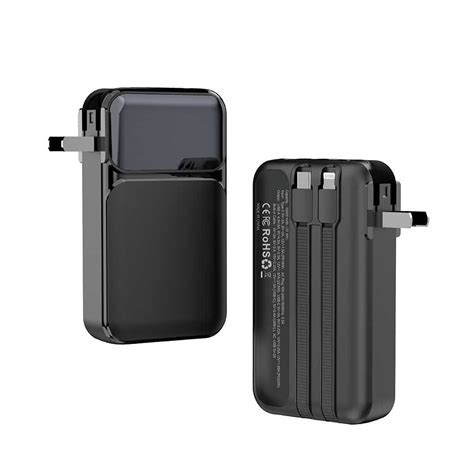
At the heart of these regulations is the Watt-hour (Wh) rating, the universal metric used by airlines and safety authorities to measure battery capacity. While many consumers are more familiar with milliamp-hours (mAh), the Wh rating provides a more standardized measure of the total energy stored, regardless of the battery’s voltage. Understanding this distinction is crucial. A power bank’s capacity in mAh alone doesn’t tell the whole story without knowing its voltage. The formula to convert mAh to Wh is: (mAh / 1000) x Voltage = Watt-hours (Wh). Most portable power banks use lithium-ion cells with a nominal voltage typically around 3.6V or 3.7V. For instance, a 27,000mAh power bank operating at 3.7V would be approximately 99.9Wh (27000/1000 * 3.7), placing it just under the 100Wh threshold. Conversely, a 43,000mAh power bank at the same 3.7V would be around 159.1Wh, fitting snugly under the 160Wh limit. Always check the manufacturer’s specifications, as the Wh rating is often printed directly on the device casing – a detail that can save you considerable hassle at security checkpoints.
The Pervasive 100Wh Guideline: Understanding Its Origins
The belief that 100Wh is the absolute maximum capacity for any power bank on a flight is widespread. This isn’t entirely baseless, as 100Wh does represent a significant benchmark in lithium battery transport regulations. For lithium batteries contained within a device (like the battery in your laptop or phone), the limit is indeed often set at or below 100Wh. This is a primary source of the confusion. Many travelers understandably, but incorrectly, extrapolate this rule to cover all portable battery types, including power banks. The simplicity of a single, catch-all number is appealing, but it overlooks specific provisions for spare lithium batteries, a category under which power banks squarely fall.
The TSA’s general guidance states: “Lithium batteries with 100 watt hours or less in a device.” This part of the rule is clear and contributes to the 100Wh perception. However, the regulations for spare batteries, which are those not installed in a device (and this explicitly includes power banks and cell phone battery charging cases), are different and offer more leeway. It’s this distinction that opens the door for higher capacity power banks, provided other conditions are met.
Unlocking More Power: The 160Wh Allowance for Spare Batteries
Herein lies the crucial detail often missed: the special allowance for larger spare lithium-ion batteries. According to the TSA, “Spare (uninstalled) lithium ion and lithium metal batteries, including power banks and cell phone battery charging cases, must be carried in carry-on baggage only.” This is the first critical point – power banks are unequivocally considered spare batteries and must never be placed in checked luggage due to fire risk in the cargo hold where an incident might go undetected and unaddressed.
More importantly, the TSA further clarifies: “With airline approval, passengers may also carry up to two spare larger lithium ion batteries (101–160 Wh).” This statement is a game-changer. It explicitly permits power banks with capacities significantly exceeding 100Wh, going all the way up to 160Wh. This translates to roughly 43,000mAh at 3.7V, a substantial amount of portable power capable of charging a modern smartphone many times over or even significantly boosting a laptop or handheld gaming device like the Steam Deck or ROG Ally. The key phrase here is “with airline approval.” This doesn’t necessarily mean you need to call the airline for individual permission each time you fly with a 120Wh power bank. Instead, “airline approval” typically refers to the airline’s published policies on battery carriage. If an airline’s official website or conditions of carriage state that batteries up to 160Wh are permitted under certain conditions, that constitutes the required approval.
A Closer Look at Major US Airline Policies
To illustrate how this “airline approval” manifests, let’s examine the published policies of several major US airlines, as these often set a precedent or align with international standards, though variations always exist. It’s vital to always check the specific airline you are flying with, especially for international routes.
American Airlines
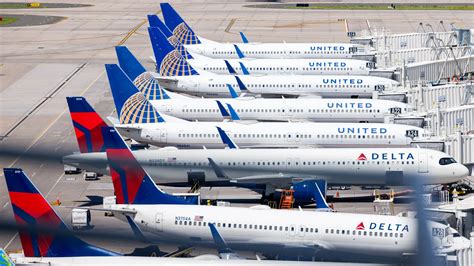
American Airlines provides clear guidance on lithium-ion battery acceptance by Watt-hour. Their policy states: “Lithium-ion battery acceptance by Watt-hour (Wh): 100 – 160 Wh – 2 spares in carry-on bag.” This explicitly allows passengers to bring up to two spare batteries, each with a capacity between 100Wh and 160Wh, in their carry-on luggage. This is a direct confirmation of the expanded allowance.
United Airlines
United Airlines echoes this sentiment. Their policy on lithium batteries specifies: “We allow up to two lithium batteries larger than 100 watt-hours but not exceeding 160 watt-hours to be packed in carry-on baggage only.” Again, the allowance for two units, each up to 160Wh, is clearly stated, with the crucial stipulation that they must be in carry-on baggage.
Delta Air Lines
Delta Air Lines also aligns with this higher threshold. Their rules for lithium-ion batteries state: “Passengers are permitted to travel with lithium ion batteries that contain a maximum of 160-watt hours per battery. Lithium ion batteries not installed in a device (spares) must be in carry-on baggage and no more than two (2) spares between 100 and 160-watt hours are allowed.” Delta’s policy reinforces the 160Wh per battery limit and the allowance for up to two such spare batteries in the 100-160Wh range.
These examples from three major US carriers demonstrate a consistent pattern: spare lithium-ion batteries, which include power banks, are indeed permissible up to 160Wh, often with a limit of two such units per passenger, exclusively in carry-on baggage. This significantly expands the charging capabilities for travelers compared to a strict 100Wh interpretation.
The Critical Distinction: Spare Battery vs. Battery in Device
The ambiguity often arises from failing to differentiate between a battery installed in a device and a spare battery. As highlighted by the TSA, power banks are explicitly classified as spare batteries. This means they are subject to the rules for spare batteries, not the (potentially more restrictive) rules for batteries contained within electronic devices like laptops or cameras. This classification is pivotal. While a very large, custom-built device with an internal battery exceeding 100Wh might face scrutiny or require special permissions, a standalone power bank up to 160Wh generally falls under the spare battery allowance when carried in hand luggage and approved by the airline’s policy.
It’s also worth noting a comment from the reference material suggesting that for batteries under 100Wh, the rules are even more lenient: “In your carry on, you can bring as many 0-100 Whr battery banks as you want.” While the exact number might be subject to a “reasonable quantity” interpretation by security or the airline, the general principle is that multiple smaller power banks (e.g., several 20,000mAh/74Wh units) are typically less of a concern than single, very large units, as long as they are all under the 100Wh individual threshold and for personal use.
Real-World Experiences: Navigating Security with Larger Power Banks
Anecdotal evidence often provides valuable insights into how these rules are applied in practice. One traveler reported successfully taking a 30,000mAh power bank (which, depending on voltage, could be around 111Wh at 3.7V) on two domestic US flights without any issues from TSA agents. Another individual confirmed flying to Peru and back with an Anker 737 (88.8Wh) without problems, highlighting that even for some international travel, well-known and compliant power banks pass through smoothly. These experiences suggest that as long as the power bank is within the permissible limits and clearly labeled, security passage is often uneventful.
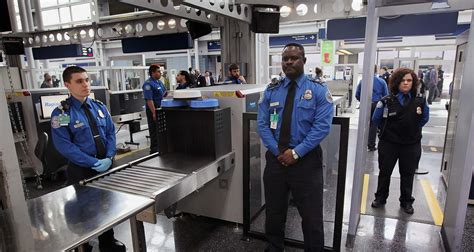
However, it’s also crucial to acknowledge the element of TSA agent discretion. One user recounted an experience from a few years prior where they flew with Milwaukee tool batteries, some of which were rated at 162Wh (technically just over the 160Wh limit). While mostly successful, one TSA agent did express concern, suspecting they might be “explosive devices.” This underscores that while regulations provide a framework, the interpretation by individual officers can vary. Being prepared, polite, and having documentation (like a printout of the airline’s battery policy) can be helpful if questioned.
Navigating the Complexities of International Travel
While the 160Wh allowance for spare batteries is relatively common for US domestic flights and some international carriers, international travel introduces greater variability. Regulations can differ significantly from one country to another, and even between different international airlines. Some countries or their Civil Aviation Authorities may impose a stricter 100Wh limit for all power banks, regardless of airline approval. Therefore, if your itinerary includes international flights, it is absolutely essential to research the specific lithium battery regulations for:
- The departing country.
- The arrival country.
- Any transit/layover countries.
- Each airline you will be flying with.
Failing to do so could result in your power bank being confiscated. Generally, sticking to power banks well under 100Wh, or a very popular and clearly marked model like the Anker 737, is a safer bet for complex international itineraries unless you have verified the rules for all jurisdictions involved. The common refrain that international flights are “tougher” on battery limits holds true due to this lack of universal standardization beyond the baseline ICAO (International Civil Aviation Organization) recommendations, which individual states may interpret or augment.
Preparing for Your Flight: Best Practices for Traveling with Power Banks
To ensure a smooth journey with your power banks, regardless of their capacity, adhere to these best practices:
- Always in Carry-On: This cannot be stressed enough. Lithium batteries, including power banks, are prohibited in checked baggage due to fire risks. They must be carried in the cabin with you.
- Verify Airline Policy: Before each trip, especially if flying with a new airline or internationally, check the airline’s most current baggage policy regarding lithium batteries. Look for Watt-hour (Wh) limits for spare batteries/power banks.
- Ensure Clear Labeling: Your power bank should have its capacity clearly marked, preferably in Watt-hours (Wh). If only mAh and Voltage (V) are listed, ensure you know the Wh conversion and that this information is legible. Power banks with missing or illegible labels are far more likely to be questioned or confiscated.
- Protect from Short Circuits: Prevent short circuits by keeping power banks in their original retail packaging, covering terminals with tape, or placing each battery in a separate plastic bag or protective pouch. Avoid letting them come into contact with metal objects like keys or coins in your bag.
- Consider Multiple Smaller Banks: If you’re concerned or traveling to a region with unclear rules, carrying two or three smaller power banks (e.g., 70-99Wh each) might be a less scrutinized option than one very large one, aligning with the “as many under 100Wh” principle.
- Charge Levels: While not a strict rule for carriage, some advise against traveling with power banks at full 100% charge or completely depleted. A partial charge (e.g., 30-70%) is sometimes considered safer for lithium batteries during transport, though official regulations focus on Wh capacity and carriage location.
- Be Prepared for Inspection: Have your power banks easily accessible in your carry-on, as you may be asked to remove them for separate screening, similar to laptops.
- Have a Contingency Plan: As one user wisely suggested, if traveling with a power bank that’s pushing the limits and you’re unsure, having someone not flying with you at the airport who could take the item if it’s denied can prevent you from having to abandon an expensive piece of gear.
Choosing the Right Power Bank for Seamless Travel
When selecting a power bank with air travel in mind, consider these factors:
- Clearly Marked Capacity: Prioritize brands that clearly label the Wh rating or at least mAh and Voltage. Reputable brands like Anker, Belkin, Zendure, or RAVPower (though availability varies) often have good labeling and are generally recognized.
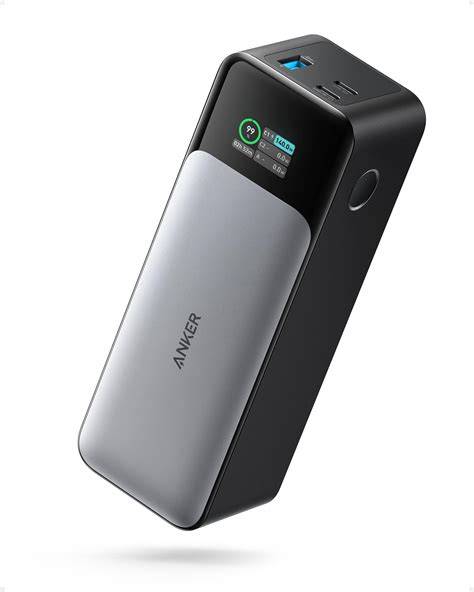
- The Sub-100Wh Sweet Spot: Power banks like the Anker 737 Power Bank (PowerCore 24K), with its 24,000mAh capacity equating to 88.8Wh, are excellent choices. They offer substantial power, fast charging capabilities for multiple devices (including some laptops via USB-C PD), and fall comfortably under the 100Wh threshold, making them universally accepted on virtually all flights worldwide, provided they are in carry-on luggage.
- The 101-160Wh Powerhouses: If your domestic US travel (or travel on airlines with confirmed 160Wh policies) demands more power, options up to around 43,000mAh (at 3.7V) become viable. These are ideal for extended trips, charging high-drain devices like gaming handhelds or multiple recharges of laptops. Always double-check airline policy before opting for these larger units.
- Quality and Safety Features: Invest in power banks from reputable manufacturers that include safety features like overcharge protection, short circuit protection, and temperature control. Cheaper, unbranded power banks may not only pose safety risks but are also more likely to attract scrutiny from security personnel.
The Final Charge: Travel Confidently with Your Power Bank
The fear of having a power bank confiscated at airport security often leads travelers to err on the side of extreme caution, sometimes unnecessarily limiting their portable power options. While the 100Wh limit is a crucial benchmark, particularly for batteries within devices and as a general guideline for many international contexts, it is not the absolute ceiling for power banks carried as spare batteries in carry-on luggage, especially within the US and on airlines that explicitly permit higher capacities.
The regulations, spearheaded by bodies like the TSA and adopted by individual airlines, clearly allow for up to two spare lithium-ion batteries (including power banks) per passenger, each with a capacity of up to 160Wh, provided they are in carry-on baggage and the airline’s policy (the “airline approval”) allows for it. This opens up a significant range of higher-capacity power solutions for tech-savvy travelers.
Ultimately, informed travel is smart travel. By understanding the nuances of Watt-hours, the distinction between spare batteries and those in devices, and by always verifying the specific policies of your airline and any transit or destination countries, you can confidently select and carry the power bank that best suits your needs. Stay charged, stay connected, and let your journey be powered by knowledge and the right preparation.