
Canada’s aviation landscape has been the subject of intense scrutiny in recent years, particularly as passengers, industry critics, and policymakers debate whether the domestic airline market is fair, competitive, and affordable. In response to growing discourse, Air Canada—the nation’s flag carrier and largest domestic airline—has submitted a detailed report to the Competition Bureau of Canada, aiming to dismantle prevailing misconceptions and present a fact-based view of the airline industry’s complexities.
In this landmark submission, Air Canada not only challenges popular myths about air travel pricing and market competition but also presents an insightful narrative on the structural and geographic realities unique to the Canadian market. With an extensive domestic network that includes major urban hubs and remote communities alike, Air Canada asserts that genuine competitiveness must be understood through the lens of sustainability, scale, and systemic challenges—not just the number of airline operators.
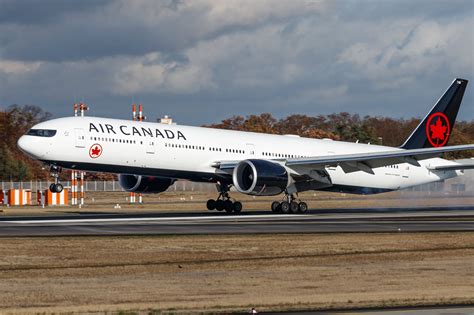
Myth 1: Air Travel in Canada is Overpriced
One of the most persistent narratives in Canadian media and consumer advocacy circles is that domestic airfares are unjustifiably high, often compared unfavorably to prices in the U.S. or Europe. Air Canada acknowledges this perception but refutes it with key contextual evidence. Unlike smaller nations or those with dense urban corridors, Canada’s sheer geographical expanse—spanning over 9.9 million square kilometers—creates immense logistical challenges.
For instance, flying from Vancouver to Halifax covers a distance of approximately 4,400 kilometers, comparable to a transcontinental flight in the U.S., but without the benefit of a dense population to support economies of scale. According to the airline’s submission, costs associated with fuel, maintenance, airport fees, and crew deployment are magnified by long sectors, harsh winter operations, and lower passenger volumes on many routes.
Moreover, regulatory compliance, including bilingual service mandates, heightened security protocols, and obligations to serve remote communities, adds to operational expenditures. When adjusted for these realities, Air Canada maintains that its pricing structure is competitive and often subsidized on unprofitable routes, especially in northern and rural regions.
Myth 2: Limited Competition Drives High Prices
Another oversimplified assumption tackled in the submission is that a lack of competitors is the primary reason for elevated fares. Air Canada argues that while competition can influence pricing dynamics, it is not the sole or even dominant factor in the Canadian context.
The airline emphasizes that low population density, airport infrastructure limitations, and regional isolation create a naturally high-cost environment where only a few carriers can operate sustainably. Many parts of Canada are served by airports with low traffic volumes, necessitating higher per-passenger costs for terminal services and runway maintenance. In such markets, adding more airlines may not be economically viable.
Air Canada further warns against the “illusion of competition” often presented by short-lived entrants. While new players may temporarily reduce prices, they frequently exit the market after failing to turn a profit, leaving travelers with fewer options in the long run. The airline stresses that over-regulation in pursuit of competition could backfire, forcing carriers to scale back services on thin routes and undermining network cohesion.
Myth 3: More Airlines Automatically Mean Better Service and Lower Prices
The call for more domestic competitors is another myth addressed with clarity. Air Canada outlines that adding more carriers to an already fragile ecosystem does not guarantee lower prices or enhanced service. It draws attention to existing low-cost and regional airlines—such as Flair Airlines, WestJet, and Porter Airlines—that already cater to budget-conscious travelers and specific routes.
Introducing additional entrants without addressing the underlying structural barriers, such as airport access, gate availability, and capital intensity, is unlikely to yield sustainable benefits. Many new carriers, the airline notes, lack the fleet size, route coverage, and operational resilience to withstand the volatility of Canada’s aviation market, especially in winter months or during economic downturns.
Instead, Air Canada proposes a focus on enhancing the efficiency and viability of existing airlines. Supportive policy measures—like streamlined airport fees, competitive fuel sourcing, and equitable slot allocation—would do more to stimulate healthy competition than simply allowing more airlines into a constrained marketplace.
Air Canada’s Strategic Role in a Competitive Market
As Canada’s largest airline, Air Canada acknowledges its pivotal role in shaping domestic air travel. With an unparalleled network covering both urban and remote destinations, the airline reiterates its commitment to equitable access and high service standards across all provinces and territories.
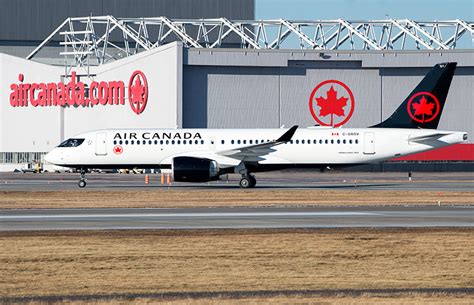
The submission underscores how Air Canada’s investments in fleet modernization, digital innovation, and sustainable aviation fuel research are direct contributions to long-term competitiveness. For example, the introduction of next-generation aircraft such as the Airbus A220 and Boeing 737 MAX improves fuel efficiency, reduces per-seat costs, and allows better matching of capacity with demand on regional routes.
Beyond hardware and operations, Air Canada is also refining its loyalty ecosystem through Aeroplan, improving consumer experience via AI-driven digital platforms, and integrating customer-centric practices throughout its service model. All these investments aim to keep the airline competitive not only in price but in value and reliability—areas consumers prioritize when selecting air travel providers.
Competition Requires Balance, Not Deregulation
The submission repeatedly emphasizes the need for measured, evidence-based regulatory interventions rather than blanket liberalization. Air Canada warns that unfettered deregulation could lead to market fragmentation, loss of essential services in less-profitable regions, and a race to the bottom in safety or service quality.
Maintaining a viable air network in a country with remote First Nations communities, resource-dependent towns, and cross-border hubs is a complex challenge. The airline calls for government partnership in developing infrastructure, such as regional airport improvements and investments in air traffic control modernization, which would benefit all carriers.
Additionally, it proposes that the Competition Bureau examine barriers to operational efficiencies, including provincial tax regimes, cross-border airspace management, and aircraft leasing frameworks, rather than merely focusing on the number of competitors.
A National Carrier’s Commitment to Long-Term Value
Air Canada presents itself not merely as a business enterprise but as a national enabler of mobility, economic development, and social connection. Its submission is rooted in the understanding that aviation serves broader public policy objectives beyond market economics. The ability for a nurse in Thunder Bay to reach a hospital conference in Ottawa, or for a student in Whitehorse to return home from university in Toronto, depends on a resilient and well-managed air travel system.
To fulfill this role, Air Canada must remain profitable, adaptable, and aligned with both market needs and national goals. The airline’s strategic vision includes continuous investments in green technology, staff training, and route optimization—tools that support both competition and connectivity.
Policy Recommendations and Collaborative Outlook
Looking forward, Air Canada urges policymakers to engage with the industry in crafting a roadmap for aviation sustainability and access. Key recommendations include:
- Incentives for sustainable aviation fuel (SAF) adoption, including tax credits and R\&D funding.
- Airport fee rationalization, especially at smaller airports where high fees disproportionately impact ticket prices.
- Infrastructure investment in Northern and Indigenous communities to support year-round connectivity.
- Balanced competition policies that prevent predatory pricing, ensure safety compliance, and maintain service reliability.
Air Canada reaffirms its willingness to work with other airlines, government bodies, and consumer advocates to ensure Canadian aviation remains robust, safe, and inclusive.
Conclusion: Shaping the Future of Canadian Aviation
In its submission to the Competition Bureau, Air Canada articulates a compelling case that challenges myths with grounded operational realities. Rather than reducing competition to a simplistic headcount of airlines, the report calls for a nuanced approach that considers geography, economics, infrastructure, and public service obligations.
The carrier’s position is not to avoid competition but to ensure it takes place in an environment that supports service quality, sustainability, and nationwide connectivity. In doing so, Air Canada asserts its role not just as a market leader, but as a steward of national mobility in one of the world’s most demanding aviation environments.