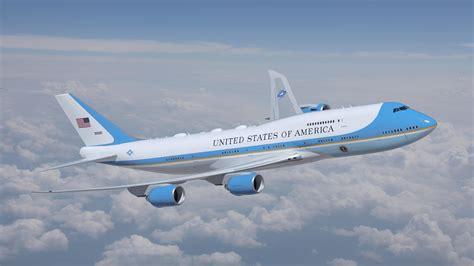
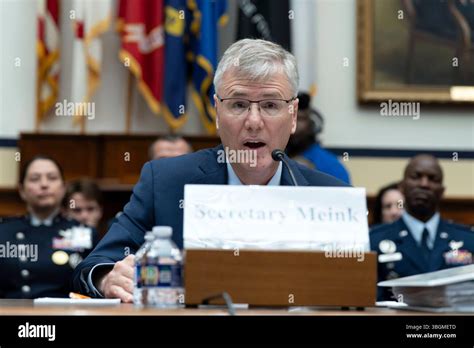
The U.S. Air Force’s plan to retrofit a Qatari Boeing 747-8 into a fully equipped Air Force One aircraft has sparked intense scrutiny in Washington, but Secretary of the Air Force Troy Meink has drawn a firm line: the total cost will remain below $400 million. Speaking before the House Armed Services Committee on June 5, Meink stated that while the retrofitting of a civilian airliner into the most sophisticated flying command center on Earth is no small task, the figures currently circulating—some of which claim the final bill will cross the $1 billion mark—are greatly exaggerated.
The Secretary emphasized that the budget includes not only structural and security overhauls, but also spare parts acquisition, a critical element for maintaining operational readiness. Despite being pressed by Democratic Representative Joe Courtney of Connecticut, Meink refused to delve into specifics, citing national security and classification restrictions surrounding Air Force One’s technical specifications.
Retrofitting the 747-8: Security, Sophistication, and Surprises
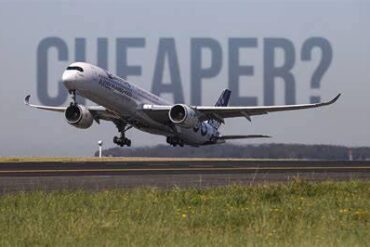
Converting a civilian aircraft designed for luxury into a flying fortress that can withstand both nuclear conflict and cyberattacks is not a straightforward task. The aircraft, a Boeing 747-8 once operated by Qatar, is currently parked in San Antonio awaiting a formal conversion contract, according to statements provided to CNN. The Department of Defense confirmed preparations are underway, but further details were withheld due to classification protocols.
The process of converting the jet—originally tailored for a royal clientele—into the U.S. President’s primary mode of transport will involve integrating advanced communications systems, countermeasures for missile threats, secure command and control infrastructure, in-flight medical facilities, and of course, the full suite of defensive and offensive tools expected of a nuclear command post in the sky.
While the 747-8 boasts newer airframe technologies compared to the older VC-25As, its current configuration is not suited for the extensive demands of Air Force One’s presidential mission profile. To retrofit it will require deep modifications across every structural and electronic layer of the aircraft.
Presidential Jet Shopping: Trump’s Legacy and the Qatar Connection
The genesis of this unusual procurement strategy can be traced back to former President Donald Trump, who reportedly grew frustrated with delays and cost overruns in the VC-25B program. Initially budgeted at $3.9 billion for two aircraft, the VC-25B program has been mired in complications. Boeing is even listing the program as a financial loss on its books due to unanticipated costs and schedule slippage.
In an effort to sidestep these issues, Trump’s administration requested Boeing explore alternatives, leading to a shortlist that included several unused or lightly operated 747-8 aircraft. Among them was the jet from Qatar, a government ally and a previous client of Boeing.
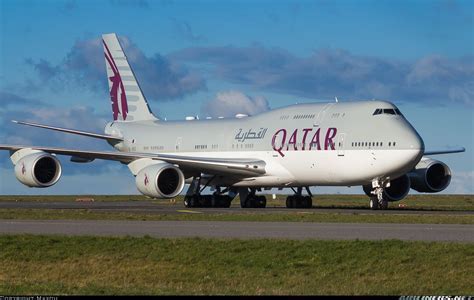
Though publicly floated as a potential “gift,” reporting by CNN clarifies that the Pentagon initiated contact, requesting a purchase from Qatar, not the other way around. While the deal is yet to be finalized, insiders stress that it was the U.S. government that sought out this aircraft to expedite the long-delayed fleet modernization.
Classified Concerns: Security Experts Raise Red Flags
Not everyone is enthusiastic. Lawmakers and defense analysts alike have raised concerns over the security implications of retrofitting a foreign-operated aircraft for presidential use. Even a well-maintained aircraft must be vetted thoroughly to eliminate the possibility of foreign surveillance hardware, structural sabotage, or embedded cybersecurity vulnerabilities.
The very act of converting a pre-owned civilian aircraft—especially one flown and maintained under a foreign flag—poses unique risks. This is one reason why much of the technical scope, contracting arrangements, and even the timeline for the retrofit remain highly classified.
Beyond Opulence: The True Cost of Making a Plane Presidential
The glamour associated with presidential air travel is often misunderstood. Far from being a symbol of luxury, Air Force One is a hardened asset, equipped to keep the U.S. executive branch functioning in the most extreme scenarios imaginable. The transformation of a standard 747-8 into a VC-25-caliber aircraft means installing:
- Advanced encrypted communications systems
- Electronic countermeasure suites
- Hardened wiring and shielding for EMP protection
- Classified radar and detection avoidance systems
- Medical facilities capable of performing emergency surgery
- Self-sufficient food preparation and water purification systems
And yet, despite this shopping list of capabilities, Meink remains adamant that the cost will not cross the $400 million threshold. If achieved, this would be a financially efficient alternative to Boeing’s floundering VC-25B effort, which has already burned through billions without producing an airworthy replacement.
What This Means for Future Presidential Airlift Operations
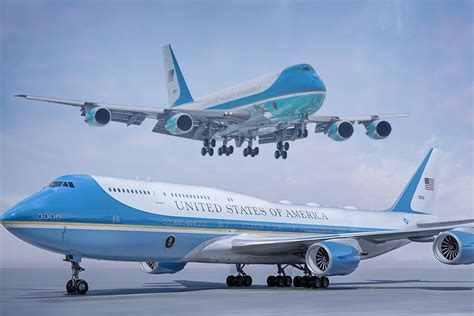
The plan to retrofit a 747-8 instead of waiting for the full delivery of Boeing’s VC-25B aircraft marks a potential paradigm shift in how the U.S. government approaches executive aviation. The precedent being set here could change future procurement strategies—favoring modified commercial platforms over ground-up military designs.
The current VC-25As, based on the 747-200 platform, are nearing 40 years of operational service. Even with meticulous maintenance and upgrades, age limits the ability to support evolving mission requirements, particularly in areas like cybersecurity and electromagnetic resilience.
The Qatar jet, while relatively new, will be tested to its limits. It remains unclear if the airframe will prove robust enough to support the magnitude of modifications required for continuous overseas deployment and contingency operations.
Classified Contracts and A Quiet Controversy
For now, the Pentagon remains tight-lipped. No contractor has been officially named, but multiple sources suggest that a private aerospace firm specializing in VIP and government retrofits may have already been tapped. Details of the selection process are under wraps.
The secrecy surrounding the project has only fueled criticism from some quarters in Congress, who argue that the public has a right to know how hundreds of millions in taxpayer dollars are being spent. Others counter that national security concerns override transparency in this case, given the sensitivity of the aircraft’s intended use.
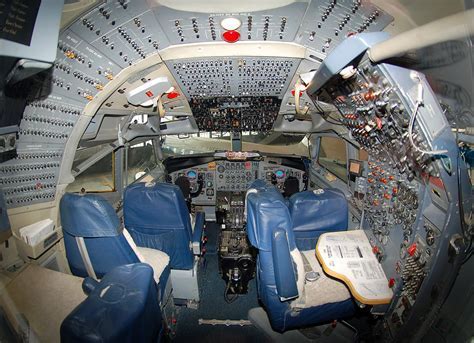
What’s undeniable is that this is not just a simple paint job and seat swap. The work required will touch on every critical function of the airframe, and involve top-secret technologies not even disclosed to the broader U.S. defense community.
Conclusion: The Cost of Speed, Security, and Sovereignty
As the Air Force moves forward with the plan to convert a Qatari 747-8 into the next generation of Air Force One, all eyes will remain on the budget, the contractors, and the outcome. Whether or not the under-$400 million promise holds, the implications of this pivot from a full military build to a retrofit strategy will ripple across future defense procurement programs.
In the high-stakes world of presidential aviation, cost is only part of the equation. Security, sovereignty, and the ability to command global operations from the skies are non-negotiable. And in this context, even a $400 million retrofit may turn out to be a relative bargain—if it delivers.
Until the upgraded aircraft takes to the skies, shielded from ballistic missiles and broadcasting encrypted orders to all branches of U.S. armed forces, one question will linger: Can a commercial jet become the most powerful aircraft in the world without compromising what matters most?