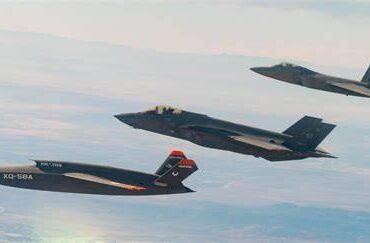
When most people imagine a fighter jet, they picture missiles hanging beneath the wings or attached under the aircraft’s fuselage. These locations are common because they provide strong structural support and allow aircraft to carry a wide range of weapons. However, some fighters feature a far more unusual configuration: missiles mounted directly on the wingtips.
At first glance, placing a heavy missile at the end of a wing seems like a strange engineering choice. The wingtip experiences significant aerodynamic forces, and adding hundreds of pounds of weight in that location appears likely to create additional stress. Yet for aircraft such as the F-16 Fighting Falcon and F/A-18 Hornet, wingtip missiles are not simply a weapon-carrying option. They are part of the aircraft’s aerodynamic design and help solve a critical flight stability problem.
The main reason some fighter jets carry missiles on their wingtips is to control wing flutter, a dangerous aerodynamic phenomenon that occurs when aircraft structures interact with airflow. Wing flutter can create unwanted vibrations and instability, especially at high speeds. If not properly controlled, these vibrations can become severe enough to damage the aircraft.
The F-16 was designed with wingtip missile stations partly because engineers discovered that adding weight at the outer edge of the wing could improve aerodynamic behavior. The aircraft’s lightweight structure and high-performance design required careful management of flexibility and vibration. A missile mounted on the wingtip acts like a balancing mass, helping reduce certain types of wing movement during flight.
The F-16 Wingtip Missile Design and AIM-120 AMRAAM Role
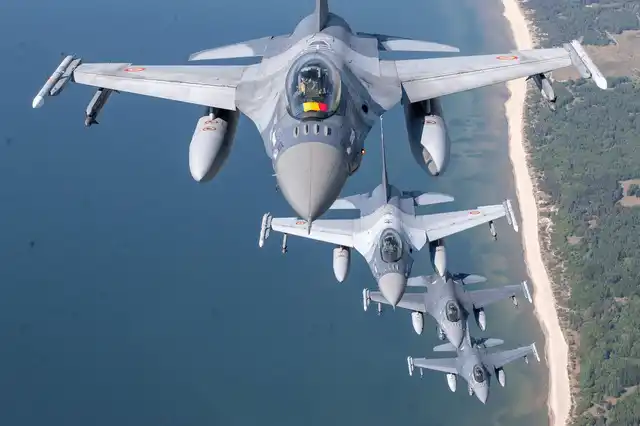
The F-16 Fighting Falcon is one of the best-known examples of a fighter aircraft using wingtip-mounted missiles. Unlike many aircraft that carry weapons only on reinforced hardpoints beneath the wings, the F-16 uses dedicated wingtip rails as standard equipment.
The aircraft commonly carries the AIM-120 AMRAAM on these stations. Although the missile weighs approximately 355 pounds, its mass provides useful aerodynamic benefits. During normal operations, F-16s are often seen carrying training versions of these missiles, known as captive carry rounds. These practice missiles have similar weight characteristics and help maintain the aircraft’s intended flight characteristics even when no live weapons are being used.
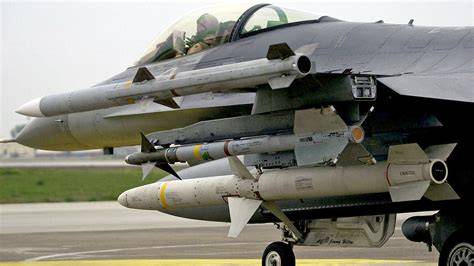
The choice of the heavier AIM-120 instead of a lighter short-range missile may seem unusual. The AIM-9 Sidewinder weighs less and performs a similar air-to-air combat role at shorter ranges. However, the additional weight of the AIM-120 provides better control of wing behavior on the F-16.
Some countries operating export versions of the F-16 have limited access to certain weapons, meaning they may use lighter missiles on wingtip rails. These aircraft can still benefit from the additional mass, but the aerodynamic effect is not identical.
Why The F/A-18 Hornet Uses Wingtip Missiles
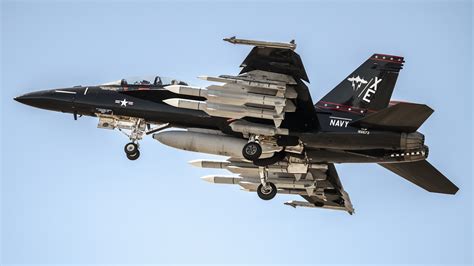
The F/A-18 Hornet family also uses wingtip-mounted missiles, although its operational purpose is slightly different. The aircraft typically carries AIM-9 Sidewinder variants, including newer AIM-9X missiles, on its wingtip stations.
For the F/A-18, wingtip missiles provide both aerodynamic advantages and additional combat capability. The aircraft can carry short-range air-to-air weapons without sacrificing space on other hardpoints for fuel tanks, larger missiles, or specialized equipment.
Modern versions of the F/A-18 have improved structural designs that reduce wing flutter concerns, but wingtip missiles remain a useful part of the aircraft’s configuration. They provide extra firepower while maintaining the balance required for high-speed maneuvering.
Wingtip Missiles Provide More Than Just Stability
Although aerodynamic stability is a major reason for wingtip missile placement, these stations also offer practical combat advantages. Every additional missile increases the aircraft’s available weapons capacity, giving pilots more options during air combat missions.
However, wingtip missiles are not essential for the aircraft to remain operational. Both the F-16 and F/A-18 can fly without them, and they can continue performing missions even after launching wingtip weapons during combat. The aircraft’s design ensures that losing these missiles does not create a dangerous imbalance.
The unusual sight of missiles attached to fighter jet wingtips represents a combination of aerodynamic engineering, structural design, and combat capability. What appears to be an awkward placement is actually a carefully calculated solution developed by aerospace engineers.
For the F-16 and F/A-18, wingtip missiles demonstrate that every part of a fighter aircraft serves a purpose. A weapon mounted at the edge of a wing is not only about carrying more missiles—it is also about controlling the aircraft’s behavior in one of the most demanding environments imaginable.