The dawn of the long-range widebody era reshaped the physics of commercial aviation, demanding landing gear systems that could safely absorb unprecedented aircraft mass. When McDonnell Douglas introduced the MD-11, it was not simply creating another large jet; it was revising the performance envelope of its own DC-10 lineage. The aircraft entered a marketplace carved open by giants like the Boeing 747 and the Lockheed L-1011, each proving that heavy, long-range jets required landing gear systems capable of distributing immense weight without compromising runway integrity.
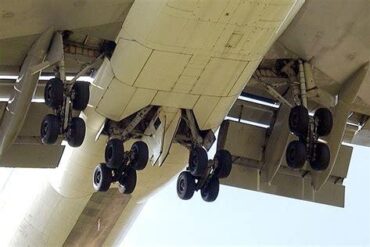
As the MD-11 program advanced through the 1980s, engineers faced a design riddle: how to build a heavier, more capable trijet while working within the dimensional limits inherited from the DC-10. The solution shaped one of the MD-11’s most recognizable elements — its 12-tire main landing gear. This remarkable configuration was not an aesthetic choice but a structural necessity forged by physics, certification rules, and the constraints of inherited geometry.

The Legacy Constraints That Drove a Radical Gear System
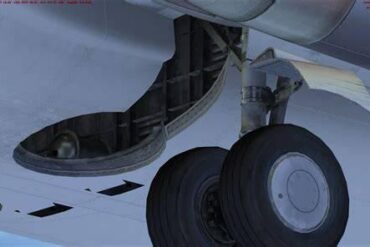
The MD-11 wasn’t conceived on a blank sheet of paper. McDonnell Douglas aimed to evolve the DC-10 platform rather than reinvent its architecture. This decision imposed strict limitations on space, including the narrow gear-bay cavities built into the DC-10 fuselage structure. These bays could only accept tires of a certain maximum diameter, and enlarging them would have triggered costly redesigns and FAA recertification.
Yet the MD-11’s maximum takeoff weight exceeding 600,000 pounds demanded far more structural resilience than the DC-10’s original system could provide. Since engineers could not increase tire size, they pursued the only remaining physics-friendly option: increasing the number of tires.
Why Twelve Tires Became Essential
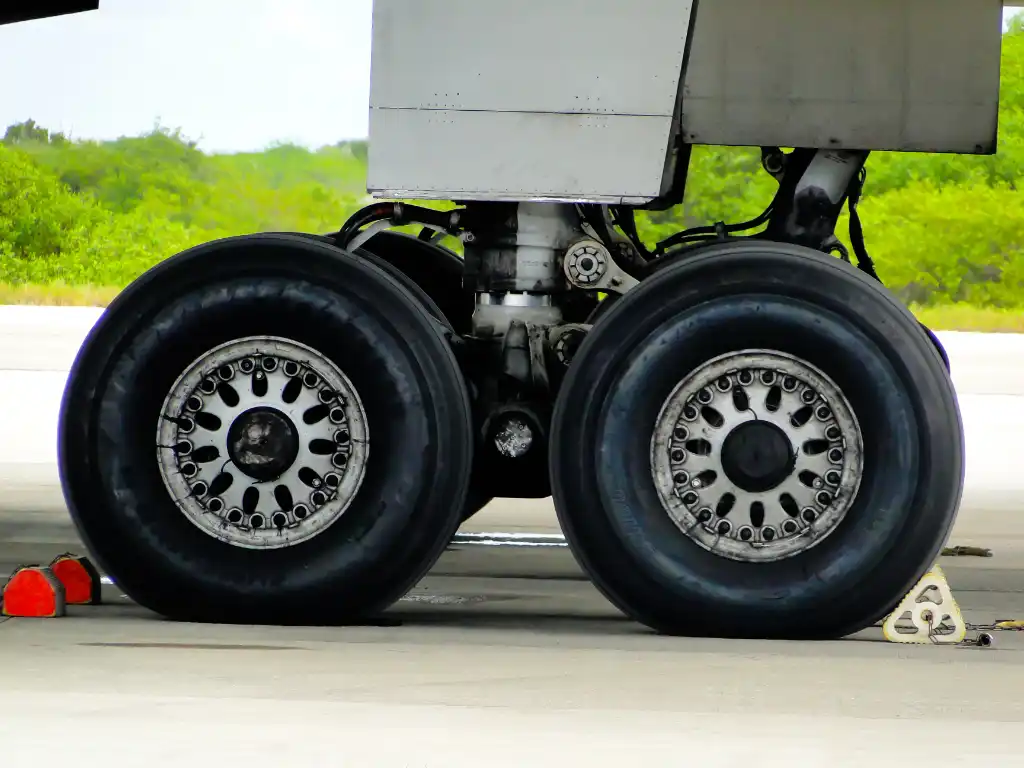
Increasing MTOW created a cascade of challenges that only a multi-axle solution could address. Each tire on a commercial airliner must remain within strict load limits defined by FAA and tire-manufacturer certifications. With the MD-11’s weight far surpassing that of the DC-10, simply relying on the earlier twin-axle bogies would have overloaded each wheel dramatically.
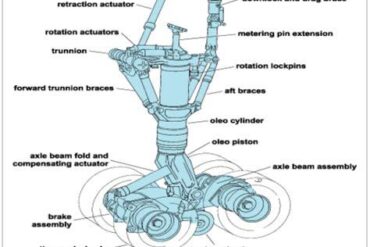
By implementing three axles with paired wheels on each main gear, McDonnell Douglas distributed the aircraft’s mass more efficiently across the pavement. The broader footprint reduced runway stress and allowed the MD-11 to operate from airports that would otherwise be unable to support its weight. The resulting 12-tire layout became not just optimal but essential for compliance and global operability.
Heat, Braking, and Redundancy: The Hidden Benefits of More Wheels
Heavy jets generate massive kinetic energy during landing and rejected-takeoff scenarios. This energy must be dissipated rapidly through brakes — making wheel quantity an important safety factor.
The MD-11’s multi-wheel setup improved braking performance through:
- More brake assemblies, allowing better heat distribution across the system.
- Greater redundancy during emergency stops, decreasing the risk of brake fade.
- Increased durability, reducing wear rates during high-cycle cargo operations.
This configuration was particularly valuable after the MD-11 shifted primarily into freight service, where high landing weights and frequent cycles place substantial strain on brake systems.

Comparing the MD-11 to Other Widebody Landing Gear Philosophies
The MD-11’s 12-wheel main gear sits in the middle of the widebody engineering spectrum. Twin-aisle jets like the Airbus A330 and Boeing 767 utilize lighter twin-bogie, four-wheel per side arrangements, totaling only eight main gear tires. These airframes simply do not approach the MD-11’s pavement-loading concerns.
Larger giants, however, push gear complexity far further. The Boeing 747 uses a total of 16 wheels across its iconic five-gear arrangement, while the Airbus A380 spreads its massive weight across 20 wheels. These aircraft follow the same principle that defined the MD-11’s solution: manage weight through distribution rather than overloading individual tires.
The MD-11’s system reflects an era of engineering where legacy constraints, cost considerations, and evolving performance ambitions intersected. Its landing gear stands as an elegant compromise between old and new — a triple-axle bogie that enabled the aircraft to achieve long-range capability without redesigning its core structure.
The Lasting Engineering Significance of the MD-11
Despite its turbulent commercial passenger career, the MD-11 has persisted for decades as a freight powerhouse. Its landing gear system, in particular, has proven exceptionally reliable under the punishing conditions of cargo operations. The 12-tire design continues to support high-density loads, hard landings, and fast turnaround times, underscoring its value long after the aircraft’s original market ambitions faded.
As the MD-11 enters its twilight years and retirement accelerates across global fleets, the aircraft leaves behind a technical legacy shaped not by glamour but by ingenious problem-solving. Its landing gear remains a masterclass in adapting inherited engineering while pushing performance boundaries. The aircraft’s 12-tire configuration stands as a reminder that even the most utilitarian components tell stories of innovation, limitation, and the creative physics of flight.