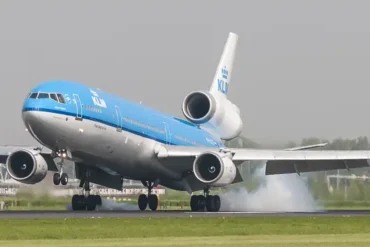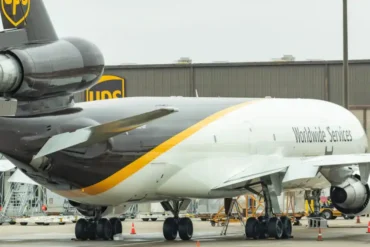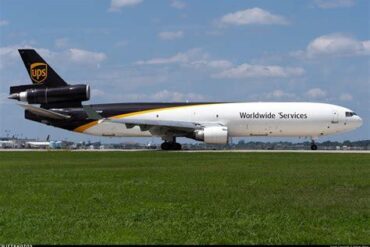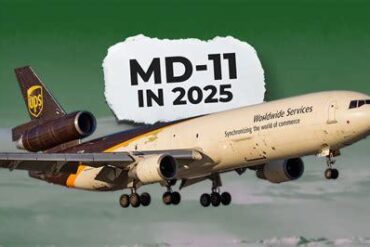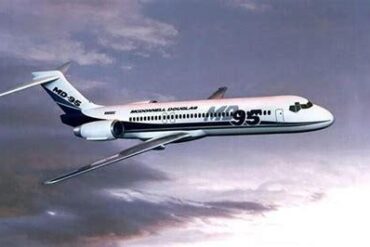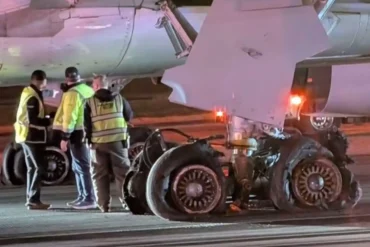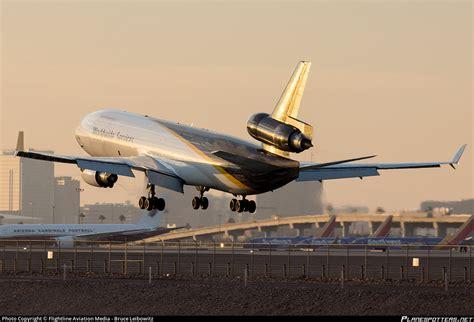
A UPS McDonnell Douglas MD-11 remains grounded at Miami International Airport (MIA) after suffering a tire blowout upon landing on July 22, 2025. The incident affected UPS Flight 2332, which was operating from Louisville Muhammad Ali International Airport (SDF) to Miami, carrying scheduled cargo on one of UPS’s busiest freight routes.
Incident Details: A Delayed and Anomalous Arrival
According to flight data, UPS Flight 2332 departed Louisville at 17:13 EDT, significantly later than scheduled. En route to Miami, the MD-11 performed multiple holding patterns over Naples and Everglades City, adding more than an hour to its expected flight time. Such behavior is unusual for a routine cargo flight and strongly suggests that the crew may have been assessing a potential mechanical issue prior to making the final descent.
Upon touchdown at Miami’s Runway 08L at 19:50 EDT, air traffic controllers observed what they described as an anomaly on the starboard (right-hand) landing gear. Subsequent inspection confirmed that the aircraft suffered a tire blowout during landing. Despite the damage, the aircraft successfully vacated the runway and taxied to the apron without further incident, preventing a closure of the runway and additional operational disruptions.
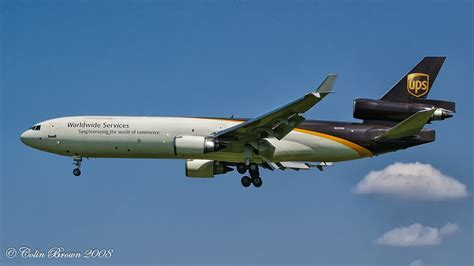
The incident left the 24-year-old aircraft (registration N262UP) stranded in Miami. It was unable to operate the scheduled return flight to Louisville, remaining parked for a thorough safety inspection and tire replacement. Sources indicate that additional landing gear checks are underway to ensure no hidden structural or hydraulic damage occurred during the blowout.
The Aircraft: N262UP — The Last Ever MD-11 Built
The MD-11 involved in this incident is historically significant. N262UP is the last MD-11 ever produced, having rolled off the assembly line in January 2001. Initially delivered to Lufthansa Cargo, the aircraft served the German freight carrier until the COVID-19 pandemic, when it was acquired by UPS following Lufthansa’s retirement of its MD-11 fleet.
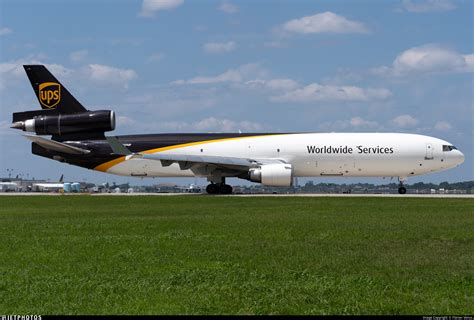
UPS currently operates 28 MD-11Fs, but with an average age of 30.7 years, the fleet is nearing retirement. UPS has already retired 15 MD-11s since 2023, progressively replacing them with new Boeing 767-300F freighters, which offer better fuel efficiency and lower maintenance costs.
UPS’s MD-11 Fleet Phase-Out Plan
The MD-11 has been a workhorse for UPS since 2001, enabling the company to expand its global express cargo network. However, its three-engine design makes it less economical than modern twin-engine freighters. As a result, UPS is executing a phased retirement of the type, with the remaining aircraft expected to leave the fleet by 2030.
In contrast, FedEx, UPS’s main rival, has taken a different approach, extending the operational life of its MD-11s until at least 2032, partly to support its premium international air freight strategy following the loss of its U.S. Postal Service contract to UPS.
Technical Risks: Why Tire Blowouts Matter
While often overlooked, tire blowouts on aircraft can pose serious safety risks, particularly during takeoff or landing phases. A blown tire can destabilize the aircraft, cause hydraulic leaks, and in extreme cases, result in runway excursions or even fuel tank ruptures—as tragically seen in the Air France Concorde crash of 2000.
In 2016, another UPS MD-11 faced a more severe tire-related incident while departing Seoul Incheon Airport. Two central landing gear tires burst during takeoff roll, leading to structural failures in the landing gear assembly. Despite the crew attempting a rejected takeoff at V1 speed, the freighter overran the runway by 1,600 feet, collapsing its nose gear and sustaining irreparable damage. That aircraft was written off, underscoring the catastrophic potential of such failures.
Safety Procedures and Immediate Actions
Following the Miami landing, UPS maintenance crews and FAA inspectors initiated a detailed assessment of the aircraft. Procedures for such events typically involve:
- Replacing the damaged tire and inspecting adjacent ones for structural compromise.
- Evaluating landing gear struts, brakes, and hydraulic systems for hidden damage.
- Conducting a runway inspection to collect debris and ensure no impact to other airport operations.
While the MD-11 taxied without assistance, hidden mechanical stress could still exist in the gear assembly. This underscores the need for non-destructive testing before clearing the freighter for return to service.
Impact on UPS Operations
While UPS did not publicly disclose cargo load details, Flight 2332 likely carried high-priority parcels and commercial freight destined for Miami’s logistics network. The grounding of an MD-11, with its maximum payload of 200,000 lbs, can create a ripple effect in UPS’s time-sensitive cargo schedules. UPS may need to reroute freight via alternate flights or deploy spare aircraft to maintain network efficiency.
A Glimpse Into the Future: The 767 Freighter Fleet
The Miami incident reinforces the importance of modernizing UPS’s fleet. The Boeing 767-300F, which UPS is adopting as its primary widebody workhorse, offers better fuel burn, lower maintenance needs, and improved reliability. With 94 767Fs currently in service and 14 more on order for delivery by 2027, UPS is well on track to phase out the MD-11 without compromising cargo capacity.
This modernization aligns with UPS’s long-term sustainability strategy, aiming to reduce carbon emissions and streamline operational costs.
Conclusion: A Reminder of Operational Risks
The UPS MD-11 tire blowout in Miami serves as a reminder of the complex challenges in cargo aviation. While no injuries occurred and the situation was contained, the incident highlights the risks associated with aging fleets and the need for rigorous maintenance. For UPS, this event underscores the urgency of transitioning to newer, more reliable aircraft.
The N262UP MD-11 will remain grounded until all safety protocols are completed, ensuring it meets the stringent airworthiness standards that UPS and regulators require for resuming operations.