Nearly three decades after the 1997 Boeing–McDonnell Douglas merger, the influence of McDonnell Douglas remains deeply embedded within Boeing’s commercial and military aircraft portfolio. The $13.4 billion acquisition created the world’s largest aerospace company at the time, combining Boeing’s commercial aircraft dominance with McDonnell Douglas’ powerful defense programs and decades of aircraft engineering experience.
The merger is often discussed through the lens of corporate culture, financial priorities, and the controversies that followed, especially after the 737 MAX crashes in 2018 and 2019. However, the story is more complex than a simple shift in management philosophy. McDonnell Douglas contributed several aircraft designs, engineering approaches, production decisions, and even corporate symbols that became permanent parts of modern Boeing.
Some inherited programs continued almost unchanged. Others evolved into new generations of aircraft that remain active today. From the Boeing 717 and the F/A-18 Super Hornet to advanced cockpit concepts and Boeing’s own logo, these decisions demonstrate how a merger can preserve the legacy of one aerospace company inside another.
Boeing 717: The McDonnell Douglas MD-95 That Became Boeing’s Final Douglas Commercial Jet
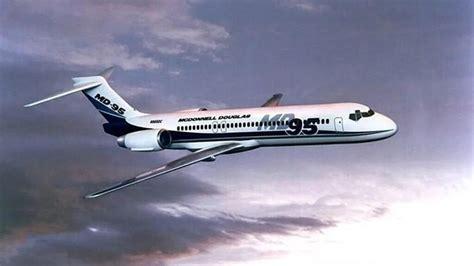
One of the clearest examples of McDonnell Douglas’ lasting influence is the Boeing 717, an aircraft that almost disappeared before it ever carried the Boeing name. Originally developed as the McDonnell Douglas MD-95, the aircraft represented the latest evolution of the Douglas DC-9 family, a design lineage that stretched back to the 1960s.
McDonnell Douglas launched the MD-95 program in 1991 as a modern replacement for aging DC-9 aircraft and early MD-80 series jets. The aircraft targeted the 100-seat short-haul market, focusing on regional and domestic routes where airlines needed efficient aircraft with lower operating costs.
Unlike Boeing’s traditional narrowbody designs, the MD-95 retained several characteristics inherited from the original DC-9. It featured a rear-mounted engine configuration, a T-tail design, and the same basic fuselage cross-section that had defined Douglas’ short-haul aircraft philosophy for decades. Instead of creating a completely new aircraft, McDonnell Douglas refined an existing platform that had already proven successful.
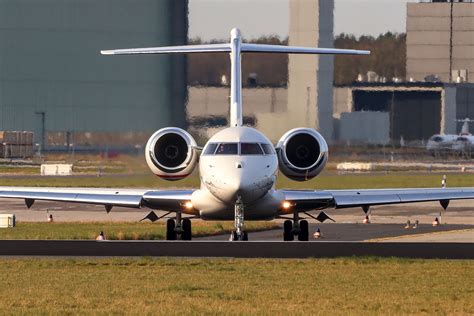
When Boeing acquired McDonnell Douglas in 1997, many industry observers expected the MD-95 program to be canceled. The aircraft competed directly with Boeing’s own 737-600, creating overlap within the company’s product lineup. Maintaining a smaller aircraft that required separate production facilities appeared commercially questionable.
However, Boeing decided that the aircraft still had market value. The MD-95 was renamed the Boeing 717-200, becoming the only McDonnell Douglas commercial aircraft design to enter production under the Boeing brand.
The first Boeing 717 was delivered to AirTran Airways in September 1999. Boeing eventually produced 156 examples before ending production in 2006. Although sales never reached the levels of the 737 family, the aircraft developed a loyal following among airlines operating frequent short routes.
Today, the 717 remains one of the most visible reminders of McDonnell Douglas’ commercial aircraft heritage. Delta Air Lines became the largest operator after acquiring aircraft from Southwest Airlines following Southwest’s purchase of AirTran. The aircraft continues operating domestic routes, proving that a 1990s McDonnell Douglas engineering decision remains useful decades later.
McDonnell Douglas Military Aircraft Became Boeing’s Defense Foundation
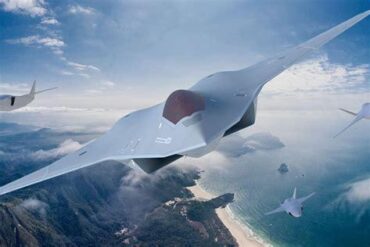
While the Boeing 717 represents the commercial side of McDonnell Douglas’ legacy, the company’s military aircraft programs were arguably even more valuable. The merger transformed Boeing from primarily a commercial aircraft manufacturer into a dominant aerospace defense contractor.
Three major programs inherited from McDonnell Douglas — the F/A-18 family, F-15 Eagle, and C-17 Globemaster III — became some of Boeing’s most important military assets.
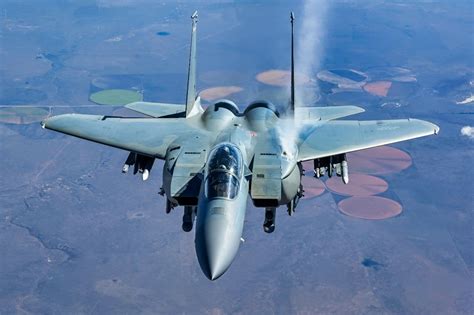
The F/A-18 Hornet was originally developed by McDonnell Douglas during the 1970s for the United States Navy. The aircraft introduced a flexible multirole capability, allowing pilots to perform both air-to-air combat and strike missions from aircraft carriers.
After the merger, Boeing continued developing the platform into the F/A-18E/F Super Hornet. Although the Super Hornet is larger and significantly upgraded compared with the original Hornet, its design philosophy comes directly from the McDonnell Douglas program.
The Super Hornet entered service in 1999 and became the backbone of the US Navy carrier aviation fleet. Boeing also developed the EA-18G Growler, an electronic warfare aircraft based on the Super Hornet platform. These programs continue generating major revenue through aircraft production, modernization, and long-term support contracts.
The F-15 Eagle followed a similar path. McDonnell Douglas inherited the aircraft from the original McDonnell design team and transformed it into one of the world’s most successful air superiority fighters. The company later created the F-15E Strike Eagle, adding precision strike capabilities while maintaining the aircraft’s exceptional performance.
Boeing continued improving the platform after the merger, eventually producing the F-15EX Eagle II. The aircraft features modern avionics, advanced radar systems, and expanded weapons capacity while maintaining the fundamental airframe architecture developed nearly half a century earlier.
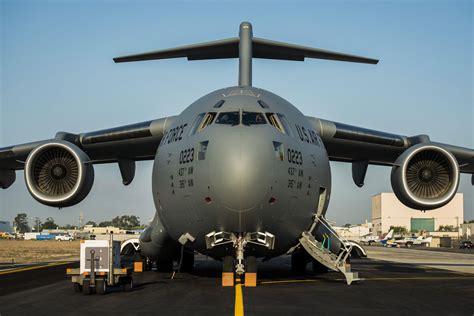
The C-17 Globemaster III was another major McDonnell Douglas achievement carried forward by Boeing. Designed as a strategic airlifter capable of transporting troops, vehicles, and equipment worldwide, the C-17 became one of the most important military transport aircraft of the modern era.
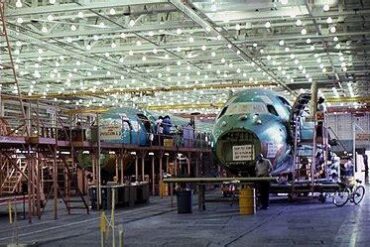
Production continued at the former McDonnell Douglas facility in Long Beach, California, until the final aircraft was delivered in 2015. Boeing produced the majority of the C-17 fleet after the merger, extending a McDonnell Douglas program for nearly two decades.
Together, the F/A-18 Super Hornet, F-15EX, and C-17 demonstrate that Boeing inherited far more than aircraft designs. It inherited decades of defense engineering expertise and production capability that became central to Boeing’s modern aerospace business.
The MD-11 Glass Cockpit Influenced Boeing’s Automation Philosophy
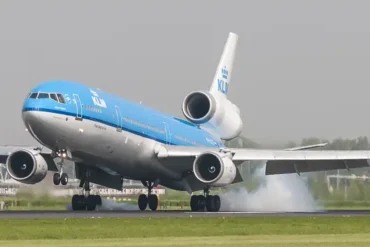
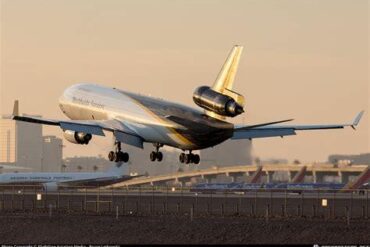
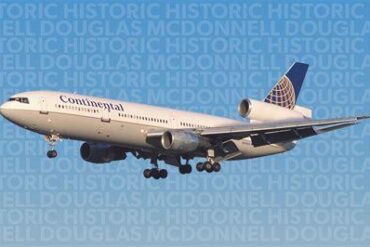
The McDonnell Douglas MD-11 was not commercially as successful as Boeing’s widebody aircraft, but its engineering innovations influenced the future direction of aircraft automation.
Entering service in 1990, the MD-11 featured one of the most advanced flight decks of its era. It replaced traditional analog instruments with a digital glass cockpit built around six large CRT displays. Like the Boeing 747-400 and Airbus A320 family, it represented a new generation of aircraft designed around a two-pilot crew.
The aircraft introduced advanced integration between flight management systems, navigation computers, autopilot controls, and automated aircraft systems. Pilots could rely on computers to manage complex tasks such as route planning, fuel calculations, and performance optimization.
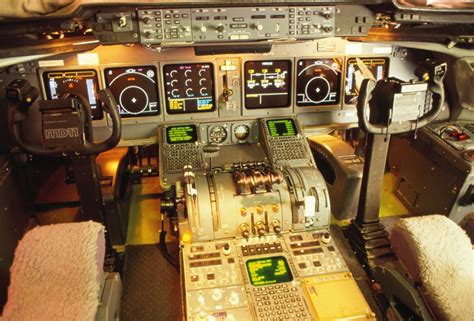
The MD-11 also pushed automation into areas where previous aircraft relied more heavily on pilots. Automated fuel management, center-of-gravity control, and stability augmentation systems demonstrated McDonnell Douglas’ belief that aircraft could become increasingly computer-managed platforms.
However, some of these systems also created challenges. The MD-11’s handling characteristics and automation philosophy received criticism from some pilots, and several accidents damaged the aircraft’s reputation. These issues provided valuable engineering lessons about the balance between automation and human control.
After the merger, Boeing absorbed McDonnell Douglas engineers who had worked on the MD-11’s avionics and flight systems. Their experience became part of Boeing’s broader engineering knowledge base. While Boeing already had advanced cockpit programs underway, the MD-11 contributed additional expertise in integrated aircraft automation and long-range flight management systems.
The influence was not a direct copy of MD-11 technology into later Boeing aircraft. Instead, it represented the transfer of engineering experience, design lessons, and automation concepts into Boeing’s future development programs.
The McDonnell Douglas Derivative Design Philosophy Changed Boeing’s Development Strategy
Perhaps the most debated McDonnell Douglas contribution was not a specific aircraft but an engineering philosophy: developing improved versions of existing aircraft instead of creating entirely new designs.
McDonnell Douglas built much of its commercial aircraft business around this approach. The DC-9, first flown in 1965, evolved through multiple generations, including the MD-80, MD-90, and MD-95. Each version improved efficiency, capacity, and technology while maintaining the original aircraft architecture.
This strategy offered significant advantages. Development costs were lower, production knowledge was preserved, and airlines could introduce new aircraft without completely retraining crews or rebuilding maintenance systems.
Boeing traditionally followed a different path. The company’s major commercial aircraft programs, including the 707, 727, 747, 757, 767, and 777, were generally clean-sheet designs created for specific market requirements.
After the merger, Boeing increasingly adopted a more derivative-focused approach. The most famous example was the 737 MAX, which updated the existing 737NG platform rather than developing an entirely new narrowbody aircraft.
The decision allowed Boeing to compete quickly against the Airbus A320neo family while avoiding the enormous cost and timeline associated with a completely new aircraft. However, the choice also created engineering challenges because larger engines had to be installed on an airframe originally designed around smaller powerplants.
The resulting MCAS system became associated with two fatal crashes that killed 346 people. Investigations highlighted failures in system design, certification, and pilot information.
The broader lesson remains debated. Some analysts argue that the derivative philosophy contributed to engineering compromises. Others point out that evolutionary aircraft development is common throughout aviation history and that the primary failures involved implementation rather than the concept itself.
Regardless of interpretation, the McDonnell Douglas approach became one of the most recognizable influences on Boeing’s post-merger aircraft strategy.
Boeing’s Corporate Logo Preserved McDonnell Douglas Heritage
Perhaps the most surprising McDonnell Douglas legacy is visible every day: Boeing’s corporate logo.
Following the 1997 merger, Boeing adopted a new logo designed by graphic designer Rick Eiber. The design incorporated the globe symbol previously associated with McDonnell Douglas rather than continuing Boeing’s previous visual identity.
The globe design traced its origins to Douglas aircraft history, particularly the Douglas World Cruiser, which completed the first aerial circumnavigation of the Earth in 1924.

The decision reflected the importance of McDonnell Douglas’ defense heritage within the newly combined company. Boeing was no longer simply a commercial aircraft manufacturer. It had become one of the world’s largest aerospace and defense companies, with major military programs such as the F-15, F/A-18, C-17, and Apache helicopter.
The logo represented that combined identity. It acknowledged that Boeing’s future would be built not only on its own history but also on the engineering achievements, military programs, and traditions inherited from McDonnell Douglas.
Nearly 30 years later, the symbol remains Boeing’s official corporate identity. It serves as a small but permanent reminder that the 1997 merger was not simply an acquisition. It was a combination of two aerospace legacies that continue shaping aircraft development today.
McDonnell Douglas’ Legacy Remains Embedded In Modern Boeing
The Boeing–McDonnell Douglas merger changed the aerospace industry forever. While debates about corporate culture and engineering decisions continue, the technical legacy of McDonnell Douglas is undeniable.
The Boeing 717, the F-15EX, the F/A-18 Super Hornet, the C-17 Globemaster III, advanced automation concepts, derivative aircraft strategies, and even Boeing’s logo all demonstrate how deeply McDonnell Douglas remains connected to the company that absorbed it.
Some inherited decisions became successful long-term assets. Others created engineering challenges that continue to influence discussions about aircraft development. Together, they reveal that mergers do not erase engineering history. They transform it, carrying ideas from one generation of aerospace innovation into the next.