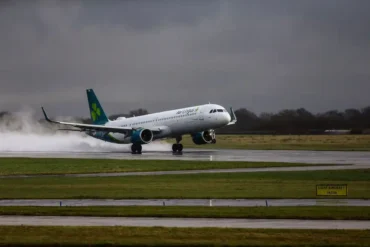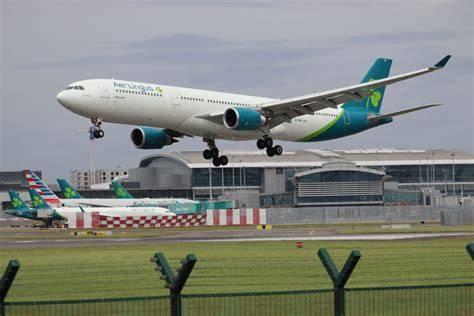
Aer Lingus began 2026 with an ambitious vision for its transatlantic network, planning what was expected to be the airline’s largest-ever schedule between Ireland and North America. Yet the year has taken a very different turn. By the end of 2026, Aer Lingus will have eliminated five US routes, while also reducing seasonal flying on another important American market.
The scale of the retreat is striking because the airline had spent years expanding its presence in the United States. New routes to secondary cities, additional Airbus A321XLR services and the restoration of previously abandoned markets had positioned Aer Lingus as an increasingly important transatlantic carrier. The subsequent cuts therefore represent more than routine seasonal adjustments.
The five cancellations also do not have one single explanation. Manchester–New York JFK, Manchester–Orlando and Manchester–Barbados disappeared because Aer Lingus decided that aircraft based in Manchester could produce stronger financial returns elsewhere. The later Dublin cuts are different. Denver, Minneapolis and Las Vegas struggled to generate the returns required by the airline amid weaker demand, rising costs and significantly greater competition from US carriers.

Why Aer Lingus Closed Its Manchester Transatlantic Base
Aer Lingus launched its Manchester long-haul operation in 2021, establishing a small transatlantic base centered on New York JFK, Orlando and Barbados. The operation initially represented an important expansion outside the airline’s traditional Dublin hub and gave passengers in northern England a direct alternative to connecting through London or Dublin.
However, the Manchester experiment did not ultimately deliver the financial performance Aer Lingus wanted. The airline announced that its standalone Manchester base would close, with Manchester–JFK ending on February 23, 2026, followed by Orlando and Barbados on March 31.
The decision is particularly interesting because weak passenger demand was not the fundamental problem. US Department of Transportation data compiled by aviation analytics company Cirium showed Manchester–JFK and Manchester–Orlando averaging approximately 78.9% load factors between January and September 2025. Their strongest months were considerably better, with August load factors reaching 92.6% on JFK and 88.2% on Orlando.
That means the aircraft were not simply flying around half-empty. Instead, Aer Lingus concluded that the revenue generated by the Manchester operation was insufficient compared with what the same aircraft could earn elsewhere. CEO Lynne Embleton acknowledged that the base was profitable but said its margins were significantly below those available in comparable parts of the business.
This distinction is crucial. Airlines do not evaluate routes purely by asking whether they make money. They also consider return on aircraft, crew, airport costs, utilization and alternative opportunities. A profitable route can therefore disappear if another destination promises a substantially better return.
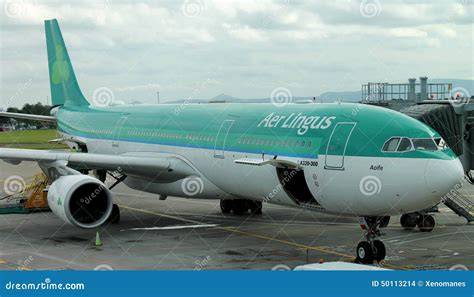
The closure affected roughly 200 Manchester jobs, while the two Airbus A330s assigned to the base were returned to Dublin and incorporated into Aer Lingus’ mainline fleet. In other words, the Manchester cuts were primarily a fleet-redeployment decision, rather than evidence that Aer Lingus had completely abandoned long-haul growth.
Dublin’s US Route Cuts Tell a Different Story
The three later cancellations from Dublin reveal a more serious problem. Aer Lingus had aggressively expanded its North American network, including the restoration of Minneapolis-St. Paul and the launch of Denver and Las Vegas in 2024. These cities were part of a broader strategy to move beyond the traditional Ireland–US markets and capture demand from less-served destinations.
As recently as September 2025, Aer Lingus was promoting its largest-ever transatlantic summer schedule, with 20 US destinations planned for summer 2026. But passenger performance subsequently exposed weaknesses in several markets.
DOT data for the 12 months through March 2026 showed a load factor of only 61.8% for Minneapolis, compared with 64.1% for Denver and 71.3% for Las Vegas. Those figures are dramatically different from the strongest periods of the Manchester routes and help explain why the Dublin network is now being reshaped.
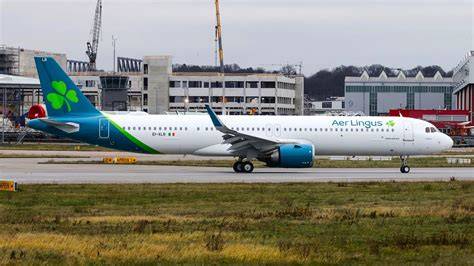
Minneapolis Became a Particularly Difficult Market
The Dublin–Minneapolis route provides perhaps the clearest example of how competition changed the economics of Aer Lingus’ expansion. Delta Air Lines began its own Dublin service from Minneapolis-St. Paul in 2024, giving passengers another nonstop option while connecting Aer Lingus’ route directly into a major US airline hub.
During summer 2026, OAG data indicated that Delta scheduled approximately 100,500 two-way seats between Minneapolis and Dublin, compared with roughly 75,100 for Aer Lingus. That is a formidable competitive environment for an airline attempting to build demand in a relatively specialized transatlantic market.
The monthly figures were even more revealing. Aer Lingus’ Minneapolis load factor fell to only 30% in February, showing how severely winter demand could deteriorate. The weakness was not isolated to Minneapolis either. Aer Lingus’ Seattle operation, which is moving to a summer-only schedule, recorded a load factor of just 28% during the same month.
Minneapolis will operate for the final time on October 24, 2026, ending a route that had once appeared to fit neatly into Aer Lingus’ strategy of connecting Ireland with major US metropolitan areas outside its traditional core network.
Denver and Las Vegas Could Not Escape the Pressure
Denver has also struggled since its launch. After achieving a load factor of approximately 73.7% in 2024, the route dropped to around 63.9% in 2025 after Aer Lingus increased capacity. More seats do not automatically create more demand, and the resulting decline illustrates the risk of expanding faster than a market can absorb.
Aer Lingus will operate its final Dublin–Denver flight on September 28, 2026. The decision removes a western US destination that had been part of the carrier’s recent growth strategy.
Las Vegas has performed somewhat better on an annual basis, recording a 71.3% load factor. Nevertheless, that headline figure hides substantial seasonal weakness, with winter load factors falling below 60%. Aer Lingus will therefore end the route on December 3, 2026.
The pressure has also come from outside Aer Lingus’ individual routes. The airline has said that competing transatlantic capacity increased by approximately 45% during winter 2025/26, making it harder for Aer Lingus to maintain fares and fill seats at attractive yields.
A €103 Million Loss Accelerated the Retrenchment
The route cancellations make more sense when viewed against Aer Lingus’ wider financial situation. The airline reported a €103 million loss in the first quarter of 2026 and subsequently announced plans to reduce overall flying by approximately 6%.
That restructuring includes removing lower-margin services and potentially cutting as many as 500 jobs. The objective is not simply to operate fewer flights, but to create a network capable of generating stronger returns from the aircraft and resources available.
Aer Lingus recorded an operating margin of 11.1% in 2025, which was below its stated medium-term target of 12% to 15%. It was also behind the margins achieved by fellow IAG airlines British Airways and Iberia.
That difference matters because Aer Lingus competes internally for investment within the International Airlines Group. A stronger financial performance could improve its ability to secure future aircraft and other strategic resources, while weak margins make aggressive expansion increasingly difficult to justify.
What Happens to the Aircraft After the US Route Cuts?
The answer is more complicated than simply sending the aircraft to new destinations. The Manchester A330s were returned to Dublin, but Aer Lingus does not currently appear to be replacing every canceled route with another equivalent long-haul service.
For peak summer 2027, the airline expects a reduction in the use of two A330s and four A320s. That suggests aircraft utilization will be reduced as Aer Lingus concentrates on its strongest markets rather than immediately redeploying every available aircraft.
Importantly, this does not necessarily mean six aircraft are being permanently retired or removed from the fleet. Aer Lingus has indicated that many fleet decisions remain under review. Some aircraft could simply see lower utilization or spend longer periods out of service.
At the same time, the airline continues investing in its long-haul product. Aer Lingus plans to retrofit 10 Airbus A330s with a new premium economy cabin during 2027, demonstrating that the carrier is not abandoning its widebody fleet or its transatlantic ambitions.
Aer Lingus Is Choosing Profitability Over Maximum Network Size
The five US route cuts ultimately tell a story about strategic discipline rather than the collapse of Aer Lingus’ transatlantic strategy. Manchester showed that even a profitable operation can be closed when its margins are inferior to alternative uses for the aircraft. Denver, Minneapolis and Las Vegas demonstrate the next stage of that strategy: when a Dublin-based route cannot generate acceptable returns, Aer Lingus is prepared to remove the capacity altogether.
The airline entered 2026 wanting to operate its biggest-ever US network. It will instead finish the year with a smaller and more selective transatlantic footprint. That may disappoint passengers who valued nonstop service to these cities, but from Aer Lingus’ perspective, the priority has changed.
The carrier needs to improve margins, control costs and make better use of its fleet before it can confidently pursue another major expansion. The arrival of new-generation widebodies in the coming years, including potential access to some of IAG’s 21 Airbus A330-900s scheduled for delivery between 2028 and 2033, could eventually provide another opportunity for growth.
For now, however, Aer Lingus is sending a clear message: bigger is no longer automatically better. The future of its US network will depend less on how many American cities it can serve and more on whether each route can deliver the financial returns needed to justify scarce aircraft, crews and capital.
That makes the 2026 cancellations an important turning point. Manchester was a case of moving aircraft toward better opportunities. The Dublin cuts are a broader network correction. Together, they show an airline attempting to move from rapid transatlantic expansion toward a smaller, more profitable and financially sustainable US network.