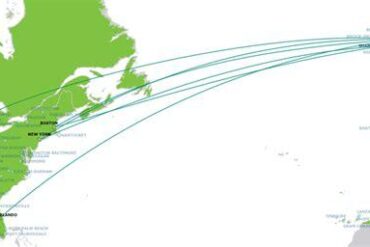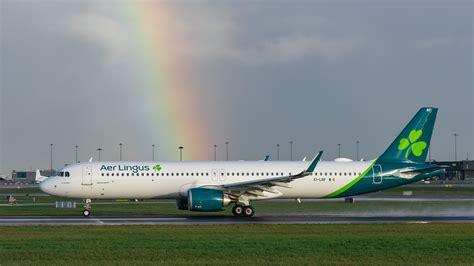
Aer Lingus is weighing a full withdrawal from Manchester Airport after years of weak route performance that has left its UK long-haul base trailing far behind its Irish operations. The airline has openly acknowledged that its Manchester–Barbados, Manchester–New York, and Manchester–Orlando routes have failed to deliver competitive margins, placing the hub’s long-term future in doubt.
Aer Lingus’ Manchester Strategy Falters
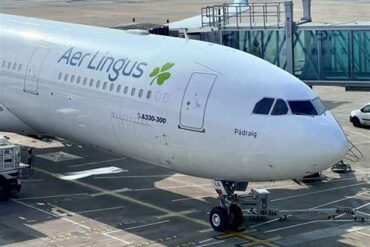
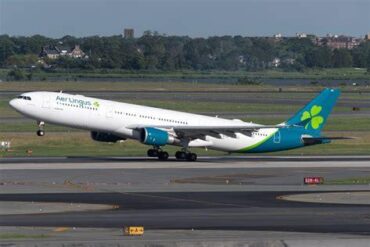
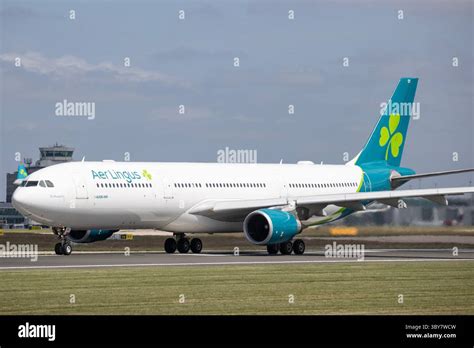
The Manchester long-haul base, launched in 2021 in the aftermath of Thomas Cook’s collapse, was intended to become a profitable UK complement to the airline’s Dublin stronghold. Two Airbus A330-300s, each configured with 317 seats, were permanently assigned to the airport to operate leisure-heavy transatlantic routes. Yet the base has consistently lagged Aer Lingus’ margins in Ireland, and recent operational pressures have only widened the gap.
Earlier this month, CEO Lynne Embleton stated that the Manchester operation must prove it can justify the continued allocation of widebody aircraft—an unmistakable signal that the airline sees stronger returns elsewhere in its network.
Underperformance Meets Rising Operational Pressures
Despite targeted marketing and seasonal adjustments, Manchester has become the carrier’s lowest-performing long-haul station. The airline cited persistently weaker yields, softer year-round demand, and intense competition as key reasons the base has struggled to reach expected profitability. Internal data reportedly shows operating margins significantly below Aer Lingus’ Irish long-haul performance—a gap widened further by two months of strike action.
The airline noted that it has reaccommodated more than 90% of affected passengers during the labor disruptions, but the financial toll has been undeniable. Lower salaries for UK-based cabin crew, combined with mounting cost-of-living pressures, triggered 11 days of walkouts across October and November, pushing the Manchester base deeper into instability.
Jobs and Fleet Utilization at Stake
Aer Lingus is now consulting with employees and unions as it examines every possible option for the Manchester hub. The consequences could be significant: roughly 200 jobs—including cabin crew and ground staff—would be affected by a closure. The Irish Air Lines Pilots’ Association (IALPA) confirmed that pilots operating for Aer Lingus UK are contractually assured of a pathway back to mainline Aer Lingus, but no such protections exist for cabin or ground personnel.
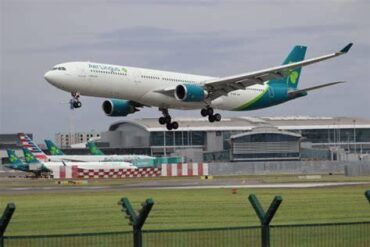
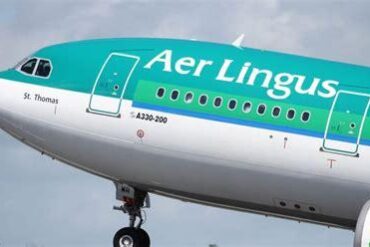
The airline’s A330 fleet, comprising ten A330-300s and three A330-200s, is already in high demand. Redeploying the Manchester-based aircraft to Dublin is widely seen as the most likely scenario, particularly as Aer Lingus continues to strengthen its North American network from its Irish hubs.
Labor Disputes Deepen the Financial Strain
The ongoing wage dispute has become central to the story. Manchester-based cabin crew earn starting salaries of £17,640.25, more than 30% below their Irish colleagues who begin at €29,833.26. A recent offer by the airline—including a 12% raise and an increased overnight allowance—was rejected, largely because Ireland-based crews receive substantially higher compensation for U.S. layovers.
Many Manchester crew members have reportedly taken second jobs to offset living expenses, highlighting the widening cost-pressure gulf between the UK and Irish operations. The prolonged unrest has not only disrupted schedules but also weakened consumer confidence in the base.
A Base With Promise—but Diminishing Prospects
When Aer Lingus inaugurated its Manchester long-haul presence, the move was hailed as a bold attempt to capture UK-originating holiday and transatlantic traffic. The strategy initially showed promise, offering passengers an alternative to larger hubs while filling the gap left by Thomas Cook. Yet four years on, the economics simply have not aligned with expectations.
The long-haul unit remains young enough that Aer Lingus could still reshape or rebuild it, but senior leadership appears increasingly convinced that the A330s can deliver far stronger returns elsewhere—particularly in Dublin, where demand, feed, and network synergies are structurally stronger.
What Comes Next
Aer Lingus maintains that all options remain on the table, from restructuring to a complete shutdown of the Manchester long-haul operation. Given the airline’s $200-million operating profit last year—despite being the lowest-performing member of the IAG Group—management is under pressure to eliminate low-yield assets and reinforce profitable growth areas.
If the airline ultimately withdraws, Manchester Airport would lose a rare non-London long-haul base, and the UK aviation landscape would feel the loss of one of its most distinctive transatlantic offerings. The decision now hinges on whether the financial picture improves rapidly—or whether Aer Lingus accepts that the Manchester experiment has run its course.