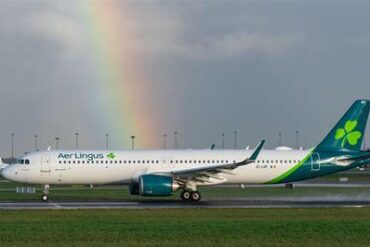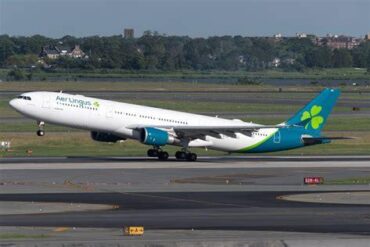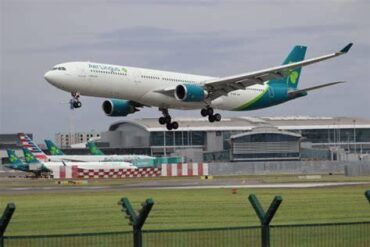
Aer Lingus is poised to shutter its long-haul base at Manchester Airport (MAN), casting uncertainty over more than 200 jobs and potentially ending a short-lived chapter in the airline’s UK expansion. The move comes after months of escalating industrial action, ongoing profitability struggles, and strained relations between the Irish flag carrier and its Manchester-based crew.
Aer Lingus’ UK Ambition Falters at Manchester
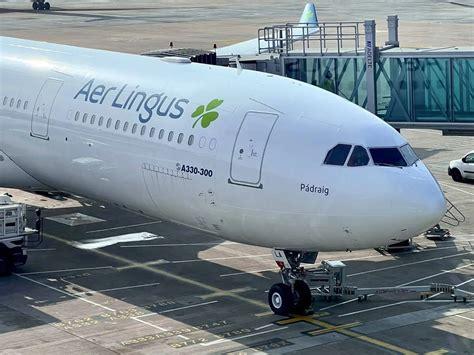
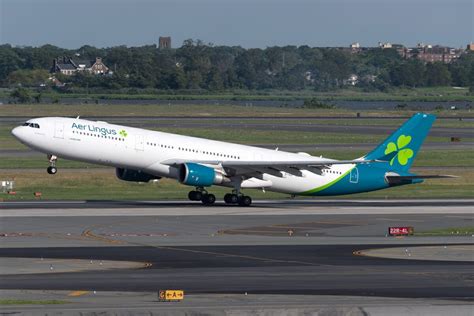
In 2021, Aer Lingus made a bold strategic move by launching transatlantic services from Manchester, deploying spare Airbus A330s following the collapse of Thomas Cook. The carrier introduced direct routes to New York (JFK), Orlando (MCO), and Barbados (BGI)—placing it in direct competition with Virgin Atlantic on some of the UK’s most lucrative leisure and business travel corridors.
To support the operation, Aer Lingus hired hundreds of local cabin crew and ground staff. However, a key tension soon emerged: Manchester-based crews were paid significantly less than their Dublin counterparts, despite rising living costs in northern England. Discontent festered, ultimately sparking a wave of strikes.
Cabin Crew Strikes Escalate Into a Broader Crisis
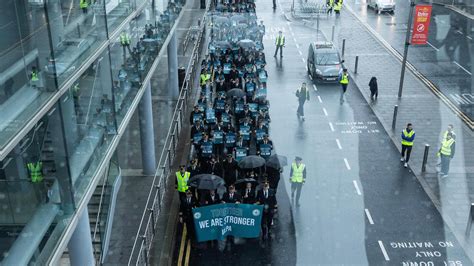
Industrial unrest ignited in October 2025, when over 130 crew members overwhelmingly rejected a proposed 9% pay rise, arguing it failed to cover basic expenses like housing and energy bills. What followed were 11 days of strikes over two months, severely testing Aer Lingus’ ability to maintain operations.
Despite the walkouts, the airline managed to continue most flights by employing replacement staff or redirecting passengers through Dublin (DUB), where aircraft were staffed by non-striking crew. This tactic drew sharp condemnation from the Unite union, which accused Aer Lingus of union-busting and undermining the bargaining power of its Manchester employees.
Unite’s general secretary lambasted the airline for failing to provide a living wage despite healthy profits under its parent company, the IAG Group. Aer Lingus, however, defended its actions by citing consistently low operating margins on the Manchester routes.
Financial Pressures Trigger Consultation Process
On November 17, 2025, Aer Lingus officially informed Manchester staff of a possible base shutdown. An internal memo revealed that the long-haul routes out of Manchester significantly underperformed relative to services from Dublin, both in profitability and passenger volume.
The memo made clear the company’s concerns: “This makes it difficult to justify further investment in the Manchester base and raises the question as to whether there are potentially better alternative uses of the two aircraft that are in the Manchester base.”
Management initiated a formal collective consultation process with union representatives and pilots. While the process is said to consider all options, base closure and redundancies are explicitly on the table. Aer Lingus has indicated it may redeploy the A330s to higher-yield transatlantic routes from Dublin, where connectivity and feeder traffic are stronger.
Redundancies and Unequal Impact on Staff
For the crew and ground teams in Manchester, the threat of mass job losses looms. While pilots seconded from Ireland are expected to return to posts in Dublin, locally hired cabin crew and airport staff face a much grimmer outlook. Aer Lingus has pledged to keep employees “fully informed and supported,” though morale is low amid the lack of firm guarantees.
Unite has yet to issue a formal public response, though insiders report that the union is preparing to fight the closure. The implications stretch beyond jobs: a shutdown would mark the end of IAG’s direct presence on Manchester’s lucrative transatlantic routes, effectively handing a competitive advantage back to Virgin Atlantic.
Strategic Retrenchment and Broader Industry Impacts
If Aer Lingus follows through, this would represent a strategic retrenchment for an airline once aiming to diversify its UK footprint. It would also be a significant blow to regional connectivity in northern England, as Manchester Airport would lose one of its few non-US, non-British operators on long-haul services.
While Aer Lingus may shore up margins by consolidating operations at Dublin, the move raises broader questions about the viability of secondary UK airports hosting long-haul carriers in a post-pandemic, cost-conscious environment.
The airline’s exit could also pressure policymakers to examine wage disparities and employment practices within multinational carriers operating in the UK. For now, more than 200 workers await their fate, caught between financial bottom lines and the escalating battles of modern air travel labor relations.