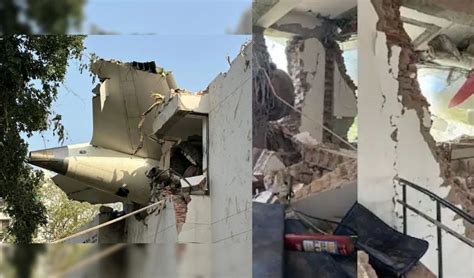
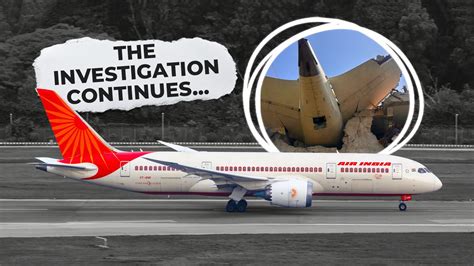
India’s aviation sector has been rocked by new revelations surrounding the Air India Flight 171 disaster, with emerging evidence pointing toward the possible involvement of the senior captain in a critical in-flight error that led to the crash. Flight 171, a Boeing 787-8 Dreamliner, tragically went down on June 12th shortly after taking off from Ahmedabad Airport, killing 241 people on board and 19 on the ground. Investigators have now zeroed in on a crucial and confounding act—the mid-air shutdown of fuel supply to both engines, an action that experts say rendered the aircraft unrecoverable within seconds.
According to a preliminary report released by the Aircraft Accident Investigation Bureau (AAIB) on July 12, the engine fuel switches were found in the CUTOFF position shortly after takeoff, effectively starving the engines of fuel. This revelation set off intense scrutiny of cockpit behavior and prompted speculation about a potential human factor in the crash. The cockpit voice recorder (CVR) captured a disturbing conversation between the two pilots, indicating confusion and contradiction as the situation unfolded.
CVR Dialogue Suggests Captain Sabharwal May Have Acted Alone
The latest investigation details, cited by the Wall Street Journal (WSJ), suggest that Captain Sumeet Sabharwal, the monitoring pilot, may have been the one who physically moved the switches to the CUTOFF position. This assertion stems from CVR audio, where the co-pilot, First Officer Clive Kunder, is reportedly heard asking, “Why did he cutoff?”—a question that is followed by a denial from the other pilot. The report does not definitively identify who performed the action, but WSJ sources familiar with the black box recordings have attributed the initial question to Kunder and the response to Sabharwal.
Kunder, 32, was in control of the aircraft during takeoff, and his hands were likely on the control column. This physical engagement would have made it nearly impossible for him to reach the fuel control panel at that critical moment. By contrast, Sabharwal, 56, had full freedom of movement as the pilot monitoring and would have been in a position to access the overhead fuel switch panel.
Ten seconds after the switches were turned off, they were returned to the RUN position. However, by that time, both engines had already lost power, and the aircraft’s fate was sealed. Investigators confirmed that the Dreamliner crashed into a medical college campus, resulting in the catastrophic loss of life. A single passenger was pulled alive from the wreckage hours later, the only survivor of the disaster.

AAIB Urges Caution as Global Media Focuses on Pilot Actions
While the investigation has taken a dramatic turn with this new information, the AAIB has issued a formal caution against premature conclusions, especially from international media outlets. In a sharply worded statement, the bureau emphasized that the final report has yet to be completed and that drawing conclusions from preliminary findings could misrepresent the facts:
“It has come to our attention that certain sections of the international media are repeatedly attempting to draw conclusions through selective and unverified reporting. Such actions are irresponsible, especially while the investigation remains ongoing.”
This statement appears to be a direct response to reports highlighting Captain Sabharwal’s personal circumstances, including alleged struggles with mental health, the recent loss of his mother, and his impending retirement. These details, while potentially relevant, have been criticized as speculative and lacking a solid evidentiary basis.
NTSB Expresses Frustration Over Indian Inquiry Process
The AAIB investigation has also faced criticism from U.S. authorities, particularly the National Transportation Safety Board (NTSB), which is involved due to the aircraft’s American manufacturer. Sources familiar with the situation revealed that the NTSB had, at one point, considered withdrawing from the investigation due to a perceived lack of transparency and slow progress. Officials and family members of the victims have echoed these frustrations, demanding clearer communication and quicker updates.
In aviation investigations, final reports can take one to two years, sometimes longer. While this timeline is standard, the magnitude and mystery of the Air India 171 crash has amplified public pressure for answers. The involvement of high-ranking international investigative bodies only adds to the urgency of a transparent and credible process.
Pilot Unions Push Back Against Media Speculation
Pilot advocacy groups have not remained silent amid the flurry of media attention. The Federation of Indian Pilots (FIP) condemned what it described as “conjecture” surrounding pilot culpability. In a public statement, the union declared:
“Such speculative commentary undermines the professionalism of highly trained crew members and has a detrimental impact on their family and friends.”
The FIP maintains that the AAIB’s preliminary report did not conclusively determine intent or identify a specific individual responsible for the fuel cutoff. According to the union, commentary attributing blame based on partially disclosed recordings is both premature and irresponsible.
Air India and Boeing Fleet-Wide Fuel Switch Inspections
In response to the discovery of the mid-air shutdown, Air India initiated a full inspection of its entire Boeing 787 fleet, focusing specifically on the fuel switch mechanisms. According to a senior airline official, these inspections were completed within days of the incident and no mechanical faults were discovered.
Furthermore, the Indian Directorate General of Civil Aviation (DGCA) instructed other airlines in the country to conduct similar checks, and South Korean authorities followed suit by examining their own Boeing fleets. The fear at the time was that a potential design flaw or lock mechanism failure might have caused the switches to move unintentionally. However, after examining the recovered fuel switches from the crash site, engineers determined that no technical anomalies were present.
Psychological Evaluation of Pilots Now Under Spotlight
As the investigation deepens, another controversial layer has emerged: the mental health screening process for commercial airline pilots in India. Reports that Captain Sabharwal was grieving and preparing for retirement have reignited discussions about how airlines evaluate psychological fitness, especially for aging pilots nearing the end of their careers.
Although no official determination has been made regarding Sabharwal’s mental state, the circumstances surrounding his recent bereavement and retirement plans have triggered concerns over possible emotional instability. Experts caution, however, that speculation must not replace verified diagnosis, and any inference must be handled with sensitivity to both facts and ethics.
The Road Ahead: Awaiting the Final AAIB Report
The preliminary findings have made headlines globally, but the final AAIB report remains the definitive document that will ultimately explain what went wrong aboard Flight 171. Until that report is released, every new piece of information must be weighed carefully and verified against technical evidence.
This catastrophe has already raised serious questions—not only about individual accountability, but also about organizational culture, regulatory oversight, and the adequacy of safety checks across the Indian aviation sector. Public trust in Air India, already fragile after years of financial instability and safety incidents, hangs in the balance as investigators dig deeper.
While authorities continue to piece together the final moments of Flight 171, one fact is chillingly clear: a human action—possibly deliberate, possibly accidental—triggered a sequence of events that led to India’s deadliest air disaster in recent memory.
Conclusion
The emerging details from the Air India Flight 171 crash probe reveal a scenario where cockpit decisions may have directly contributed to the fatal outcome. As more facts surface, scrutiny intensifies—not just on the pilots but also on Air India’s procedures, the AAIB’s transparency, and the wider aviation industry’s safeguards.
The truth behind why the fuel switches were moved to the cutoff position, and who exactly did it, may eventually be clarified in the final report. But until then, the tragedy serves as a stark reminder of how fragile safety margins can be, and how critical clarity, competence, and communication are at 30,000 feet.