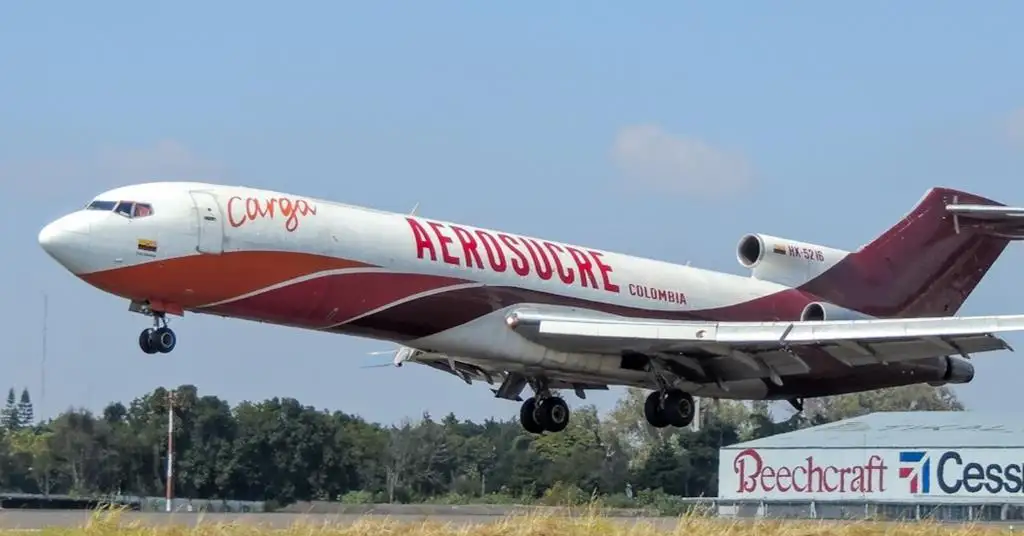
In the quiet pre-dawn hours of December 12, 2025, a historic aircraft teetered on the edge of extinction. Aerosucre flight A4-141, operated by one of the last airworthy Boeing 727-200 freighters in the world, encountered a serious mechanical failure that may spell the end of its operational life. This wasn’t just another cargo flight; it could mark the final chapter of a legendary aircraft that’s spanned over four decades of aviation history.
A Critical Incident at 15,000 Feet
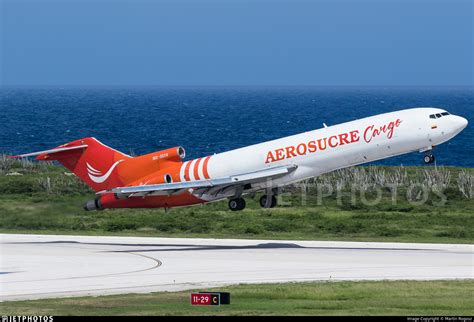
The aircraft involved, registered as HK-5216, departed from Barranquilla Ernesto Cortissoz International Airport (BAQ) at 2:27am, bound for Bogotá’s El Dorado International Airport. Operated by Colombian cargo airline Aerosucre, this Boeing 727-200 was flying a short one-hour domestic route—routine, until it wasn’t.
Shortly after takeoff, the flight crew detected a failure in the left-hand main landing gear. At 15,000 feet, the ascent was halted. The crew cautiously began descent and circled in a holding pattern at 3,000 feet to assess the situation. At 3:41am, the aircraft touched down back on Runway 05, but the landing was far from smooth. As the freighter rolled down the tarmac, its left wing collapsed, dragging along the runway.
Despite the dramatic landing, no injuries were reported, and the crew successfully kept the aircraft on the runway. However, the damage was substantial—especially to the left wing and landing gear assembly, raising questions about the airframe’s viability for repair. Given the jet’s age—45 years and counting—aviation experts fear this incident could spell its end.
HK-5216: A Flying Relic With a Storied Past
HK-5216 wasn’t just old; it was a flying piece of history. Originally ordered by Braniff International Airways in 1978, the aircraft first took to the skies in January 1980. Over the years, it wore the liveries of multiple airlines including US Air, American Trans Air, Astar Air Cargo, and Air Class Líneas Aéreas. Converted into a freighter in 2003, it eventually found a new home at Aerosucre in 2017.
Before its possible demise, the aircraft had clocked over 62,000 flight hours and 34,820 flight cycles, according to ch-aviation data. These numbers underscore not just the durability of the 727 platform, but also the intense utility freight carriers squeezed from aging fleets in developing markets.
The Operational Fallout for Aerosucre
The loss of HK-5216 could deal a serious blow to Aerosucre’s fleet, which already consists of just six aircraft, all of which are aging:
- Boeing 727-200F – One aircraft, 45.3 years old
- Boeing 737-200F – One aircraft, 44.9 years old
- Boeing 737-300F – Two aircraft, 37.3 years average
- Boeing 737-400F & SF – Two aircraft, around 33 years old
Aerosucre, notorious for past accidents and labeled by some aviation circles as one of the world’s most dangerous airlines, is now forced to reckon with dwindling options in an increasingly modernized freight market. The carrier did not respond to press inquiries about the incident, perhaps signaling an ongoing internal debate over whether HK-5216 is worth salvaging.
The Bigger Picture: Fewer Than 25 Boeing 727s Left Flying
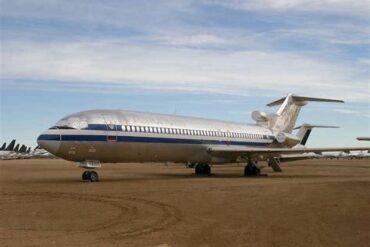
Globally, the Boeing 727 has nearly vanished from the skies. Fewer than two dozen airworthy 727s remain as of 2025, most operating as cargo haulers in remote parts of Africa, South America, the Caribbean, and the U.S. The type, once a staple of global aviation with its iconic T-tail and tri-jet configuration, is now a nostalgic rarity.
The possible end of HK-5216 isn’t just the retirement of an airplane—it’s the closing act of an entire generation of aviation. For enthusiasts and historians alike, the grounded jet sitting on the apron in Barranquilla is a somber symbol of time’s relentless march.

Will It Fly Again?
Whether HK-5216 will be repaired remains unclear. Investigations by Colombia’s Aerocivil are ongoing, and airframe repairs for a jet of this vintage are rarely economically justified. Parts scarcity, regulatory compliance, and sheer age often push operators to cut losses rather than restore aging aircraft. The jet has not moved since the incident, and its fate may already be sealed in silence.
Unless Aerosucre surprises the industry with a full restoration, the skies may have seen their last takeoff of HK-5216, and with it, a little more of aviation’s golden era disappears into history.