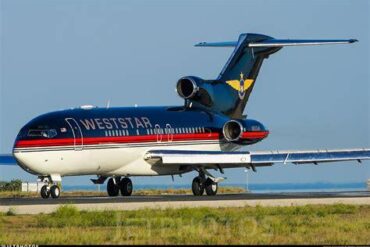
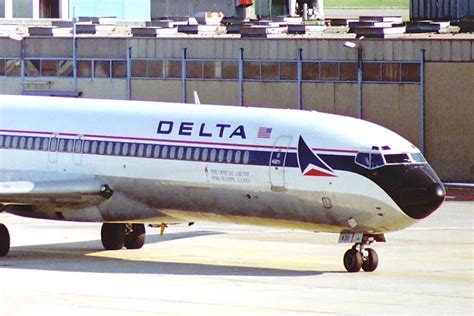
The Boeing 727 did not emerge from a vacuum of pure engineering ambition. It was sculpted by a three-way tug-of-war between airline economics, regulatory frameworks, and the hard physics of early jet propulsion. When it first rolled onto runways in the early 1960s, the aircraft’s trijet configuration looked unconventional—one engine buried in the tail, two mounted on the rear fuselage. Yet that unusual layout was neither aesthetic indulgence nor experimental whim. It was a precise solution to a complex operational equation.
In the dawn of the jet age, airlines were pushing into thinner routes—shorter runways, higher elevations, and regional markets that could not support the operational heft of aircraft like the Boeing 707. The industry needed a jet that could leap from constrained airfields yet still deliver the speed and prestige of turbine travel. Boeing’s answer would become one of the most commercially successful narrow-body airliners in history.
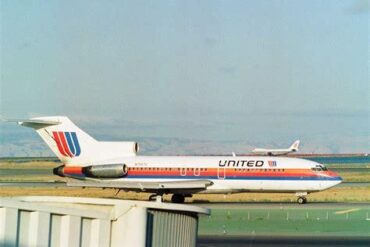
The tri-engine design represented a calculated compromise. Each launch customer—United Airlines, American Airlines, and Eastern Air Lines—arrived with different non-negotiables. Boeing’s engineers were not merely designing an airplane; they were arbitrating between competing business models, safety rules, and technological ceilings.
Airline Demands That Shaped the Trijet Blueprint
The 727’s engine count was essentially negotiated into existence.
United Airlines required strong “hot and high” performance. Airports such as Denver sit at high elevation, where thinner air reduces engine thrust and aerodynamic lift. Aircraft departing these fields need more raw power just to achieve safe takeoff margins.
American Airlines, by contrast, pushed for the efficiency of a twin-engine jet. Fewer engines meant lower maintenance costs, reduced fuel burn, and simpler logistics. In a purely economic vacuum, two engines would have been ideal.
Eastern Air Lines introduced the regulatory constraint. At the time, overwater flight rules prohibited twin-engine aircraft from operating routes more than 60 minutes from a diversion airport. This restriction effectively barred twins from lucrative Caribbean and Gulf of Mexico routes. A third engine unlocked those markets instantly.
Boeing’s solution was elegant: install three Pratt & Whitney JT8D turbofans. This configuration delivered sufficient thrust for demanding runways, regulatory clearance for overwater operations, and better efficiency than a four-engine layout. The result satisfied all three carriers without forcing any to abandon core requirements.
Engine Technology Limits in the Early Jet Age
Modern travelers are accustomed to twin-engine aircraft crossing oceans with casual confidence. That reality rests on decades of reliability improvements and certification evolution. In the early 1960s, engine technology had not yet reached that threshold.
The low-bypass JT8D engines powering early 727s produced between 13,600 and 16,100 pounds of thrust. For an aircraft carrying over 100 passengers from short runways, two engines simply did not provide adequate performance margins.
Adding a fourth engine would have solved the thrust problem—but at a cost. More engines meant more drag, more weight, more fuel burn, and heavier wing structures to support additional nacelles. Airlines seeking short-haul profitability would have balked at quadjet economics.
Three engines therefore became the minimum viable thrust solution—a balance between performance and efficiency.

Short Runways and the Physics of Lift
Many secondary airports in the 1960s featured runways as short as 4,500 feet. Jets like the 707 required far longer distances, restricting them to major hubs. Boeing wanted the 727 to penetrate underserved regional markets.
To achieve this, engineers paired the trijet layout with one of the most advanced high-lift systems of its time: triple-slotted flaps. These complex wing surfaces dramatically increased lift at low speeds, allowing steeper climb angles and shorter takeoff rolls.
Mounting engines at the rear delivered another aerodynamic benefit. With no nacelles under the wings, airflow remained cleaner, improving lift efficiency. The wing could be optimized purely for aerodynamics rather than structural reinforcement.
Three engines supplied the thrust. The wing design converted that thrust into runway performance. Together, they enabled operations from airports previously closed to jet service.
The T-Tail: Form Following Function
The 727’s T-tail configuration is one of its most recognizable design elements. Rather than placing the horizontal stabilizer low on the fuselage, Boeing elevated it atop the vertical fin.
This was not stylistic flourish. Rear-mounted engines required unobstructed airflow. A conventional tailplane would have sat directly in engine exhaust and turbulent wake. Raising the stabilizer solved the interference problem while preserving control authority.
The high tail also improved aerodynamic efficiency during takeoff and landing by keeping the stabilizer in cleaner air. However, the design introduced risks—notably the potential for deep stall, a condition where disturbed airflow renders the tail ineffective at recovery angles.
Engineers mitigated these risks through aerodynamic refinements and operational procedures. The payoff was a sleek silhouette that became synonymous with the trijet era.
The S-Duct and the Hidden Third Engine
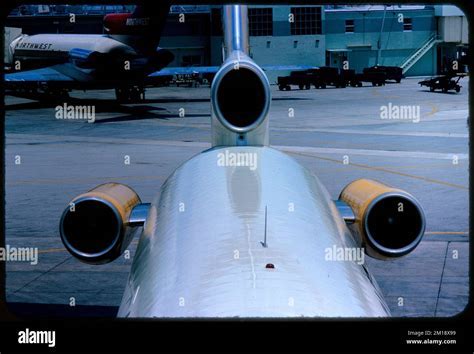
The center engine—known as the number-two engine—was fed by an internal S-shaped intake duct running through the tail. This serpentine passage allowed Boeing to mount the engine internally while maintaining a clean external profile.
Yet airflow does not enjoy sharp turns. Early designs struggled with distorted inlet flow, which could trigger compressor stalls during rapid throttle changes. Engineers introduced vortex generators and reshaped duct contours to stabilize airflow.
Maintenance crews faced their own challenges. Accessing the tail engine required platforms, ladders, and patience. Routine inspections took longer than on wing-mounted engines, increasing labor costs.
The S-duct was an engineering compromise—an aerodynamic win paired with mechanical inconvenience.
Regulatory Barriers and Overwater Freedom
Before modern ETOPS (Extended-range Twin-engine Operational Performance Standards), regulators treated twinjets cautiously. Engine failure far from land was considered an unacceptable risk.
By adding a third engine, the 727 gained immediate overwater certification flexibility. Eastern Air Lines could deploy it across Caribbean networks without waiting for regulatory evolution.
This capability unlocked profitable tourism and business routes. It also future-proofed the aircraft against operational limitations that plagued early twinjets.
In effect, the third engine functioned as both propulsion and passport.
Competition in the Trijet Arena
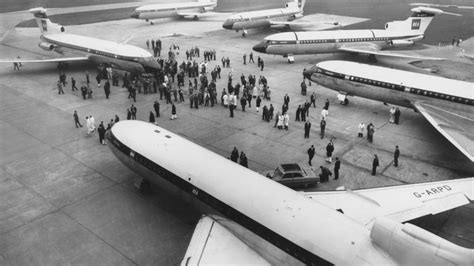
Boeing was not alone in exploring the trijet formula. Across the Atlantic, Hawker Siddeley’s Trident pursued a similar architecture, though with lower passenger capacity and shorter range. Later, the Soviet Union introduced the Tupolev Tu-154, a rugged trijet built for harsh operating environments.
While each aircraft shared the three-engine philosophy, the 727 distinguished itself through commercial scale. More than 1,800 units were produced, dwarfing the Trident’s output and rivaling later narrow-body successes.
Its blend of performance, economics, and regulatory flexibility made it the dominant short-to-medium haul jet of its generation.
Passenger Experience and Airport Independence
The 727 was designed for infrastructure flexibility. Many smaller airports lacked jet bridges, so Boeing integrated a rear airstair into the fuselage.
Passengers could board directly from the tarmac, enabling operations in remote or underdeveloped regions. This feature enhanced route versatility and reduced ground equipment dependency.
The airstair also became infamous. In 1971, hijacker D.B. Cooper parachuted from the rear stairs midflight after extorting ransom money—one of aviation’s greatest unsolved mysteries. The incident led to the installation of the “Cooper vane,” a device preventing stair deployment in the air.
Engineering necessity, operational convenience, and criminal legend fused into one peculiar design legacy.
Noise, Fuel Burn, and the March of Progress
Technology never stops moving. By the 1980s and 1990s, the 727’s strengths began to look like liabilities.
Its low-bypass turbofans were significantly louder than newer high-bypass engines. As global noise regulations tightened, many aircraft required expensive hush kits to remain compliant.
Fuel efficiency also lagged behind emerging twinjets like the Boeing 737 Next Generation and Airbus A320 families. Two modern engines could outperform three older ones in both economy and environmental footprint.
Airlines faced a financial tipping point: retrofit aging trijets or replace them entirely. Most chose retirement.
Maintenance Economics of Three Engines
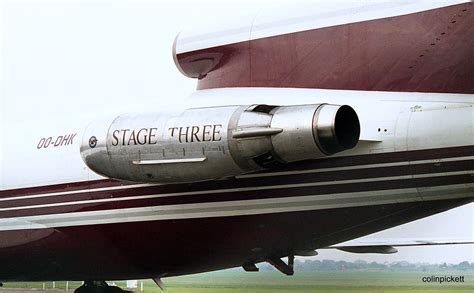
Operating three engines meant triple the inspection cycles, parts inventories, and overhaul schedules compared with twins.
The tail-mounted center engine amplified costs further due to accessibility challenges. Even routine borescope inspections demanded additional setup time.
While the trijet design once represented optimal compromise, advancing engine reliability eroded its economic rationale. Maintenance math gradually turned against the configuration.
A Workhorse That Opened the Jet Age
Despite later disadvantages, the 727’s impact was transformative. It connected secondary cities to jet networks, democratizing air travel beyond flagship hubs.
Its performance allowed airlines to build hub-and-spoke systems, feeding passengers from regional airports into long-haul gateways. This network architecture still defines global aviation today.
The aircraft also introduced innovations such as onboard auxiliary power units (APUs), enabling self-sufficient ground operations without external power.
The Lasting Legacy of the Trijet Experiment
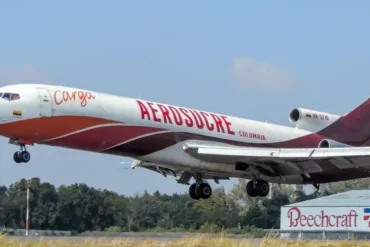
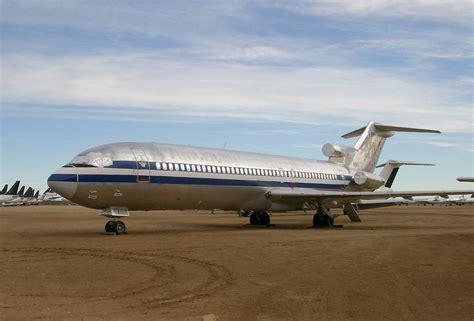
Today, only a handful of 727s remain in active service, mostly as freighters or private conversions. Yet its design DNA echoes through aviation engineering decisions.
The aircraft proved that engine count is never arbitrary—it is a negotiation between physics, regulation, and economics. Modern ETOPS certifications now allow twins to fly routes once reserved for three or four engines.
But the conceptual lesson endures: when technology, law, and market demand collide, engineering solutions become acts of diplomacy.
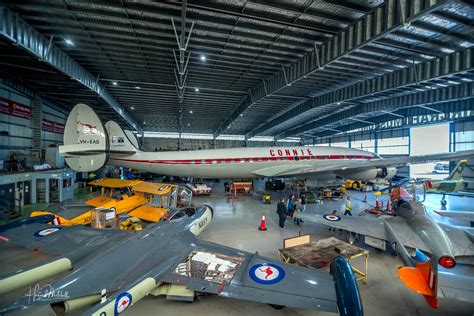
The Boeing 727’s three-engine configuration was not excess—it was precision. A machine built at the intersection of limitation and ambition, where every turbine represented a solved problem. Its silhouette remains a reminder that progress is rarely linear. Sometimes it arrives with an extra engine bolted to the tail, daring the industry to catch up.