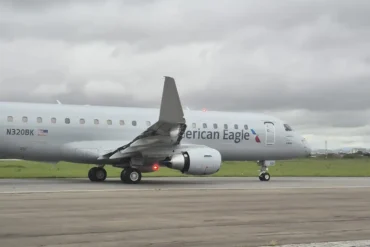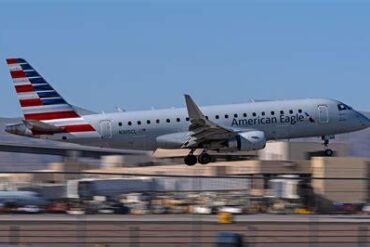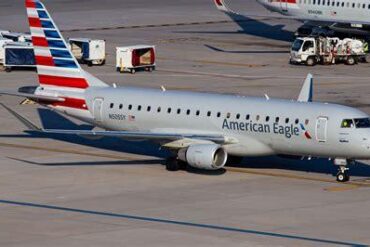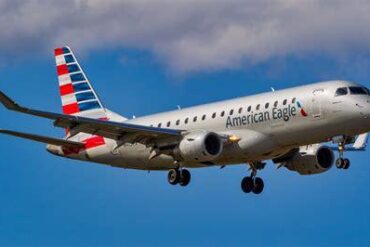
American Airlines has unveiled a striking new aircraft to celebrate the upcoming 250th anniversary of the United States, but the biggest surprise is not the patriotic paint scheme. It is the airplane itself. Rather than selecting one of its many Boeing jets built in the United States, the carrier chose a Brazilian-built Embraer E175 regional jet to wear the special America250 livery.
The reveal immediately sparked debate across aviation circles. American Airlines operates one of the world’s largest Boeing fleets, with hundreds of U.S.-manufactured aircraft in service. On the surface, choosing a foreign-built regional jet for a deeply patriotic campaign appears unusual. Yet when examined through the lens of airline strategy, network visibility, and operational efficiency, the decision makes far more sense than critics may assume.
American introduced the aircraft during a ceremony at Dallas/Fort Worth International Airport, attended by company leadership and federal transportation officials. The aircraft, registered N341MB, was recently delivered to Envoy Air, the wholly owned regional subsidiary that operates flights under the American Eagle brand.
The jet’s livery features bold red, white, and blue styling, with a large “250” graphic stretched across the fuselage. It is designed to honor both the nation’s semiquincentennial and American Airlines’ own 100th anniversary, as the carrier traces its roots back to 1926.

Why the Embraer E175 Was the Smartest Choice
The Embraer E175 may not carry the symbolic weight of a Boeing 777 or 737, but it offers something more valuable in airline marketing: constant visibility.
Regional jets like the E175 typically operate multiple flights per day, often completing five to seven sectors across a network of large, mid-sized, and smaller cities. That means the America250 aircraft will be seen repeatedly by passengers, airport staff, and communities across a far wider range of locations than a long-haul aircraft that might fly only one or two routes daily.
Instead of spending much of its time on international rotations or parked between long-haul missions, the E175 will remain active throughout the domestic system. For a commemorative aircraft intended to build public awareness, that makes it a powerful promotional tool.
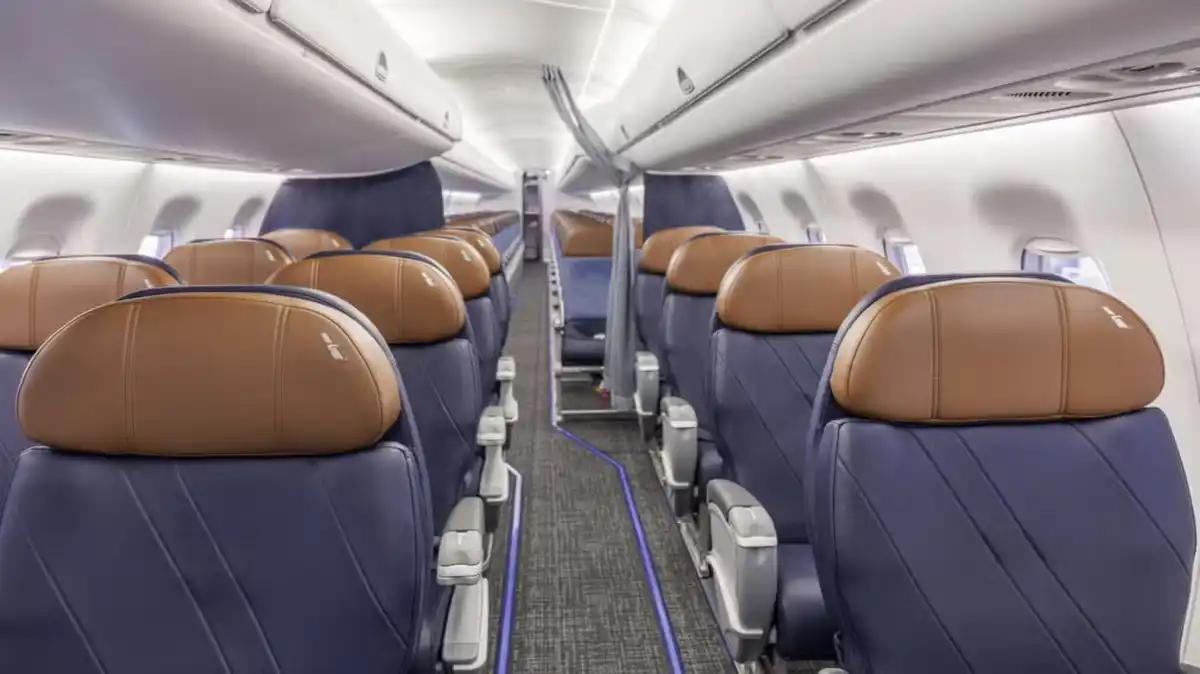
The E175 is also a familiar and comfortable aircraft for passengers. With 76 seats, including 12 First Class seats and 64 Main Cabin seats, it bridges the gap between regional efficiency and mainline comfort. Travelers encountering the special livery are not just seeing a celebration aircraft—they are flying on it.
The International Debut Adds Symbolism
American’s America250 jet is not limited to domestic visibility. The aircraft is scheduled to operate the airline’s renewed service from Miami to Caracas, restoring a route that no U.S. carrier had served in years.
That gives the aircraft an immediate international stage. Rather than keeping the patriotic design within domestic borders, American is using it to signal a return to important markets while showcasing U.S. aviation branding abroad.
The move reflects how airlines often use special liveries as more than decorative projects. These aircraft become flying ambassadors, carrying brand identity into airports worldwide.
A Brazilian Airframe With American Hardware
Another important detail often missed in the early criticism is that while the E175 airframe is assembled in Brazil, the aircraft uses GE CF34 turbofan engines, produced by one of America’s most recognizable aerospace manufacturers.
Modern commercial aircraft are global products. Components, avionics, engines, and systems frequently come from multiple countries regardless of final assembly location. Even many “American-made” aircraft rely on international supply chains.
So while the jet carries Embraer branding, it also represents the deeply interconnected nature of aerospace manufacturing. In that sense, it mirrors modern America itself: innovative, collaborative, and globally linked.
American Airlines Is Not Stopping With One Aircraft
The E175 will not be the only America250 aircraft in the fleet. American Airlines has confirmed that a Boeing 737 will also receive commemorative markings, ensuring a U.S.-built narrowbody joins the celebration.
That second aircraft may satisfy traditionalists who expected Boeing to headline the patriotic campaign. But strategically, launching first with the E175 gives American broader daily exposure while reserving the 737 for high-profile mainline operations.
This two-aircraft approach combines visibility with symbolism. One plane reaches communities frequently, while the other reinforces the carrier’s large domestic presence.
Other Airlines Are Joining the America250 Movement
American is not alone in preparing aircraft for the national milestone. Several major U.S. airlines are participating with their own commemorative liveries.
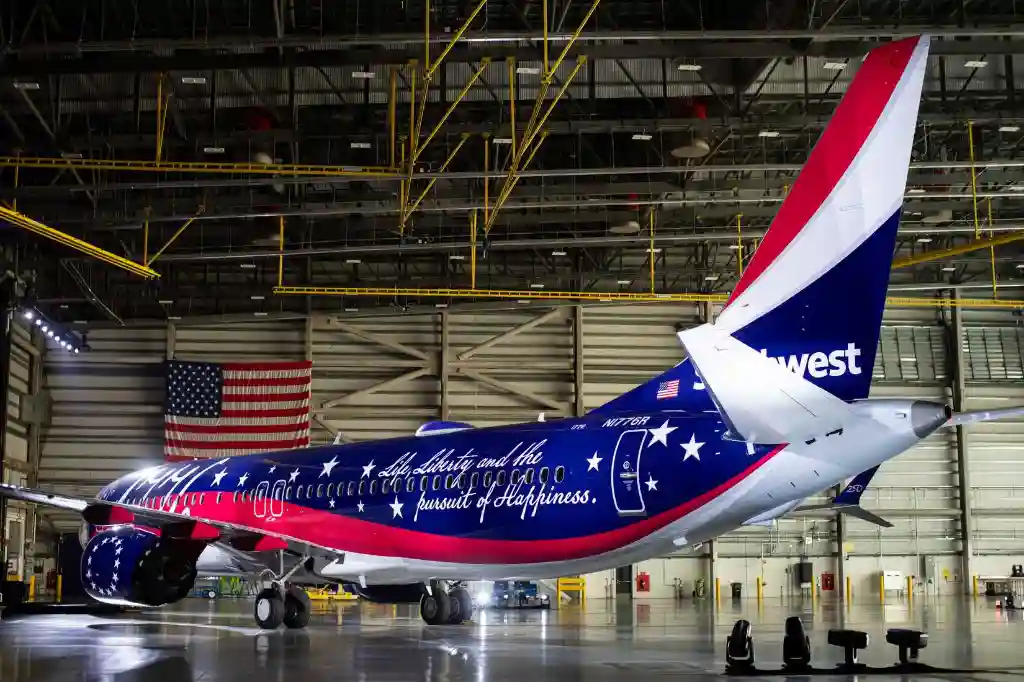
Southwest Airlines has already unveiled a themed Boeing 737 MAX 8 featuring the memorable registration N1776R, directly referencing the year of American independence. Alaska Airlines and United Airlines have also confirmed plans, though details remain limited.
The growing participation shows how powerful aviation can be in national celebrations. Aircraft liveries turn ordinary commercial jets into moving tributes seen by millions.
More Than Paint: A Branding Masterstroke
Special liveries often appear cosmetic, but they serve serious business purposes. They generate media coverage, social media engagement, passenger curiosity, and emotional connection with the brand. For an airline celebrating its centennial during the same period the United States marks 250 years, the timing could hardly be stronger.
American Airlines understood that the best aircraft for this mission was not necessarily the biggest or most expensive. It was the one most likely to be seen, photographed, and remembered.
That is why the Brazilian-built Embraer E175 became the chosen canvas.
In aviation, symbolism matters—but visibility matters more. American Airlines selected the aircraft that could carry the celebration to the greatest number of people, across the greatest number of cities, in the shortest amount of time.
And from a fleet strategy perspective, that is not controversial at all. It is simply smart.