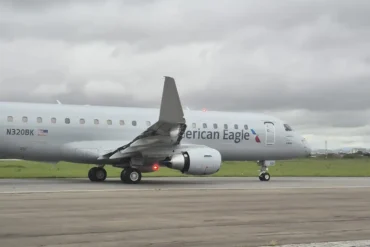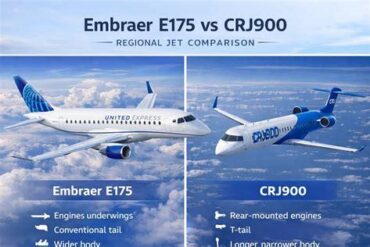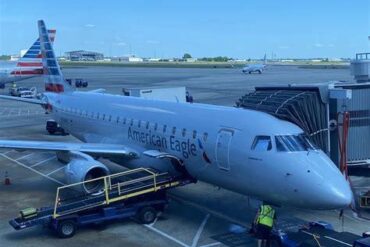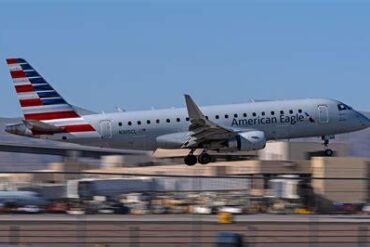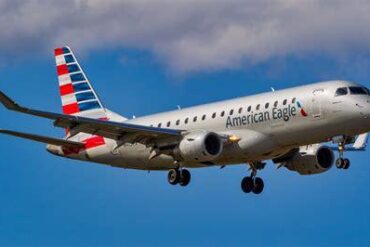
Regional aviation in the United States has long been defined by a combination of operational necessity, fleet economics, and contractual constraints. At the heart of this conversation lies the Embraer E175, a workhorse aircraft that has not only stood the test of time but thrived in an environment that has resisted significant disruption. As the aviation industry peers into the next 10 to 20 years, a crucial question arises: Will a new aircraft rise to take the crown, or will the E175 remain the undisputed king of regional flying?
The E175: A Proven Performer in Regional Markets
The Embraer E175, introduced in the early 2000s, has since established itself as a cornerstone of North American regional operations. Known for its exceptional passenger comfort, fuel efficiency, and compatibility with U.S. scope clauses, the E175 strikes a near-perfect balance between size, performance, and regulatory compliance.
From a passenger perspective, the aircraft offers 2-2 seating, eliminating the dreaded middle seat, and a surprisingly quiet cabin. For airlines, the E175 delivers cost-effective operations on short-haul routes while maintaining flexibility for medium-haul markets. Moreover, its advanced flight deck includes features typically reserved for larger jets, such as autothrottles, auto anti-ice, and automatic speedbrake retraction, enhancing both safety and pilot workload management.

Scope Clauses: The Invisible Gatekeeper of Fleet Evolution
A significant factor cementing the E175’s dominance is the restrictive nature of pilot union scope clauses embedded in U.S. airline contracts. These clauses limit the size and weight of aircraft that can be flown by regional partners, effectively freezing innovation unless the economics shift or labor agreements evolve.
Under most current scope clauses, regional jets are capped at 76 seats and 86,000 pounds maximum takeoff weight. While newer aircraft like the Embraer E175-E2 offer improved fuel burn and emissions profiles, they exceed the weight limit and are therefore disqualified from operating under existing contracts. This reality has forced Embraer to continue producing the older E175-E1 variant, which fits within the contractual framework even though it’s based on older technology.
This situation exemplifies how industrial relations can have a more substantial impact on fleet planning than raw technical capability. Airlines may desire newer, more efficient jets, but if the cost of renegotiating contracts or reclassifying regional carriers is too high, status quo prevails.
The A220 Dilemma: Technically Superior, Economically Incompatible
Among potential successors, the Airbus A220 is frequently highlighted for its superior cabin experience, modern avionics, and remarkable fuel efficiency. It’s an aircraft built with the future in mind, capable of serving both regional and mainline markets with ease. However, it faces an uphill battle in the regional segment for several key reasons.
First and foremost, the A220 does not meet scope clause restrictions due to its larger size and weight, effectively relegating it to mainline routes. Furthermore, the unit cost of the A220 is significantly higher than the E175, creating a pricing misalignment that makes fleet replacement uneconomical for many regional operators. Despite some large U.S. carriers like Delta integrating the A220 into their mainline fleets, its application in true regional operations remains limited and unlikely to shift soon without contract renegotiation.

The Ghosts of Regional Jets Past: CRJ, MRJ, and the 717 Legacy
In exploring the landscape of regional aircraft, it’s impossible not to reflect on past contenders that either faded away or never reached fruition. The Bombardier CRJ series, once a staple of short-haul flying, has largely been retired or phased out, primarily due to passenger discomfort and high operating costs. Still, a contingent of pilots and aviation enthusiasts regard the CRJ700 and CRJ900 with a sense of rugged admiration, praising their performance and reliability.
Then there was the Mitsubishi Regional Jet (MRJ)—later rebranded as the SpaceJet—which aimed to challenge the status quo with advanced fuel efficiency and cabin comfort. Despite initial excitement, the program was ultimately cancelled, a casualty of development delays, scope clause incompatibility, and lack of customer traction.
Even older aircraft such as the Boeing 717, Fokker 100, and BAe 146/Avro RJ occasionally surface in nostalgic discussions. These models brought unique capabilities, but none could offer the comprehensive economic and regulatory fit that the E175 provides today.
Turboprops and Missed Opportunities: The Q400’s Elusive Potential
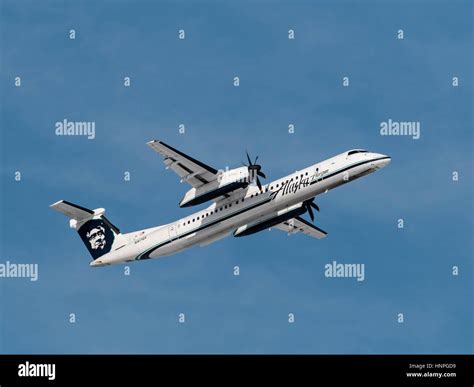
While regional jets dominate the North American market, turboprops remain a viable option in other parts of the world. The Bombardier Q400, in particular, could have filled niche roles in short-distance routes with lower demand. It offers superior short-field performance, lower fuel burn, and can operate from smaller airports with limited infrastructure.
However, despite its operational strengths, the Q400 never gained traction in the U.S. regional ecosystem. The stigma around turboprop comfort, combined with the branding desires of major carriers, limited its appeal. In markets where speed and perception trump fuel savings, jet engines continue to rule, even if the economics are marginally worse.
What Would It Take for a New Aircraft to Dethrone the E175?
For a new regional aircraft to overtake the E175, several major shifts would need to occur:
- Scope Clause Reform: The single largest barrier. Without changes to union agreements, heavier or more capable aircraft will continue to be excluded from regional fleets.
- Economic Rebalancing: The new aircraft must not only offer better performance, but also justify the cost of acquisition, training, and maintenance changes.
- Manufacturer Strategy: OEMs need to tailor products specifically for this niche. Trying to shoehorn larger jets into regional operations has consistently failed.
- Environmental Incentives: As sustainability pressures grow, regulatory or incentive-driven fleet renewals could favor newer, cleaner designs.
Until these factors align, no serious rival is poised to replace the E175 at scale. While niche players may emerge for specialized missions, volume dominance will remain with the status quo.
Looking Ahead: Stability in the Skies or Innovation on the Horizon?
Regional aviation is inherently conservative, largely due to the tight margins and regulatory entanglements that define the space. This is not an industry prone to rapid transformation. Yet, incremental innovation continues in the background. Technologies such as hybrid-electric propulsion, advanced materials, and autonomous systems may one day unlock a new paradigm of regional aircraft.
But in the near to mid-term—especially over the next 10 to 20 years—the E175 looks increasingly likely to retain its crown. As long as scope clauses stay in place and no manufacturer can profitably introduce a compliant alternative, the aircraft will remain the backbone of regional fleets.
It’s an aircraft that perfectly fits a very specific mold—efficient, compliant, and comfortable—and no challenger has yet managed to check all the same boxes. Unless there is a structural upheaval in pilot labor agreements, airline fleet strategy, or government policy, the E175’s reign is far from over.
Conclusion: A King Without a Challenger
In the game of regional aviation, the Embraer E175 is a reigning monarch, not because it has no rivals, but because its unique intersection of technical adequacy and regulatory compatibility remains unmatched. Despite the temptations of newer, cleaner, or more sophisticated aircraft, none have been able to usurp its place—not due to lack of innovation, but because the ecosystem surrounding regional aviation actively resists such change.
For the foreseeable future, regional airports across North America will continue to echo with the familiar sound of E175 engines, reliably connecting communities, enabling airline networks, and quietly outperforming in the shadows of their larger, flashier cousins.
And so, the question transforms from “Who will replace the E175?” to “Why replace it at all?”