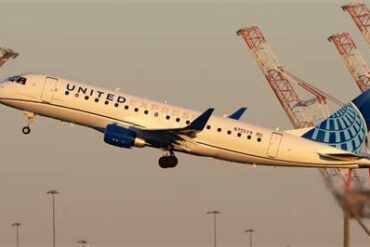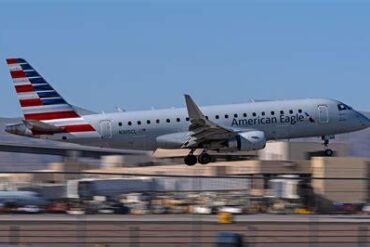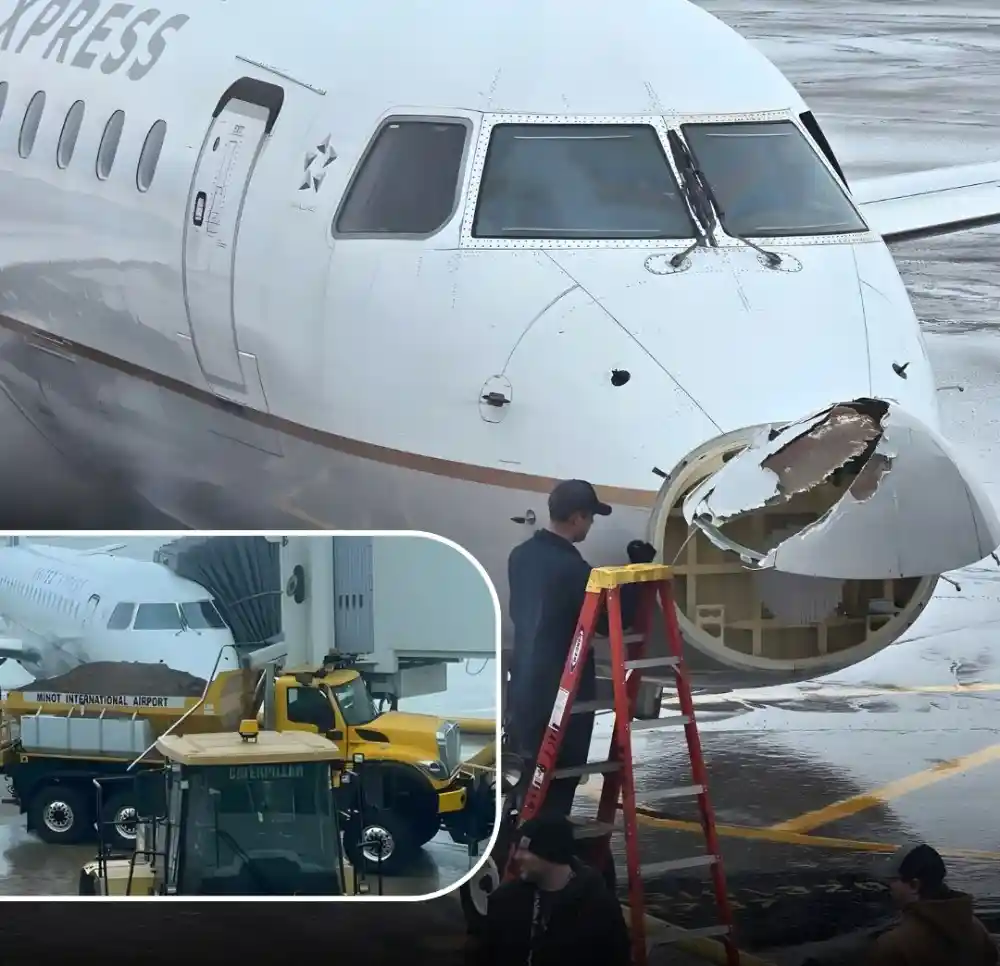
On the frigid morning of December 9, 2025, a serious ground incident unfolded at Minot International Airport (MOT), North Dakota, when a plow truck reportedly struck the nose of a United Express Embraer E175 regional jet, ripping open its radome and grounding the aircraft indefinitely. Operated by SkyWest Airlines under the United Express brand, the Embraer E175, registered N135SY, was preparing for departure on flight UA5062 to Denver International Airport when the collision occurred.
Impact on Flight Operations and Aircraft Status
The flight was scheduled to depart at 7:15 a.m. local time for a short-haul route to Denver, but the aircraft never left the tarmac. Following the incident, Flightradar24 data confirmed the cancellation of the scheduled service. The aircraft was later removed from service and is now listed for its next operation as a Denver to Palm Springs route on December 11, 2025, pending inspection and repairs.
The Embraer E175 involved is a 10.7-year-old E175LR variant, capable of accommodating 76 passengers across two cabins—12 in first class and 64 in economy. It is one of many such jets in SkyWest’s fleet, serving as the workhorse for regional United Express flights across the country.
Severity of Ground Damage
Images circulated in aviation enthusiast forums such as Flightradar24 Flight Spotters showcased the extent of the damage: the nose cone, or radome, appeared to be torn open, exposing sensitive avionics equipment typically housed in the forward fuselage. The radome is crucial not only for housing weather radar systems but also for maintaining the aircraft’s aerodynamics.
Ground Incidents: A Persistent Safety Risk in Aviation
While such high-profile collisions are relatively rare at a single airport, they are alarmingly common across the global aviation industry. Known as ground damage incidents, these events involve external equipment or vehicles striking parked or taxiing aircraft, often during snow clearance, fueling, baggage handling, or pushback operations.
In this case, the culprit appears to be a snow plow, likely involved in clearing the runway or taxiways amidst winter weather conditions. These vehicles are essential in northern airports like Minot, where harsh winters and low visibility increase operational risks.
Terry Yeomans, Director of the International Standard for Business Aircraft Handling (IS-BAH), has previously warned that most ground damage events, though often minor, are underreported due to the lack of formal regulatory requirements. He emphasized that **”even seemingly small impacts can result in serious structural or systems-related failures.”
Not an Isolated Incident
This latest mishap joins a growing list of noteworthy ground accidents in late 2025:
- On November 18, two United Airlines Boeing 737-900ERs made wingtip contact during pushback in Houston, shearing off a winglet.
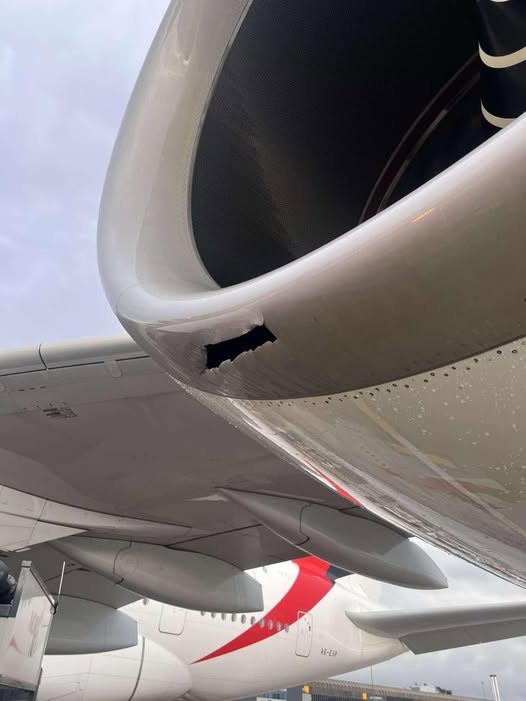
- On December 1, an Emirates Airbus A380 collided with a fuel truck in Manchester Airport (MAN), damaging an engine cowling and grounding the aircraft for over 48 hours.
These recurring events highlight a systemic vulnerability in airport ground operations—especially when working under time constraints or inclement weather.
The Bigger Picture: Human Error, Training, and Infrastructure
Ground support equipment collisions are often traced back to human error, fatigue, or inadequate training among ground crew. In snowy, low-visibility conditions—common in places like North Dakota—additional safeguards such as ground radar, automated stop systems, and advanced driver-assistance systems on airside vehicles are recommended.
Airport authorities and airline partners have been investing in better training protocols and real-time vehicle tracking systems, yet incidents like the one in Minot suggest that much work remains. Damage to aircraft on the ground can cost millions in repairs, not to mention reputational harm and operational disruptions.
As of now, neither SkyWest Airlines nor United Airlines has issued a formal statement about the crash. The Federal Aviation Administration (FAA) has yet to confirm whether the incident will lead to a formal investigation, though given the severity of the damage, an inquiry is likely.
Conclusion: A Call for Heightened Vigilance
The incident at Minot is a stark reminder of the vulnerabilities that exist outside the cockpit. While the aviation industry boasts one of the safest safety records in the world in terms of airborne operations, ground safety remains a critical area of focus. Until systematic improvements in vehicle guidance, crew training, and procedural oversight are universally adopted, the risk of tarmac accidents will remain a shadow over daily airport operations.