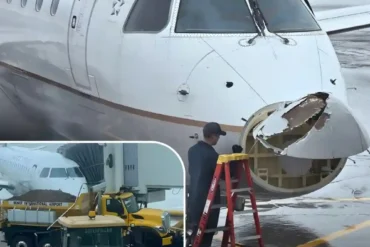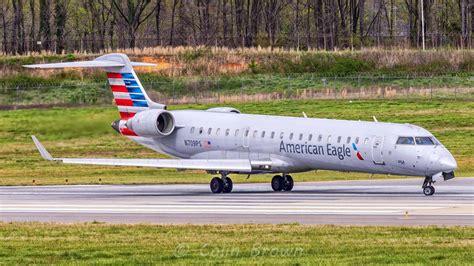
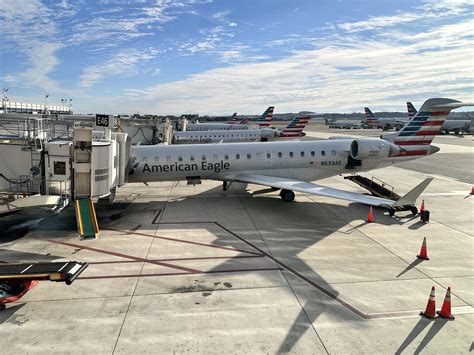
A routine regional flight departing Washington, D.C. turned into a short but urgent emergency after runway debris struck an American Eagle Bombardier CRJ-700 during takeoff, punching a hole in the aircraft’s radome and forcing the crew to divert moments after becoming airborne. The incident occurred on the evening of March 9, 2026, when the aircraft—operated by PSA Airlines on behalf of American Eagle—was departing Ronald Reagan Washington National Airport (DCA) bound for Birmingham-Shuttlesworth International Airport (BHM).
Despite the structural damage to the aircraft’s nose section, the flight crew maintained control and executed a rapid diversion to Washington Dulles International Airport (IAD), landing safely just 16 minutes after departure. No injuries were reported among passengers or crew, though the aircraft itself required repairs before returning to service.
Takeoff Impact: Foreign Object Strikes Aircraft During Roll
Flight AA5561 was originally scheduled to depart DCA at 19:59 local time, but operational delays pushed the actual takeoff to 23:29. As the regional jet accelerated along Runway 15, the crew felt a noticeable impact—an indication that the aircraft had struck foreign object debris (FOD) on the runway surface.
Foreign object debris refers to any loose material on an airfield that can be ingested by engines or strike an aircraft during high-speed operations. During the takeoff roll, aircraft reach speeds exceeding 150 knots, meaning even a small piece of debris can behave like a projectile when hit by landing gear or airflow.
The CRJ-700 continued its departure and lifted off normally, but the crew quickly realized something had struck the aircraft.
Rather than climbing toward its cruising altitude, the pilots stopped their ascent at approximately 4,000 feet while assessing aircraft systems and potential structural damage. Given the unknown nature of the impact and the proximity of multiple airports in the Washington region, the crew opted to divert immediately.
Rapid Diversion to Washington Dulles
The aircraft turned west toward Washington Dulles International Airport, located about 24 miles from Reagan National. Dulles offers longer runways, extensive maintenance support, and less congested nighttime traffic—making it a logical diversion point for aircraft departing the capital region.
Within minutes of the decision, the CRJ-700 was descending toward Dulles. The aircraft touched down safely, concluding a flight that lasted just 16 minutes from takeoff to landing.
After the aircraft arrived at the gate, maintenance personnel conducted an inspection that revealed the extent of the damage.
According to the Federal Aviation Administration (FAA):
“The aircraft struck an object on takeoff from DCA and diverted to IAD, where a post-flight inspection revealed a hole in the radome.”
The radome—located at the nose of the aircraft—protects sensitive weather radar equipment while allowing radar signals to pass through. Damage to this component can affect navigation and weather detection, making immediate inspection essential.
Aircraft Grounded Before Repairs in Wichita
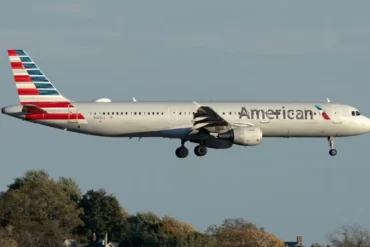
The aircraft involved was a 22-year-old Bombardier CRJ-700, registered N517AE. Originally delivered in 2003, the regional jet later joined the PSA Airlines fleet in 2017, where it operates short-haul flights across the American Airlines regional network.
Configured to carry 65 passengers, the aircraft features:
- 9 First Class seats
- 54 Economy seats
- 16 Main Cabin Extra seats with additional legroom
Following the incident, the jet remained parked at Washington Dulles while technicians evaluated the damage and determined the necessary repair procedures.
Flight tracking data shows the aircraft departed Dulles the following evening, flying to Wichita Dwight D. Eisenhower National Airport (ICT) in Kansas. Wichita hosts a major Bombardier maintenance and service center, making it a common destination for structural repairs involving CRJ-series aircraft.
After completing repairs, the aircraft repositioned back to Reagan National Airport, where it was scheduled to resume commercial service, including a flight to Grand Rapids, Michigan (GRR).
Why Radome Damage Is a Serious Aviation Concern
While the aircraft landed safely, a punctured radome is considered a significant maintenance issue. The radome is constructed from specialized composite materials designed to be both aerodynamically smooth and transparent to radar signals. Even relatively small damage can disrupt airflow over the aircraft’s nose or interfere with onboard weather radar.
In severe cases, radome damage can also expose internal radar systems to moisture, debris, or structural stress during flight.
Radome damage most commonly occurs during:
- Bird strikes
- Runway debris impacts
- Ground handling incidents
- Extreme weather events
For flight crews, any suspected nose impact during takeoff or climb typically prompts an immediate diversion to the nearest suitable airport. Continuing a long flight with potential radar or structural damage could create unnecessary risk, particularly if the aircraft encounters weather along the route.
Runway Debris: A Persistent Threat to Aviation Safety
The incident also highlights the ongoing hazard posed by foreign object debris on airport runways, an issue that aviation authorities worldwide treat with extreme seriousness.
Even small objects—such as bolts, fragments of metal, or pieces of rubber from aircraft tires—can cause major damage when struck at high speed. Airports conduct frequent runway inspections, often several times per day, to remove debris and maintain safe operating conditions.
History shows how dangerous FOD can be under the wrong circumstances. One of aviation’s most tragic examples occurred on July 25, 2000, when Air France Flight 4590, a Concorde supersonic jet, crashed shortly after takeoff from Paris.
In that accident, a titanium strip that had fallen from a Continental Airlines DC-10 remained on the runway. When the Concorde accelerated for departure, the metal piece shredded one of its tires. Debris from the exploding tire ruptured a fuel tank, ultimately triggering the catastrophic crash that killed all 113 people onboard and on the ground.
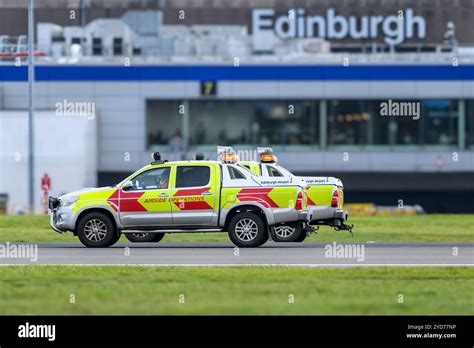
Modern airports use specialized vehicles, radar-based scanning systems, and regular visual patrols to detect debris before aircraft encounter it. Even with these measures, however, occasional incidents still occur due to the sheer volume of daily flight operations.
A Short Flight With a Safe Ending
Although the damage to the CRJ-700 was dramatic—leaving a visible hole in the aircraft’s nose—the quick decision-making by the flight crew ensured the situation remained controlled. The aircraft landed safely, passengers were unharmed, and the jet was repaired and returned to service within days.
The event serves as a reminder that aviation safety relies on layers of protection: vigilant pilots, rigorous maintenance inspections, and constant runway monitoring. When an unexpected hazard appears—even something as small as a piece of debris—those systems are designed to prevent a minor incident from becoming something far worse.