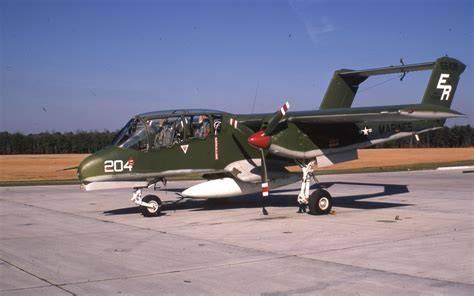
The North American Rockwell OV-10 Bronco remains one of the most distinctive military aircraft ever created. With its unusual twin-boom design, high-mounted straight wing, and tandem cockpit, it looked more like a rugged utility aircraft than a combat machine. Yet this unconventional turboprop became one of the most effective counter-insurgency aircraft of the Vietnam War, proving that battlefield success was not always determined by speed, size, or advanced technology.
Born from the challenges of asymmetric warfare, the OV-10 Bronco represented a different philosophy of airpower. Instead of chasing enemy aircraft or delivering massive conventional strikes, it was designed to stay close to ground troops, observe the battlefield, coordinate attacks, and provide immediate support. Its journey from a troubled concept to a legendary combat aircraft reflected the changing demands of modern warfare.
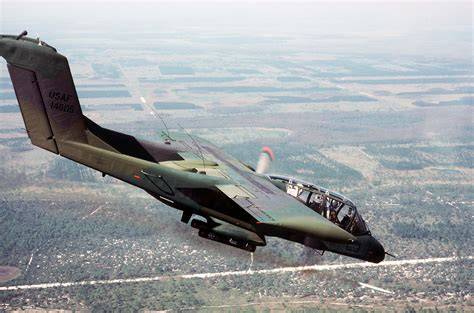
The OV-10 Bronco Concept: Creating A New Type Of Battlefield Aircraft
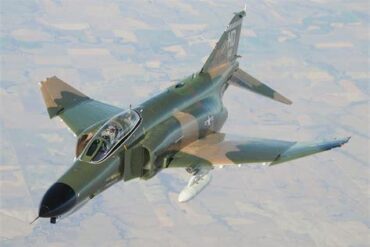
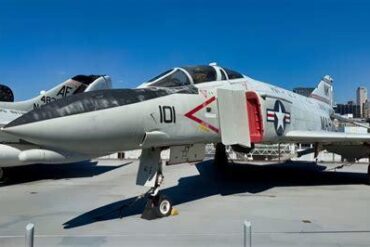
During the early years of the Cold War, military planners increasingly recognized that traditional combat aircraft were not always suited for unconventional conflicts. Fast jets such as the McDonnell Douglas F-4 Phantom II were highly capable machines, but they were designed for high-speed operations and large-scale warfare. In Vietnam, where U.S. forces faced a hidden enemy operating among dense forests and difficult terrain, a different approach was required.
The U.S. military needed an aircraft that could fly slowly over combat zones, remain airborne for long periods, locate enemy forces, and guide other aircraft toward targets. This requirement led to the Light Armed Reconnaissance Aircraft (LARA) program, a joint effort involving the U.S. Air Force, Navy, Marine Corps, and Army.
North American Aviation developed the NA-300 design, which eventually became the OV-10 Bronco. The aircraft entered service in 1968 and was built around flexibility rather than raw performance. Its twin Garrett T76 turboprop engines, excellent visibility, short takeoff and landing capability, and rugged construction made it ideal for operations near frontline positions.
Unlike many aircraft designed during the jet age, the Bronco was built around the idea of being present where the fighting happened. It could operate from small airfields, improvised runways, and remote locations where larger aircraft could not easily function.
Mission Creep Nearly Changed The OV-10 Bronco Forever
The original vision for the LARA aircraft was surprisingly simple. Military planners wanted a lightweight battlefield machine that could support infantry units directly. The ideal aircraft would be easy to maintain, inexpensive to operate, and capable of using primitive forward locations close to combat zones.
However, as multiple military branches became involved, the design gradually changed. Each service added new demands, including greater range, higher payload capacity, improved speed, and additional mission capabilities. The aircraft that emerged from this process was much larger and more complex than the original concept.
The Bronco’s wingspan expanded significantly, and the aircraft gained weight as engineers incorporated additional requirements. The simplicity that defined the earliest LARA proposals slowly disappeared. What began as a lightweight battlefield companion evolved into a more advanced multi-role platform.
Despite these compromises, North American Aviation managed to preserve the most important characteristics of the design. The production OV-10 retained excellent low-speed handling, strong battlefield visibility, twin-engine reliability, and the ability to carry weapons. Although it was no longer the ultra-simple aircraft originally imagined, it still maintained the qualities needed for unconventional warfare.
The OV-10 Bronco In Vietnam: Proving The Value Of Persistence
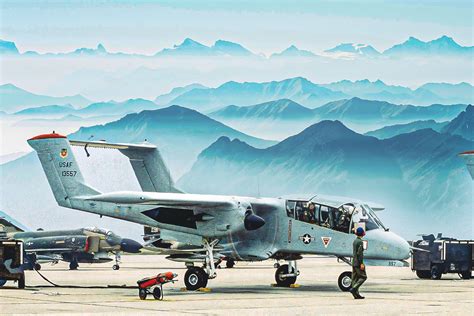
When the OV-10 Bronco arrived in Vietnam, it quickly demonstrated that effective airpower was not always about flying faster or carrying the largest weapons. Its greatest advantage was persistence. The aircraft could remain over a battlefield, observe enemy movements, and coordinate attacks with a level of precision that many faster jets struggled to achieve.
Vietnam’s dense jungle environment created major challenges for pilots. Enemy forces could hide beneath thick vegetation, making identification extremely difficult. The Bronco’s large windows, low-speed stability, and excellent downward visibility allowed crews to search terrain carefully and communicate directly with ground forces.
The aircraft became especially valuable in the forward air controller (FAC) role. Bronco crews could locate targets, mark enemy positions, and direct strike aircraft toward precise locations. In many ways, the OV-10 served as an airborne command center, a role that later influenced the development of modern battlefield surveillance platforms.
Its ability to survive in dangerous environments also became one of its defining characteristics. While high-performance jets often approached targets at tremendous speeds, the Bronco could stay low and slow, maintaining constant awareness of battlefield conditions.
The OV-10 Bronco As A Combat Aircraft
Although reconnaissance and coordination were its primary missions, the OV-10 was far from defenseless. The aircraft featured multiple external hardpoints capable of carrying rockets, bombs, gun pods, and other weapons. This transformed it into an effective light attack aircraft when ground forces required immediate assistance.
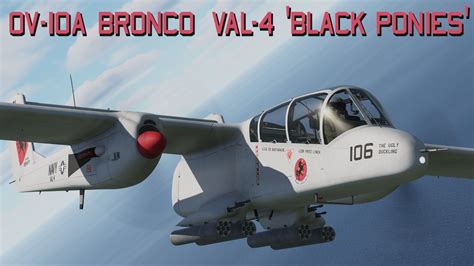
One of the most famous examples came from the U.S. Navy’s VAL-4 Black Ponies squadron. Operating in the Mekong Delta, these Broncos conducted armed reconnaissance and close air support missions for Navy river patrol units, Marine forces, and special operations teams.
The aircraft’s combination of endurance, firepower, and maneuverability made it particularly effective in riverine and jungle warfare. It could arrive quickly, remain over the target area, and provide accurate support without requiring the extensive infrastructure needed by larger aircraft.
The Long Legacy Of The OV-10 Bronco
The OV-10 Bronco officially retired from U.S. military service in 1995, but its story did not end there. Several countries continued operating the aircraft, with the Philippine Air Force flying Broncos until 2024. Few aircraft have maintained such a long operational history after their original introduction.
The Bronco’s influence can still be seen in modern light attack aircraft such as the Embraer A-29 Super Tucano and Beechcraft AT-6 Wolverine. These aircraft follow a similar philosophy: affordable, durable platforms designed to provide surveillance, precision attacks, and close support in conflicts where traditional fighter jets may be unnecessary.
The OV-10 Bronco succeeded because it solved a specific problem. It was not the fastest aircraft, the most heavily armed aircraft, or the most technologically advanced aircraft of its era. Instead, it was a machine designed around the realities of ground warfare.
From a controversial concept shaped by competing military demands to a respected Vietnam War legend, the OV-10 Bronco proved that simple ideas, when matched with the right battlefield requirements, can create extraordinary results. Its legacy remains a reminder that sometimes the most unusual aircraft become the ones remembered forever.