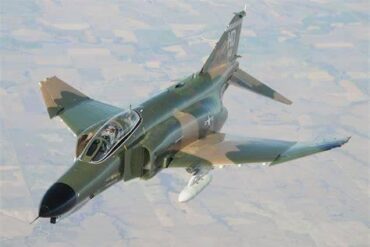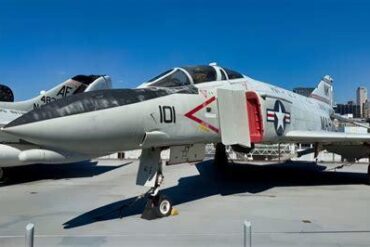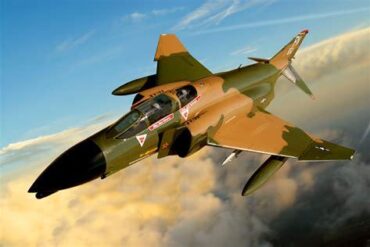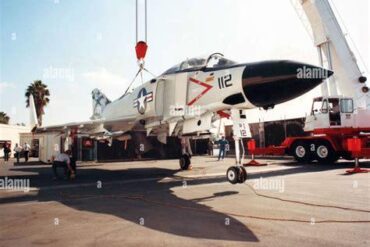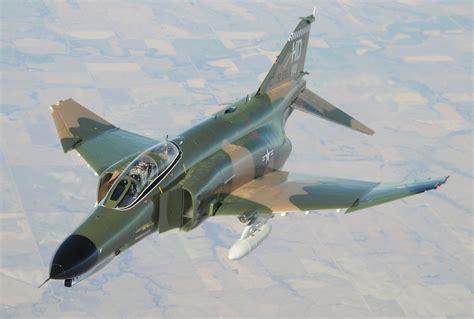
The McDonnell Douglas F-4 Phantom II was conceived in an era when speed was not just an advantage but a philosophy. Designers in the 1950s believed that air combat would be decided far above the clouds, at extreme ranges, with radar-guided missiles replacing close-in dogfights. Out of that mindset emerged an aircraft that looked oversized, overpowered, and unapologetically fast. The F-4 Phantom II was built to reach the edge of what was aerodynamically and mechanically possible at the time, and it delivered performance numbers that still command respect decades later.
When the Phantom first flew in 1958, it entered a world where breaking Mach 2 was rare, expensive, and risky. Many aircraft could flirt with supersonic speeds in short bursts, but few could sustain them. The F-4 was different. It was engineered from the outset to cruise fast, climb fast, and intercept threats before they ever reached friendly airspace. Speed was not a party trick; it was the aircraft’s core identity.
By the time it entered service with the United States Navy in 1960, the F-4 Phantom II was already rewriting the performance record books. It was large, heavy, and unmistakably powerful, yet capable of acceleration and top-end speed that embarrassed lighter fighters. This contrast between brute mass and raw velocity is what still makes the Phantom such a fascinating machine today.
The Exact Top Speed of the F-4 Phantom II
The headline number associated with the F-4 Phantom II is Mach 2.23, equivalent to roughly 1,470 miles per hour or 2,370 kilometers per hour at altitude. That figure represents the aircraft’s maximum level speed under optimal conditions, typically achieved at high altitude where thinner air reduces drag and allows jet engines to operate more efficiently.
This was not a theoretical value pulled from wind tunnel charts. The F-4 demonstrated this speed in real flight, repeatedly, across multiple variants. At the time of its introduction, Mach 2.23 placed the Phantom at the very top of the global fighter hierarchy. Only a handful of aircraft worldwide could even approach that performance, and most were specialized interceptors with limited operational flexibility.
What made this achievement remarkable was the Phantom’s size. With a maximum takeoff weight exceeding 27 metric tons, the F-4 was far heavier than many of its contemporaries. Conventional wisdom suggested that such mass would limit speed, yet the Phantom defied that logic through sheer engine power and aerodynamic efficiency optimized for high-speed flight.
Speed in Context: Why Mach 2.23 Mattered
In the early Cold War, speed was survival. Strategic bombers were getting faster, higher-flying, and more difficult to intercept. A defending fighter needed to climb rapidly, reach supersonic velocity quickly, and maintain that speed long enough to engage. The F-4 Phantom II was built precisely for that mission.
Compared to earlier fighters, the Phantom’s top speed represented a generational leap. Aircraft that had dominated the skies just a few years earlier suddenly looked slow and vulnerable. Even today, Mach 2.23 remains impressive. Many modern multirole fighters, optimized for stealth and sensor fusion rather than outright velocity, have lower published top speeds.
This reality often surprises casual observers. A jet designed in the 1950s can outrun aircraft introduced more than half a century later. The explanation lies in design priorities. The Phantom sacrificed fuel efficiency, low observability, and close-in agility to maximize thrust and high-altitude performance. In doing so, it achieved speed numbers that remain difficult to match without significant trade-offs.
The Engines That Made the Phantom Fast
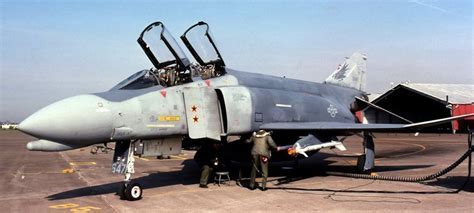
At the heart of the F-4’s speed were its two General Electric J79 afterburning turbojet engines. Each engine produced over 17,000 pounds of thrust, with later variants pushing closer to 18,000 pounds. Combined, they delivered a level of raw power that few fighters of the era could rival.
The J79 was a demanding engine, known for high fuel consumption and distinctive smoke trails in early versions, but it responded quickly and delivered explosive acceleration. When the afterburners lit, the Phantom surged forward with authority, converting fuel directly into speed and climb performance.
This engine pairing gave the F-4 exceptional straight-line acceleration. Pilots often remarked that once the aircraft was pointed forward and the throttles were advanced, very little in the sky could stay ahead of it. That acceleration was just as important as top speed, allowing the Phantom to close distance rapidly during interception missions.
How High Altitude Boosted the F-4’s Speed
The Phantom achieved its maximum speed at altitude, typically above 36,000 feet, where air density is low and drag is reduced. In these conditions, the aircraft could sustain Mach 2-class flight without overstressing the airframe.
High altitude performance was a defining feature of the F-4. In 1961, the Phantom climbed to 66,443 feet, setting a sustained altitude record. This ability to operate comfortably near the stratosphere complemented its speed, making it an ideal interceptor against high-flying threats.
At lower altitudes, the F-4 was still fast, but not at its absolute peak. Dense air increases drag and thermal stress, limiting sustained supersonic flight. Even so, the Phantom retained excellent dash speed near the ground, giving it tactical flexibility unmatched by many interceptors of the era.
Acceleration and Climb: Speed Beyond the Top Number
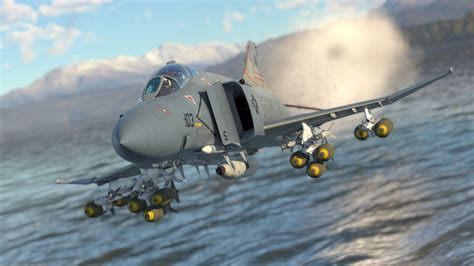
Top speed tells only part of the story. The F-4 Phantom II was equally famous for how quickly it could reach that speed. With a climb rate of approximately 41,000 feet per minute, the Phantom could rocket upward faster than most adversaries could react.
This performance translated directly into combat advantage. An interceptor that can climb faster can dictate the terms of engagement, choosing when and where to fight. The Phantom’s acceleration allowed it to convert fuel into altitude and velocity with ruthless efficiency.
In many ways, this climb performance was more valuable than raw top speed. It meant the F-4 could scramble from alert status, reach altitude rapidly, and intercept intruders before they reached their targets. That capability defined its role during the height of Cold War tensions.
Operational Limits and Sustained Supersonic Flight
While the F-4 could exceed Mach 2, sustained flight at those speeds was constrained by heat and fuel consumption. At extreme velocities, air friction heated the aircraft’s skin significantly, especially around the nose and leading edges. Engineers accounted for this with robust materials and structural margins, but prolonged Mach 2+ flight was not routine.
Fuel burn was another limiting factor. With afterburners engaged, the J79 engines consumed fuel at an astonishing rate. This meant that maximum speed runs were typically brief, used tactically rather than continuously.
Even with these limitations, the Phantom’s ability to repeatedly reach such speeds without structural issues underscored the strength of its design. It was not fragile or temperamental at high velocity; it was built to live there when required.
Speed Versus Agility: A Deliberate Trade-Off
The F-4 Phantom II’s speed came at the expense of maneuverability. Its large wings and heavy structure made it less agile than smaller fighters like the MiG-21. In close-range dogfights, this difference became painfully obvious during the early years of the Vietnam War.
However, this was not a design failure so much as a doctrinal gamble. The Phantom was never meant to rely on turning fights. Its designers assumed that speed, radar, and missiles would render traditional dogfighting obsolete. In that context, prioritizing Mach 2 performance made perfect sense.
Later upgrades, including leading-edge slats and improved training, mitigated some of these shortcomings. Even so, the Phantom remained fundamentally a speed-centric aircraft, happiest when allowed to exploit its straight-line performance.
How Later Variants Affected Top Speed
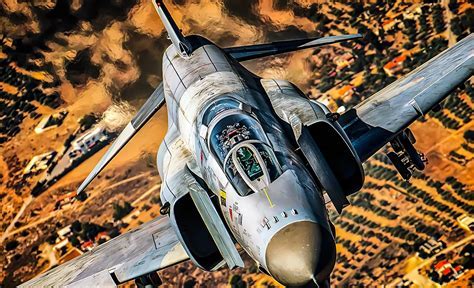
Not all F-4 variants were equally fast. Early models prioritized pure speed and altitude performance, while later versions balanced that with improved handling and mission versatility. The F-4E, for example, introduced an internal cannon and aerodynamic changes that slightly reduced top speed in exchange for better close-in performance.
The F-4S incorporated smokeless engines and further refinements, again trading a small amount of maximum velocity for operational effectiveness. These changes did not dramatically alter the Phantom’s speed profile, but they illustrate how performance priorities evolved over time.
Even with these modifications, later Phantoms remained capable of exceeding Mach 2, preserving the aircraft’s reputation as one of the fastest fighters ever to enter widespread service.
Comparing the F-4 to Modern Fighters
Measured purely by top speed, the F-4 Phantom II still holds its own against many modern aircraft. Fighters like the F/A-18 Hornet and F-35 Lightning II have lower published maximum speeds, reflecting different design goals focused on stealth, sensors, and multirole flexibility.
This does not mean the Phantom is superior overall. Modern fighters dominate in situational awareness, survivability, and precision. Yet the fact that a 1950s-era design can outrun 21st-century jets speaks volumes about how extreme the Phantom’s speed performance was.
The Phantom represents a moment in aviation history when speed was pursued with singular intensity, even at the cost of other attributes.
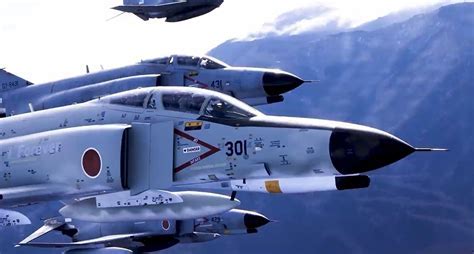
Records That Cemented the Phantom’s Legacy
The F-4 Phantom II set 16 world records for speed, altitude, and climb performance. These achievements were not marketing stunts but demonstrations of a mature, operational aircraft pushing the boundaries of flight.
Such records reinforced confidence in the design and validated the philosophy behind it. They also ensured that the Phantom would be remembered not just as a workhorse, but as a benchmark in raw performance.
Even as newer aircraft surpassed some of these records, the Phantom’s accomplishments remained a testament to what was possible with 1950s technology when speed was the primary objective.
Why the Phantom’s Speed Still Matters
Understanding how fast the F-4 Phantom II could fly is about more than numbers. It reveals how strategic thinking, engineering ambition, and technological optimism converged in a single aircraft. The Phantom was built for a future that designers imagined, not the one that ultimately unfolded.
That future valued speed above all else, and the F-4 delivered it in spectacular fashion. Its Mach 2.23 top speed was not an accident or an afterthought. It was the natural result of a design philosophy that believed the fastest aircraft would control the sky.
Decades after its first flight, the Phantom’s speed remains its most enduring signature. It stands as a reminder that, in aviation, raw velocity once ruled supreme, and few aircraft embodied that belief more completely than the F-4 Phantom II.