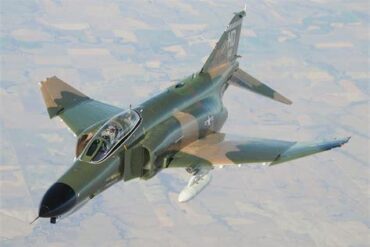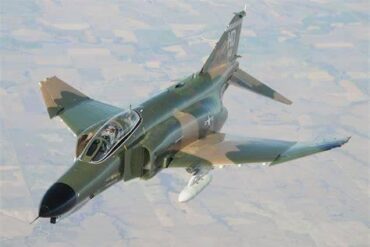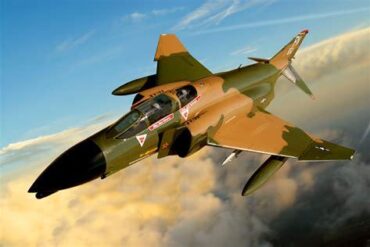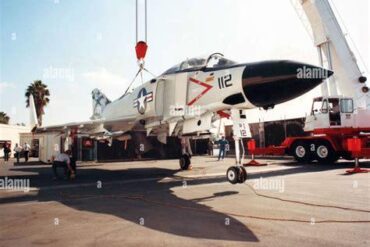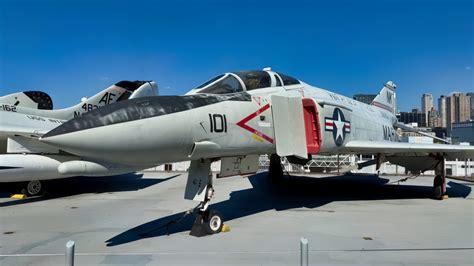
The McDonnell Douglas F-4 Phantom II was never supposed to be a fighter that survived into the third decade of the 21st century. Designed during the height of the Cold War, first flown in 1958, and introduced into service when jet combat was still evolving, the aircraft belongs to an era that predates stealth technology, digital battle networks, and modern fifth-generation fighters. Yet more than six decades after its maiden flight, the F-4 Phantom remains operational in several countries and continues to perform missions that matter.
Its enduring presence raises an obvious question: why has an aircraft conceived during the Eisenhower administration refused to disappear from military aviation? The answer lies in a combination of exceptional engineering, adaptability, upgrade potential, and strategic necessity. While newer fighters dominate headlines, the Phantom continues to prove that capability is not measured solely by age.
The Origins of the F-4 Phantom II and Its Cold War Mission
The F-4 Phantom II emerged from a United States Navy requirement for a fleet-defense interceptor capable of intercepting enemy bombers at long distances. At the time, military planners anticipated large-scale aerial confrontations involving nuclear-armed aircraft, requiring interceptors with tremendous speed, range, and firepower.
McDonnell Aircraft responded with a design unlike anything in service. Powered by two General Electric J79 turbojet engines, the Phantom delivered exceptional thrust and acceleration. Its large airframe provided significant fuel capacity, allowing long-range missions without sacrificing payload. The aircraft’s two-seat cockpit enabled one crew member to focus on flying while the other managed radar systems, navigation, and weapons.
The result was a fighter that could fly faster than Mach 2, carry a substantial weapons load, and adapt to a wide variety of missions. What began as a naval interceptor soon evolved into one of the most versatile combat aircraft ever built.
Combat experience accelerated this transformation. During the Vietnam War, military planners discovered that missile-only air combat assumptions were flawed. Dogfighting remained relevant, and tactical flexibility became essential. The Phantom evolved into a true multirole aircraft capable of air superiority, ground attack, reconnaissance, suppression of enemy air defenses, and electronic warfare.
Its ability to perform so many missions ensured that the aircraft would become a cornerstone of Western airpower for decades.
A Production Legacy Few Fighters Can Match
One of the most important reasons the Phantom survives today is the sheer scale of its production.
More than 5,000 aircraft were manufactured between 1958 and 1981, making it one of the most successful supersonic military aircraft programs in history. Large fleets entered service with the United States Air Force, United States Navy, and United States Marine Corps before spreading across Europe, Asia, and the Middle East.
This extensive production run created a massive global ecosystem of spare parts, maintenance expertise, technical documentation, and upgrade experience. Unlike niche aircraft produced in limited numbers, the Phantom benefited from a support network that remained active long after many operators retired their fleets.
The aircraft’s popularity also encouraged local modernization efforts. Nations developed their own maintenance programs, avionics packages, radar improvements, structural upgrades, and weapons integrations. Instead of becoming obsolete, the Phantom continuously evolved.
Because hundreds of airframes remained available in storage, operators could replace worn aircraft or source spare components without the enormous costs associated with developing an entirely new platform.
By the time many air forces considered retiring the Phantom, they had already invested heavily in sustaining and improving it. That investment continues to pay dividends today.
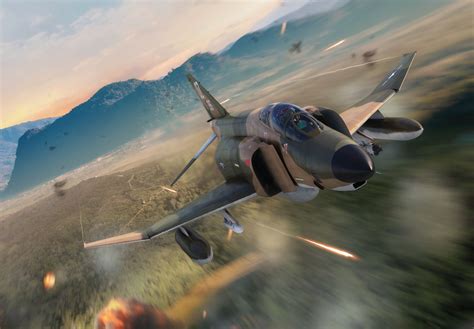
Why the F-4 Phantom’s Design Aged So Well
Many military aircraft become obsolete because their original designs lack room for growth. The Phantom avoided this problem.
Its large fuselage provided ample space for future avionics, wiring, radar systems, electronic warfare equipment, and mission computers. Structural strength allowed engineers to integrate new weapons without compromising safety or performance.
The aircraft’s powerful engines also gave designers flexibility. Even as modernization programs added weight through advanced sensors and electronic systems, the Phantom retained useful performance margins.
Another major advantage was payload capacity. The aircraft can carry a remarkable amount of ordnance compared with many modern fighters. While stealth aircraft prioritize low observability and internal weapons bays, the Phantom’s design philosophy focused on carrying substantial combat loads over long distances.
This characteristic remains valuable for strike missions where stealth is not essential.
The Phantom also developed a reputation for durability. Airframes designed for demanding Cold War operations proved capable of enduring decades of service under challenging conditions. Many aircraft accumulated thousands of flight hours while remaining structurally viable after extensive refurbishment programs.
These attributes created a platform that could absorb technological improvements without requiring fundamental redesign.
How Different Nations Found New Roles for the Phantom
The Phantom’s continued relevance stems from a simple reality: modern military operations require more than stealth fighters.
Many missions do not demand low-observable characteristics. Strike operations, reconnaissance missions, maritime patrol tasks, weapons testing, and advanced training exercises can often be performed effectively by upgraded legacy aircraft.
Countries that retained the Phantom recognized this distinction. Instead of attempting to compete directly with fifth-generation fighters, they adapted the aircraft to missions that exploit its strengths.
Its speed remains impressive. Its payload remains substantial. Its operational costs are often lower than those of advanced modern aircraft. Most importantly, crews understand the aircraft thoroughly after decades of operational experience.
These factors combine to create a platform that remains useful despite its age.
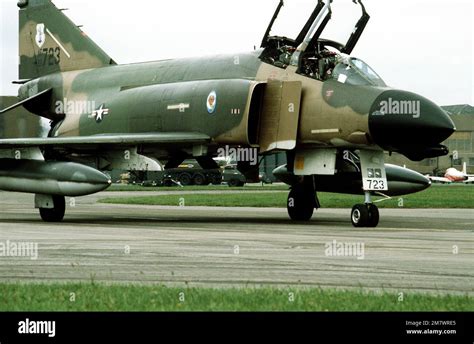
Greece’s F-4E AUP: A Classic Aircraft Reinvented
Among current Phantom operators, Greece stands out as one of the most successful examples of modernization.
The Hellenic Air Force has operated the aircraft since 1974 and invested significantly in extending its operational life through the Peace Icarus 2000 upgrade program.
The resulting F-4E AUP configuration transformed the aircraft from a Cold War fighter into a modern strike platform. Upgrades included advanced radar systems, improved mission computers, multifunction cockpit displays, and enhanced targeting capabilities.
The integration of the AN/APG-65GR radar dramatically improved situational awareness and target engagement capabilities. Similar technologies equipped early F/A-18 Hornets, providing the Phantom with capabilities far beyond its original design.
The addition of the Litening II targeting pod allowed precision engagement of ground targets using laser-guided munitions. Combined with AIM-120 AMRAAM compatibility, Greek Phantoms gained both air-to-air and air-to-ground capabilities relevant to modern combat environments.
These aircraft continue serving with the 338th Fighter-Bomber Squadron and regularly participate in demanding training operations across Greece.
Their continued service reflects a practical military strategy. By assigning strike and secondary mission responsibilities to upgraded Phantoms, Greece can preserve newer fighters such as the F-16V and Rafale for missions where their advanced capabilities provide greater advantages.
Turkey’s F-4E 2020 Terminator Program
Turkey pursued one of the most ambitious Phantom modernization programs ever attempted.
The F-4E 2020 Terminator upgrade transformed aging aircraft into highly capable strike platforms equipped with modern sensors, avionics, and weapons systems.
Developed with significant Israeli assistance, the modernization package introduced advanced cockpit technologies, updated electronic warfare systems, structural enhancements, and improved radar capabilities.
The Elta EL/M-2032 radar provided modern targeting and tracking performance, while new electronic countermeasures improved survivability in contested environments.
Perhaps most importantly, Turkish Phantoms gained compatibility with sophisticated stand-off weapons capable of striking targets from considerable distances. This capability allowed the aircraft to remain strategically relevant despite increasing threats from modern air defense systems.
The Terminator program demonstrates a broader lesson about military aviation. A well-designed aircraft can remain operationally valuable for decades when paired with contemporary sensors and weapons.
Turkey continues to benefit from this investment by maintaining a capable strike fleet that supplements newer aircraft and provides operational flexibility during procurement transitions.
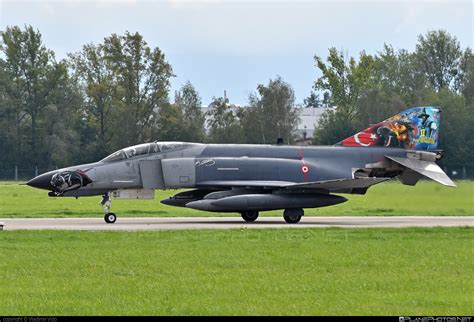
Iran’s Extraordinary Effort to Keep the Phantom Flying
No country better illustrates the Phantom’s resilience than Iran.
Following the 1979 Iranian Revolution, sanctions severely restricted access to spare parts and technical support. Many analysts expected Iran’s Phantom fleet to become inoperable within a relatively short period.
Instead, the Islamic Republic of Iran Air Force achieved something remarkable.
Through domestic engineering efforts, reverse engineering, component refurbishment, and local manufacturing, Iran managed to sustain significant portions of its Phantom fleet for decades.
Particularly impressive has been the continued support of the General Electric J79 engine. Maintaining high-performance turbojet engines without direct manufacturer assistance presents enormous technical challenges. Yet Iranian engineers developed indigenous overhaul capabilities that enabled continued operations.
While performance may not fully match original factory specifications, the aircraft remain capable of conducting operational missions.
Iranian Phantoms have participated in deterrence operations, border patrols, maritime security missions, and military exercises. Their longevity demonstrates not only the durability of the aircraft itself but also the determination of operators to preserve valuable capabilities despite external constraints.
The Phantom’s role in Iran extends beyond military utility. It serves as a symbol of strategic self-reliance and operational continuity in a region where airpower remains critically important.
The Economics Behind Phantom Longevity
Military aviation decisions are often driven by economics as much as technology.
Acquiring new fighters requires enormous investments in procurement, infrastructure, maintenance systems, pilot training, and logistics networks. Even wealthy nations face difficult choices when balancing defense budgets.
For countries already operating modern frontline fighters, retaining upgraded Phantoms can be a cost-effective way to preserve force structure and mission capacity.
Instead of assigning every task to expensive next-generation aircraft, operators can employ legacy platforms for missions where their capabilities remain sufficient.
This layered approach maximizes value while reducing wear on newer fleets.
The Phantom occupies an attractive position within this framework. Its performance remains respectable, its maintenance requirements are well understood, and many operators already possess decades of institutional knowledge regarding its operation.
As long as the aircraft can fulfill assigned missions effectively, retirement becomes less urgent.
Why the F-4 Phantom Refuses to Become Obsolete
The story of the F-4 Phantom is ultimately a story about intelligent adaptation.
Aircraft do not survive for more than sixty years through nostalgia alone. They survive because they continue to provide value.
The Phantom’s combination of speed, payload, range, durability, and upgrade potential created a platform capable of evolving alongside changing military requirements. Few aircraft in history have demonstrated such flexibility across so many decades and operational environments.
While stealth fighters represent the future of high-end air combat, not every mission demands cutting-edge technology. Many tasks still reward proven performance, reliability, and cost-effective capability.
That reality explains why the Phantom remains airborne long after many expected its retirement.
From Greece’s mountain valleys to Turkey’s strike squadrons and Iran’s regional patrol missions, the F-4 Phantom continues to demonstrate that exceptional engineering never truly goes out of style. More than sixty years after its first flight, the legendary fighter remains a living reminder that some aircraft become more than machines—they become enduring instruments of national power whose relevance transcends generations.