Speed has always been one of the most fascinating qualities of a fighter jet. During the early Cold War, aircraft designers pushed aggressively toward higher and higher speeds because the ability to outrun an opponent appeared to offer a decisive advantage. The result was a remarkable generation of aircraft built around enormous engines, slender airframes, and the ability to operate at extreme altitude.
Yet modern air combat has changed dramatically. Maximum speed is no longer the defining measure of a fighter jet’s effectiveness. Flying at Mach 2 or faster consumes enormous quantities of fuel, increases aerodynamic heating, places significant demands on the engines and structure, and can reduce maneuverability. Combat experience, particularly from the Vietnam War, demonstrated that fighters rarely needed to exploit their absolute maximum speed during engagements.
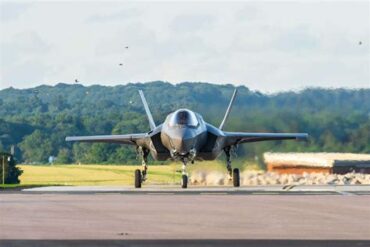
That helps explain why some of today’s most sophisticated fighter jets are deliberately slower than their Cold War predecessors. The F-35 Lightning II, for example, emphasizes stealth, sensors, networking, and situational awareness rather than extreme velocity, with a maximum design speed of approximately Mach 1.6. Nevertheless, several active fighter jets and interceptors can still exceed Mach 2 at high altitude.
6. Lockheed Martin F-16 Fighting Falcon — Mach 2.05
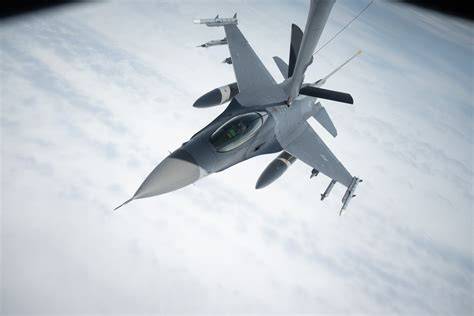
The Lockheed Martin F-16 Fighting Falcon is the slowest aircraft on this list in terms of maximum speed, but its ability to reach approximately Mach 2.05 at altitude is still remarkable for a fighter originally conceived as a lightweight, affordable multirole aircraft. The F-16 first flew in the 1970s and entered service in 1978, yet its basic design has proved adaptable enough to remain a major component of numerous air forces more than four decades later.
The aircraft’s success comes from much more than raw speed. Its compact airframe, powerful engine, fly-by-wire flight controls, excellent visibility, and high thrust-to-weight ratio made it an exceptionally capable dogfighter. As successive upgrades added more powerful computers, modern radar systems, improved electronic warfare equipment, precision weapons, and enhanced cockpit technology, the F-16 gradually evolved from a lightweight fighter into a highly capable multirole platform.
The modern F-16 Block 70/72 represents the latest expression of that evolutionary approach. It incorporates an advanced AESA radar, modernized avionics, improved cockpit displays, and structural enhancements intended to extend service life. In other words, today’s F-16 is considerably more sophisticated than the aircraft that originally established the Fighting Falcon’s reputation.
Its Mach 2 capability is therefore best understood as an additional advantage rather than its primary mission. The F-16 normally operates well below its maximum velocity, where fuel consumption, maneuverability, and weapons employment are more practical. Even so, having the ability to exceed Mach 2 provides useful performance margins for interception, rapid repositioning, and high-speed tactical operations.
5. Lockheed Martin F-22 Raptor — Mach 2.25
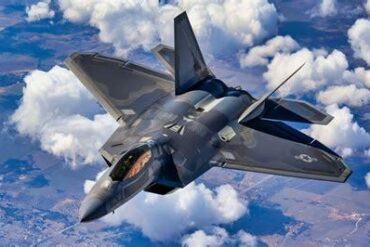
The F-22 Raptor represents a completely different approach to fighter design. Developed as the successor to the F-15’s air-superiority role, it combines low observability, advanced sensors, powerful engines, high maneuverability, and exceptional high-altitude performance. Its estimated maximum speed is approximately Mach 2.25.
The Raptor’s most impressive characteristic, however, is not its maximum speed. It is its ability to supercruise, meaning it can sustain supersonic flight without relying continuously on afterburners. The F-22 is widely associated with a supercruise speed of roughly Mach 1.7 at altitude, giving it an important advantage over conventional fighters that must consume enormous quantities of fuel to maintain comparable speeds.
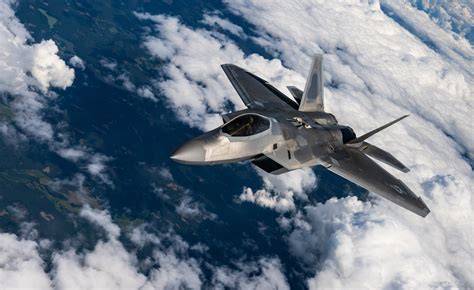
This distinction matters because maximum speed and useful speed are not the same thing. A fighter that can briefly reach Mach 2.25 but rapidly exhausts its fuel may be less operationally useful than an aircraft capable of maintaining a lower supersonic speed efficiently. The Raptor’s combination of supercruise, stealth, internal weapons carriage, and high-altitude performance allows it to approach combat situations with considerable energy and tactical flexibility.
The F-22 program was originally expected to be much larger. The United States Air Force once planned to acquire hundreds of aircraft, but changing strategic priorities and the high cost of the program resulted in a much smaller production run. Only 187 production Raptors were completed, with additional aircraft used for training and development.
Despite its limited fleet size, the F-22 remains one of the world’s most formidable air-superiority fighters. Its eventual successor is expected to emerge from the U.S. Air Force’s next-generation fighter program, but until that transition occurs, the Raptor remains an unusually powerful combination of stealth and sustained supersonic performance.
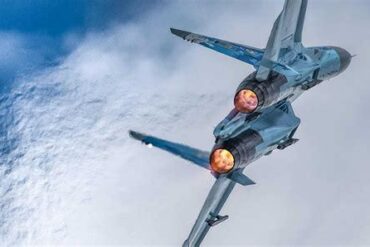
4. Sukhoi Su-35 — Mach 2.25
Russia’s Sukhoi Su-35 demonstrates how a fundamentally Cold War-era fighter design can remain relevant through extensive modernization. The aircraft belongs to the extensive Flanker family that originated with the Su-27, but the Su-35 incorporates substantial improvements to its engines, avionics, radar, electronic warfare systems, and flight-control technology.
With a maximum speed of approximately Mach 2.25 at altitude, the Su-35 is among the fastest operational fighter aircraft still flying. Its performance is supported by powerful engines and a large airframe capable of carrying substantial fuel and weapons loads. Unlike many smaller multirole fighters, the Su-35 was developed primarily around long-range air-superiority missions and high-performance maneuvering.
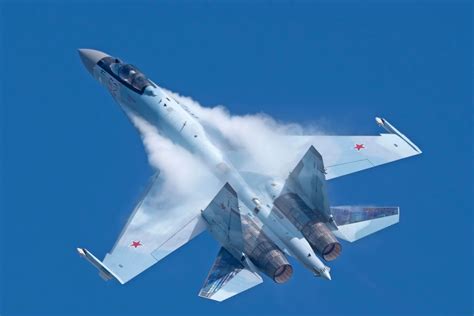
The Flanker family’s aerodynamic design gives the Su-35 impressive agility despite its considerable size. Its large lifting surfaces and thrust-vectoring engines can contribute to exceptional low-speed maneuverability, while its powerful propulsion system provides strong acceleration at higher speeds.
The broader Flanker family also illustrates an important difference in how countries classify aircraft. Variants such as the Su-30, Su-34, Su-35, and naval Su-33 are sometimes described as separate fighter types, but they share extensive ancestry with the Su-27. Similar evolutionary relationships exist in Western aircraft families, where major upgrades can retain the original designation.
China has also developed its own derivatives of the Flanker concept, including the J-11, J-15, and J-16. Some of these aircraft are believed to possess maximum speeds around or above Mach 2 at altitude. The Su-35 therefore represents not simply one fast aircraft, but the latest high-performance expression of an airframe family that has influenced fighter aviation for decades.
3. Eurofighter Typhoon — Mach 2.35
The Eurofighter Typhoon was designed around the demanding requirements of European air defense during the late Cold War. Its mission was to counter highly capable Soviet fighters, and that requirement produced an aircraft with powerful engines, excellent aerodynamic performance, advanced sensors, and impressive high-altitude speed.
The Eurofighter consortium commonly advertises a maximum speed of approximately Mach 2.0, although higher estimates of around Mach 2.35 are sometimes cited for high-altitude flight. Regardless of which figure is used, the Typhoon clearly belongs among the world’s fastest modern fighter jets.
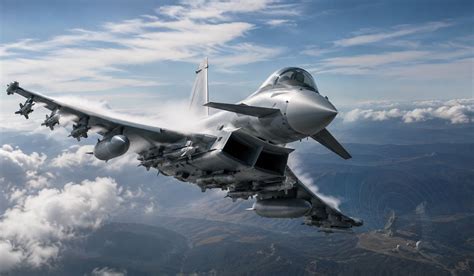
Perhaps more important than its maximum velocity is its supercruise capability. The Typhoon can reportedly sustain supersonic flight at around Mach 1.5 under suitable conditions, without depending on continuous afterburner use. This gives it a practical high-speed advantage over many fighters whose spectacular maximum speeds are difficult to exploit for extended periods.
The aircraft is also exceptionally agile. Its delta-wing and canard configuration provides strong aerodynamic performance, while its twin Eurojet EJ200 engines deliver substantial thrust. The result is an aircraft capable of combining high-speed interception with close-in maneuvering and modern multirole operations.
The Typhoon is operated by several European countries and has also become an important export fighter. Its service life is expected to continue well into the 2030s, allowing it to bridge the gap between fourth-generation fighter technology and the emerging sixth-generation era.
2. McDonnell Douglas F-15 Eagle — Mach 2.5
The F-15 Eagle was designed with one objective above almost everything else: achieving air superiority. When it entered service in the 1970s, it represented a dramatic technological response to the growing sophistication of Soviet fighter aircraft. Its combination of powerful engines, a large radar, heavy weapons load, high altitude capability, and exceptional acceleration established the Eagle as one of the defining air-superiority fighters of the Cold War.
The F-15 can reach approximately Mach 2.5 at altitude, placing it among the fastest operational fighter aircraft in the world. Its speed is supported by two powerful engines and a large airframe capable of carrying significant quantities of fuel and weapons.
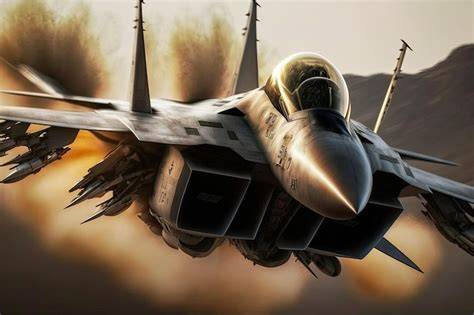
What makes the F-15 particularly remarkable is its longevity. Rather than becoming obsolete after a few decades, the Eagle has repeatedly been upgraded to accommodate new technologies and missions. Different versions have incorporated increasingly sophisticated radars, computers, electronic warfare systems, and weapons.
The modern F-15EX Eagle II demonstrates how far the original concept has evolved. It is not simply an unchanged Cold War aircraft still operating because of a lack of alternatives. It is a heavily modernized platform designed to carry large weapons loads while providing substantial range, speed, and payload capacity.
The F-15’s continued production is especially significant because very few fighter designs have survived for so long while retaining their relevance. Its speed remains impressive, but its real strength is the combination of speed, payload, range, radar performance, and upgrade potential.
1. Mikoyan MiG-31 Foxhound — Mach 2.83
At the top of the list is the Mikoyan MiG-31, an aircraft designed for a very different strategic environment from today’s multirole fighters. Developed from the earlier MiG-25 family, the MiG-31 was created as a long-range interceptor capable of defending enormous areas of Soviet territory against high-speed aircraft and cruise missiles.
Its maximum speed is approximately Mach 2.83 at altitude, making it generally regarded as the fastest combat aircraft still in operational service. The aircraft’s speed is only one part of its design philosophy. It also has a powerful radar, long-range weapons, a two-person crew, and the ability to operate over vast distances.
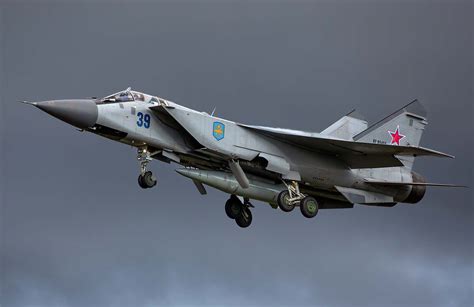
The MiG-31’s continued existence is largely explained by geography and mission requirements. Russia covers an enormous territory, including remote regions where maintaining dense fighter bases is difficult. A fast interceptor capable of covering large distances can therefore provide a capability that conventional multirole fighters cannot easily replicate.
The aircraft has also received modernization programs intended to keep selected airframes operational. Upgraded MiG-31 variants include the MiG-31BS, MiG-31BSM, and MiG-31K, with improvements tailored to different missions.
The MiG-31 has also attracted considerable attention because some variants have been associated with the air-launched Kh-47M2 Kinzhal missile. Descriptions of Kinzhal as a purely “hypersonic” weapon can be misleading, since ballistic missiles routinely reach hypersonic velocities during portions of their trajectories. The MiG-31’s role is more accurately understood as that of a high-speed launch platform and interceptor rather than simply a carrier for a single weapon.
Why Mach 2 Is No Longer the Ultimate Fighter-Jet Goal
The six aircraft above demonstrate that Mach 2-plus performance remains achievable, but modern fighter design increasingly focuses on qualities that cannot be measured by maximum speed alone. Supersonic flight generates substantial drag and fuel consumption, while high-speed operation can reduce endurance and restrict maneuverability. The faster an aircraft flies, the more energy it can consume simply maintaining velocity.
This is why fifth-generation fighters such as the F-22 prioritize stealth, sensor fusion, electronic warfare, networking, and supercruise rather than simply pursuing the highest possible Mach number. A fighter that detects an opponent first, remains difficult to detect, and launches a weapon from an advantageous position may have little reason to fly at Mach 2.5.
The contrast between the F-22 and the older MiG-31 is particularly revealing. The MiG-31’s extraordinary speed reflects an era when long-range interception and defeating fast intruders were central requirements. The F-22, meanwhile, was designed for an environment where information dominance and low observability could be more decisive than raw velocity.
That does not make extreme speed obsolete. It remains valuable for interceptors, rapid repositioning, emergency disengagement, and high-altitude operations. Instead, modern aviation treats speed as one component of a much larger performance equation.
The Enduring Appeal of Mach 2 Fighter Jets
The continued service of the F-16, F-22, Su-35, Eurofighter Typhoon, F-15, and MiG-31 shows that the pursuit of speed has not disappeared from military aviation. These aircraft represent very different generations and philosophies, ranging from lightweight multirole fighters to stealth air-dominance platforms and specialized long-range interceptors.
Their maximum speeds also need to be interpreted carefully. Published Mach figures generally apply to high-altitude flight under specific conditions, and an aircraft’s practical combat speed can be considerably lower. Reaching Mach 2.5 is an impressive engineering achievement, but doing so with a useful weapons load, sufficient fuel, and meaningful combat endurance is a much more complicated challenge.
The future is likely to move even further toward balanced performance. Sixth-generation fighters are expected to emphasize stealth, advanced sensors, networking, autonomous systems, electronic warfare, and integration with unmanned aircraft. Some may still approach or exceed Mach 2, but the days when maximum speed alone defined a fighter’s technological sophistication are largely over.
Even so, these six aircraft preserve an extraordinary chapter in aviation history. Mach 2 remains a symbolic threshold, separating conventional high-performance aircraft from machines engineered to operate in an environment where aerodynamic heating, fuel consumption, and structural loads become major design challenges. For as long as the world’s fastest fighter jets continue to fly, that threshold will remain one of military aviation’s most compelling benchmarks.