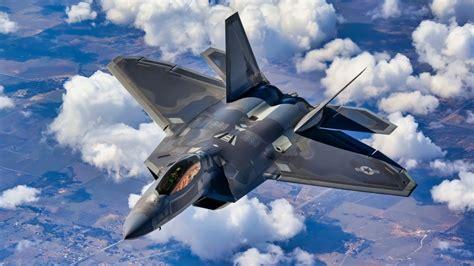
The Lockheed Martin F-22 Raptor remains one of the most sophisticated air-superiority fighters ever built, combining stealth, supercruise, advanced sensors, thrust vectoring, and exceptional maneuverability in a single platform. Developed for the U.S. Air Force by Lockheed Martin and Boeing, the F-22 was designed around a very different philosophy from older speed-focused interceptors. Rather than chasing an extreme top speed, it combines low observability, high altitude performance, sensor fusion, and sustained supersonic flight to dominate the air-combat environment.
Powered by two Pratt & Whitney F119-PW-100 afterburning turbofan engines, the Raptor produces roughly 70,000 pounds of combined thrust. Its published maximum speed is approximately Mach 1.95, or around 1,500 mph at altitude. More importantly, the F-22 can supercruise at speeds above Mach 1 without continuously relying on afterburners, with approximately Mach 1.5 often cited for sustained supercruise. That combination makes it exceptionally fast in practical combat terms, even though several older fighters can exceed its maximum speed.
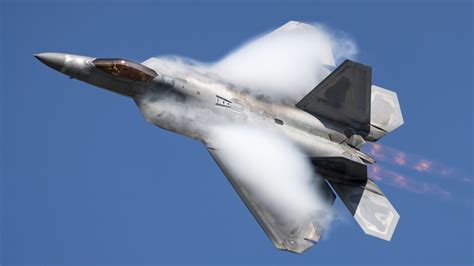
The distinction is important because maximum speed does not determine which fighter would win an air battle. A fighter’s radar signature, sensors, weapons, electronic warfare systems, acceleration, energy retention, altitude, and pilot training can be far more important than a few hundred miles per hour of additional speed. The F-22 is a fifth-generation fighter, not a sixth-generation aircraft, but its technology established a benchmark for later combat-aircraft development. Some considerably older aircraft, however, were designed around the pursuit of extreme speed and can still outrun the Raptor under the right conditions.
Among foreign-built fighters, five stand out for having published maximum speeds above the F-22’s approximately Mach 1.95 figure. They range from Israel’s IAI Kfir, a compact fighter derived from French Mirage technology, to the remarkable Soviet MiG-25 Foxbat, an aircraft built almost entirely around speed and high-altitude interception.
IAI Kfir: Israel’s Mach 2 Fighter
The Israel Aircraft Industries Kfir is one of the clearest examples of how a relatively compact fighter could achieve extraordinary speed without the sophisticated technology found aboard a modern stealth aircraft. Israel developed the Kfir after restrictions on foreign military supplies created a strong incentive to build an indigenous fighter capability. Its basic aerodynamic lineage can be traced to the French Dassault Mirage 5, while Israel substantially modified the aircraft’s avionics, structure, and propulsion.
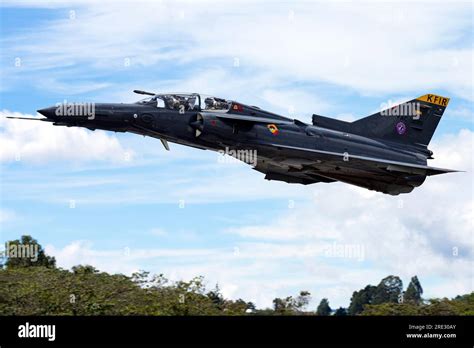
The Kfir entered service with the Israeli Air Force in 1975 and became Israel’s first operational fighter capable of reaching Mach 2. Its propulsion system was based on the General Electric J79 turbojet, the same basic engine family used by aircraft such as the F-4 Phantom II. Israeli production of the engine under license gave the country greater control over the aircraft’s supply chain and helped turn the Kfir into a highly capable indigenous combat aircraft.
With approximately 15,000 pounds of thrust, the Kfir can reach a maximum speed of around Mach 2, or roughly 1,516 mph, at altitude. That puts its published maximum speed just beyond the F-22’s Mach 1.95 figure. The difference is small, however, and says little about the two aircraft’s relative combat capabilities. The Kfir lacks the F-22’s stealth shaping, integrated sensors, modern electronic warfare architecture, and advanced air-to-air combat systems.
Only about 220 Kfirs were produced, but the design proved remarkably durable. Upgraded examples have remained in service overseas decades after the type’s Israeli retirement, demonstrating how a fast and relatively simple airframe can remain useful when supported by modernization programs.
Mikoyan MiG-29 Fulcrum: A Cold War Speedster
The Mikoyan MiG-29 Fulcrum was developed by the Soviet Union as a highly maneuverable air-superiority fighter capable of challenging Western aircraft such as the F-15 Eagle and F-16 Fighting Falcon. It entered Soviet service in 1983, during a period when both NATO and the Warsaw Pact were investing heavily in fighters that could gain an advantage through speed, maneuverability, radar performance, and weapons technology.

Two RD-33 turbofan engines provide approximately 36,600 pounds of combined thrust, allowing the MiG-29 to reach about Mach 1.98, or approximately 1,520 mph at altitude. That gives the Soviet fighter a narrow numerical speed advantage over the F-22.
The MiG-29’s significance, however, extends well beyond its top speed. Its aerodynamic design emphasized agility, high thrust-to-weight performance, and strong close-range combat characteristics. The type has also received numerous upgrades throughout its service life, allowing different operators to keep the basic airframe relevant long after the end of the Cold War.
The F-22 would have enormous technological advantages over a legacy MiG-29 in many aspects of modern air combat, particularly in stealth and sensor fusion. A speed advantage of only a few dozen miles per hour therefore does not translate into a meaningful overall technological advantage for the older fighter.
Mikoyan-Gurevich MiG-23 Flogger: An Older Fighter That Breaks Mach 2
The MiG-23 Flogger is even more surprising because it predates the F-22 by several decades. Developed during the 1960s and introduced into Soviet service in 1970, the MiG-23 was designed as a high-speed fighter capable of operating in demanding air-defense and interception missions. Its variable-sweep wing was one of its defining features, allowing the aircraft to adjust its aerodynamic configuration for different phases of flight.
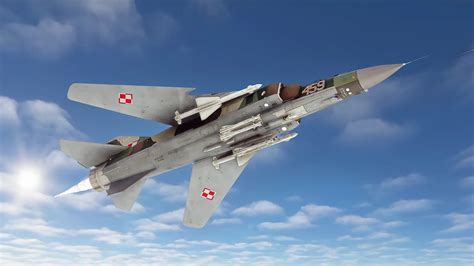
The aircraft used a single Tumansky turbojet engine capable of producing approximately 25,350 pounds of thrust with afterburner. Under suitable conditions, the MiG-23 could reach around Mach 2.02, or approximately 1,550 mph. That places it slightly above the F-22’s published maximum speed.
The MiG-23 was also produced in enormous numbers compared with many later fighters, with more than 5,000 examples of various versions manufactured. Its combination of speed, radar capability, variable geometry, and relatively long combat range made it an important Soviet export fighter.
Today, the contrast with the F-22 is enormous. The MiG-23’s radar and sensors belong to an earlier technological era, while its large radar signature makes it fundamentally different from a stealth fighter. Its Mach 2-plus capability is therefore best understood as an example of how raw speed was once a central design priority for fighter aircraft.
Sukhoi Su-27 Flanker: Mach 2 Performance With Extreme Agility
The Sukhoi Su-27 Flanker was developed specifically to counter advanced American fighters, including the F-14 Tomcat and F-15 Eagle. Entering service in 1986, it combined long range, high speed, powerful radar, heavy weapons capacity, and exceptional aerodynamic performance. It became the foundation for an extensive family of Russian fighters that remains important decades later.
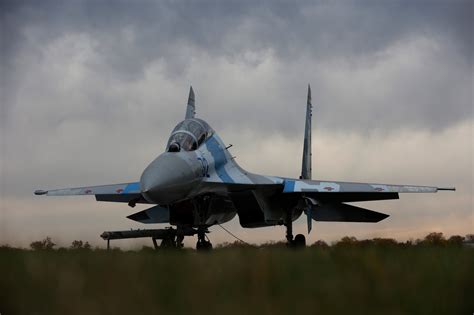
Two Lyulka AL-31F afterburning turbofan engines generate approximately 55,280 pounds of combined thrust. The Su-27 has a published maximum speed of approximately Mach 2.025, equivalent to roughly 1,553 mph at altitude. Once again, the numerical difference from the F-22 is small, but the Flanker’s speed is impressive considering its age and size.
The aircraft’s reputation rests heavily on its maneuverability. The Su-27’s aerodynamic design and thrust characteristics allow it to perform dramatic high-angle-of-attack maneuvers, including the famous Cobra maneuver. It can also achieve a climb rate approaching 1,000 feet per second under favorable conditions.
The Su-27 family has evolved considerably through derivatives and upgrades, but the original aircraft illustrates an important Cold War design philosophy. Soviet engineers sought an aircraft that could combine speed and agility with enough range and weapons capacity to challenge American air-superiority fighters. Its maximum speed therefore came as part of a broader performance package rather than as an isolated achievement.
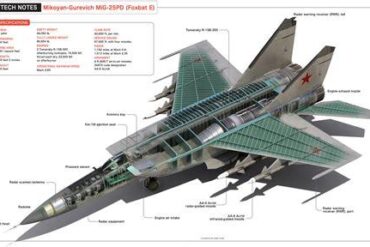
Mikoyan-Gurevich MiG-25 Foxbat: The Fighter That Reached Mach 2.8
The MiG-25 Foxbat is in a completely different category. While most fighters balance speed against maneuverability, range, weapons, and structural limitations, the MiG-25 was created primarily around high-speed, high-altitude interception. The Soviet Union developed it in response to the perceived threat from extremely fast American reconnaissance aircraft and bombers.
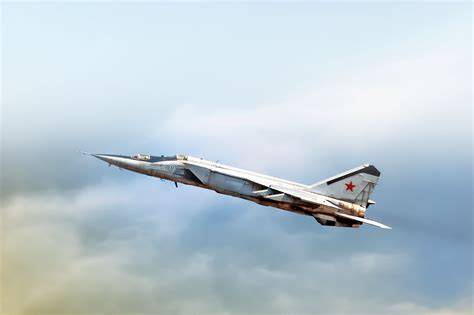
The result was one of the fastest production fighter-interceptors ever built. Two Tumansky R-15B-300 turbojet engines generated approximately 45,000 pounds of combined thrust, allowing the MiG-25 to reach a published maximum speed of about Mach 2.8, or roughly 1,850 mph.
That figure places the Foxbat dramatically ahead of the F-22 in straight-line maximum speed. The MiG-25 was designed to operate at altitudes approaching 59,000 feet, where its combination of speed and altitude gave it the ability to intercept aircraft that conventional fighters struggled to reach.
There was, however, an important limitation. The Foxbat’s engines and airframe could not safely sustain extreme speeds indefinitely. Reports from Soviet defector Viktor Belenko indicated that the aircraft could theoretically approach approximately Mach 3.2, but doing so risked severe engine overheating and damage. Soviet operational restrictions consequently kept its practical maximum speed lower.
The MiG-25 also illustrates why speed alone is not enough to define a modern fighter. Its enormous engines, heavy structure, and specialized mission profile made it poorly suited to the kind of close-range maneuvering associated with agile air-superiority fighters. Yet when the requirement was to climb rapidly, fly extremely high, and intercept a target at extraordinary speed, the Foxbat was exceptionally specialized.
Why the F-22 Does Not Need to Be the Fastest
The five aircraft demonstrate that the F-22 Raptor is not the world’s fastest fighter, despite being among the most technologically advanced. The Kfir reaches roughly Mach 2, the MiG-29 approaches Mach 1.98, the MiG-23 and Su-27 exceed Mach 2, and the MiG-25 can reach approximately Mach 2.8.
That does not make any of them technologically superior to the Raptor. The F-22 was designed around a different objective: achieving air dominance through the integration of stealth, supercruise, advanced sensors, electronic warfare, maneuverability, and modern weapons. Its ability to remain supersonic without continuous afterburner use can also be more operationally valuable than a spectacular but rarely sustained maximum-speed figure.
The MiG-25 is the clearest demonstration of this distinction. It can outrun the F-22 by hundreds of miles per hour, but speed alone cannot compensate for the enormous differences in detection, survivability, situational awareness, and weapons technology between a specialized Cold War interceptor and a fifth-generation stealth fighter.
Ultimately, these aircraft reveal two very different eras of fighter design. The MiG-23, MiG-25, MiG-29, Su-27, and Kfir demonstrate how engineers repeatedly pushed conventional aerodynamic designs beyond Mach 2. The F-22 instead represents a generation in which remaining difficult to detect and maintaining superior awareness can matter more than simply reaching the highest possible number on the airspeed indicator. In a modern combat environment, the fastest aircraft is not automatically the aircraft with the greatest combat advantage.