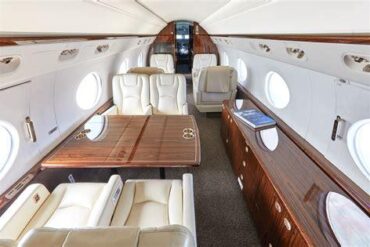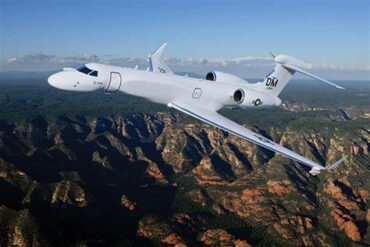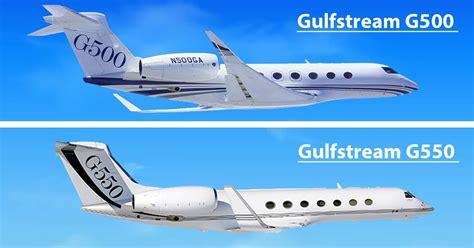
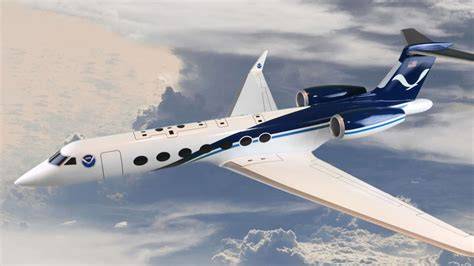
The Gulfstream G550 has long occupied an important place in the history of high-performance business aviation. When Gulfstream introduced the aircraft in 2003, its combination of long range, a large cabin, and a Mach 0.885 maximum speed made it an unusually capable private jet. Its two Rolls-Royce BR710 C4-11 engines produce up to 15,500 pounds of thrust each, giving the G550 enough power to operate at speeds that remain impressive more than two decades after its introduction.
Yet business aviation does not stand still. Newer aircraft have pushed maximum operating speeds higher while simultaneously improving range, fuel efficiency, cabin comfort, and avionics. Some now approach the upper limits of conventional subsonic flight, while others have demonstrated that enormous intercontinental range does not necessarily require sacrificing speed. For travelers who place a premium on reaching their destination quickly, these aircraft represent the next step beyond the G550.
The difference may look small on paper. A few hundredths of a Mach number does not sound dramatic, but at cruising altitude it can translate into meaningful time savings over long distances. The following eight aircraft all have published maximum speeds above the Gulfstream G550’s Mach 0.885, although their designs and priorities vary considerably.
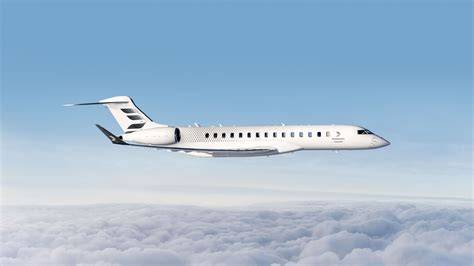
Bombardier Global 8000 — Mach 0.95
The Bombardier Global 8000 sits at the extreme end of modern business-jet performance. With a published maximum speed of Mach 0.95, it is faster than the G550 by a substantial margin and has been positioned by Bombardier as the world’s fastest civilian aircraft since Concorde. Its ultra-high-speed cruise is Mach 0.92, while high-speed cruise is Mach 0.90.
That performance comes from two GE Passport engines, each producing close to 19,000 pounds of thrust. The engines themselves are closely related to technology developed for the CFM LEAP family, but the Global 8000 incorporates hardware and software specifically optimized for the aircraft. Bombardier has also used lightweight engineering, including a 52-inch titanium blisk, to reduce vibration and mass.
The Global 8000 is not merely a speed machine. Its approximately 8,000-nautical-mile range places it firmly in the ultra-long-range category, meaning operators can combine very high speed with nonstop intercontinental missions. That combination is what makes its performance particularly notable: the aircraft is designed to fly far, fast, and in a cabin intended for long periods in the air.
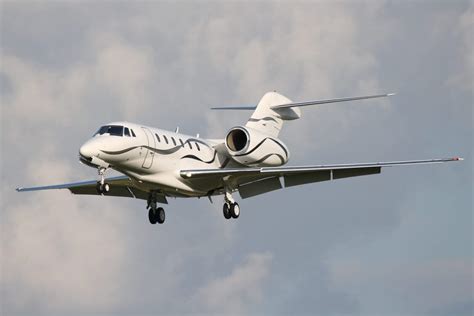
Cessna Citation X and Citation X+ — Mach 0.935
The Cessna Citation X earned its reputation by doing something relatively unusual for a business jet: making outright speed one of its defining characteristics. The original Citation X has a maximum speed of Mach 0.92, while the later Citation X+ raises that figure to Mach 0.935.
Its appearance makes the aerodynamic objective obvious. The aircraft has sharply swept 37-degree wings and a streamlined fuselage designed to reduce drag at high speed. The original model uses two Rolls-Royce/Allison AE 3007C1 engines producing about 6,700 pounds of thrust apiece. The Citation X+ uses improved AE3007C2 powerplants, bringing additional thrust and refinements in efficiency and engine control.
The X+ can deliver roughly the same basic philosophy as its predecessor while extracting more performance from an already fast platform. Although production of the Citation X family has ended, its maximum speed remains sufficient to put both versions ahead of the G550.
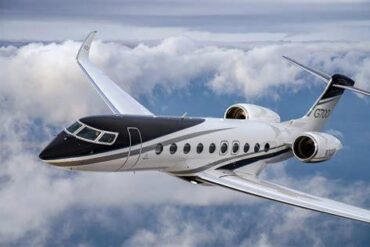
Gulfstream G700 — Mach 0.935
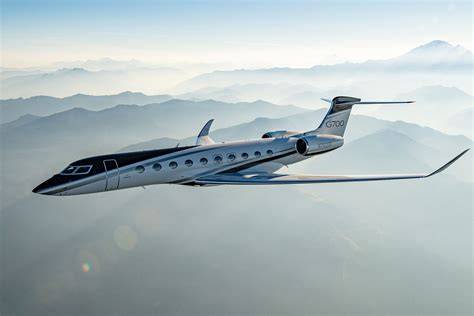
The Gulfstream G700 demonstrates how far Gulfstream’s own flagship family has evolved since the G550. Introduced in 2019 and now certified, the G700 has a maximum operating speed of Mach 0.935, placing it significantly above the G550’s Mach 0.885 ceiling.
The aircraft is powered by two Rolls-Royce Pearl 700 engines, which together provide approximately 36,500 pounds of thrust. Its performance is paired with a range of around 7,750 nautical miles, allowing it to undertake long intercontinental missions while retaining a high-speed cruise capability of Mach 0.90.
Speed, however, is only one part of the G700’s design. Its cabin measures approximately 56 feet 11 inches, making it one of the largest purpose-built private-jet interiors. Gulfstream has configured the aircraft for multiple living zones, and its enormous cabin can accommodate features such as a dedicated bedroom. The result is an aircraft that improves on the G550’s speed without treating speed as its only priority.
Gulfstream G800 — Mach 0.935
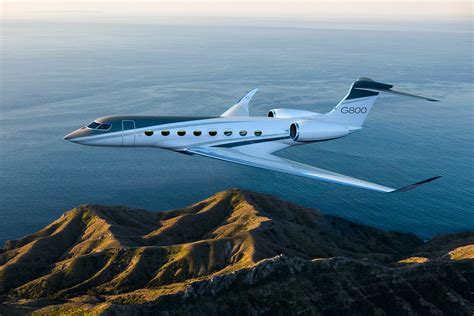
The Gulfstream G800 shares the G700’s Mach 0.935 maximum operating speed, but its mission is more heavily focused on range. With a published range of approximately 8,200 nautical miles, it is designed for operators who want to connect distant cities without fuel stops.
The aircraft uses the same Rolls-Royce Pearl 700 engines as the G700, with each engine producing 18,250 pounds of thrust. Its somewhat shorter and lighter fuselage, derived from the G650ER family, helps Gulfstream balance fuel capacity, structural weight, and aerodynamic performance.
The G800’s capabilities have also been demonstrated outside the brochure. During one long-distance demonstration flight, the aircraft covered approximately 8,303 nautical miles between Melbourne and Moline, remaining airborne for around 17 hours at an average Mach 0.85. Its normal long-range cruise is slower than its maximum speed, but that is typical of aircraft designed to maximize range and endurance.
Bombardier Global 7500 — Mach 0.925
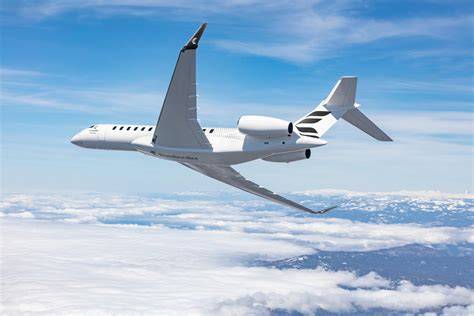
The Bombardier Global 7500 combines high speed with an enormous intercontinental range. Introduced in 2018, it has a maximum speed of Mach 0.925 and a typical cruise speed around Mach 0.82.
Interestingly, the Global 7500 and Global 8000 use the same basic GE Passport engine family. The distinction is partly in how the powerplants are managed. Software and performance refinements allow the Global 8000 to extract additional speed, giving it a higher maximum velocity than the 7500 despite their shared engine architecture.
The Global 7500 remains an extremely capable aircraft in its own right. Its large cabin, long-range capability, and high-speed performance place it among the most sophisticated business jets ever developed. Compared with the G550, it offers both a higher maximum speed and a much newer platform built around the demands of modern ultra-long-range travel.
Bombardier Global 5500 — Mach 0.9
The Bombardier Global 5500 narrowly crosses the threshold that separates it from the G550. Its maximum operating speed is Mach 0.90, compared with Mach 0.885 for Gulfstream’s older aircraft.
The Global 5500 entered service in 2019 and uses Rolls-Royce Pearl engines producing approximately 15,125 pounds of thrust each. Its range reaches roughly 5,900 nautical miles, while high-speed cruise is listed at Mach 0.88 and typical cruise at Mach 0.85.
The significance of the Global 5500 is that it does not need an enormous increase in speed to offer a different proposition from the G550. It is a newer-generation aircraft incorporating modern cabin technology, updated engines, and improved efficiency. Its advantage in maximum speed is modest, but its overall design represents the progress made in business aviation since the G550 entered service.
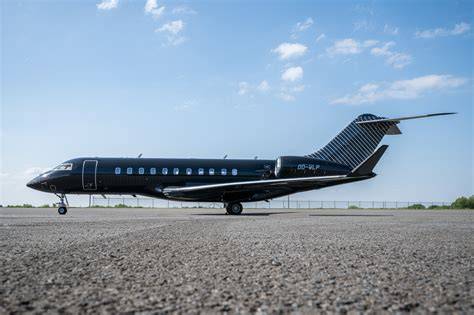
Bombardier Global 6500 — Mach 0.9
The Bombardier Global 6500 reaches the same Mach 0.90 maximum speed as the Global 5500, but its longer-range mission gives it a distinct identity. With a range of approximately 6,600 nautical miles, it can travel about 700 nautical miles farther than the Global 5500.
It uses the same Rolls-Royce Pearl engine family, but the powerplant represents a major evolution from the BR710 architecture associated with the G550. Bombardier has cited improvements including a redesigned high-pressure compressor, lower fuel consumption, and reduced nitrogen-oxide emissions.
The Global 6500 can accommodate up to 17 passengers, making it an interesting combination of capacity, range, and speed. Its Mach 0.90 maximum is only slightly higher than the G550’s, but the aircraft demonstrates how newer propulsion technology can improve several aspects of performance simultaneously rather than concentrating solely on top speed.
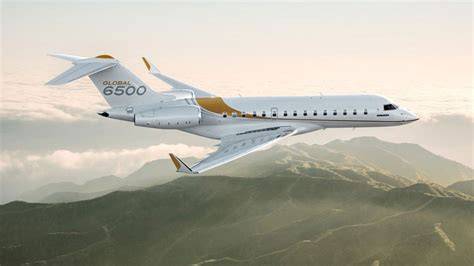
Dassault Falcon 8X — Mach 0.9
The Dassault Falcon 8X takes a different approach to high-speed business aviation because it uses three engines. While three-engine commercial aircraft have largely disappeared from mainstream airline fleets, the configuration remains an important part of Dassault’s Falcon family.
The Falcon 8X is powered by three Pratt & Whitney PW307D engines, each producing approximately 6,722 pounds of thrust. Its maximum speed is Mach 0.90, while long-range cruise is around Mach 0.80. The aircraft can fly approximately 6,450 nautical miles and accommodate up to 16 passengers.
Its three-engine layout is particularly interesting because the Falcon 8X is not simply about brute force. Dassault has emphasized its efficiency, claiming substantial fuel-efficiency advantages over other aircraft in the ultra-long-range segment. Inside, the aircraft provides a cabin approximately 42 feet 8 inches long with multiple lounge zones, giving it the flexibility expected from a large-cabin private aircraft.
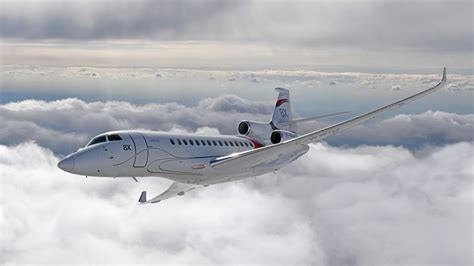
How These Fast Private Jets Surpass the Gulfstream G550
The G550 remains an important benchmark because its Mach 0.885 maximum speed was remarkable when the aircraft entered service. The newer jets demonstrate how incremental advances in aerodynamics, propulsion, materials, software, and weight reduction have steadily pushed that boundary upward.
At the top of the group, the Global 8000 reaches Mach 0.95, putting it much closer to the practical high-speed edge of conventional subsonic business aviation. The G700, G800, and Citation X+ reach Mach 0.935, while the Global 7500 reaches Mach 0.925. The Global 5500, Global 6500, and Falcon 8X each reach Mach 0.90.
Those numbers do not mean these aircraft routinely fly at their maximum speeds. Maximum operating speed and normal cruise speed are different measurements, and long-range operators generally balance speed against fuel consumption, weather, payload, and mission requirements. Nevertheless, the maximum figures reveal just how much private-jet technology has advanced since the G550 established itself as one of the industry’s speed leaders.
The fascinating part is that modern aircraft no longer need to choose so sharply between speed and range. The fastest jets on this list can also cross oceans, carry luxurious cabins, and remain airborne for many hours. That is the real evolution beyond the G550: not simply flying faster, but combining speed, range, efficiency, and cabin capability in aircraft designed to make very long journeys feel considerably shorter.