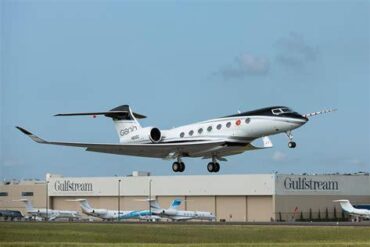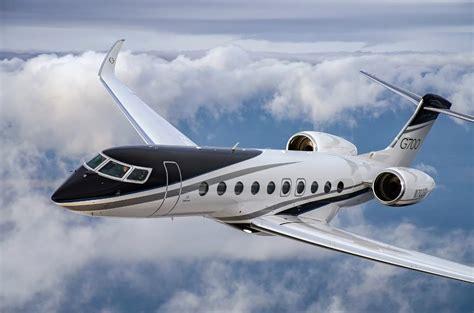
The Gulfstream G700 has achieved something no other business jet has managed in such a short period. While the manufacturer celebrated the delivery of its 100th production aircraft, the flagship private jet simultaneously secured its 100th official city-pair speed record. That remarkable coincidence was far more than a marketing milestone—it demonstrated how Gulfstream has transformed speed into one of its strongest competitive advantages in the ultra-long-range business aviation market.
Rather than focusing solely on luxurious interiors or record-breaking range, the G700 has consistently proven that executives, entrepreneurs, heads of state, and celebrities are willing to invest in an aircraft capable of saving valuable hours on every intercontinental journey. Every new speed record reinforces that reputation, making the G700 one of the most accomplished business aircraft ever built.
The achievement also arrives during one of the most competitive periods in private aviation, with manufacturers racing to dominate the premium long-range segment. Gulfstream’s answer has been simple: build an aircraft that flies farther, flies faster, and keeps passengers more comfortable than virtually anything else in the sky.
A Historic Milestone: 100 Deliveries Matched by 100 Speed Records
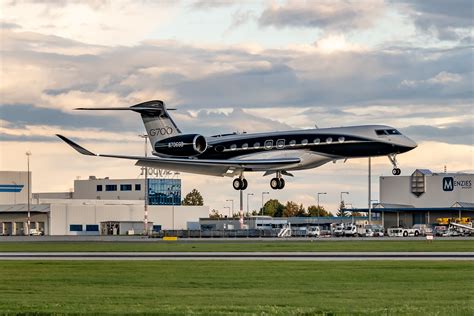
When Gulfstream announced delivery of its 100th G700, it revealed another remarkable accomplishment. The aircraft had simultaneously logged its 100th officially recognized city-pair speed record, highlighting just how frequently the flagship jet has been used to demonstrate its real-world performance.
The milestone flight connected Savannah/Hilton Head International Airport (SAV) with San Jose Mineta International Airport (SJC) in only 4 hours and 36 minutes, maintaining an impressive average cruise speed of Mach 0.91. Instead of ending the demonstration there, the aircraft immediately departed California for Teterboro Airport (TEB) in New Jersey, completing another record-setting journey in just 4 hours and 14 minutes, again averaging Mach 0.91.
Those cruise speeds are particularly impressive because they sit only slightly below the aircraft’s maximum operating speed of Mach 0.935. Few production business jets spend so much of their flight envelope operating this close to their performance limits while maintaining efficiency and passenger comfort.
The accomplishment reflects years of engineering investment, advanced manufacturing techniques, and aerodynamic refinement that allow the G700 to perform consistently instead of setting isolated demonstration records.
Speed as Gulfstream’s Greatest Competitive Weapon
The modern ultra-long-range business jet market is dominated by fierce competition. Every manufacturer offers luxurious cabins, advanced technology, and exceptional range, making performance differentiation increasingly difficult.
Gulfstream has chosen to compete through time savings.
For high-net-worth travelers, multinational corporations, and government operators, every hour saved during international travel has tangible value. Reducing flight time means executives arrive earlier for meetings, governments can deploy faster, and owners spend less time in the air without sacrificing nonstop capability.
The G700’s ability to routinely cruise at Mach 0.90 distinguishes it from many competitors that prioritize maximum range over sustained high-speed performance. Instead of asking customers to choose between speed and distance, Gulfstream engineered an aircraft capable of delivering both.
This philosophy explains why so many official city-pair records continue accumulating. They are not specially modified flights but demonstrations of what the aircraft regularly achieves in operational service.
The Engineering Behind 100 Speed Records
Exceptional performance begins with exceptional propulsion.
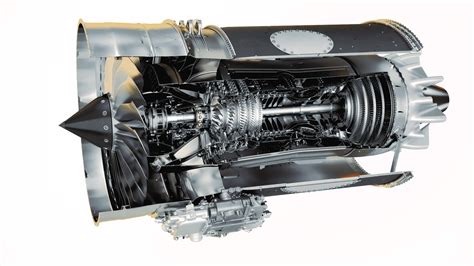
Powering the G700 are two Rolls-Royce Pearl 700 turbofan engines, each producing approximately 18,250 pounds of thrust during takeoff. These engines represent one of the latest generations of business aviation powerplants, combining higher efficiency with substantial thrust output.
Their performance enables the aircraft to maintain:
- Maximum range: 7,750 nautical miles (14,353 km)
- High-speed range: 6,650 nautical miles (12,316 km)
- Maximum operating speed: Mach 0.935
- Typical high-speed cruise: Mach 0.90
- Economy cruise: Mach 0.85
However, engines tell only part of the story.
Engineers paired the Pearl 700 with a highly refined wing optimized for both low drag and excellent high-altitude performance. The airframe’s aerodynamic efficiency allows the aircraft to maintain elevated cruise speeds without dramatically increasing fuel consumption.
This balance between power, aerodynamics, and weight management enables the G700 to operate near the upper limits of business jet performance while preserving the range expected from a flagship aircraft.
Why Flying Higher Makes Flying Faster
One overlooked reason behind the G700’s record-setting flights is altitude.
Commercial airliners generally cruise between 35,000 and 39,000 feet, where air traffic is relatively dense. Business jets like the G700 routinely climb significantly higher, eventually reaching 51,000 feet.
Operating at these altitudes provides several operational advantages.
The thinner atmosphere creates less aerodynamic drag, allowing higher true airspeeds without excessive fuel burn. Equally important, fewer aircraft occupy these flight levels, enabling more direct routing with fewer air traffic constraints.
Pilots often spend less time deviating around congestion or waiting for altitude changes, helping preserve average cruise speeds throughout long journeys.
Passengers benefit as well. Higher altitudes generally experience smoother atmospheric conditions, reducing turbulence and creating a noticeably quieter cabin environment.
These operational advantages accumulate over thousands of miles, often saving dozens of minutes compared with lower-altitude operations.
Luxury Designed for Ultra-Long-Haul Missions
Flying nearly eight thousand nautical miles nonstop demands more than speed.
The G700 was developed around the assumption that passengers may spend 12 to 15 hours onboard, making cabin comfort just as important as flight performance.
One of its most significant wellness features is an exceptionally low cabin altitude. While cruising at over 50,000 feet, cabin pressure remains equivalent to only about 2,900 feet above sea level, significantly lower than that experienced aboard most commercial airliners.
Lower cabin altitude helps reduce fatigue, dehydration, headaches, and the effects commonly associated with jet lag after ultra-long flights.
Fresh air systems further improve passenger wellbeing by continuously introducing outside air instead of relying heavily on recirculated cabin air.
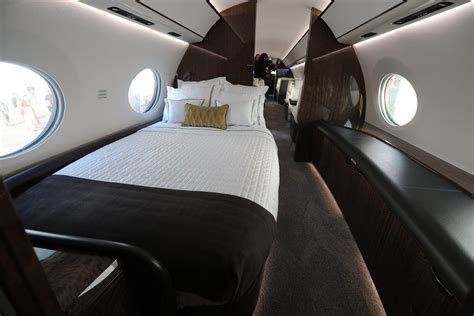
Inside, the aircraft offers one of the industry’s largest cabins, accommodating up to 19 seated passengers or 13 sleeping occupants across as many as five distinct living areas.
Owners can configure dedicated conference rooms, entertainment lounges, dining spaces, crew rest compartments, and even a private master suite featuring its own shower. Large panoramic oval windows flood the interior with natural light, while advanced circadian lighting systems help passengers adjust more naturally to changing time zones.
Advanced Cockpit Technology Reduces Pilot Workload
Record-setting flights require more than raw performance.
Modern long-range aviation depends heavily upon sophisticated flight management systems capable of optimizing routing, fuel efficiency, weather avoidance, and navigation simultaneously.
The G700’s Symmetry Flight Deck represents one of Gulfstream’s most significant technological advances.
Instead of traditional control yokes, pilots operate the aircraft using electronically linked active control sidesticks. These provide tactile feedback, improving precision while reducing pilot workload during all phases of flight.
Large touchscreen displays replace many conventional cockpit switches, presenting flight data through Honeywell’s advanced Primus Epic avionics architecture.
Integrated technologies include:
- Next Generation Flight Management System
- Synthetic Vision with three-dimensional terrain display
- Predictive Landing Performance System
- Advanced navigation optimization
- Fuel efficiency management tools
Together, these systems allow pilots to focus more on strategic decision-making while automation manages routine operational tasks.
More than 700 pilots have already completed type ratings for the G700, demonstrating industry confidence in the aircraft’s flight deck design.
Sustainable Aviation Fuel Is Becoming Part of the Performance Story
High performance increasingly goes hand in hand with sustainability.
Several record-setting G700 flights have incorporated Sustainable Aviation Fuel (SAF) blends, including a notable nonstop flight between Savannah and Honolulu, completed in 8 hours and 52 minutes.
SAF can substantially reduce lifecycle carbon emissions compared with conventional jet fuel while remaining fully compatible with existing aircraft engines and airport infrastructure.
Rather than compromising performance, these flights demonstrated that environmentally conscious fuel choices can coexist with world-class speed records.
As SAF availability expands worldwide, future long-range business aviation is likely to combine greater operational efficiency with lower environmental impact.
Why Billionaires Continue Choosing the G700
Performance alone does not explain why the G700 has become one of the world’s most sought-after private aircraft.
High-profile owners increasingly value aircraft that maximize flexibility.
Among the most recognizable buyers is Jeff Bezos, who added a G700 to a fleet already containing multiple Gulfstream aircraft. Registered as N11AF, the aircraft initially entered service with relatively short domestic flights before transitioning into regular long-haul international operations, including frequent trips to destinations in Europe.
For owners whose schedules regularly span multiple continents, reducing travel time by even thirty to sixty minutes on every long-distance mission creates meaningful productivity gains throughout the year.
Combined with unmatched cabin comfort, nonstop capability, and exceptional dispatch reliability, the G700 has become a logical choice for individuals who view time as their most valuable resource.

Gulfstream’s Commitment to Speed Extends Beyond the G700
The company’s emphasis on performance is not limited to its flagship.
The Gulfstream G280 continues to hold recognition as one of the fastest midsize business jets available.
Despite occupying a much smaller market segment, the aircraft cruises at approximately 644 mph (1,037 km/h) during high-speed operations while offering a range of 3,600 nautical miles.
Powered by twin Honeywell HTF7250G engines and equipped with advanced Primus Epic avionics, the G280 demonstrates that Gulfstream’s design philosophy extends across its entire product portfolio.
Whether serving regional business missions or intercontinental executive travel, the company consistently prioritizes speed without compromising operational capability or passenger experience.
A New Benchmark for Business Aviation
The coincidence of delivering 100 Gulfstream G700s while simultaneously achieving 100 official city-pair speed records represents far more than a symbolic milestone. It illustrates an aircraft that has consistently delivered on its engineering promises in everyday service rather than controlled demonstrations.
Powered by efficient Rolls-Royce Pearl 700 engines, capable of cruising near Mach 0.90, operating at altitudes above most commercial traffic, and supported by one of the industry’s most advanced flight decks, the G700 has redefined expectations for ultra-long-range private aviation.
Equally important, its performance does not come at the expense of passenger wellbeing. Spacious interiors, remarkably low cabin altitude, fresh-air systems, customizable living spaces, and cutting-edge lighting create an environment designed for productive, comfortable journeys that span oceans without interruption.
As manufacturers continue competing for dominance in the premium business jet sector, the G700’s growing collection of speed records demonstrates that its greatest advantage is not simply flying farther or flying faster. It is combining both attributes with unmatched luxury and operational maturity in a single aircraft—an achievement reflected perfectly by the remarkable milestone of 100 aircraft delivered and 100 speed records earned almost simultaneously.