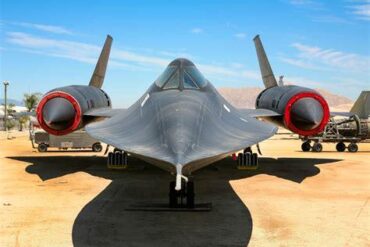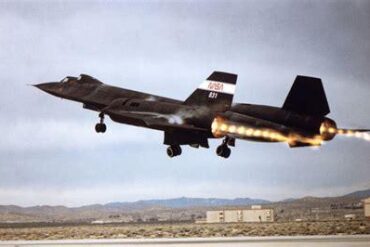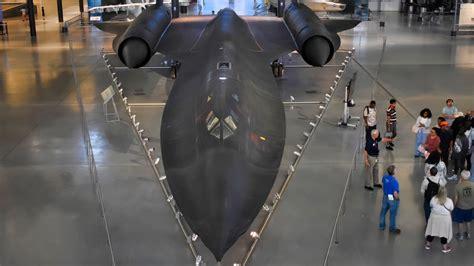
The Lockheed SR-71 Blackbird remains one of the most extraordinary achievements in aviation history. More than two decades after its retirement, no crewed air-breathing aircraft has surpassed its legendary combination of speed and altitude. The Blackbird’s ability to cruise above Mach 3 while operating near the edge of space created a performance benchmark that modern aircraft have still failed to overcome.
The reason is not simply that engineers have forgotten how to build faster aircraft. Instead, the SR-71 represented a rare convergence of Cold War urgency, unlimited innovation, advanced materials, specialized propulsion, and a mission that justified extreme engineering solutions. Today’s aircraft pursue different priorities, focusing on stealth, efficiency, range, connectivity, and survivability rather than pure speed.
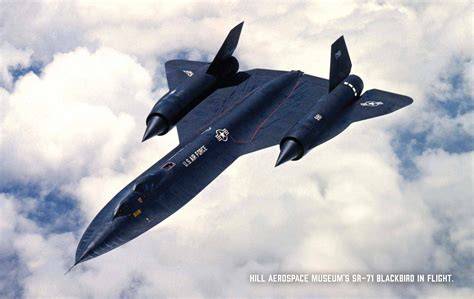
The SR-71 Blackbird was created during the height of the Cold War when intelligence gathering was considered a national priority. After the vulnerability of earlier high-altitude aircraft such as the U-2 became clear, the United States needed an aircraft that could collect information while avoiding increasingly advanced Soviet air defenses.
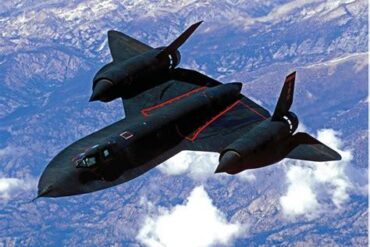
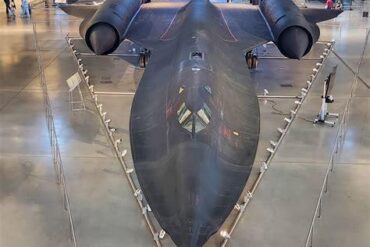
The result was an aircraft unlike anything before or since. Designed by Lockheed’s legendary Skunk Works division, the SR-71 combined a unique aerodynamic shape, titanium construction, and revolutionary engines to achieve performance that still appears futuristic decades later.
The SR-71 Blackbird Was Designed Around Speed And Altitude
The SR-71 entered service in 1966 with the primary mission of strategic reconnaissance. Unlike conventional aircraft that relied on maneuverability or defensive weapons, the Blackbird used speed and altitude as its main protection. The aircraft was built around a simple but demanding philosophy: fly so high and so fast that enemy defenses could not reach it.
The aircraft operated at altitudes between 80,000 and 85,000 feet, far above normal commercial flight levels. At these heights, the SR-71 could observe enormous areas of the Earth while remaining outside the effective range of most surface-to-air missiles.
Its performance came from two revolutionary Pratt & Whitney J58 engines, each capable of producing approximately 32,500 pounds of thrust with afterburners. However, these engines were unlike traditional turbojets. At speeds above Mach 3, the aircraft’s inlet system transformed the engine operation, directing airflow in a way that allowed the propulsion system to function partially like a ramjet.
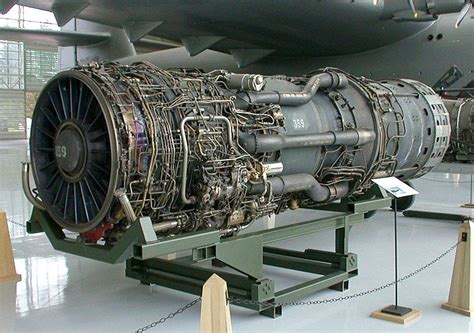
This combination of engine power and aerodynamic engineering allowed the SR-71 to maintain sustained speeds above Mach 3 for extended periods. Its officially recorded maximum speed reached approximately Mach 3.32, or around 2,193 mph (3,529 km/h), achieved on July 17, 1976.
Few aircraft have ever approached those numbers. Even today, most modern fighter aircraft remain below Mach 2, while experimental aircraft capable of higher speeds usually sacrifice operational practicality, endurance, or crew capability.
Titanium Construction Allowed The Blackbird To Survive Extreme Heat
Flying at Mach 3 created a major engineering challenge: heat. At such speeds, friction with the atmosphere caused the aircraft’s skin temperature to rise dramatically, reaching approximately 600°F (316°C) in some areas.
Traditional aluminum airframes could not survive these conditions. Engineers therefore built around 92% of the SR-71’s structure using titanium and titanium alloys, creating one of the most advanced airframes of the twentieth century.
However, titanium introduced its own difficulties. The material was expensive, difficult to machine, and challenging to manufacture. Lockheed engineers even had to develop new production methods because existing industrial techniques were insufficient for the aircraft’s demanding requirements.
The aircraft was also designed with expansion in mind. The SR-71 was intentionally built with small gaps between panels because the structure expanded during high-speed flight. On the ground, fuel could leak through these gaps, but at Mach 3 temperatures, the aircraft expanded and sealed itself.
This level of specialization explains why reproducing the SR-71 today would not simply involve installing more powerful engines on a modern airframe. The entire aircraft was a carefully balanced system designed around extreme conditions.
Why Modern Aircraft Have Not Replaced The SR-71’s Performance
The biggest reason no crewed aircraft has beaten the SR-71’s records is that modern aviation priorities have changed.
During the Cold War, speed was a strategic weapon. The United States needed an aircraft capable of penetrating heavily defended airspace, gathering intelligence, and escaping before enemy systems could respond. The SR-71 fulfilled that role perfectly.
Today, military planners often prefer aircraft that combine stealth, sensors, networking capabilities, and unmanned technology. A slower aircraft with advanced electronic systems may provide more battlefield value than a faster aircraft that is easier to detect.
Modern stealth aircraft such as the Lockheed Martin F-35 Lightning II and advanced unmanned systems demonstrate this shift. Their advantages come from reducing detection, sharing information, and operating as part of a larger network rather than simply outrunning threats.
The development of satellites also changed reconnaissance. During the SR-71 era, a manned aircraft was one of the best ways to collect intelligence over hostile territory. Today, satellites, drones, and advanced sensors can perform many surveillance tasks without risking a pilot.
The SR-71 Was Expensive Because It Pushed Engineering Limits
The Blackbird’s incredible performance came with enormous costs. Every part of the aircraft was specialized, from its fuel to its maintenance procedures.
The SR-71 required a unique fuel known as JP-7, which was designed to resist ignition at extremely high temperatures. During a typical mission lasting around 90 minutes, the aircraft could consume approximately 12,000 gallons of fuel.
The aircraft also required aerial refueling because its fuel capacity was not always sufficient for long missions involving maximum-speed operations. Tankers played an important role in extending the SR-71’s global reach.
Maintenance was equally demanding. The aircraft required highly trained crews and careful inspections after missions involving extreme thermal stress. The operational costs were justified during the Cold War because the intelligence value was considered priceless.
Once alternative surveillance methods became available, maintaining such an expensive aircraft became increasingly difficult to justify.
The Final Flight Proved The Blackbird Was Still Unmatched
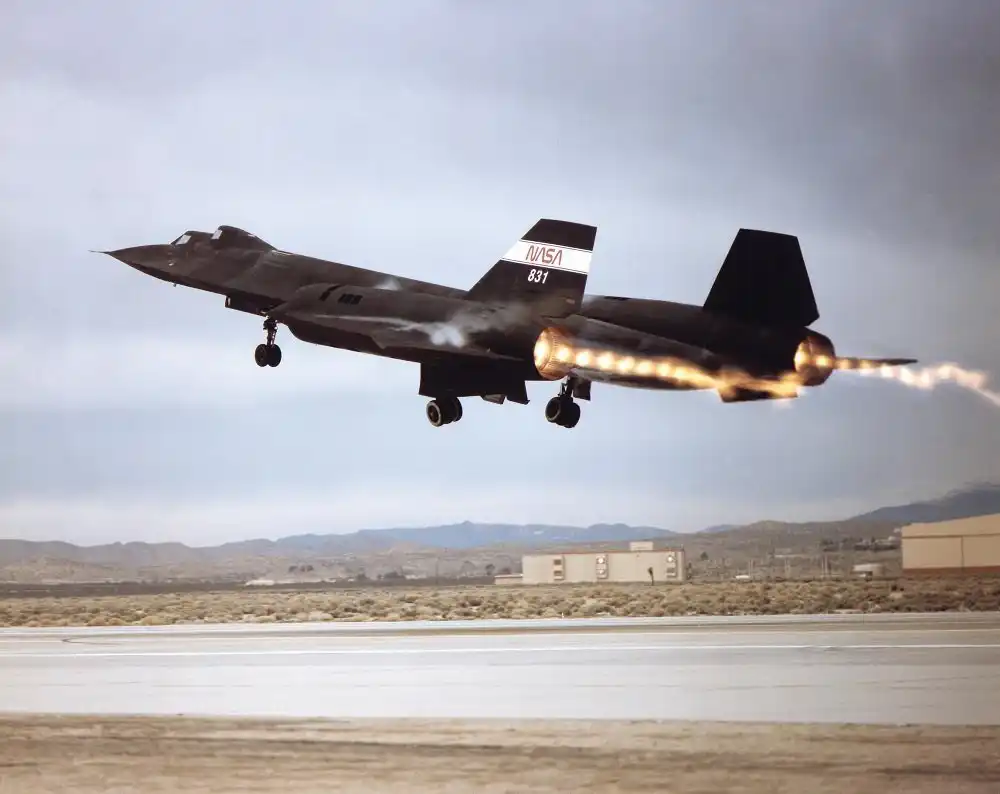
The SR-71 officially completed its final flight on October 9, 1999, but its retirement was not caused by technological failure. In many ways, the aircraft was still ahead of its time.
The final flight was performed by NASA-operated SR-71 aircraft at Edwards Air Force Base, California. The aircraft reached approximately Mach 3.21 and climbed to more than 80,000 feet, demonstrating that its remarkable capabilities remained intact more than three decades after its first flight.
NASA used several Blackbirds as research platforms after military retirement. These aircraft contributed to studies involving high-speed aerodynamics, thermal protection, sonic boom research, and advanced propulsion technologies.
The fact that NASA continued using the SR-71 decades after its introduction highlights how far ahead of its era the aircraft truly was.
Experimental Aircraft Have Gone Faster, But Not In The Same Category
Some aircraft have exceeded the SR-71’s speed, but they do not represent direct replacements. Experimental vehicles such as rocket-powered aircraft and specialized research platforms have achieved far higher speeds, yet they operate under completely different conditions.
For example, the North American X-15 reached speeds above Mach 6 and altitudes far beyond the SR-71. However, it was not a practical operational aircraft. It carried limited fuel, required specialized launch procedures, and was designed specifically for research.
The SR-71 remains unique because it combined extreme speed, extreme altitude, range, and operational capability in a reusable crewed aircraft.
That balance is much harder to achieve than simply reaching a record-breaking number.
Future Aircraft May Challenge The SR-71’s Legacy
New aerospace programs continue to explore high-speed flight. Hypersonic aircraft concepts, advanced reconnaissance platforms, and next-generation military systems may eventually surpass the Blackbird’s performance.
However, achieving such goals requires solving major challenges involving propulsion, heat management, materials, and economics.
A future aircraft capable of exceeding Mach 3 while carrying a crew would need advanced engines, possibly combining technologies from turbojets, ramjets, and scramjets. It would also need materials capable of surviving repeated extreme heating cycles.
The question is not whether engineers can theoretically build a faster aircraft. The question is whether such an aircraft would provide enough strategic value to justify its enormous cost.
The SR-71 Blackbird Remains Aviation’s Ultimate Speed Record Holder
The SR-71 Blackbird has survived for more than 26 years without a crewed air-breathing aircraft surpassing its speed or altitude achievements because it was built for a very specific historical moment.
It represented a time when nations were willing to invest extraordinary resources into creating machines that pushed the boundaries of physics. Its combination of Mach 3+ performance, 80,000-foot operations, titanium construction, and revolutionary engines remains unmatched.
Modern aviation has moved toward stealth, automation, and efficiency. Those technologies may be more practical for today’s missions, but they have not replaced the unique achievement of the Blackbird.
The SR-71 was not simply a fast airplane. It was a technological statement that proved human engineering could operate at the edge of the atmosphere—and more than two decades after its final flight, that achievement still stands alone.