Air Canada closed the third quarter of 2026 with record operating revenue of $6.984 billion, a 21% jump from the same period a year earlier, and the number has already been drafted into a tidy story: the carrier’s new Basic fares in business class and premium economy, which went on sale in late July, supposedly drove the surge. The evidence published alongside the results does not support that conclusion. The record belongs to a thirteen-week quarter in which those fares were available for only about the final nine weeks, a window in which fuel-driven fare increases and a pronounced shift in premium travel patterns were moving at the same time. Understanding what the quarter actually proves — and what it leaves open — requires separating the top line from the bottom line, then looking closely at the fare rules themselves, and finally measuring Air Canada’s version against the premium Basic products that Delta Air Lines and JetBlue have built on the same unbundling logic.
A Record Top Line With A Thinner Bottom Line
The revenue architecture behind the record is straightforward. Passenger revenue reached roughly $6.3 billion, powered by a yield gain of 11%, a passenger load factor that rose 2.6 percentage points to 89.1%, and cargo revenue that climbed 33%. Unit revenue advanced 14% on both a total and a passenger basis, a gain that arrived on top of capacity growth of 5.7% — meaning Air Canada sold more seats, at higher prices, on more flying. By any conventional reading, that is a record quarter. All figures were reported by the airline.
Profitability told a very different story. Fuel expense rose by $906 million while the price per liter climbed from 88.3 cents to 148.3 cents, and operating income slipped to $261 million from $284 million, compressing the operating margin to 3.7% from 4.9%. Adjusted EBITDA of $936 million landed slightly below last year’s $961 million, with the margin falling to 13.4% from 16.6%, net income attributable to shareholders dropped to $139 million from $264 million, and free cash flow turned negative by $440 million. A record top line sat on top of a balance sheet that was leaking.
Management responded by lowering full-year adjusted EBITDA guidance to $2.4 billion to $2.7 billion from $2.9 billion to $3.2 billion, attributing the cut chiefly to higher expected fuel prices. The chief financial officer credited decisive pricing, capacity, and cost actions with softening the fuel impact — a phrase that describes recovering cost pressure rather than capturing premium leisure demand. Balance sheet actions continued alongside the operating results, as Air Canada used Aeroplan transaction proceeds to repay $1.7 billion of debt and completed an $800 million issuer bid that reduced shares outstanding by about a 10% slice.
Revised 2026 Guidance Signals Caution Rather Than Confidence
The updated outlook is where the tone of the quarter becomes legible. Adjusted EBITDA guidance fell to $2.4 billion to $2.7 billion. ASM capacity is now expected to rise approximately 2.75% from 2025, a narrower band than the earlier 2.25% to 3.25% range. Adjusted CASM is guided to an increase of 5.5% to 6% from 2025, marginally worse than the prior 5% to 6%. Free cash flow is now expected to break even, plus or minus $150 million, against a previous $200 million to $500 million target.
That is a wholesale repricing of the year’s financial story, and it lands in the same quarter in which the airline is being credited with inventing premium unbundling. A carrier that expected to generate up to $500 million in free cash flow and now expects to generate nothing was not behaving like a business discovering a new profit engine. It was defending a fuel shock that arrived faster than fares could absorb it.
What The Premium Cabins Actually Contributed
Executives reported that premium cabin revenue rose 19% and corporate revenue 22%, with North American markets posting the strongest unit revenue gains because shorter booking windows let the airline pass higher fuel costs into fares more quickly. Premium travel was already central to the airline’s economics, accounting for about 30% of passenger revenue in its 2025 results despite occupying far fewer seats than economy. The trend also predates the Basic launch entirely: premium revenue grew 11% in the second quarter, when no premium Basic fares existed.
Chief Commercial Officer Mark Galardo pointed to a behavioral shift, saying that premium customers, whether traveling for leisure or business, have been flying more in spring and autumn than during the summer peak. He described the quarter as a story of premium rather than budget passengers, predicted record September and October revenue, and noted that the shift began two or three years ago, has accelerated, and is now appearing slightly in November. On the new fares, Galardo said in mid-August that it was far too early to judge reception because they had been on sale for barely more than a week, and he described United Airlines’ early results with its own premium Basic fares as interesting.
Because Air Canada’s Basic fares were on sale for only about the last nine weeks of a 13-week quarter, and because fuel-driven fare increases and shifting travel patterns were operating simultaneously, nothing in the disclosed record allows the revenue gain to be credited to unbundling. The 11% premium growth in the second quarter, before the product existed, is the cleanest available rebuttal.
What Air Canada’s Basic Business Fare Takes Away
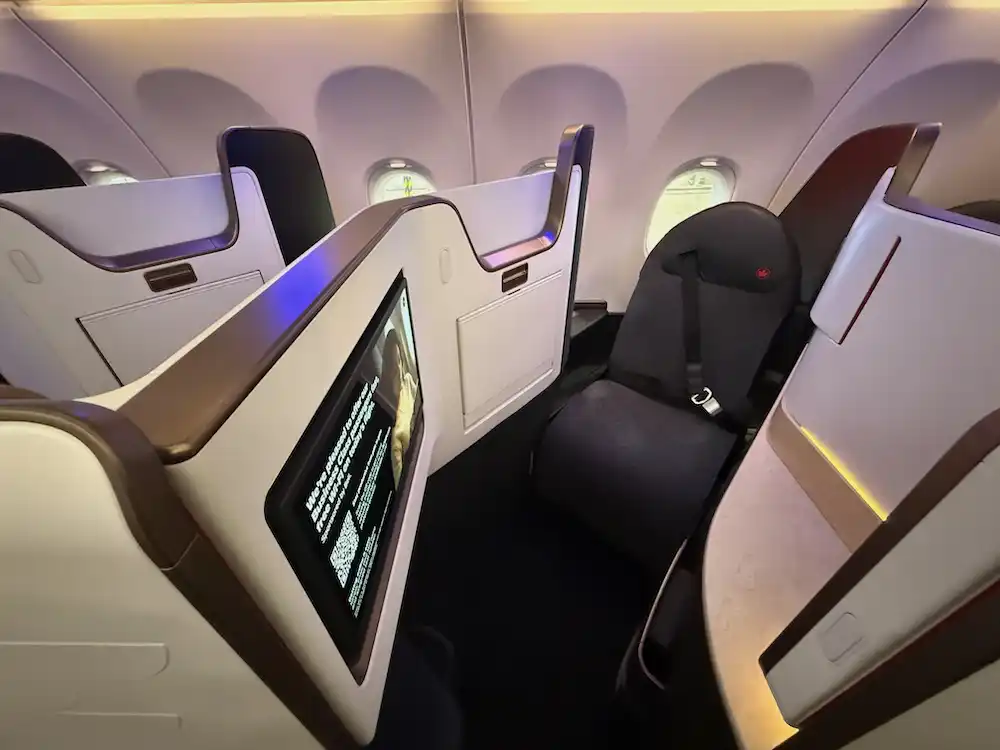
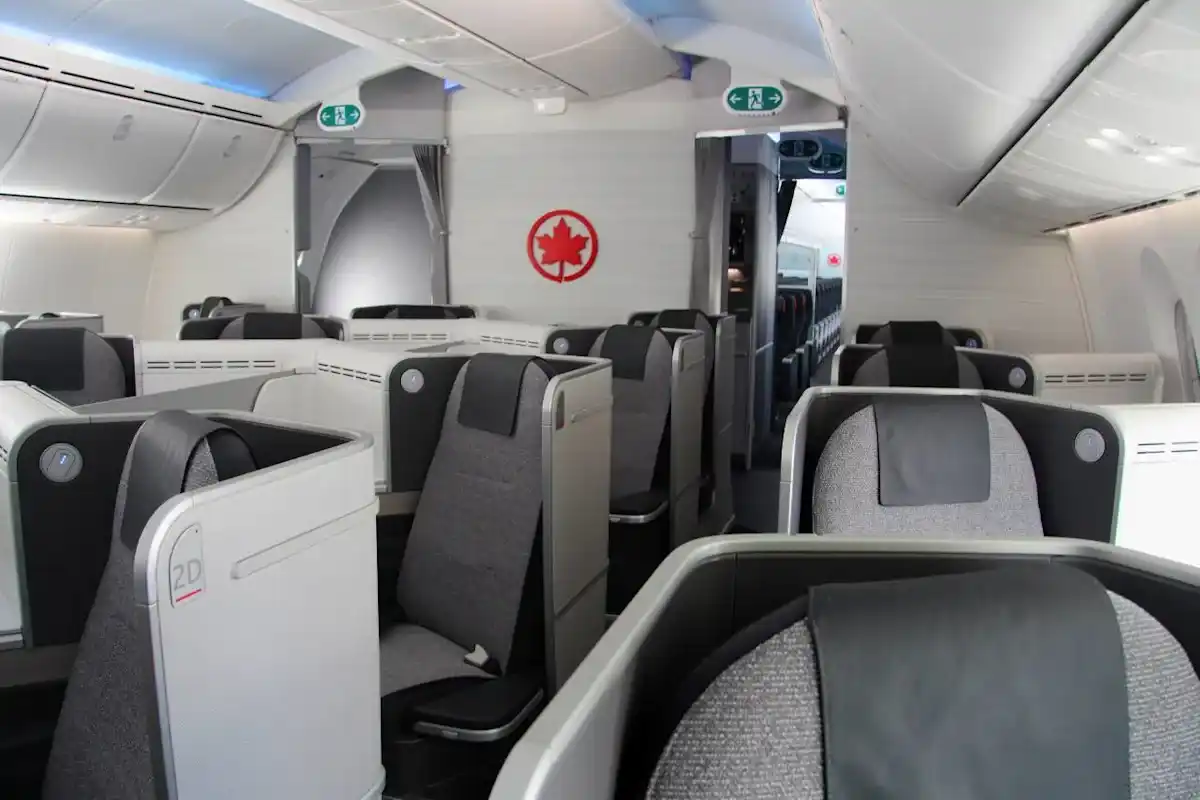
Business Class Basic is sold on flights within Canada, to the United States, and to and from Central and South America, and it is not offered on long-haul itineraries such as Montreal to New Delhi. Tickets are non-refundable and carry no future travel credit, while changes up to two hours before departure cost $200 within Canada or to the US and $700 on international flights, in Canadian dollars. Same-day airport changes and standby are not permitted, advance seat selection carries a fee, and the checked allowance falls from two bags to one on Canada and US routes. Carry-on allowances remain at one personal article and one standard article across Basic, Standard, and Latitude.
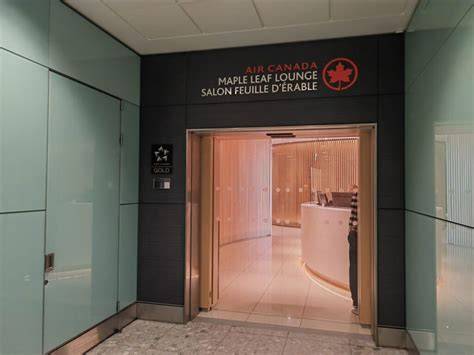
Despite the cuts, the fare remains more than critics might expect, since passengers retain Maple Leaf Lounge access, priority check-in and baggage handling, and the same earning rate of one Aeroplan point and four Status Qualifying Credits per dollar. Premium Economy Basic is stricter because it drops lounge access, keeps the same flexibility limits, and, according to AwardWallet, excludes eUpgrade certificates. The business class table lists no eUpgrade row, which makes sense because no cabin sits above it, so the restriction mainly affects travelers who would otherwise apply certificates to a Premium Economy ticket.
The savings are modest, and this is the detail that reframes the entire product. On Toronto to Mexico City, AwardWallet found Basic at $1,022, Standard at $1,093, and Latitude at $1,256, leaving only a $71 gap between Basic and Standard — a spread AwardWallet interprets as a nudge toward the pricier option.
How Delta’s Basic Business Compares
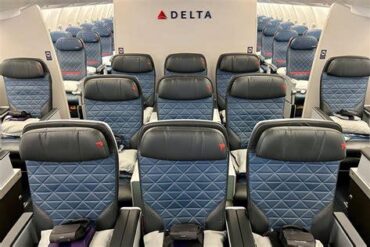
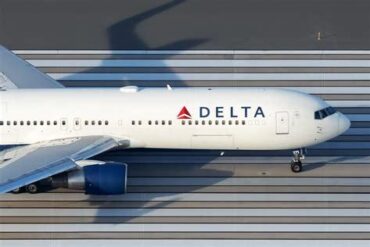
Delta began selling Basic Business on July 8 for travel starting in September, and the fare preserves the lie-flat seat, Zone 1 boarding, and the standard Delta One meal while removing most of the ground experience. Seats are assigned after check-in, the checked allowance shrinks by one bag, and the ticket earns 2 SkyMiles per dollar instead of 5, although it still counts toward Medallion status. Delta also bars upgrades of every kind, paid ones included, and rules out same-day confirmed changes and standby. Delta First Basic has been flying since July in select domestic and Latin American markets, while Premium Select Basic follows alongside Basic Business in September.

Lounges mark the sharpest contrast, since Basic Business passengers keep Delta One check-in and the Delta One Lounge only through January 18, 2027, after which the privileges lapse unless obtained through a Sky Club membership or an eligible American Express card. Fees also differ, as AwardWallet reports that Delta raised the change and cancellation charge for Basic Business to $500 from $99 on travel originating in the United States and Canada, with cancellations yielding an eCredit toward a future ticket.
Measured against those terms, Air Canada’s version asks for less on several fronts, because it retains lounge access, preserves full Aeroplan earnings, and charges $200 for changes within Canada or to the US versus Delta’s $500. Its $700 international change fee, roughly US$496, is comparable to Delta’s, and its lack of any refund or credit is harsher than Delta’s eCredit. Air Canada also confines Basic to shorter routes, whereas Delta extends its premium Basic fares to select long-haul international markets.
JetBlue Takes A Narrower Route
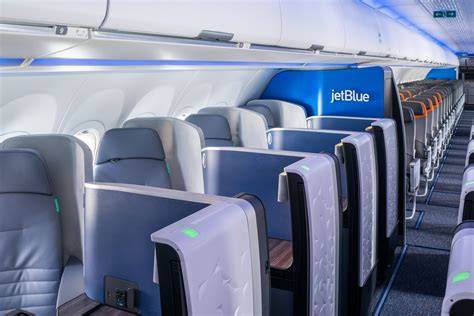
JetBlue Airways sorts travelers first by onboard experience, choosing among Main, EvenMore, BlueFirst, and Mint, and then by up to three fare options named Base, Standard, and Flex that differ in seat selection and refundability. Base fares omit seat selection and return travel credit on cancellation, less any fee, and they are branded for Main, EvenMore, and BlueFirst. President Marty St. George framed the structure as two clicks: the onboard experience first and the fare second.
The release states that Base fares are not available in Mint, so the lie-flat product keeps only its Standard and Flex tiers, and a Mint Base fare does not appear in JetBlue’s own description. BlueFirst, the domestic first-class product that begins rolling out later this year, is listed with a Base option, although JetBlue says fuller fare details will follow. United, which introduced unbundled premium fares in April 2026, and Lufthansa already sell comparable products, and Air Canada’s tiers resemble those of its partners.
The Fourth Quarter Will Be The First Real Test
The fourth-quarter report in early 2027 will be the first to cover a full quarter with Basic fares on sale, which should give analysts a cleaner view than the partial exposure in the third quarter. The reading will be clouded because Air Canada has said it is not yet providing 2027 guidance and has trimmed planned first-quarter 2027 capacity by two points; fuel prices remain the key variable in its outlook, and a new chief executive, Anko van der Werff, is due to arrive by the end of January 2027.
Within that noise, the most informative signal may be how many buyers choose Standard when the gap is as small as $71 — a figure airlines rarely disclose, and one that would show whether Basic is expanding the premium audience or merely repricing existing buyers. Delta’s lounge cutoff on January 19, 2027, will supply a parallel test of how travelers react to losing ground perks, and Air Canada, having kept its lounge access, can treat that contrast as either a selling point or a cushion for tightening its terms later. Because the incoming chief executive will inherit both the fare structure and the missing 2027 outlook, his first budget cycle may decide whether Basic remains a modest entry point or grows into the fare most travelers see first in search results.