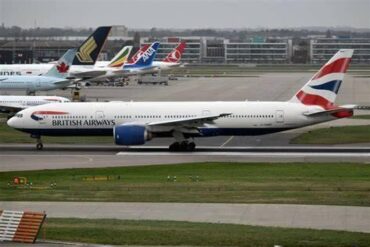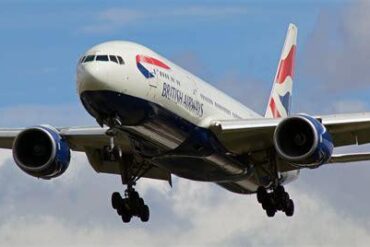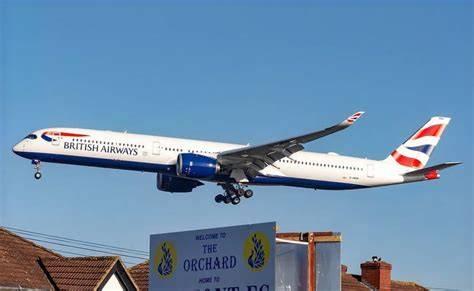
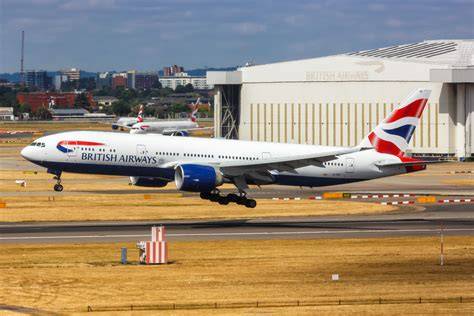
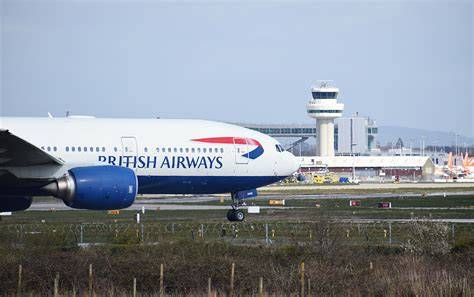
British Airways is preparing to retire the workhorse that built its long-haul network, yet it has so far declined to publish a retirement date or a route-by-route succession plan for the 43 Boeing 777-200ERs that still anchor so much of its schedule at London Heathrow. The fleet averages roughly 26 years of age, and the overwhelming majority of those airframes are based at Heathrow rather than Gatwick, which places the entire renewal question squarely on the airline’s most slot-constrained and most commercially valuable doorstep. The only firm date British Airways has committed to belongs to the other London airport: in a February 27, 2026 message to colleagues, CEO Sean Doyle confirmed that the first new Boeing 787-10 would be delivered to Gatwick in 2029. Everything beyond that statement remains an informed projection rather than a published schedule, and that gap between confirmed fact and educated prediction is precisely where the story of Heathrow’s 777 replacement becomes genuinely interesting.
Why The Heathrow 777-200ER Question Is So Complicated
Replacing a 777-200ER is not the straightforward like-for-like swap it appears to be on a spreadsheet. The 777-200ER at British Airways is a business-heavy, four-class aircraft, typically configured with Club Suites, World Traveller Plus, World Traveller and, on at least some airframes and routes, a First cabin. Any successor that lacks First changes the product as well as the seat count, which means route-by-route decisions carry premium-revenue consequences far beyond raw capacity. Heathrow compounds the difficulty because it is the one airport where British Airways genuinely cannot add flights at will. Slots are finite and tightly held, so the only meaningful lever for growth is upgauging: flying a larger aircraft on an existing departure. That logic points toward bigger jets rather than simpler ones, and it explains why two distinct types dominate the picture: the Airbus A350-1000, which is already stepping onto some of the 777-200ER flying, and the Boeing 787-10, with the long-delayed Boeing 777-9 expected to follow as the eventual flagship.
The first tangible clue arrived not from Heathrow but from Nashville, and it suggested a more significant strategic shift than a simple one-for-one replacement. British Airways scheduled the Airbus A350-1000 to take over its daily Heathrow–Nashville service from March 29, based on schedule data first spotted by Ishrion Aviation and subsequently reported by Simple Flying. The published flight times remain unchanged at 9 hours 10 minutes outbound as BA223 and 8 hours 10 minutes back as BA222, even though the A350 cruises slightly faster than the 777. During winter, the route has relied on the Boeing 787-8, and there is no confirmation yet on whether that aircraft returns once the cold season arrives.
The Nashville Swap Reveals The Real Strategy: Upgauging
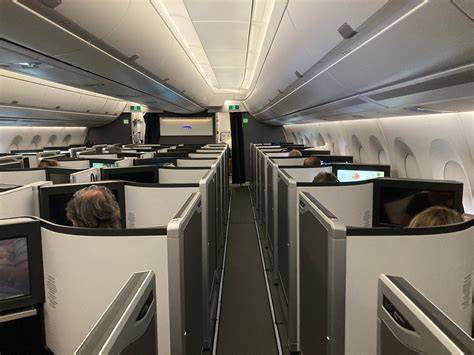
The Nashville change is instructive because the seat count tells a story that a simple aircraft substitution would not. The Heathrow 777-200ER seats 272 passengers on this route, while the A350-1000 seats 331, a jump of 59 seats achieved without a single additional departure. The seat models themselves are identical, but British Airways fits a smaller galley area to squeeze in the extra rows, and cabin crew have voiced concern about galley space on the type, according to Turning Left For Less. The breakdown is revealing: Club Suites rise from 48 to 56, World Traveller Plus climbs from 40 to 56, and World Traveller expands from 184 to 219. Economy passengers may even gain a measure of comfort, since the A350 carries one fewer seat per row than the 777, which slightly widens the aisle experience and reduces the classic nine-abreast squeeze.
The strategic significance runs deeper than seating. Adding 59 seats to a route without adding a flight is the only genuine growth mechanism available at a slot-controlled hub, and it converts an old airframe whose depreciation is complete but whose efficiency is dated into a modern jet with materially lower per-seat costs. There is a cargo dimension too. The A350-1000 is comparable in size to the Boeing 777-300ER and therefore has a significantly larger hold than the 777-200ER, which on a short transatlantic sector lets British Airways load more freight than before. Efficiency is the other half of the equation: according to Airbus, the A350 Family delivers a 25% advantage in fuel burn, operating costs and CO₂ emissions compared with previous-generation competitor aircraft, a gain that flows from advanced aerodynamics, new-generation Rolls-Royce Trent XWB engines and lightweight materials accounting for more than 70% of the airframe. At an airport where British Airways cannot grow its departure count, that combination of more seats and lower unit cost per departure makes the A350-1000 uniquely attractive.
Gatwick Gets The First New 787-10s And A Clearer Path
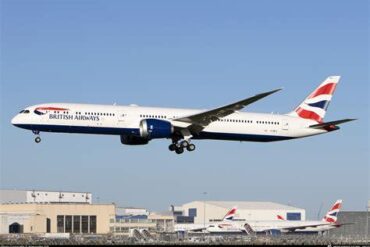
Gatwick is the easiest part of the puzzle because British Airways has actually given it a delivery date. Citing Cirium data, Aerospace Global News reported that British Airways served 13 destinations from Gatwick in March 2026, all lower-yielding leisure flights ranging from Antigua and Cancun to Orlando and Mauritius, plus Accra and Islamabad for visiting-friends-and-relatives traffic. Around 12 aircraft are typically based there, and some suggest 17 could be once the 787-10 arrives. The new jets are not expected to carry a First cabin, which simplifies the aircraft’s role at a leisure-focused base and preserves cabin consistency on routes where First demand is limited. The outlet also suggests that a larger Gatwick presence could make the airport more attractive to oneworld partner airlines hoping to feed connecting passengers into British Airways’ network, turning a secondary base into a more useful connection point.
There is also a technical twist that materially changes which routes the new Dreamliners can serve. According to Turning Left For Less, British Airways’ earliest 787-10s lacked crew rest bunks and were range-limited, so the newly ordered aircraft will receive an increased-gross-weight modification and bunks. That unlocks routes such as Vancouver, Phoenix, Mauritius, Cancun and Las Vegas, all of which become workable once the modification is fitted. The newly ordered 787-10s will be powered by General Electric GEnx engines, following the airline’s decision to introduce a second engine supplier alongside Rolls-Royce on its Dreamliner fleet, which also gives British Airways greater leverage in long-term engine maintenance negotiations. Doyle’s own message confirmed the bunks, and Aerospace Global News adds that the rest areas should be welcome news for crew, since the airline’s initial 787-10s do not have them. That gives British Airways a relatively clean renewal path at Gatwick, but Heathrow remains harder, because replacing a four-class, business-heavy aircraft with a 787-10 without First changes the product as well as the capacity.
The Boeing 777-9 Will Shape The Final Replacement Mix
The 777-9 is the biggest aircraft in British Airways’ replacement plan, and it is also the one that introduces the most uncertainty. As of mid-2026, the type was still working through the tail end of its certification sequence, and Boeing is expected to deliver its first example in 2027, by which time Airbus will likely have well over 150 A350-1000s flying worldwide. For British Airways, Turning Left For Less expects a four-class layout of eight First, 65 Club Suites, 46 World Traveller Plus and 206 economy seats, 325 in all, debuting from 2027 or 2028 with the airline’s new First suite. Against the A350-1000’s 331 seats, the 777-9 would not even add capacity on a Nashville-type route, which complicates the idea of the 777-9 as a simple 777-200ER successor and reframes it instead as a premium-experience aircraft.
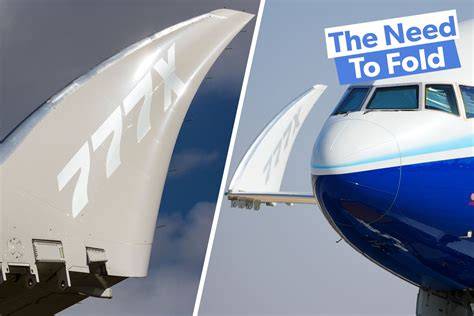
The order book tells the strategic story more clearly than any single route decision. British Airways has 24 Boeing 777-9s on order after adding six aircraft in March 2025, plus six additional A350-1000s and 38 Boeing 787-10s, including the 32-aircraft order announced in 2025. Those numbers make one aircraft particularly important: twenty-four 777-9s are supposed to become British Airways’ largest new-generation widebodies, but none has yet joined the fleet, and the timing of that arrival could determine how quickly the oldest Heathrow 777s can finally disappear. The same site expects the new First suite to be limited to the 24 Boeing 777-9s and the 12 refurbished Airbus A380s, which would make the 777-9 as much a flagship statement as a fleet-replacement tool. That concentration of First in two types is a deliberate premium strategy, but it also means the aircraft retiring from Heathrow routes could take the First cabin with them rather than hand it to a successor.
Heathrow’s Oldest 777-200ERs May Have To Wait
That leaves British Airways with an awkward transition period. Turning Left For Less reports that the airline intends to retire all 43 777-200ERs, some of which will exceed 30 years of age by withdrawal, and its reader analysis suggests the last four, delivered in 2009, could stay longer because they are younger. British Airways has confirmed none of that beyond Doyle’s statement about Gatwick, which means the exit date for the oldest airframes remains a matter of informed speculation rather than a published schedule. The wait has had visible moments. FlyMag reported that BA229 to Baltimore returned to Heathrow on July 9, 2026, and BA183 to New York turned back the next evening, both operated by 777-200ERs after crews identified technical issues, and both flights were subsequently cancelled. Age alone is not proof of unreliability, since many 777s worldwide have flown happily for decades, but the incidents landed just as the renewal timeline moved into public focus and sharpened the question of how long the oldest airframes should remain in front-line service.
Route-By-Route Clues Will Arrive Before Any Formal Announcement
Because British Airways has published no Heathrow replacement roadmap, the practical answer will likely surface in schedule filings long before any press release. Airlines routinely load aircraft types into reservation systems months ahead of an official announcement, which is exactly how the Nashville change became public knowledge through schedule data rather than a corporate statement. The pattern suggests the remaining Heathrow 777-200ER routes will follow the same route-by-route reveal: an A350-1000 here to capture premium capacity and freight revenue, a 787-10 there to test a lighter premium mix, and the 777-9 held back for the flagship roles where First revenue justifies the wait. The six additional A350-1000s on order are a modest cushion rather than a full solution, which means any further 777-9 delay would leave British Airways with fewer tools than it needs to retire the oldest airframes on schedule.
There is a premium-cabin cost to watch as well. Turning Left For Less points out that the new First suite does not fit four abreast in a 787 and that the A350-1000 carries no First at all, so some Heathrow routes could lose the cabin entirely as the 777-200ERs go. That is precisely the trade-off British Airways has not yet explained to the customers paying for it. Some will welcome newer jets with quieter cabins and more consistent Club Suites; others will see a quiet downgrade of the flagship experience at the airport where British Airways charges its highest fares. In 2023, when the airline was still weighing its options, One Mile At A Time argued that Heathrow is capacity-controlled and that the larger A350-1000 and 787-10 variants offer excellent economics, noting that British Airways’ 777 fleet averaged nearly 20 years of age at the time, with nearly two-thirds of the jets delivered in 2001 or earlier, mostly the 777-200ER variant. Three years on, the cast is clear, but the final act is not.
Two Deliveries Will Determine How Heathrow’s 777 Era Ends
Two milestones will settle how this plays out, and neither is fully in British Airways’ hands. The first is the pace of 787-10 deliveries after the Gatwick debut in 2029. The second is whether Boeing can certify and hand over the 777-9 on the schedule it now promises. If the Dreamliners flow reliably, British Airways can retire 777-200ERs without leaving Heathrow gaps, spreading new-generation economics across routes that never needed a four-class widebody. If the 777-9 slips again, the A350-1000 becomes the obvious stopgap, yet the six additional aircraft on order are a modest cushion that would require careful sequencing across the network. The order book says as much: British Airways has chosen more than one type of new-generation widebody rather than a single universal replacement, precisely because Heathrow’s slot scarcity and premium demand reward a mixed fleet tailored to individual route economics.
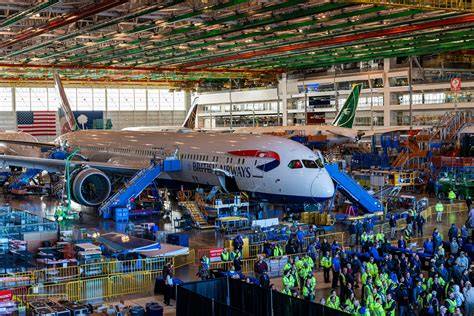
Aerospace Global News makes a similar point about Gatwick: basing new jets there relieves pressure on a heavily slot-constrained Heathrow hub and frees older airframes to be retired without disrupting the flagship base. That is the quiet logic behind the Gatwick-first delivery sequence. The younger 787-10s go where the routes are leisure-heavy and the capacity gain is straightforward, while Heathrow waits for aircraft that can carry First or at least match the premium density the 777-200ER currently provides. The result is a renewal that will feel uneven to passengers: some routes will jump forward a generation almost overnight, while others will keep flying an aircraft type that first entered British Airways service in the late 1990s.
What The 777-200ER Succession Means For Passengers
For travellers, the practical consequences are straightforward even if the timetable is not. Routes that receive the A350-1000 gain more Club Suites, more premium economy seats and a quieter, more efficient cabin, alongside the possibility of a marginally faster crossing. Routes that receive the 787-10 gain modern engines and lower operating costs but may lose First entirely, which changes the calculus for anyone booking a premium cabin at Heathrow. Routes that keep the 777-200ER retain a familiar four-class product on an airframe that is, by any measure, approaching the end of its economic life. The next transatlantic flight a passenger books at Heathrow could belong to any of those three categories, and the type that actually shows up will depend on schedule filings already being drafted rather than on any public announcement.
The deeper question is whether British Airways should hold on to its youngest 777-200ERs until the 777-9 arrives, or whether the A350-1000 and 787-10 are enough on their own. Holding the youngest airframes preserves premium capacity and buys time for the flagship type, but it also means carrying older economics on routes where competitors are flying newer jets. Moving early to the A350-1000 accelerates efficiency gains and freight capability at a fraction of the 777-9’s premium footprint, but it permanently removes First from some Heathrow routes. The answer British Airways eventually publishes will reveal how much it values flagship prestige versus unit-cost discipline at its most important airport, and for now, the clearest guidance remains the Nashville swap: a route that gained 59 seats, more freight capacity and newer engines without adding a single departure.