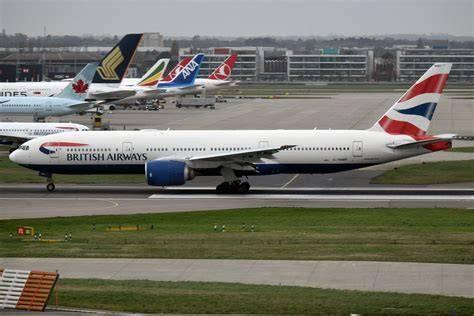
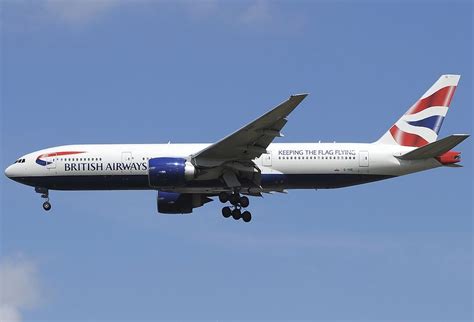
British Airways has built one of the world’s most recognizable long-haul fleets, combining modern aircraft such as the Airbus A350 and Boeing 787 Dreamliner with proven workhorses that have served the airline for decades. Among all the aircraft currently flying under the British Airways name, one jet stands apart for its remarkable longevity: Boeing 777-200ER registered G-VIIA.
Delivered to British Airways in July 1997, G-VIIA is now approaching three decades of continuous service with the airline. The aircraft is not only the oldest active jet in the British Airways fleet but also holds a special place in aviation history as the first Boeing 777-200ER ever produced by Boeing. Despite its age, the widebody aircraft continues to operate international routes, carrying passengers across the Atlantic and into popular Caribbean destinations.
The Historic Boeing 777-200ER That Became a British Airways Legend
G-VIIA carries manufacturer serial number 27483 and line number 41, marking it as the first production example of the Boeing 777-200ER variant. The aircraft completed its first flight in October 1996, beginning a journey that would eventually make it one of the most experienced widebody jets in commercial aviation.
Although G-VIIA was the first 777-200ER built, it was not the first aircraft of the type delivered to British Airways. That honor belongs to G-VIIC, which entered the airline’s fleet in February 1997. G-VIIA arrived several months later as the ninth Boeing 777-200ER operated by British Airways, but its role was particularly significant because it served as a leading aircraft during the variant’s certification process.
Over nearly 30 years, the aircraft has accumulated more than 120,000 flight hours and approximately 17,500 flight cycles. These figures highlight the enormous amount of work completed by the jet, including thousands of long-distance journeys between Europe, North America, and other global regions.
Like many aircraft of its generation, G-VIIA was temporarily removed from service during the COVID-19 pandemic. The aircraft spent more than 18 months in storage as airlines worldwide reduced capacity due to travel restrictions. However, British Airways eventually returned the jet to active service, demonstrating that the aircraft still had significant operational value.
A Boeing 777 With Decades of Service and a Remarkable Safety Record
The long operational history of G-VIIA has included only one major incident. In June 2003, the aircraft experienced an unusual event shortly after departing London Gatwick Airport. During the climb, a large access door separated from the aircraft, causing damage to cabin windows, the fuselage, and the tail fin.
At the time, the aircraft was carrying 272 passengers and 14 crew members. Fortunately, nobody onboard was injured, and the aircraft was later repaired and returned to service. The incident became a notable moment in the aircraft’s history, but it did not define the jet’s operational career.
Instead, G-VIIA became known for reliability and endurance. The aircraft represents an era when airlines invested heavily in long-range aircraft designed for decades of service. The Boeing 777-200ER was particularly successful because it combined extended range, strong passenger capacity, and operational flexibility.
Where British Airways’ Oldest Active Jet Is Flying Today
Despite being nearly 30 years old, G-VIIA remains active on some of British Airways’ most important international routes. Flight tracking data shows that during the summer of 2026, the aircraft has been operating almost exclusively on the airline’s transatlantic network from London Heathrow Airport.
Recent flights have included destinations across the United States, including Boston Logan International Airport, Chicago O’Hare International Airport, New York John F. Kennedy International Airport, and Washington Dulles International Airport. These routes remain central to British Airways’ global strategy because of strong business and leisure demand between the United Kingdom and North America.
The aircraft has also continued serving popular Caribbean destinations. Recent operations have included flights to Barbados, Bermuda, Grand Cayman, and Nassau, demonstrating the flexibility of the Boeing 777-200ER platform.
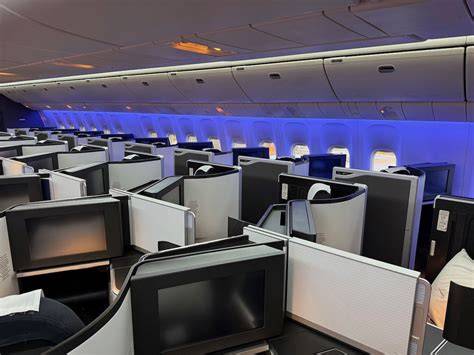
In its current four-class configuration, G-VIIA can accommodate up to 235 passengers. The cabin includes eight First Class seats, 49 Club Suites business-class seats, 40 World Traveller Plus premium economy seats, and 138 World Traveller economy seats.
The aircraft’s ability to serve premium-heavy routes remains valuable for British Airways, especially on markets where passenger demand supports multiple cabin classes.
Why British Airways Still Operates 30-Year-Old Widebody Aircraft
Keeping an aircraft for nearly three decades may seem unusual, especially as airlines increasingly introduce newer-generation models. However, there is a strong financial argument behind operating aircraft like G-VIIA.
The biggest advantage is that the aircraft has already been fully paid off. A fully depreciated aircraft can provide significant value because the airline avoids the large capital costs associated with purchasing new aircraft. While newer aircraft offer better fuel efficiency and lower maintenance costs, older jets can remain economically attractive when properly maintained.
The Boeing 777-200ER fleet continues to play an important role in British Airways’ long-haul operations. The aircraft type represents the airline’s oldest widebody fleet, but it remains a core part of services from both London Heathrow and London Gatwick.
At Gatwick, the 777-200ER currently represents the foundation of British Airways’ widebody operations. However, this will gradually change as newer aircraft, including the Boeing 787-10 Dreamliner, begin replacing older jets later this decade.
The Future of British Airways’ Aging Boeing 777 Fleet
British Airways is already undergoing a major fleet modernization program. The airline operates more than 40 Boeing 787 Dreamliners, including the 787-8, 787-9, and 787-10 variants, making it one of the few carriers worldwide with all three Dreamliner versions. It also operates 18 Airbus A350-1000 aircraft, which provide advanced efficiency and premium passenger comfort.
The arrival of the Boeing 777-9 will eventually accelerate the replacement of older 777 aircraft. However, delays to the 777X program mean British Airways is not expected to receive the new aircraft until around 2028.
Until then, aircraft like G-VIIA will continue playing an important role. While a 30-year-old widebody may no longer represent the future of commercial aviation, it remains a symbol of engineering durability and operational resilience.
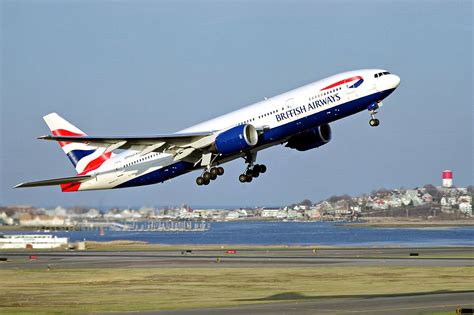
For passengers boarding G-VIIA today, the experience represents more than just another long-haul flight. They are stepping onto a piece of aviation history — an aircraft that helped introduce the Boeing 777-200ER era and continues to connect London with destinations around the world nearly three decades after its first delivery.