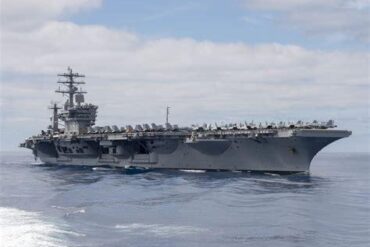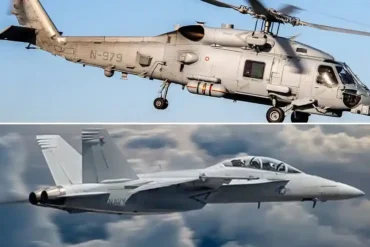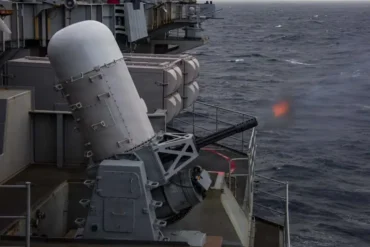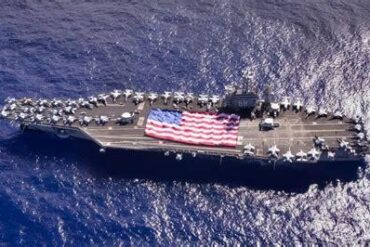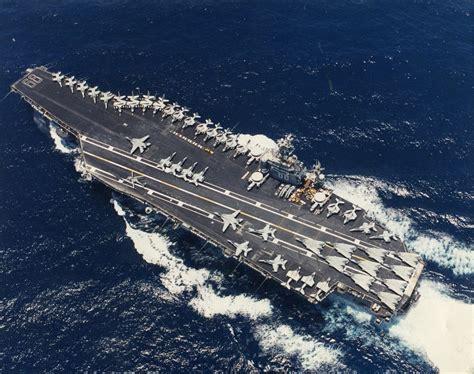
For nearly five decades, one colossal symbol of American naval power has continued to sail the world’s oceans, defying time, technological advancements, and global conflict. The USS Nimitz (CVN-68), the oldest American aircraft carrier still in active service, remains a floating fortress, unmatched in legacy and operational history.
Commissioned on May 3, 1975, the USS Nimitz was not merely another warship but the birth of a new era in naval aviation, replacing the aging Kitty Hawk and Forrestal-class carriers. Named after Admiral Chester W. Nimitz, a pivotal leader in the U.S. Pacific Fleet during World War II, this nuclear-powered aircraft carrier revolutionized fleet capabilities with unprecedented endurance and striking power.
The USS Nimitz was conceived toward the end of the Vietnam War, signaling a new generation of supercarriers built for longevity and global dominance. Unlike the USS Enterprise, which required eight nuclear reactors, the Nimitz-class streamlined propulsion with just two reactors, creating space for 90% more aviation fuel and 50% more ordnance, fundamentally enhancing its combat endurance and firepower.
Size, Scale, and Capabilities of the USS Nimitz
The Nimitz’s physical dimensions and logistical capabilities reflect its position as one of the most formidable ships ever constructed. Measuring 1,092 feet in length—equivalent to nearly three football fields—and displacing over 100,000 tons, the USS Nimitz is a mobile military city.
Capable of serving up to 18,000 meals daily and distilling 400,000 gallons of fresh water every day, the vessel is designed for prolonged missions at sea without external resupply. These self-sustaining attributes enable extended global deployments, crucial for rapid U.S. response to international crises.
A Combat Record Spanning Global Conflicts
The operational history of the USS Nimitz reads like a chronicle of modern American military engagements. From its first Mediterranean deployment in 1976, the carrier has been central to enforcing U.S. foreign policy and projecting naval superiority worldwide.
In 1980, the Nimitz played a critical role in Operation Eagle Claw, the failed mission to rescue American hostages in Iran—a mission that underscored the strategic reliance on aircraft carriers for rapid military response. By 1985, it was supporting air strikes in Beirut, reinforcing U.S. military presence during Lebanon’s volatile civil war.
The 1990s saw the Nimitz enforcing no-fly zones during Operation Desert Storm, symbolizing air dominance over Iraq. These missions marked the evolution of aircraft carriers from Cold War relics to indispensable tools of asymmetric warfare.
As global threats evolved, so did the USS Nimitz’s contributions. In the early 2000s, it was at the forefront of Operation Iraqi Freedom and Enduring Freedom, providing essential air support and force projection. More recently, its involvement in anti-ISIS operations in Iraq and Syria reinforced its role as a modern combat powerhouse.
By 2023, the USS Nimitz had achieved remarkable operational milestones: over 350,000 arrested aircraft landings and 250,000 catapult launches, a testament to its enduring relevance and rigorous flight operations.
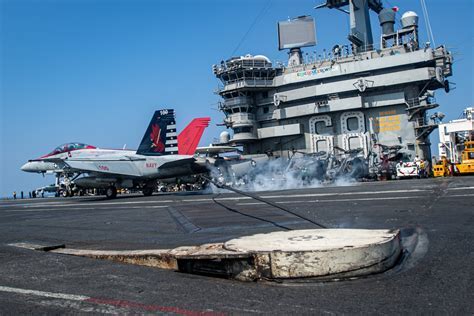
Upgrades and Longevity: Why the Nimitz Still Matters
While most military hardware is retired after a few decades, the USS Nimitz defies conventional lifecycle expectations. Two significant overhauls—first between 1983-84, and then from 1998 to 2001—infused the vessel with cutting-edge systems, new technologies, and essential structural reinforcements, ensuring its combat readiness well into the 21st century.
Additionally, the Nimitz has undergone five homeport changes, reflecting strategic naval repositioning and maintaining operational flexibility across theaters. Its recent assignment to the Middle East in June 2025, replacing the Carl Vinson Strike Group amidst escalating tensions between Israel and Iran, demonstrates continued trust in its capabilities, even after nearly 50 years of service.
Notably, the Nimitz was originally scheduled for decommissioning in 2022. However, evolving global dynamics and the need for sustained carrier presence extended its operational life, with 2026 or 2027 now projected as its likely retirement window. Upon decommissioning, Newport News, Virginia, a storied shipyard in naval history, is expected to be its final stop.
USS Nimitz: Legacy Beyond Service
The USS Nimitz is more than a warship—it is a living monument to American engineering, military innovation, and geopolitical strategy. Few vessels can claim such an expansive, battle-hardened legacy, spanning the late Cold War, Middle Eastern interventions, counterterrorism operations, and current geopolitical flashpoints.
Generations of sailors, pilots, and military personnel have called the Nimitz home, trained on its decks, and relied on its unwavering presence across global waters. Its contributions extend beyond hardware—it’s a symbol of American deterrence, projecting stability and readiness wherever deployed.
Despite its age, the Nimitz continues to execute missions that influence international stability. From high-stakes military exercises to real-world combat deployments, its operational tempo underscores an unmatched service record.
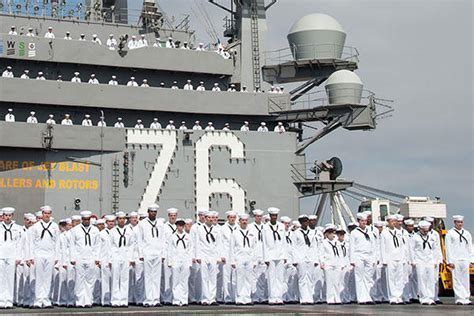
As the ship approaches its final years, its legacy is already cemented. The lessons learned, technological advancements tested, and strategic doctrines refined aboard the USS Nimitz have shaped the future of naval warfare. Its successors, including newer Gerald R. Ford-class carriers, inherit a foundation built by nearly half a century of proven maritime superiority.
In the annals of naval history, few ships endure as both instruments of war and emblems of national resolve. The USS Nimitz stands among these rarities, reminding the world that American naval power is as much about resilience as it is about cutting-edge technology.
Even as retirement looms, the Nimitz sails on—vigilant, battle-tested, and forever etched into the legacy of American military might.