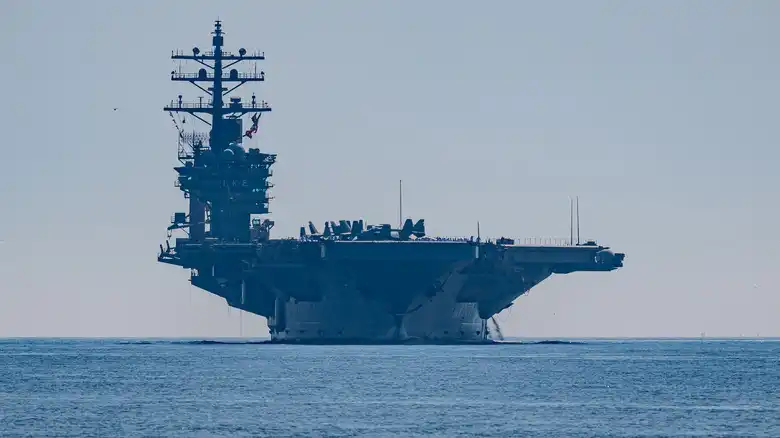
The United States Navy remains the world’s only force capable of maintaining a continuous global aircraft carrier presence, yet the number of carriers actually deployed at any given time is often far smaller than many people assume. Although federal law requires the Navy to maintain 11 aircraft carriers, maintenance schedules, modernization work, and operational readiness mean only a fraction of the fleet is available for frontline missions. In 2026, just four nuclear-powered aircraft carriers are fully deployed, while the legendary USS Nimitz occupies a unique transitional position as it prepares for retirement.
The legal foundation behind America’s carrier fleet comes from Title 10 of the U.S. Code, which requires the Navy to sustain no fewer than 11 operational aircraft carriers alongside carrier air wings and amphibious warfare ships. This requirement reflects decades of American naval strategy that depends upon rapidly deployable air power capable of operating without relying on foreign airfields. Aircraft carriers allow the United States to respond quickly to military crises across multiple oceans while supporting allies, deterring adversaries, and protecting maritime trade routes.
Despite meeting the statutory requirement on paper, maintaining eleven nuclear-powered supercarriers has become increasingly demanding. Extensive maintenance periods, modernization programs, and lengthy overhaul cycles significantly reduce the number of ships available for immediate deployment. As a result, operational commanders must carefully balance global commitments against finite carrier availability, making every deployed strike group exceptionally valuable.
USS Theodore Roosevelt Supports Pacific Operations
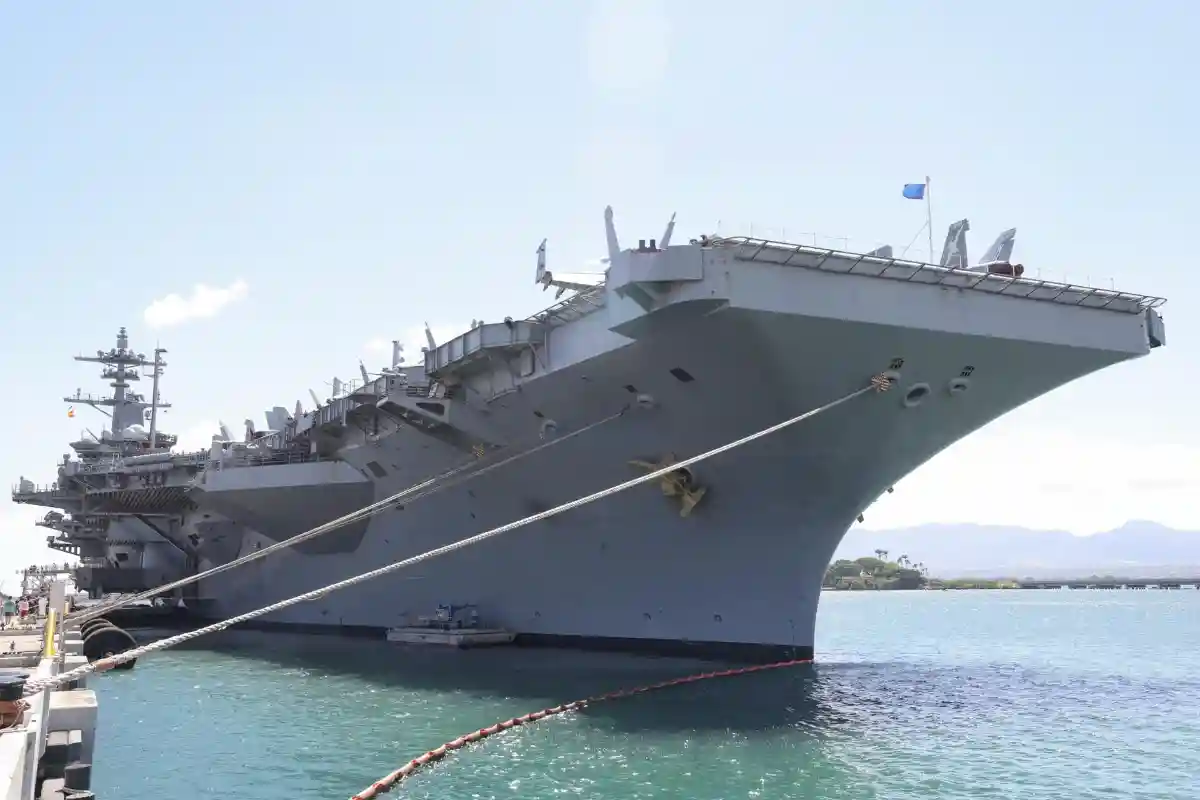
Among the Navy’s deployed carriers, the USS Theodore Roosevelt (CVN-71) continues serving as one of America’s most active frontline assets. During 2026, the carrier has participated in the multinational Rim of the Pacific (RIMPAC) exercise from Joint Base Pearl Harbor-Hickam in Hawaii. RIMPAC brings together naval forces from dozens of participating nations, strengthening interoperability while demonstrating collective maritime security across the Indo-Pacific region.
The deployment underscores America’s enduring strategic emphasis on the Pacific, where carrier aviation remains central to maintaining freedom of navigation and reassuring regional allies. The Theodore Roosevelt’s embarked air wing provides a formidable combination of strike, surveillance, electronic warfare, and defensive capabilities capable of responding rapidly across vast ocean distances.
USS Abraham Lincoln Remains Active in the Arabian Sea
The USS Abraham Lincoln (CVN-72) continues operating with the Abraham Lincoln Carrier Strike Group, supporting Operation Epic Fury in the Arabian Sea. Carrier strike groups represent far more than a single warship, combining guided missile cruisers, destroyers, submarines, logistics vessels, and carrier-based aircraft into a highly integrated combat formation capable of sustained independent operations.
Its deployment highlights the continued importance of naval aviation in maintaining stability throughout the Middle East. From intelligence gathering to precision strike capabilities, the Abraham Lincoln provides policymakers with flexible military options without requiring permanent land-based deployments.
USS George Washington and USS George H.W. Bush Maintain Global Presence
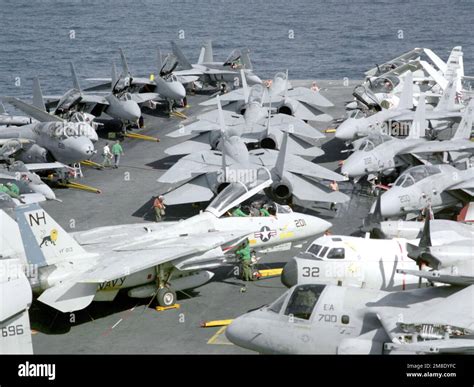
The USS George Washington (CVN-73) has begun its first operational patrol of 2026 in the Philippine Sea, reinforcing America’s naval posture across the western Pacific. The region remains strategically significant because of expanding maritime competition, making continuous carrier operations an essential component of U.S. deterrence strategy.
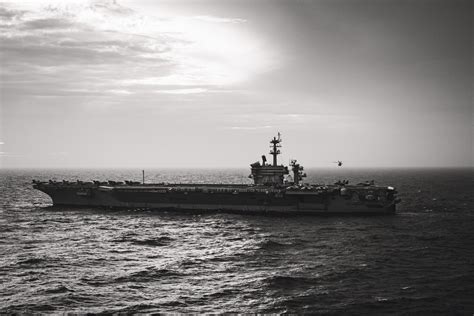
Meanwhile, the USS George H.W. Bush (CVN-77) remains deployed in the Arabian Sea, extending the Navy’s ability to project combat power across another critical theater. Having multiple carriers operating simultaneously allows commanders to sustain persistent air operations while providing flexibility should regional tensions escalate unexpectedly.
Why USS Nimitz Is No Longer Fully Operational
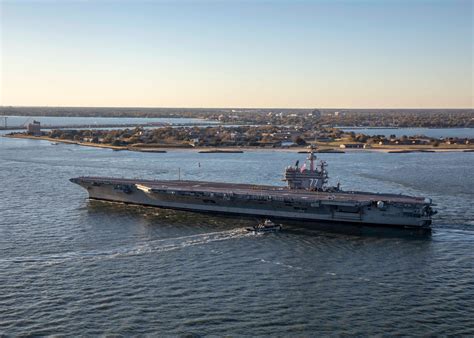
The iconic USS Nimitz (CVN-68) occupies a distinctive position within the fleet. Although technically counted among the Navy’s eleven carriers, the ship has spent part of 2026 in New York Harbor participating in the Navy’s 250th anniversary International Naval Review rather than conducting operational deployments.
Originally scheduled for retirement during 2026, the carrier’s decommissioning has been postponed until March 2027 because its successor, the USS John F. Kennedy (CVN-79), continues experiencing delivery delays. Having completed its mid-life Refueling and Complex Overhaul more than two decades ago, questions remain regarding how readily the aging carrier could return to frontline service if required.
Maintenance Challenges Continue to Limit Carrier Availability
America’s carrier fleet illustrates a persistent readiness challenge. Six additional carriers remain unavailable throughout much of 2026 because they are undergoing planned maintenance, modernization, or overhaul periods. Government assessments have repeatedly found that these maintenance cycles frequently exceed their original schedules, delaying fleet availability and placing additional pressure on operational carriers.
The delayed arrival of the Ford-class USS John F. Kennedy further complicates the transition. Advanced technologies, including the Advanced Arresting Gear and Advanced Weapons Elevator, have required prolonged testing and certification before the ship can officially enter service. Until those challenges are resolved, the Navy continues relying heavily on its aging Nimitz-class fleet to sustain America’s unmatched global carrier presence.