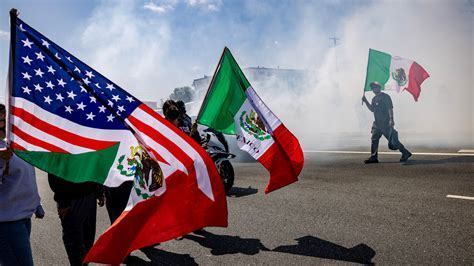
As tensions surged across Los Angeles in response to immigration enforcement raids, the U.S. government escalated its presence not only on the streets but in the skies. Beyond the deployment of National Guard units and U.S. Marines, reports confirmed that military-grade aircraft, including Predator drones and Black Hawk helicopters, have been mobilized for operations above the city. The revelation, first brought to light by 404 Media, has ignited a firestorm of civil liberty concerns and renewed scrutiny over the federal use of aerial surveillance technology during domestic unrest.
Military Aircraft in the Domestic Theater: Unprecedented or Unnoticed?
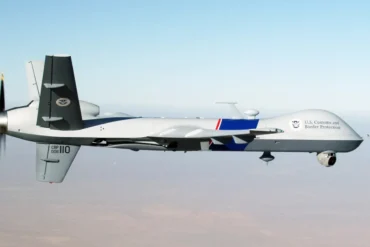
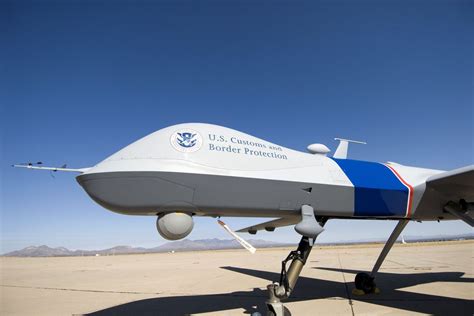
The presence of helicopters in Southern California’s airspace is routine, especially given its proximity to military bases and the prevalence of local law enforcement aircraft. However, the introduction of Predator drones—more commonly associated with overseas military campaigns—marks a profound shift in the visual and tactical landscape of domestic law enforcement. These drones, operated by the Department of Homeland Security (DHS), were reportedly unarmed, but their mere presence during protests directed at federal immigration actions introduces a potent blend of militarized optics and technological surveillance.
The aircraft in question, particularly the MQ-1 Predator, is capable of high-altitude, long-endurance reconnaissance. Though traditionally armed with AGM-114 Hellfire missiles in combat zones, officials insist the current deployments are strictly unarmed. This caveat, however, has done little to quell the alarm voiced by privacy advocates and local officials.
Local Leaders Push Back: Mayor and Governor Express Dismay
Los Angeles Mayor Karen Bass and California Governor Gavin Newsom both expressed visible frustration over the federal decision to deploy military and federal surveillance assets without what they described as appropriate coordination with state and municipal authorities. The move is seen by many as an overreach of federal power into local governance and civil society.
Mayor Bass denounced the aerial presence as an “escalatory tactic” that risks alienating the very communities already marginalized by aggressive immigration policies. Governor Newsom echoed these sentiments, emphasizing the importance of transparency, accountability, and civilian oversight in any operations involving military assets on U.S. soil.
404 Media Reveals Drone Details: A Controversial Deployment
According to 404 Media’s investigative report, Predator drones were launched as part of broader aerial support missions tied to federal immigration enforcement operations. The Department of Homeland Security, which oversees U.S. Customs and Border Protection (CBP) and Immigration and Customs Enforcement (ICE), authorized the flights. John Mennell, a spokesperson for CBP, stated that the drones were intended for “aerial support” and that surveillance was conducted only in support of officer safety and not for tracking First Amendment activities.
Yet, critics are far from reassured. Persistent aerial surveillance is widely regarded as a civil liberties minefield. The American Civil Liberties Union (ACLU) and other advocacy groups argue that these surveillance operations establish a precedent for mass monitoring, violating constitutional protections and eroding public trust.
Drone Technology and Civil Liberties: A Delicate Balance
Veteran and drone specialist Brett Velicovich defended the legality of the drone use, emphasizing that it falls well within the current scope of federal authority. He told Fox News that the flights are “perfectly legal” under existing surveillance laws and guidelines. However, legality does not equate to legitimacy in the eyes of many. Legal scholars warn that the absence of clear legislative guardrails for drone deployment on U.S. soil makes such actions ripe for abuse.
Drones like the Predator are capable of persistent surveillance over wide areas for extended periods. High-resolution cameras, infrared sensors, and live-feed transmission capabilities allow federal agencies to monitor movement patterns, crowd behaviors, and even facial details—a level of detail and reach that conventional aircraft cannot match.
From the War Zone to City Streets: The Militarization Debate
The optics of using aircraft that are staples of overseas counterinsurgency operations has led to growing fears about the militarization of domestic law enforcement. The MQ-1 Predator, once a fixture of U.S. missions in Afghanistan and Iraq, now finds itself flying above American neighborhoods.
Critics argue that deploying military-grade surveillance assets during civil demonstrations—especially those rooted in First Amendment rights—establishes a chilling precedent. It risks creating an environment where protest is not only monitored but potentially criminalized through association.
Meanwhile, DHS maintains that the surveillance is passive and conducted only at the request of federal agents on the ground. According to CBP, the Predator drone missions were intended to provide overhead security in high-tension zones to “ensure officer safety.” Still, questions about proportionality and necessity remain unanswered.
Legal Framework: Loopholes and Ambiguity
There is currently no federal law explicitly banning drone surveillance of civilian populations, provided the operation complies with FAA regulations and does not violate specific civil liberties. This gap leaves a troubling legal ambiguity. The Fourth Amendment, which guards against unreasonable searches and seizures, is increasingly tested in an age where aerial technology can bypass traditional barriers to surveillance.
Law professors and privacy experts point out that drones hovering at 20,000 feet do not require warrants under current interpretations of airspace laws. This opens a grey area where government agencies can monitor individuals and gatherings with minimal oversight or judicial recourse.
Historical Echoes: Surveillance and Social Movements
This is not the first time the U.S. government has been accused of surveilling protest movements. From the FBI’s COINTELPRO operations in the 1960s and 70s to post-9/11 monitoring of Muslim communities, the use of technology to gather intelligence on political dissenters is a recurring theme.
More recently, similar drones were deployed during Black Lives Matter demonstrations in 2020, prompting a widespread outcry. That incident led to multiple congressional inquiries and a push for tighter restrictions on the domestic use of drones. Yet, as the Los Angeles case now shows, federal authorities have maintained a flexible interpretation of surveillance guidelines, particularly when national security or immigration enforcement is invoked.
Public Reaction: Transparency Demands Rise
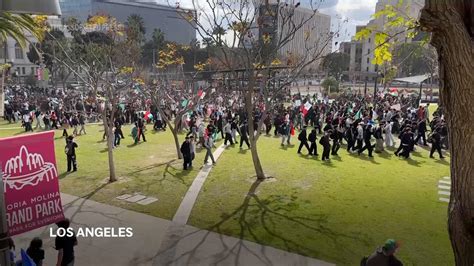
Public response to the drone and aircraft deployment has been swift and polarized. While some citizens accept the explanation of safety and security, many others see the maneuver as a dangerous expansion of the surveillance state. The concern isn’t simply about being watched—it’s about being watched by machines initially built for warfare.
Calls for transparency have intensified. Civil rights organizations are demanding a full accounting of flight paths, mission scopes, data retention policies, and internal approval protocols. In particular, they want to know what data is being collected, who has access to it, and how long it will be stored.
Looking Ahead: Policy Vacuum or Impending Reform?
The Los Angeles incident may serve as a catalyst for legislative action. Several lawmakers have already signaled their intent to revisit the rules governing aerial surveillance. At issue is whether current privacy protections are sufficient in the era of unmanned, high-capacity observation tools.
Proposed solutions include:
- Mandatory warrants for any aerial surveillance over protests or gatherings.
- Creation of civilian oversight boards for DHS operations.
- Time-limited data retention policies with deletion protocols.
- Real-time public notification of federal surveillance activity.
These measures, however, remain hypothetical until Congress or the courts intervene. For now, the public is left in a legal and ethical limbo, unsure of where the line between safety and surveillance is being drawn—or erased.
Conclusion: Aerial Surveillance Crosses Into Controversy
The deployment of Predator drones and Black Hawk helicopters over Los Angeles in the midst of protests is not merely a story of technology—it is a profound marker of how surveillance, civil liberties, and national policy are colliding in American cities. With federal agencies invoking officer safety and legality, and civil rights groups raising alarms over privacy invasions and constitutional overreach, the divide has never been more pronounced.
As this story continues to evolve, one thing remains clear: The sky above Los Angeles has become a new battleground—not just of machines and missions, but of rights, trust, and the fragile balance between security and freedom.