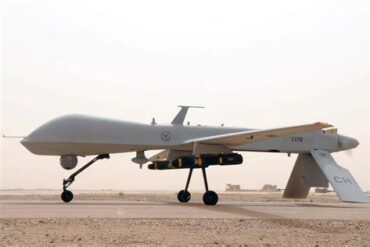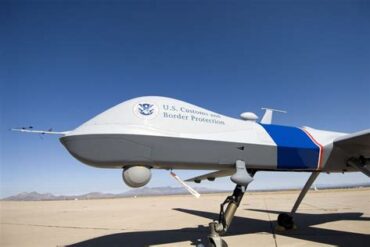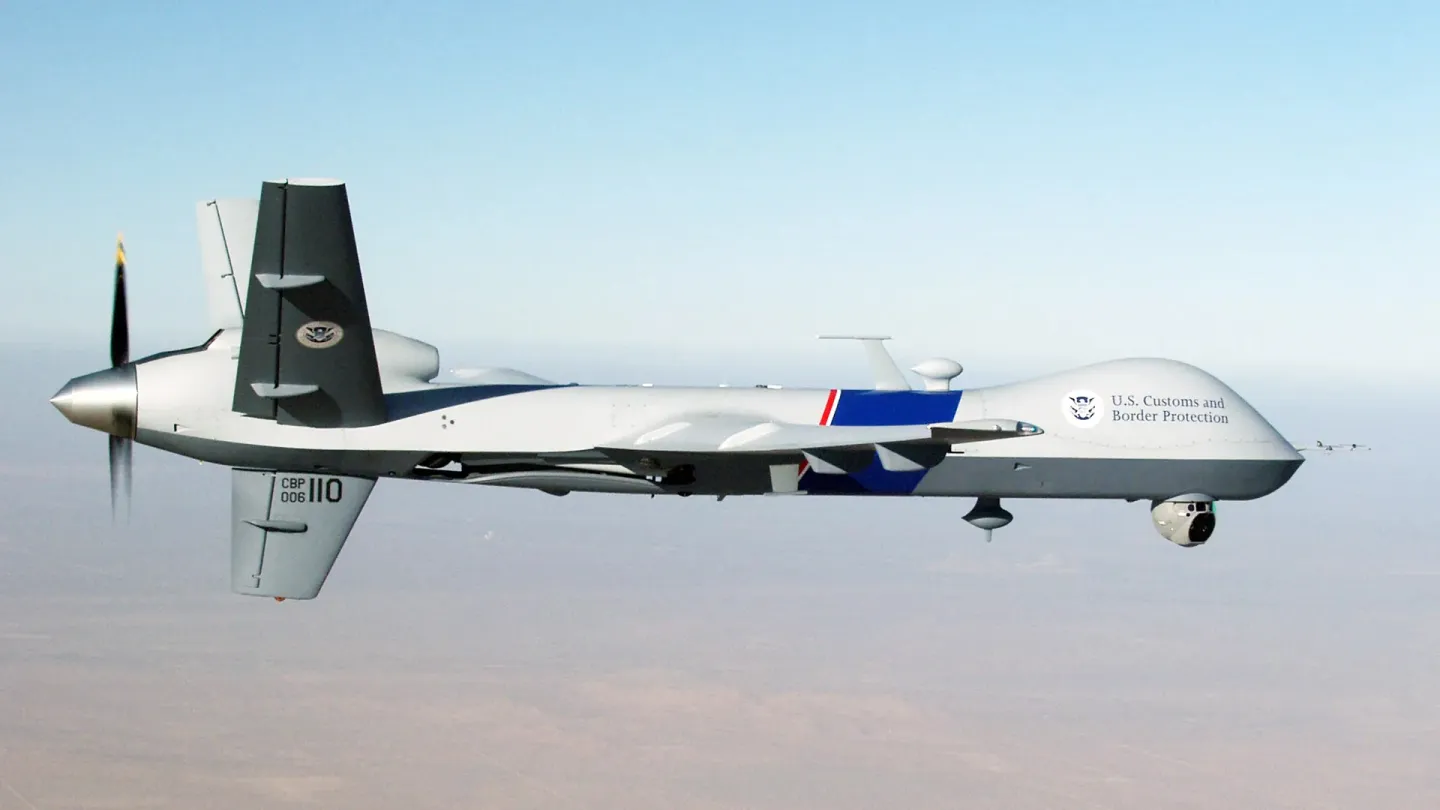
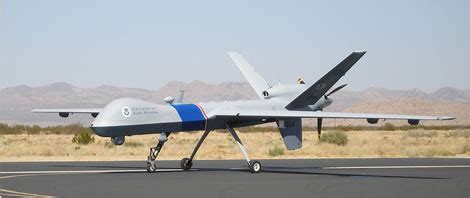
The presence of Predator B drones over Los Angeles skies has ignited a firestorm of public concern, civil liberties debate, and national media attention. These advanced unmanned aerial vehicles (UAVs), operated by U.S. Customs and Border Protection (CBP) under the Department of Homeland Security (DHS), were confirmed to be monitoring areas of unrest following violent demonstrations that erupted after immigration enforcement operations conducted by Immigration and Customs Enforcement (ICE). While CBP insists that the drones were deployed for officer safety surveillance, privacy advocates warn that their usage raises profound constitutional and ethical questions.
The revelation came after days of speculation and public tracking of drone activity by online aviation observers. Although CBP remained silent at first, open-source intelligence and air traffic control (ATC) communications confirmed that MQ-9 Predator B drones, known for their military capabilities and endurance, were orbiting in hexagonal patterns consistent with persistent surveillance operations.
Homeland Security’s Eye in the Sky
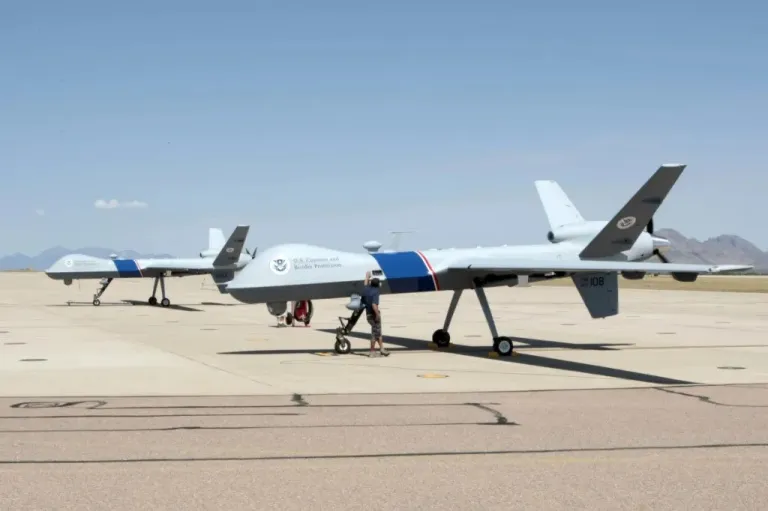
The MQ-9 Predator B drones, which evolved from the earlier MQ-1 Predator, are among the most sophisticated surveillance platforms in CBP’s arsenal. While military variants are capable of lethal strikes, the CBP-operated versions are unarmed, optimized for multi-role surveillance tasks. According to CBP, the drones used in Los Angeles missions include the Guardian Maritime Mission variant, which is fitted with Raytheon SeaVue multi-mode radar and synthetic aperture radar (SAR) capable of generating high-resolution imagery even through clouds, smoke, or dust. Additionally, these drones house electro-optical and infrared video cameras, feeding real-time data back to command centers on the ground.
This ability to conduct wide-area, continuous aerial surveillance — especially in urban environments — is rarely exercised domestically. Nonetheless, the precedent was set in Minneapolis in 2020, when a Predator B orbited the city during mass protests over the police killing of George Floyd. As with Minneapolis, Los Angeles’ usage of such aircraft indicates a heightened federal interest in monitoring civil unrest beyond traditional ground-level tactics.
Tracking the Orbits: Open-Source Intelligence Reveals Drone Presence
Aviation hobbyists and open-source intelligence enthusiasts played a pivotal role in confirming the drones’ activity. On June 9, X user @Aeroscout shared ATC audio indicating that two drones with callsigns TROY 701 and TROY 703 were rotating duties over Los Angeles. These identifiers align with known DHS aviation assets. Notably, TROY 701 had previously been tied to tail number CBP-113, a known Guardian variant.
Supporting evidence included sightings of hexagonal flight patterns above Los Angeles, often a clear marker of high-altitude surveillance drones. Aircraft such as the CBP Multi-Role Enforcement Aircraft (TROY 314) and a CBP Black Hawk helicopter (TROY 212) were also tracked in the same airspace, confirming a broad federal aerial presence.
Federal Response Intensifies: Marines, National Guard, and Task Force 51
The drone activity is just one part of a much larger federal mobilization in response to the unrest. Following President Donald Trump’s directive, the U.S. Northern Command (NORTHCOM) activated Task Force 51, a multi-agency response unit comprising over 2,100 National Guard soldiers and 700 active-duty Marines from the 2nd Battalion, 7th Marines, 1st Marine Division.
Task Force 51 is specifically designed to deploy rapidly in Homeland Security and Defense operations, integrating seamlessly with civil authorities to maintain order and protect federal infrastructure. Commanded by Maj. Gen. Scott M. Sherman, the task force emphasizes de-escalation protocols, crowd control tactics, and strict rules of engagement.
Despite this mobilization, Sherman clarified that as of mid-week, the Marines had not yet been deployed in the city. Meanwhile, 2,000 National Guard members were already operational, and another 2,000 were on standby.
Civil Liberties and the Expanding Surveillance State
The deployment of Predator B drones has been met with alarm from civil liberties organizations such as the American Civil Liberties Union (ACLU). Critics argue that persistent aerial surveillance infringes on Fourth Amendment protections against unreasonable searches and sets a dangerous precedent for government overreach. While manned surveillance flights are common, the psychological impact of drones patrolling domestic skies introduces new levels of concern.
CBP has attempted to address these criticisms. A spokesperson stated that the Air and Marine Operations (AMO) division “does not engage in surveillance of First Amendment activities” and that its onboard sensors are not capable of facial recognition or identifying individuals by detailed physical characteristics. The agency also noted that drones can identify general traits such as clothing or the presence of large items but cannot discern identity or vehicle license plates.
Still, these assurances have done little to quell fears. The sensor packages aboard these drones, particularly the SAR systems, can produce detailed surface maps and track movements over wide areas, making them powerful tools for population monitoring. As these technologies become more accessible and integrated with AI-enhanced analytics, their implications on privacy and civil rights could be profound.
Legal Precedent and Executive Power
The deployment of federal surveillance assets — especially military-grade drones — hinges on legal justifications derived from the Insurrection Act and other federal statutes. President Trump’s directive invoked provisions that permit the use of federal forces during instances of rebellion or public disorder. Under such legal frameworks, DHS can coordinate with the Department of Defense (DoD) to provide intelligence, logistical support, and security assets to bolster local enforcement.
The legal ambiguity surrounding drone surveillance in domestic contexts continues to be a gray area. Judicial rulings have yet to clearly define the scope of constitutional protections against aerial surveillance using unmanned systems, particularly those operating at altitudes and using sensors undetectable by citizens on the ground.
Strategic Implications: Policing from Above
From a strategic perspective, the use of Predator B drones during civil unrest highlights the increasing militarization of domestic law enforcement. These surveillance platforms allow federal authorities to gather comprehensive situational awareness, coordinate response units, and map crowd movements in real time. In doing so, they can identify flashpoints, coordinate crowd dispersal, and potentially deter unlawful behavior through their mere presence.
However, critics argue that such tactics could erode public trust and inflame tensions further. For demonstrators, the sight — or knowledge — of a military-grade drone silently orbiting overhead may feel less like oversight and more like oppression. The line between public safety and mass surveillance grows thinner with every sortie.
What Comes Next for Surveillance Policy in the U.S.
With the DHS confirming its active use of Predator Bs during sensitive domestic operations, the debate over federal surveillance capabilities is far from settled. If unrest continues in Los Angeles or spreads to other major cities, it is likely that similar drones will be deployed elsewhere. This trend signals a broader shift toward integrating aerial surveillance as a standard tool in the federal law enforcement playbook.
Policymakers now face a difficult task: balancing the legitimate needs of public safety and officer protection with the equally vital defense of civil liberties and democratic accountability. The coming months may see calls for congressional oversight, demands for clearer drone usage guidelines, and perhaps even legal challenges aimed at curbing the unchecked growth of domestic aerial surveillance.
Whether the skies above Los Angeles mark an isolated event or a new norm in homeland security remains to be seen — but what is certain is that Predator B drones have now become a defining symbol of the state’s evolving approach to civil unrest and public order.