The US Department of Homeland Security (DHS) is moving toward one of the most significant changes in federal aviation operations in decades by planning a dedicated government-operated deportation airline expected to begin service in 2027. Rather than relying primarily on charter carriers, the department intends to establish a permanent fleet of government-owned aircraft that can conduct deportation missions while remaining available for emergency response, medical evacuations, diplomatic transport, and continuity-of-government operations. The proposal reflects a broader effort to create a faster, more flexible aviation capability that can respond around the clock while supporting the administration’s expanding immigration enforcement strategy.
Unlike today’s outsourced model, the proposed airline would own its aircraft while contracting a professional aviation company to operate and maintain them. Pilots, cabin crew, maintenance personnel, flight nurses when required, and additional security staff would all be supplied through a competitively awarded operations contract. The objective is to create a continuously available fleet capable of launching domestic or international missions on very short notice through a hub-and-spoke operating system.
The proposal arrives as Congress approves tens of billions of dollars in additional funding for immigration enforcement, detention capacity, border security, and deportation initiatives. That financial backing provides DHS with the opportunity to reduce dependence on commercial charter providers while developing an aviation capability specifically tailored to government operational requirements.
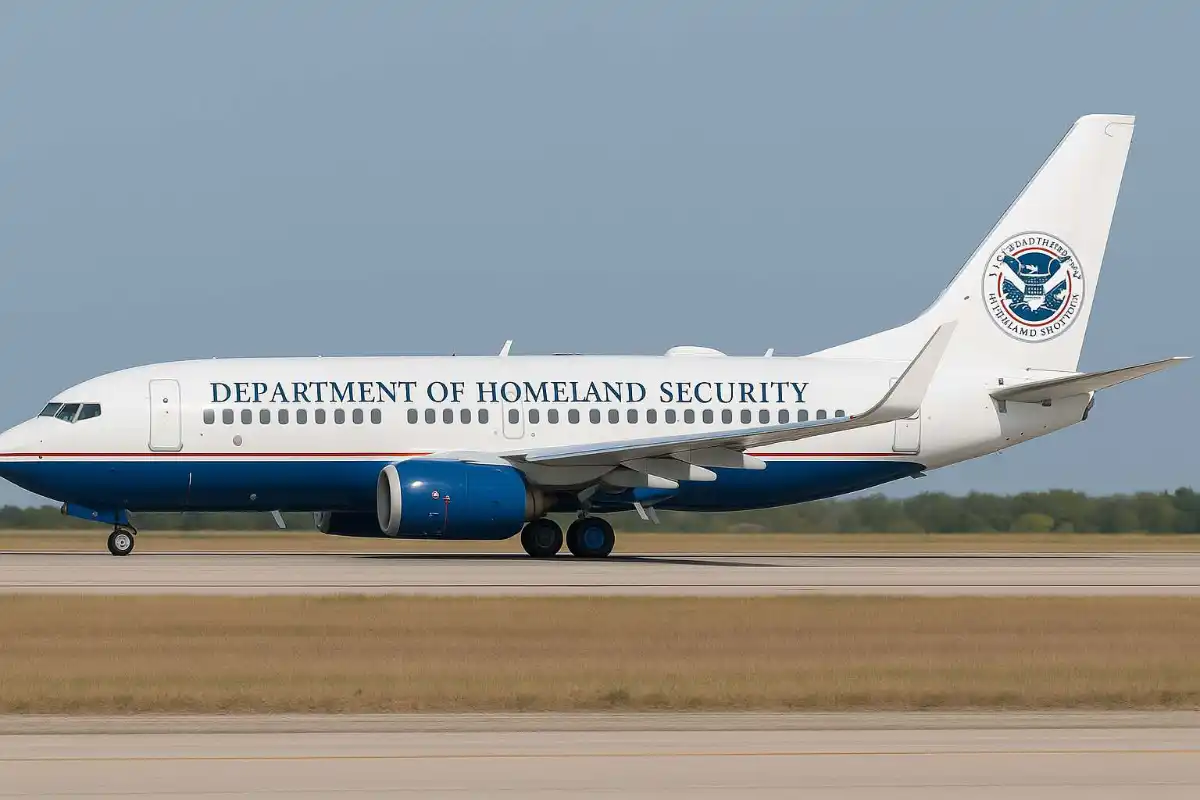
DHS Wants A Round-The-Clock Government Airline
The planned airline is designed to function very differently from a traditional commercial carrier. Instead of scheduled passenger services, aircraft would remain available 24 hours a day, ready for immediate deployment whenever operational requirements arise. Missions would include both forced removals and voluntary deportation flights, but the fleet would also support emergency government transportation during national crises.
Officials envision aircraft capable of quickly repositioning anywhere within the United States before continuing to destinations across Latin America, Europe, or other international locations depending on operational demands. This flexibility would allow DHS to respond not only to immigration-related missions but also humanitarian emergencies, medical transportation requirements, and high-priority government travel.
Rather than building an airline workforce from scratch, DHS is conducting extensive market research to identify experienced aviation companies capable of providing complete operational support. Interested operators would assume responsibility for flight crews, maintenance, scheduling, safety management, regulatory compliance, and aircraft readiness while DHS retains ownership of the fleet.
Boeing 737-700 Selected As The Fleet’s Workhorse
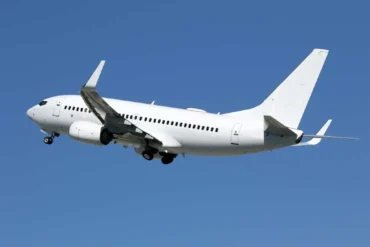
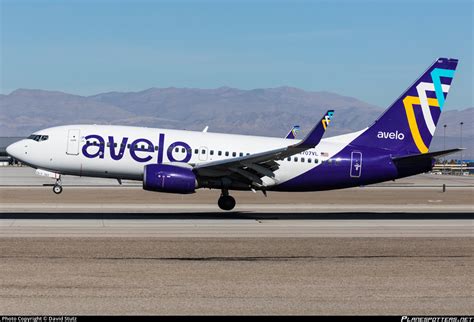
At the center of the proposal is the Boeing 737-700, a practical narrowbody aircraft well suited for medium-range government transport. The aircraft offers seating for as many as 149 passengers in an all-economy configuration while delivering a maximum range approaching 3,800 miles (6,115 kilometers), allowing nonstop flights across much of North America and into parts of Central and South America.
DHS has already secured six Boeing 737-700 aircraft formerly operated by Avelo Airlines, with plans ultimately calling for a fleet of seven examples. The acquisitions were reportedly completed through Daedalus Aviation Corp., with the aircraft purchase valued at approximately $140 million.
The selection reflects practical operational considerations rather than luxury. The 737-700 belongs to the highly successful Next Generation 737 family, offering proven reliability, extensive maintenance support, readily available spare parts, and operating economics that make it attractive for frequent government missions.
Luxury Gulfstream G650ER Adds Long-Range Executive Capability
Complementing the narrowbody fleet will be two Gulfstream G650ER business jets already registered with the department. While dramatically different from the larger Boeing aircraft, the ultra-long-range Gulfstreams fulfill an entirely separate mission profile.
The G650ER is capable of flying approximately 6,700 miles (10,720 kilometers) without refueling, making nonstop intercontinental missions possible while cruising at high speed. These aircraft are expected to transport senior DHS leadership, government officials, diplomatic delegations, and personnel involved in sensitive operations where speed, flexibility, and direct routing are essential.
Their inclusion demonstrates that the proposed airline extends well beyond deportation flights. DHS intends to establish a multi-role aviation organization capable of supporting executive transportation, crisis response, and specialized government missions from a common operational platform.
Reducing Dependence On Charter Airlines
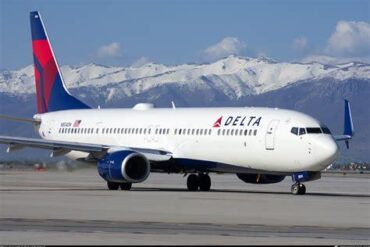
Current deportation flights are largely conducted using privately owned aircraft supplied by charter companies, including Global Crossing Airlines (GlobalX). While this arrangement provides flexibility, it also requires DHS to negotiate aircraft availability, crew scheduling, and mission support through outside providers.
A permanent government-owned fleet could simplify planning while reducing long-term operating expenses associated with repeated charter contracts. Aircraft would remain configured specifically for government requirements, maintenance schedules could be standardized, and operational availability would no longer depend on commercial fleet utilization.
The outsourced operating model also enables DHS to leverage experienced commercial aviation professionals without creating an entirely new federal airline workforce, potentially reducing administrative complexity while maintaining professional flight standards.

Immigration Policy Drives Aviation Expansion
The airline proposal cannot be separated from broader immigration policy developments. The current administration has emphasized substantially increasing deportation activity, with ambitions reaching approximately one million removals annually. According to reported figures covering the first months of 2025, hundreds of thousands of individuals were detained or deported, highlighting the growing operational demands placed on immigration authorities.
Supporters argue that expanding aviation capacity strengthens enforcement capabilities, improves logistical efficiency, and reduces dependence on commercial charter markets. Critics, however, continue to raise questions regarding due process, humanitarian considerations, and the broader implications of large-scale deportation operations. As a result, the proposed airline has become both an aviation initiative and a politically significant component of national immigration policy.
A New Government Aviation Model Could Emerge In 2027
If procurement proceeds as planned, DHS will operate a specialized fleet consisting of seven Boeing 737-700s and two Gulfstream G650ERs, with commercial operators providing flight operations under long-term contract. The combination offers both high-capacity transport and global executive mobility, creating an aviation capability unlike any currently maintained by the department.
The initiative represents a strategic shift away from reliance on charter providers toward a permanent government-controlled fleet capable of supporting deportations, emergency response, executive travel, medical evacuation, and other high-priority federal missions. Whether viewed primarily as an operational efficiency measure or as an extension of immigration enforcement policy, the planned airline marks a significant evolution in how the United States government intends to conduct specialized aviation operations beginning in 2027.