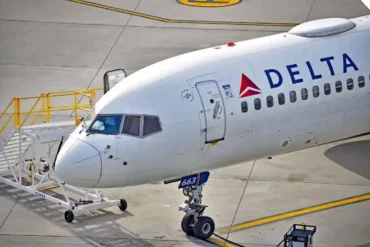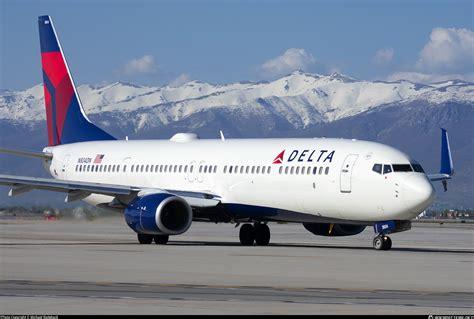
Delta Air Lines has long stood as one of the most versatile and powerful players in the global aviation market, boasting a fleet of nearly 1,000 aircraft that span short-haul connectors to long-haul international widebodies. Yet, among its massive and diverse collection, one aircraft model stands out not for its prominence—but for its brief and quiet tenure: the Boeing 737-700.
While many global carriers like Southwest Airlines leaned heavily into the 737-700 for its adaptability and right-sized economics, Delta Air Lines never fully embraced this member of Boeing’s Next Generation family. The reasons lie deeply rooted in Delta’s fleet strategy, hub network design, and post-merger integration plans. But to fully understand why this aircraft was ultimately phased out, we must dig into the history, utility, and final fate of the 10 Boeing 737-700s that once wore the Delta widget.
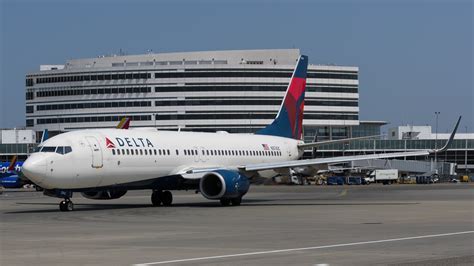
Delta’s Fleet Philosophy: Bigger Picture, Smaller Role for the 737-700
Delta Air Lines’ fleet strategy is anchored in operational flexibility, cost-efficiency, and reliability. Following its 2008 merger with Northwest Airlines, Delta began aggressively diversifying its fleet beyond an all-American stable, incorporating more Airbus models and aligning closer with the European manufacturer. Today, it stands as the largest global operator of both the Airbus A220 and A330, while also operating robust fleets of Boeing 717s, 757s, and 767s.
The Boeing 737 family has traditionally been a core part of Delta’s operations. The airline currently operates hundreds of Boeing 737NGs and has placed substantial orders for the 737 MAX 10. But not every 737 variant earned equal favor. The 737-700, in particular, filled a unique but narrow niche. With just 10 aircraft ever joining the Delta mainline fleet, it represented one of the smallest sub-fleets in the airline’s history. These jets were delivered between 2008 and 2009, powered by CFM56 engines, and were meant to serve lower-demand short-haul routes.
The Unremarkable Service Life of Delta’s 737-700s
Unlike other aircraft types that enjoyed decades-long service, Delta’s 737-700s had relatively short careers, flying commercial routes for just over a decade. The aircraft registrations ranged from N301DQ to N310DE, and while they may have played roles in both scheduled flights and ad-hoc charters, their utility started declining rapidly in the face of newer, more cost-effective aircraft.
Between 2020 and 2023, Delta began progressively withdrawing the aircraft from service—a move likely accelerated by the downturn in air travel caused by the COVID-19 pandemic. Aircraft like N301DQ were retired by mid-2021, and others such as N309DE followed suit in 2022. Ultimately, none of the 737-700s survived beyond 14 years in Delta’s active fleet—a stark contrast to the longevity of Delta’s Boeing 757 or 767 families.
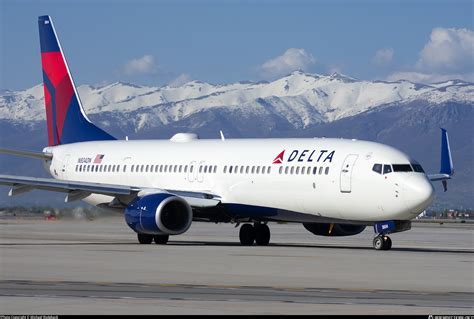
Why the Boeing 737-700 Didn’t Fit Delta’s Long-Term Vision
Delta’s use of the 737-700 was always cautious. The aircraft was well-suited for thin routes that didn’t require the larger 737-800 or A321, but that use case was limited. As Delta’s strategy evolved post-Northwest merger, the 737-700 began to look increasingly redundant.
More crucially, the economics didn’t scale. Operating a micro-fleet of just 10 aircraft introduced complexities in maintenance, training, and parts provisioning. For an airline of Delta’s size, that inefficiency was unacceptable. The in-house Delta TechOps team, while capable of servicing a wide variety of aircraft, gains maximum efficiency from larger sub-fleets. In the grand scheme, the cost-benefit of maintaining such a small 737-700 fleet simply didn’t make strategic sense.
Delta also began adopting a newer class of fuel-efficient, right-sized aircraft that offered better economics with more advanced onboard products—aircraft like the Airbus A220-100 and A220-300.
Replacements: The Rise of Airbus A220 & A319
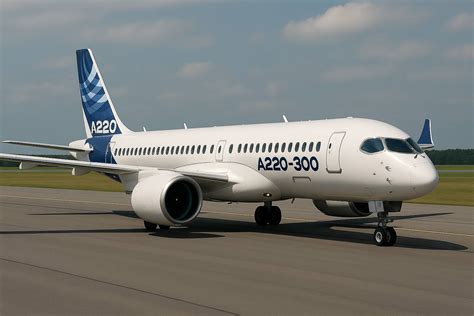
The phase-out of the 737-700 opened the door for the Airbus A220, an aircraft that has quickly become one of Delta’s most flexible workhorses. Its modern Pratt & Whitney geared turbofan engines, spacious cabin design, and excellent fuel efficiency made it the ideal successor for the roles once filled by the 737-700.
Additionally, Airbus A319s, which offer comparable capacity and range, helped cover some of the operational gaps left behind by the Boeing 737-700’s retirement. These aircraft proved particularly useful on short-to-medium-haul routes, and many were already integrated into Delta’s existing fleet structure.
What makes the Airbus A220 a better fit is not just its cost-per-seat performance, but also its versatility across Delta’s hub-and-spoke network. The aircraft is nimble enough for smaller markets but capable enough to stretch into transcontinental flights.
The Surprising Post-Delta Lives of the 737-700s
Not all of Delta’s 737-700s ended up in the scrapyard. According to historical fleet movement data:
- Two aircraft, N302DQ and N306DQ, are now flying for the Colombian Air Force, showcasing the platform’s enduring military utility.
- Another aircraft is being repurposed for the National Nuclear Security Administration (NNSA)—a lesser-known U.S. federal agency involved in securing nuclear materials.
- Four aircraft were scrapped in Marana, Arizona.
- The remaining three jets are currently in storage in San Bernardino, California.
This fragmented fate underscores how even niche fleets like Delta’s 737-700s can find second lives in defense or governmental operations where their reduced passenger capacity and mature systems are still seen as assets.
Lessons Learned: Strategic Rationalization in Action
In retiring the 737-700s, Delta wasn’t merely trimming fat—it was executing on a long-term fleet rationalization strategy that began post-merger and intensified in the pandemic’s wake. Other notable aircraft retired during this same period include:
- McDonnell Douglas DC-9
- MD-88 and MD-90
- Boeing 747-400
- Boeing 777
These exits made room for a younger, more fuel-efficient generation of jets tailored for Delta’s premium-heavy, cargo-capable, fuel-saving future. With Airbus A220s, A321neos, and A350s entering service, the airline is well on its way to not just replacing, but upgrading its entire flight experience.
Final Takeaway: The Right Jet for the Right Time—But Not for Long
The Boeing 737-700 never truly found its home in Delta’s complex network. Although it played a tactical role in the late 2000s and early 2010s, it was never destined to be a permanent fixture. The fleet was simply too small, too limited, and not aligned with Delta’s scaling strategy.
Thanks to its fleet optimization, Delta is now better positioned to navigate evolving passenger expectations, sustainability goals, and global market shifts. Meanwhile, the 737-700 quietly exits stage left—its story in Delta’s history a short but telling chapter in the airline’s relentless pursuit of fleet excellence.