The Curious Odyssey of Mehran Karimi Nasseri
In the vast corridors of Charles de Gaulle Airport, among the transient rhythm of international travelers, one man became a permanent resident. His name was Mehran Karimi Nasseri, an Iranian refugee whose surreal story of statelessness transformed Terminal 1 into a reluctant home for 18 years. What began as a bureaucratic mishap evolved into a philosophical meditation on identity, belonging, and endurance.
Born in 1945 in Masjed Soleiman, Iran, Nasseri grew up amid the oil-soaked legacy of British colonial influence. His father, a doctor with the Anglo-Persian Oil Company, ensured a relatively comfortable childhood. Yet, Nasseri’s own account of his origins diverged wildly—at times claiming a Scottish or Swedish mother, asserting illegitimacy, and later denying it. These contradictions would foreshadow the enigmatic path ahead.
Exile Without a Country
The defining fracture in Nasseri’s life emerged in 1977, when he claimed expulsion from Iran for protesting the Shah. Though this narrative remains disputed, what followed was a Kafkaesque spiral through European immigration systems. After studies at the University of Bradford in the UK, Nasseri bounced between countries, eventually securing refugee status in Belgium under the auspices of the United Nations High Commissioner for Refugees (UNHCR). However, that refugee status came tethered to conditions Nasseri refused to accept.
By 1988, during a journey intended to lead him to England, he found himself stranded in France—without a passport, without documentation. He claimed his papers were stolen at a train station; others allege he mailed them to Brussels himself, possibly to manipulate asylum processes. Whatever the truth, his lack of documents meant the British refused him entry, and the French would not allow departure.
Terminal 1: A Reluctant Sanctuary
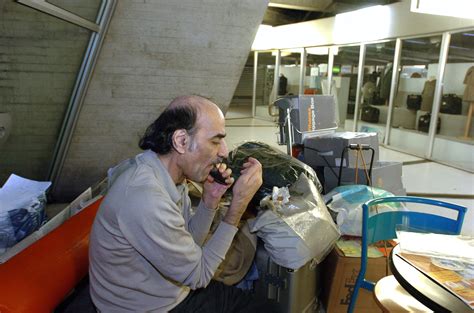
Thus began his astonishing 18-year encampment in Terminal 1. At first detained, then forgotten, Nasseri settled into a liminal existence. French officials could neither deport him nor grant full entry. Offers from Belgium and France were declined because the documentation listed his nationality as Iranian, a status he refused. He preferred the moniker “Sir, Alfred Mehran”, comma included—a reflection of both personal reinvention and bureaucratic resistance.
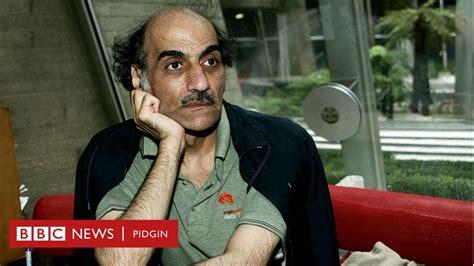
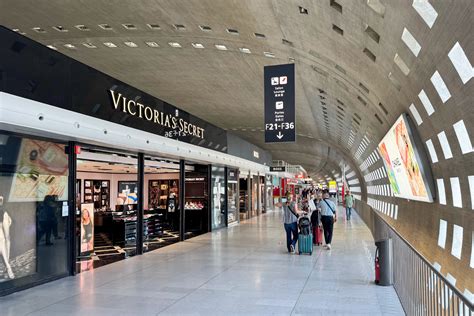
Within the terminal, Nasseri became a fixture. He was often found writing in his journal, puffing his gold pipe, or sipping coffee near the Paris Bye Bye Bar. Donations from travelers and airline staff sustained him. His home was a red bench, beside which rested his luggage and hand-written signs asserting his preferred identity.
Legal Labyrinths and Identity Crisis
Legal intervention came in the form of Christian Bourget, a French human rights lawyer. But Nasseri’s own resistance thwarted progress. In 1995, Belgian authorities offered reissuance of his papers, but only under supervision in Belgium. Nasseri declined, insisting he wanted to live in the United Kingdom as originally intended.
Repeated offers were rebuffed on technical grounds. Papers that lacked the precise wording of “Sir, Alfred Mehran” were discarded. He rejected any documentation labeling him Iranian, citing his loss of nationality. This bureaucratic stalemate became self-perpetuating. Nasseri was effectively stateless, yet complicit in perpetuating his status.
From Real Life to Cinematic Inspiration
Nasseri’s unique situation caught the attention of filmmakers. In 1993, his story was adapted into the French film “Lost in Transit”, and later inspired the character of Viktor Navorski, played by Tom Hanks in Steven Spielberg’s 2004 film “The Terminal”. Although the film does not explicitly credit Nasseri, DreamWorks reportedly paid him $250,000 for the rights to his life story.
He became something of a cultural symbol, referenced in opera, documentaries, and literature. Filmmakers like Hamid Rahmanian and Alexis Kouros documented his life. The opera “Flight” by Jonathan Dove, which premiered in 1998, was likewise inspired by his ordeal.

Departure From the Terminal
In 2006, Nasseri’s health declined. He was hospitalized, and airport officials dismantled his sitting area. For the first time in nearly two decades, he left the terminal. The French Red Cross temporarily housed him in a hotel, and he later lived in a shelter in Paris’ 20th arrondissement. But this reprieve was brief.
In a final twist of fate, Nasseri returned to Charles de Gaulle Airport in September 2022, mere weeks before his death. On 12 November 2022, he succumbed to a heart attack within the very terminal that had become synonymous with his name. An airport spokesperson confirmed that he had resumed living in a public area of Terminal 1, returning to the familiar silence of departure lounges and distant loudspeakers.
Legacy of a Stateless Man
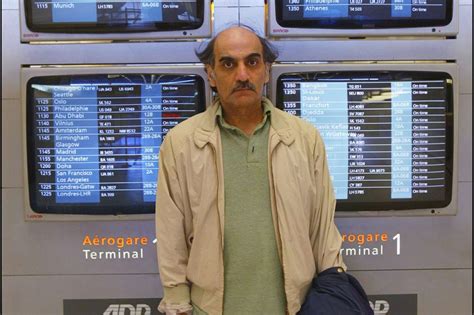
Mehran Karimi Nasseri’s story transcends novelty. Beneath the eccentricity of living in an airport lies a profound critique of global systems of migration, bureaucracy, and identity. His experience is emblematic of the tens of thousands who exist in legal limbo—refugees, asylum seekers, and stateless individuals caught between nations and paperwork.
Nasseri’s refusal to accept imposed labels—national, legal, or social—became a form of protest, however self-defeating. His existence illuminated the gray zones of citizenship, where the absence of documentation renders a person invisible yet immovable.
In many ways, he was not merely trapped by the system but also by a deeply held belief in self-authorship. His insistence on being called “Sir, Alfred Mehran” was not vanity—it was a claim to autonomy in a world that had stripped him of it.
FAQ
Who was Mehran Karimi Nasseri?
Mehran Karimi Nasseri was an Iranian refugee who lived in Charles de Gaulle Airport’s Terminal 1 for 18 years, from 1988 to 2006, due to a combination of lost documents, statelessness, and personal refusals to accept offers of asylum that did not match his preferred identity.
Did the film The Terminal accurately portray Nasseri’s life?
While “The Terminal”, starring Tom Hanks, was inspired by Nasseri’s story, it did not directly depict the events of his life. The film is a fictionalized version and omits the legal complexities and psychological nuances of Nasseri’s real ordeal. Nevertheless, DreamWorks purchased the rights to his story.
Why did Nasseri refuse offers of residency?
Nasseri declined several residency offers because the documents listed him as Iranian and used a name he did not accept. He insisted on being recognized as “Sir, Alfred Mehran”, and he rejected any legal resolution that contradicted his constructed identity. His refusal became both a personal stance and an act of existential resistance.