For passengers, hearing the words “we will be diverting to another airport” can instantly change the mood inside a cabin. A flight that was supposed to arrive at a familiar destination suddenly takes a different direction, leaving travelers wondering what happened and why the aircraft could not simply continue. However, behind every diversion decision is a carefully structured process built around safety, risk assessment, and operational discipline.
A modern commercial flight diversion is rarely caused by one simple problem. Instead, pilots evaluate a complex combination of factors, including weather conditions, fuel availability, aircraft capability, airport suitability, medical emergencies, and air traffic limitations. The decision is not made emotionally, nor is it based on passenger convenience or airline schedules. It comes from a deliberate analysis of whether continuing the flight remains the safest option.
The aviation industry has developed sophisticated decision-making systems because pilots must often make critical choices while managing uncertainty. Human psychology can become a risk factor during stressful situations, especially when crews feel pressure to arrive on time or avoid disrupting thousands of passengers. Structured decision models help pilots avoid common mistakes such as waiting too long, becoming focused on one solution, or underestimating changing conditions.
Every diversion begins with a simple but powerful question: What happens if we continue? Pilots must look beyond the immediate inconvenience of changing plans and consider the possible consequences of pressing forward. A missed business meeting, a delayed connection, or an additional hotel night may frustrate passengers, but those problems are minor compared with the consequences of continuing into unsafe conditions.
How Pilots Evaluate Whether a Flight Should Continue or Divert
One of the most important parts of aviation decision-making is removing emotion from the process. Pilots are trained to examine risks objectively, using frameworks that force them to consider potential outcomes before a situation becomes urgent.
A widely used risk-management approach focuses on four fundamental questions:
- What are the consequences if the flight cannot be completed as planned?
- How easily can the situation become unsafe?
- What information or event would change the decision?
- What are the absolute limits that cannot be exceeded?
The first question forces pilots to compare inconvenience against risk. A diversion may create operational challenges, but those costs are predictable and manageable. Continuing toward an airport during deteriorating weather, with limited fuel or reduced aircraft capability, introduces uncertainty that could quickly become dangerous.
The second question examines how rapidly a manageable situation could become a serious problem. Aviation accidents rarely occur because of a single isolated issue. Instead, they often develop through a chain of small problems that combine at the wrong moment.
For example, poor weather alone may not require a diversion. A minor mechanical issue alone may not require one either. But poor weather combined with a technical limitation, increasing fuel consumption, and congested airspace can dramatically reduce the available safety margin.
Experienced pilots constantly ask themselves: “If this situation gets worse, will we still have good options?”
That question is crucial because aviation safety depends heavily on maintaining choices. A crew that diverts early usually has multiple airports, routes, and strategies available. A crew that delays too long may find those options disappearing one by one.
Fuel: The Clock That Controls Every Diversion Decision
Among all factors considered during a diversion, fuel is often the most decisive. Fuel represents time, and pilots must continuously calculate how long they can safely remain in the current situation before changing plans.
Before departure, airline dispatchers and flight crews create detailed fuel plans. These calculations include the planned route, expected weather, alternate airports, holding requirements, and legally required reserves. However, real-world operations can quickly change those assumptions.
A flight approaching a busy airport may encounter unexpected delays caused by thunderstorms, runway closures, or traffic congestion. Air traffic controllers may instruct aircraft to enter holding patterns while waiting for conditions to improve.
From the passenger perspective, an aircraft circling above an airport may appear to have plenty of time. Inside the cockpit, however, pilots are watching a countdown.
The crew does not simply ask, “How much fuel do we have left?” Instead, they ask, “How many minutes of safe operation remain?”
This distinction is extremely important. Fuel is converted into time because time determines available options. A Boeing 737 or similar commercial aircraft may have enough fuel to hold for a certain period, but that holding time decreases rapidly when the aircraft remains at lower altitudes or flies inefficient patterns.
Lower-altitude holding is especially demanding because jet engines burn fuel more quickly compared with efficient cruise conditions at high altitude. A missed approach at a major airport can consume much more fuel than expected if air traffic restrictions prevent an immediate climb.
Because of this, pilots establish clear diversion triggers before they are under extreme pressure. They may decide that if weather has not improved by a specific time, or if fuel reaches a predetermined level, the aircraft will leave the holding pattern and proceed to an alternate airport.
This prevents a dangerous situation where the crew waits until the last possible moment and loses the ability to make a comfortable, controlled decision.
Weather Conditions: Why Pilots Do Not Simply “Try One More Approach”
Weather is one of the most common reasons flights divert, but the decision is far more complicated than looking outside the cockpit window.
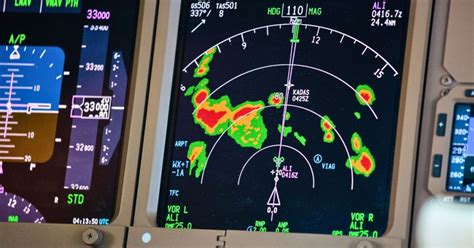
Modern aircraft can operate safely in many challenging environments, but every airport has specific limitations. Pilots must consider visibility, cloud ceiling, wind direction, runway conditions, braking performance, and the availability of instrument landing systems.
A destination airport may appear close enough for landing, yet conditions can change rapidly. A thunderstorm that moves across the runway, sudden wind shifts, or heavy rain can transform an acceptable approach into a dangerous one within minutes.

Pilots rely on detailed weather information, including forecasts, airport reports, and real-time updates. They also prepare alternative plans before departure. A professional crew does not wait until the aircraft is already committed to a difficult approach before thinking about what happens next.
Landing calculations include safety margins because aircraft performance is affected by many variables. A wet runway, unexpected tailwind, or reduced braking action can significantly increase stopping distance.
A runway that is suitable under ideal conditions may become unsuitable during poor weather. The aircraft itself may be capable of landing, but the combination of environmental factors may leave too little safety margin.
This is why pilots establish firm limits. If conditions fall outside those limits, the decision is not about courage or skill. It is about recognizing that the safest option is to use another airport.
Aircraft Problems: When Small Failures Change the Entire Plan
Not every diversion begins with dramatic engine problems or emergency warnings. Sometimes, a relatively minor technical issue can force pilots to reconsider the entire flight plan.
Modern airliners are designed with multiple backup systems, but every aircraft has operating limits. When a component fails, pilots evaluate how that failure affects the aircraft’s ability to complete the flight safely.
A single equipment problem may seem insignificant, but its impact depends on the surrounding circumstances.
For example, a navigation system issue may affect where the aircraft can legally fly. A communication problem may limit operational flexibility. A hydraulic system problem may affect braking, landing gear operation, or flight controls.
Pilots consult aircraft manuals and operational procedures to determine whether the aircraft remains within approved limits. They also consider whether the situation could become worse.
A key question is:
“If this problem develops further, will we still have enough options?”
This forward-looking approach explains why some aircraft divert even when they appear to be operating normally from a passenger perspective. The crew is not reacting only to the current condition. They are protecting against possible future deterioration.
Medical Emergencies: Balancing Passenger Health and Flight Safety
Medical emergencies present some of the most difficult diversion decisions because pilots must balance two urgent priorities: getting medical help quickly while maintaining overall flight safety.
Not every medical event requires a diversion. Many situations can be managed by cabin crew, passengers with medical training, and airline medical support services. However, some conditions require immediate access to hospital facilities.
The captain must evaluate several factors, including the passenger’s condition, the nearest suitable airport, weather conditions, aircraft position, and landing requirements.
A diversion for a medical emergency is not simply about choosing the closest airport. The best airport is usually one that can provide appropriate medical care while also safely handling the aircraft.
A remote airport may be physically closer but unable to support the passenger’s needs or accommodate a large commercial aircraft.
The crew must also consider aircraft weight. Many flights depart with large fuel reserves, meaning the aircraft may still be heavier than its maximum landing weight shortly after takeoff. In some cases, pilots may need to burn fuel before landing unless the emergency requires immediate action.
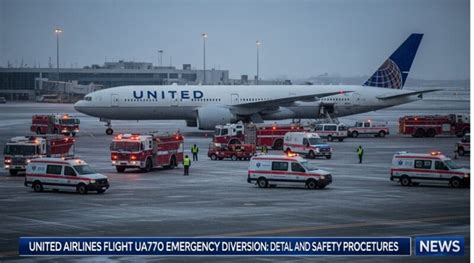
Airport Selection: Why the Nearest Airport Is Not Always the Best Choice
When a diversion becomes necessary, pilots do not simply choose the closest airport on a map. They evaluate whether that airport can safely handle the aircraft and support the situation.
Important considerations include:
- Runway length and surface conditions
- Airport rescue and emergency services
- Maintenance availability
- Weather conditions
- Passenger handling facilities
- Customs and immigration requirements for international flights
A large aircraft experiencing a technical problem may require a major airport with long runways, specialized equipment, and maintenance teams.
For example, an aircraft with reduced braking capability may need a longer runway than usual. A smaller regional airport nearby may not provide enough safety margin, while a larger airport slightly farther away may be the better choice.
Diversion planning is therefore a balance between distance, capability, and risk.
The Captain Has the Final Decision
Ultimately, every diversion decision belongs to the aircraft captain. Air traffic controllers provide guidance, dispatch teams provide information, and airline operations departments offer support, but the final responsibility rests with the pilot in command.
Under aviation regulations such as 14 CFR 91.3(a), the pilot in command has final authority over the operation and safety of the aircraft.
This authority exists because the captain is the person directly evaluating the real-time situation. They are responsible for making decisions that may affect hundreds of passengers and crew members.
Airlines understand that diversions are expensive. They create costs through additional fuel, airport fees, passenger accommodations, and schedule disruptions. However, operational efficiency can never override safety.
Professional pilots are trained to recognize psychological pressure and avoid continuing simply because a flight is already close to its destination.
The safest decision is sometimes the decision that causes the most inconvenience.
Why Diversions Are Actually a Sign of Aviation Safety
For passengers, a diverted flight may feel like a failure. In reality, it often demonstrates exactly how modern aviation is designed to work.
Aviation safety does not depend on avoiding every unexpected event. It depends on having systems, procedures, and trained professionals capable of managing those events safely.
Every diversion represents a moment where pilots identified a changing situation, evaluated the risks, and chose the option that preserved the greatest safety margin.
The questions pilots ask before diverting are not signs of uncertainty. They are evidence of careful preparation.
When an aircraft changes course toward another airport, it is usually because a highly trained team decided that protecting passengers mattered more than protecting the original schedule. That decision-making culture is one of the main reasons commercial aviation remains one of the safest forms of transportation in the world.