Every aircraft accident leaves behind a lesson — and few are as sobering as those caused by a simple oversight. A routine flight controls check is one of the most critical steps in preflight safety, yet history and incident records show it is also one of the most neglected. From piston aircraft to corporate jets, the consequences of skipping this procedure are devastating. We explore why a thorough flight control check before every flight is not optional, but vital.
The Price of Neglect: Real-World Accidents Rooted in Oversight
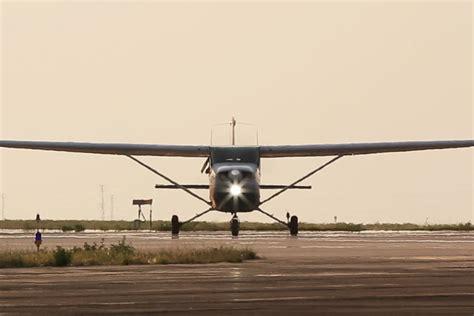
In a widely circulated case, a Cessna 172 attempted a takeoff but failed just seconds into the roll. The pilot, realizing too late that a bolt used as a makeshift gust lock remained inserted in the yoke, attempted to abort. But with a light crosswind pushing the aircraft, the plane veered off the runway into a group of trees. While the pilot sustained only minor injuries, the aircraft suffered severe damage. The NTSB report made the cause unmistakably clear: the bolt was not removed, and the flight control check — which would have exposed the blockage — was never performed.
This incident wasn’t isolated to general aviation. In 2014, a Gulfstream IV with a highly experienced crew failed to rotate at 162 knots during takeoff from Bedford, Massachusetts. With only 1,373 feet of runway left, the pilots applied full brakes and reverse thrust. It was not enough. The aircraft overshot the runway, struck a ravine, and exploded — killing all seven people on board. The NTSB’s post-crash analysis was chilling: 98% of the plane’s previous 175 flights lacked a proper flight control check. The locked gust system — which should have prevented throttle advancement — had failed, but the pilots failed first by neglecting their checklist.
What a Flight Controls Check Really Entails
Too often, pilots think of flight controls checks as a box to tick rather than a system to interrogate. In reality, this step is a critical integrity check of the pilot-aircraft interface. The purpose is not just to verify movement, but to ensure correct, unobstructed, and synchronized responses across all axes of control.
Here’s what every flight control check must include:
- Free and Correct Movement: Ensure all primary flight controls — ailerons, elevators, rudder — move smoothly and in the correct direction. A reversal or restriction here could prove fatal.
- Autopilot Disengagement: Confirm that the autopilot disengages cleanly, especially in aircraft equipped with integrated flight systems.
- Force Feedback: Be sensitive to abnormal resistance or slack in the yoke or rudder pedals. Anything unusual could indicate a cable snag, mechanical interference, or control surface obstruction.
- Auditory Indicators: Listen for clicking, scraping, or grinding sounds that may originate from pulley misalignment or FOD (foreign object debris) in control runs.
- Control Lock Removal: Whether it’s a certified gust lock or an improvised bolt, no flight should proceed without absolute certainty that all locks are disengaged.
Improper Gust Lock Use: A Dangerous Shortcut
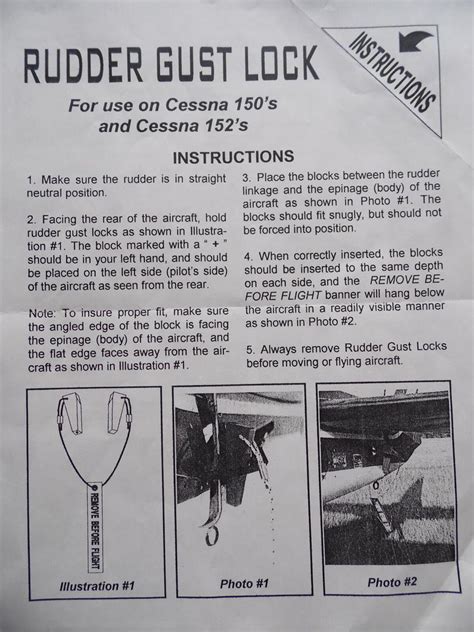
In most Cessna single-engine aircraft, the gust lock is designed with redundancy — often a metal flag covers the ignition switch when installed. It physically inhibits startup unless removed. But in the case of the Cessna 172 accident, a bolt had been used in place of the factory lock. Without an ignition block, there was no fail-safe to prevent flight initiation.
This kind of substitution is not just non-compliant, it is lethal. Improvised solutions defeat the design logic of aircraft systems. Only certified parts and processes should be used when locking or disabling controls during ground storage or high-wind parking scenarios.
The Checklist: Your Aircraft’s First Line of Defense
From Cessna 152s to Boeing 787s, the checklist is not a guideline — it is a mandate. Flight control checks are integrated into the pre-takeoff sequence for every aircraft, but their exact placement varies. Depending on manufacturer SOPs (Standard Operating Procedures), it might appear in the run-up, pre-takeoff, or before-taxi section. Regardless, it must never be skipped.
Professionalism in aviation is not measured by flight hours but by procedural discipline. Every checklist line exists because someone, somewhere, suffered the consequences of forgetting it. A flight control check isn’t about compliance — it’s about survival.
Habitual Neglect: The Culture of Complacency
When the Gulfstream IV incident unfolded, what alarmed investigators most wasn’t the mechanical failure — it was the pattern of behavior. Data revealed the flight crew had failed to perform proper flight control checks in nearly every takeoff prior to the crash. Over time, their procedural discipline had eroded to a fatal level.
This is a stark reminder that checklist complacency is a cultural issue, not a one-time slip. Flight departments, training institutions, and individual pilots must cultivate an environment where every item, no matter how routine, is executed with rigor. Complacency grows slowly but kills instantly.
Control Surface Failures: Not Always Mechanical
Control system failures don’t always result from hardware issues. Sometimes, external conditions interfere. Insects, mud, snow, or ground debris can obstruct movement. In flight schools or training environments where aircraft sit idle for long hours, it is not uncommon to find foreign material in control gaps, hinges, or pushrod fairings. A tactile and visual inspection during the preflight walkaround is essential.
Furthermore, inside the cockpit, misplaced kneeboards, headsets, or flight bags can lodge behind rudder pedals or yokes. These minor oversights are easy to catch — but only if you look.

Flight Training and the Culture of Thoroughness
In pilot training, instructors emphasize airspeed management, radio communication, and emergency procedures. But few lessons leave a lasting impression like the discipline of doing it right every single time. Flight schools must instill a hardwired habit: check, verify, and double-check.
Even student pilots should be taught to perform the flight control check audibly — saying “free and correct, left, right, up, down, rudder full travel” reinforces both habit and accountability. More importantly, it builds a rhythm that translates into safety during solo flight or real-world flying under pressure.
Flight Controls and the Chain of Safety
A preflight control check is not just about motion. It’s the first link in a chain of flight safety. The yoke, stick, or sidestick is the extension of pilot intent — and any disruption along its path compromises not just performance, but control authority.
Once airborne, failure in primary controls leads to loss of attitude stability, reduced maneuvering capacity, and in the worst cases, unrecoverable flight states. In contrast, most issues can be corrected or flagged on the ground, long before takeoff speeds are reached.
The FAA, EASA, and major safety boards continue to urge pilots to take checklist compliance seriously. Yet the responsibility lies not with the agency, but with the individual in the left seat.
We Fly with Precision — Or Not at All
In the sky, there is little margin for error. The price of a skipped check is often paid in metal, fire, and loss. That is why we fly with precision — or not at all. Every takeoff must be preceded by a quiet moment of thorough inspection. No matter how rushed, no matter how routine, the flight control check stands as a final, powerful affirmation of readiness.
If there is a single ritual we never shortcut, it is this: “Flight controls — free and correct.”
FAQs
What is a gust lock and why is it dangerous if not removed?
A gust lock secures the aircraft’s control surfaces during high wind conditions on the ground to prevent damage. If not removed before flight, it can prevent control movement, causing loss of control during takeoff.
Is the flight control check mandatory for all aircraft?
Yes. From small trainers to commercial jets, the flight control check is a standard item in preflight or pre-takeoff procedures.
What should I look for during a flight control check?
You should verify full and correct motion of all control surfaces, ensure no unusual resistance, listen for abnormal sounds, check for FOD, and confirm the autopilot disengages properly.
Can flight control issues develop suddenly in the air?
Yes. Cable breakage, foreign objects, or icing can lead to in-flight control problems, but many such issues can be caught early with proper ground checks.
How can I ensure my flight control checks remain effective over time?
Build a habit of verbalizing the check, follow the checklist precisely, and treat every preflight like a first-time experience. Regular, focused attention prevents complacency.