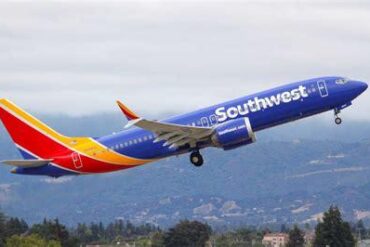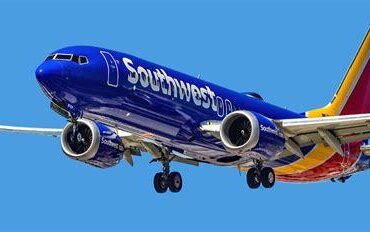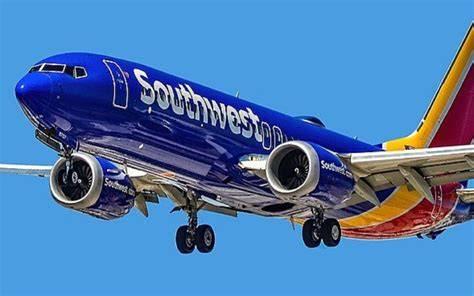
Southwest Airlines has built one of the largest Boeing 737 fleets in the world, with hundreds of modern 737 MAX 8 aircraft supporting its domestic network and international expansion. At first glance, it may seem logical that any of these jets should be capable of flying across the Pacific Ocean, especially because the MAX 8 is designed with improved fuel efficiency, longer range, and modern technology compared with earlier 737 generations.
However, aviation operations are not determined by aircraft capability alone. A Boeing 737 MAX 8 sitting on the ramp at a Southwest Airlines airport is not automatically authorized to fly thousands of miles over open ocean. The difference comes down to a complex regulatory approval known as ETOPS (Extended-range Twin-engine Operational Performance Standards).
ETOPS is the reason why Southwest can operate flights to Hawaii with selected aircraft, but cannot simply assign every 737 MAX 8 in its fleet to Pacific routes. The aircraft type may be identical, but the operational approvals behind each individual airplane can be completely different.
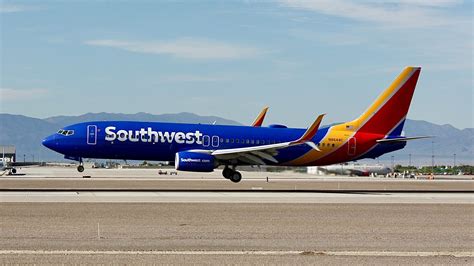
Why Boeing 737 MAX 8 Aircraft Need ETOPS Approval for Pacific Flights
Modern twin-engine aircraft are extremely reliable, but flying over large areas of open water creates unique operational challenges. Unlike a domestic flight between major cities, a Pacific crossing may place an aircraft hundreds of miles from the nearest suitable airport.
ETOPS rules were developed to ensure that twin-engine aircraft can safely continue operating when flying far away from diversion airports. The regulations focus on what happens during unlikely situations, such as an engine failure, medical emergency, or other event requiring the aircraft to divert.
For a Boeing 737 MAX 8 operating a route to Hawaii, the aircraft must meet specific requirements that cover far more than basic performance. Regulators evaluate the aircraft itself, but they also examine the airline’s maintenance system, crew procedures, dispatch processes, reliability data, and operational planning.
This means ETOPS is not simply a certification attached to the Boeing 737 MAX 8 model. Instead, it is an approval for a complete operational system.
A MAX 8 aircraft can have the range and technical ability to complete a Pacific flight, but without being included in Southwest’s approved ETOPS program, that aircraft cannot legally perform the mission.
Southwest Airlines learned this reality when it prepared to launch Hawaii service. The airline received FAA approval for ETOPS operations in February 2019 before beginning flights to the islands shortly afterward. That approval allowed the carrier to use specially prepared aircraft for long overwater operations.
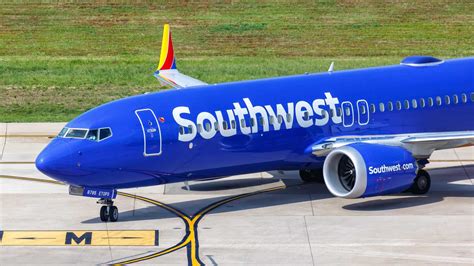
Southwest Airlines Has a Large Boeing 737 MAX 8 Fleet, But Not Every Jet Has the Same Role
Southwest Airlines has long built its business around fleet simplicity. Unlike many global airlines that operate dozens of aircraft types, Southwest has historically focused almost entirely on the Boeing 737 family.
This approach helps reduce complexity. Pilots can transition between aircraft more easily, maintenance teams can specialize in fewer models, and scheduling becomes more flexible.
However, fleet commonality does not mean every aircraft performs the same mission.
By the end of 2025, Southwest operated more than 800 Boeing 737 aircraft, including over 300 Boeing 737 MAX 8 jets. The airline continues replacing older Boeing 737NG aircraft with newer MAX models, with additional deliveries expected in the coming years.
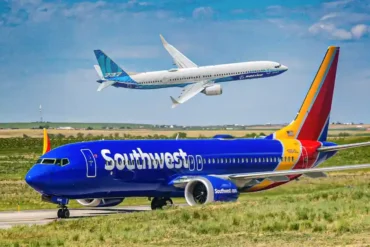
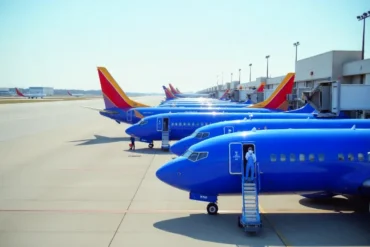
From the outside, a passenger might see two Boeing 737 MAX 8 aircraft parked next to each other and assume they have identical capabilities. Structurally, they may be almost identical. Operationally, however, they can be very different.
One aircraft may be assigned primarily to domestic flights between major US cities. Another may be equipped, maintained, and approved specifically for Hawaii service.
The difference is not visible from the cabin. It exists in the airline’s operational documents, maintenance programs, and regulatory approvals.
This distinction allows Southwest to maintain efficiency. Instead of certifying its entire fleet for ETOPS operations, the airline can focus resources on the aircraft that actually require those capabilities.
What Exactly Is ETOPS and Why Does It Matter?
ETOPS allows twin-engine aircraft to fly routes that would otherwise be restricted because of their distance from suitable airports.
The basic idea is simple: if an aircraft loses one engine, it must still be able to safely reach an alternate airport within the approved diversion time.
Modern ETOPS ratings can allow aircraft to fly several hours away from potential landing locations. Large widebody aircraft such as the Airbus A350 and Boeing 787 often operate extremely long overwater routes under advanced ETOPS approvals.
For narrowbody aircraft like the Boeing 737 MAX 8, ETOPS certification has opened new opportunities. Airlines can use efficient single-aisle aircraft on routes that previously required larger widebody jets.
This has become especially important for markets such as mainland United States to Hawaii. Instead of operating larger aircraft, airlines can use fuel-efficient narrowbodies while maintaining appropriate safety standards.
However, ETOPS introduces additional operational responsibilities.
An airline must demonstrate that its aircraft reliability meets strict standards. Maintenance teams must follow additional procedures. Dispatch departments must consider diversion airports, weather conditions, and aircraft status before approving flights.
Crew training also plays an important role. Pilots operating ETOPS flights must understand specific procedures related to extended diversion operations.
Therefore, ETOPS is not a feature that can simply be switched on for an aircraft overnight.
Why Only Some Southwest Boeing 737 MAX 8s Are ETOPS Certified
Southwest does not need every Boeing 737 MAX 8 in its fleet to be ETOPS capable.
The airline operates hundreds of domestic routes where aircraft remain close to suitable airports. For those flights, ETOPS certification provides little practical benefit.
Maintaining every aircraft under an ETOPS program would create unnecessary costs and complexity. Each additional certified aircraft requires additional tracking, documentation, maintenance controls, and operational oversight.
According to information provided by Southwest Airlines, only a portion of its fleet has ETOPS certification, with approximately 138 aircraft approved for these extended operations.
That number is enough to support the airline’s Hawaii network while avoiding the expense of converting the entire fleet.
This strategy is common throughout the aviation industry. Airlines frequently create specialized sub-fleets for specific missions, even when aircraft belong to the same model family.
For example, an airline may have several Boeing 737 MAX 8 aircraft, but only those operating long overwater routes receive additional approvals. Others remain focused on domestic or regional flying.
The result is a fleet that appears identical to passengers but functions differently behind the scenes.
Why Airlines Do Not Certify Every Aircraft for Long Overwater Operations
The reason comes down to economics and operational efficiency.
ETOPS certification is not just a one-time approval process. It requires continuous investment. Airlines must maintain higher reliability standards and keep detailed records demonstrating that aircraft remain suitable for these operations.
Additional costs can include:
- specialized maintenance procedures
- reliability monitoring systems
- crew training requirements
- operational planning changes
- spare parts support
- additional documentation and compliance work
For an airline like Southwest, which operates hundreds of Boeing 737 aircraft, applying these requirements to every jet would create significant expense.
If only a fraction of the fleet regularly flies to Hawaii, certifying the entire fleet would not provide a meaningful operational advantage.
Instead, airlines typically create a dedicated group of ETOPS-capable aircraft and schedule those airplanes on routes requiring the approval.
This approach provides flexibility while controlling costs.
It also explains why a passenger booking a Southwest flight may see a Boeing 737 MAX 8 assigned to one route but not another. The limitation is not necessarily the aircraft’s physical capability. It is the aircraft’s approved operational status.
Is Southwest’s Approach Different From Other Airlines?
Southwest’s strategy is not unusual. Many airlines around the world use similar methods when managing ETOPS fleets.
Large carriers operating international networks often maintain specialized aircraft groups for long-range missions. Even within the same aircraft family, some jets may receive additional approvals while others remain limited to standard operations.
Regulators generally approve ETOPS based on the complete operating environment rather than the aircraft model alone.
Boeing can design an aircraft capable of long-distance operations, but the airline must still demonstrate that it can safely operate that aircraft under extended-range conditions.
This explains why two airlines operating identical Boeing 737 MAX 8 aircraft may have different route capabilities.
One carrier may operate the aircraft across oceans, while another may use it exclusively for domestic flights.
The difference comes from the airline’s operational choices and regulatory approvals.
How Much Does ETOPS Certification Cost for a Boeing 737 MAX 8?
There is no publicly available fixed price for ETOPS certification of a Boeing 737 MAX 8.
The cost depends heavily on the airline’s existing systems, fleet size, maintenance capabilities, and operational goals.
For an airline already operating a modern Boeing 737 fleet, the process may require expanding existing procedures rather than creating an entirely new program.
However, the investment involves much more than paperwork. Airlines must prepare engineering programs, train employees, update manuals, establish reliability monitoring, and demonstrate compliance to regulators.
Because these costs vary significantly, airlines generally evaluate whether ETOPS certification provides enough operational value before expanding approval to more aircraft.
For Southwest, certifying a limited number of aircraft makes financial sense because Hawaii operations require ETOPS capability, but most of the airline’s network does not.
The Future of Southwest Airlines and Boeing 737 MAX 8 Pacific Operations
As Southwest continues replacing older Boeing 737NG aircraft with Boeing 737 MAX 8 jets, the role of the MAX fleet will continue growing.
The aircraft offers significant advantages, including improved fuel efficiency and lower operating costs. These benefits make it an attractive platform for longer routes.
However, the growth of the MAX fleet does not automatically mean every aircraft will become Pacific capable.
Southwest will likely continue using a selective ETOPS strategy, assigning approved aircraft to Hawaii and other extended-range missions while keeping the majority of the fleet optimized for domestic operations.
This approach matches the airline’s broader philosophy: maintain simplicity while carefully controlling operational costs.
The Boeing 737 MAX 8 gives Southwest the technical foundation for long overwater flights, but regulatory approval determines which aircraft can actually perform those missions.
The Bottom Line: Aircraft Capability Is Only Part of the Story
The idea that every Boeing 737 MAX 8 should automatically be able to fly across the Pacific is understandable, but aviation operations are far more complicated.
The aircraft itself may have the range, reliability, and performance required for long-distance flying. However, ETOPS certification, maintenance programs, crew training, and airline approvals determine whether a specific aircraft can actually operate those routes.
Southwest Airlines does not need every Boeing 737 MAX 8 to be Pacific-ready. By maintaining a smaller group of ETOPS-certified aircraft, the airline can serve Hawaii efficiently while avoiding unnecessary costs across its massive fleet.
The story highlights an important reality of modern aviation: two aircraft that look identical on the outside can have very different capabilities because of the systems, approvals, and operational structures behind them.