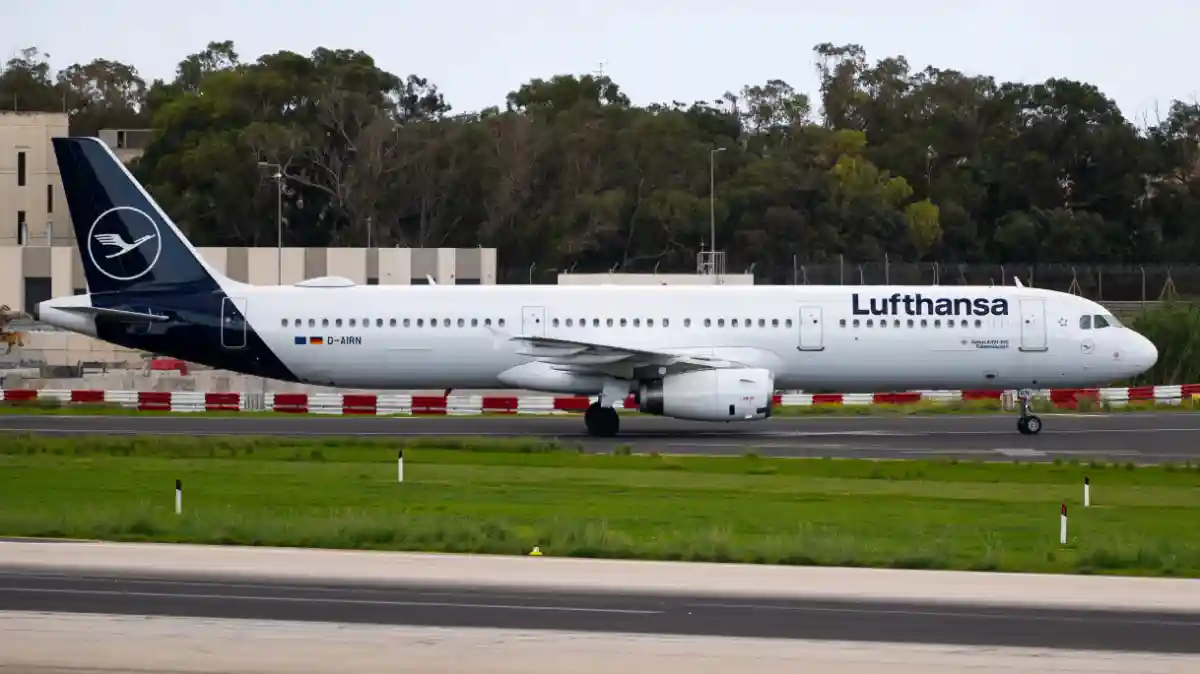
Lufthansa’s fleet list reads like a case study in contradictions. The German flag carrier retired the last of its four-engine Airbus A340-600s in October 2025 after twenty-three years of service, closing the book on the quadjet era with the quiet ceremony usually reserved for a beloved flagship. Yet at the same time, on the Frankfurt and Munich departure boards, travellers can still book a seat on an Airbus A321 delivered before the A340-600 prototype had even rolled out of the paint shop. Tail number D-AIRA, named Finkenwerder, arrived at Lufthansa on January 27, 1994, and it remains part of the airline’s active inventory alongside several near-identical siblings. That single fact captures everything remarkable about the narrowbody revolution.
What makes the survival of these aircraft so striking is not sentiment but arithmetic. The aircraft carrying the A321-100 airframe through its fourth decade is the same family that ultimately replaced the A340 on the routes the quadjet once dominated. Lufthansa now holds eighteen Airbus A321neo aircraft on firm order, with deliveries scheduled through 2027, and each of those new jets is a direct descendant of the 1994 original. The story of the world’s first A321 fleet is therefore not a nostalgic footnote. It is the clearest available illustration of how engine economics, fatigue life and route density reshaped the modern airline business.
Lufthansa as Launch Customer: How the A321 Was Born in Hamburg
The A321 saga began in 1988, when Airbus management approved a stretched derivative of the A320 just as the smaller jet was entering service. Engineers at the newly established Hamburg Finkenwerder facility stretched the fuselage by approximately 23 feet, or 6.9 metres, and the resulting prototype first took to the air on March 11, 1993. Registered F-WWIA, the aircraft flew for just over four and a half hours over northern Germany and the North Sea. The aircraft also carried symbolic weight: it became the first Airbus product assembled on a final assembly line outside France, binding the programme to German industry and to Lufthansa in particular.
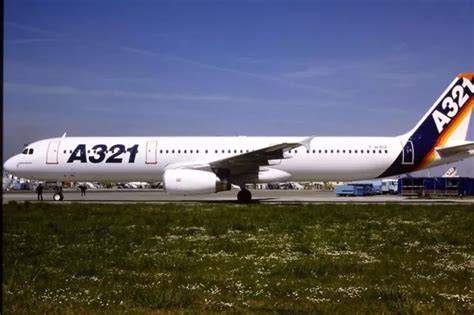
Lufthansa’s position as launch customer was the natural consequence of that geography and of the airline’s long partnership with Airbus. The carrier accepted the first production aircraft on January 27, 1994, and named it Finkenwerder after the Hamburg district housing the new plant. The initial batch of twenty jets arrived between 1994 and 1998, the last of them D-AIRY, handed over on November 4, 1998. By 2015 the Lufthansa flightline counted 63 A321s, a figure that underlines how completely the stretched narrowbody conquered its own launch operator’s network.
The Trade-Off That Defined the A321-100
The A321-100 was always a compromise, and understanding it explains much of what followed. The longer fuselage carried up to 220 passengers, but the aircraft shared the A320’s fuel capacity, so it flew with a shorter range than the smaller jet it was derived from. Airlines bought it for exactly that reason: it was unmatched on densely travelled short sectors where boarding speed and seat count mattered more than reach. For Lufthansa in the mid-1990s, flying the type between Frankfurt, Munich and the busiest European capitals made commercial sense even without the range.
6 Survivors Carrying Three Decades of Cycles
Of the 6 surviving aircraft from Lufthansa’s original A321-100 intake, four remain listed in service and two, D-AIRA and D-AIRC, are reportedly parked. The three oldest survivors show how hard these jets have worked: D-AIRH, named Garmisch Partenkirchen, is 31.7 years old with 65,265 flight hours and 49,303 cycles; D-AIRA is 31.3 years old with 64,898 hours and 48,839 cycles; and D-AIRC, named Erlangen, is 31.2 years old with 66,298 hours and 51,393 cycles. Every one of them has already exceeded Airbus’s original design goal of 48,000 cycles for the A320 family, a milestone the manufacturer thought would mark the end of a typical airliner’s useful life.
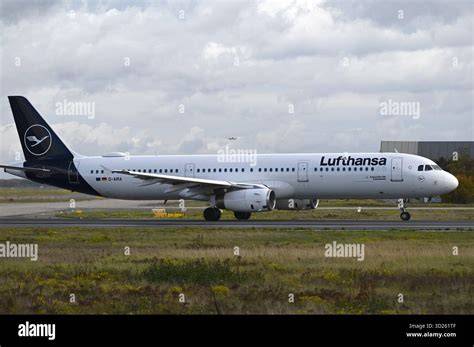
Those figures matter because they reveal where fatigue accumulates. Hours measure time in the air, but cycles measure the takeoff and landing pairs that actually stress a fuselage and landing gear. A long-haul jet can fly more hours with fewer cycles; a short-haul workhorse like the A321-100 piles on cycles relentlessly. The survival of these airframes is a testament to how conservatively the A320 family was originally designed, and to the fact that Airbus’s later Extended Service Goal programme legally raised the limits to 60,000 cycles and 120,000 flight hours once the structure proved more durable than the specification demanded.
Why the A340-600 Retired While Its Narrowbody Junior Survived
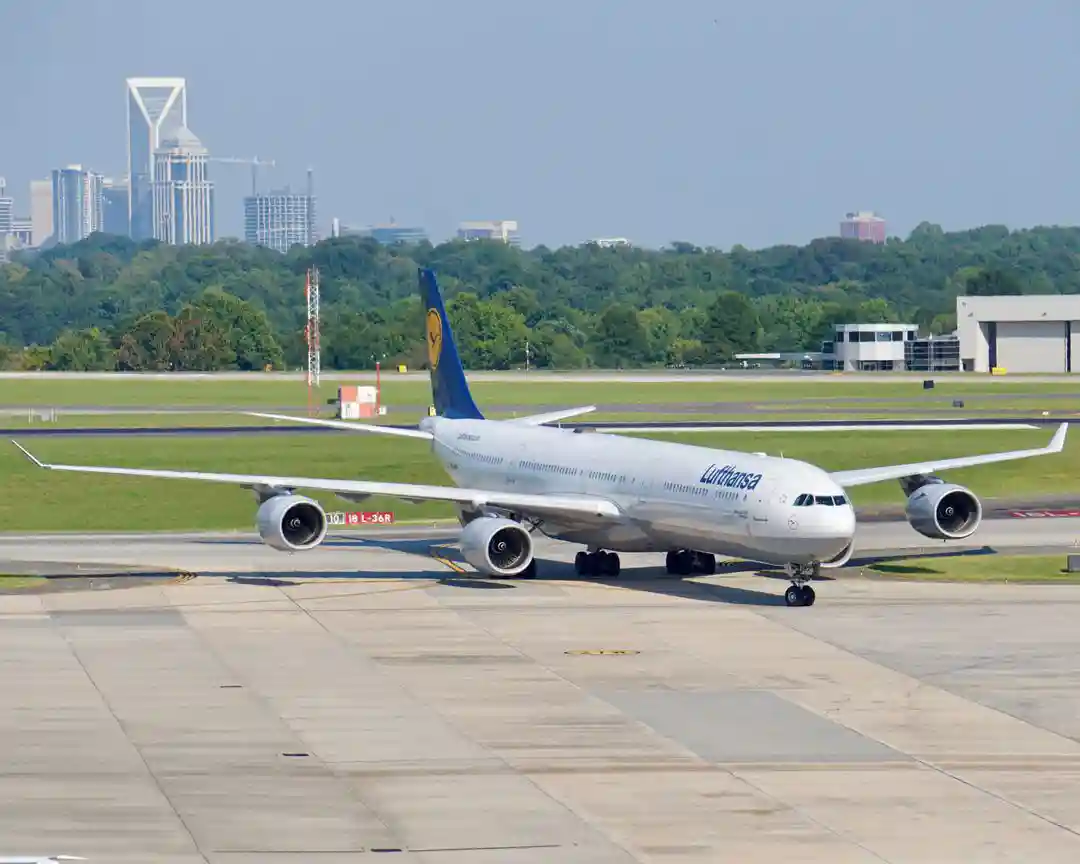
The recently retired A340-600 was also a stretched airframe, so its departure next to the A321’s survival looks paradoxical until the two designs are examined side by side. The A321 is a straightforward stretch of the basic A320, with a structure and wing designed from the outset around modest growth. The A340-600 was the longest airliner in the world when it debuted, stretched by 34 feet and 9 inches, or 10.6 metres, beyond the original design to compete with the Boeing 777. That extreme length created structural flexibility, bending and twisting in turbulence that demanded heavy reinforcement and added significant weight.
The A340-600 also carried four engines, and it is here that the economics became decisive. Advances in twinjet technology made two large, fuel-efficient turbofans sufficient on long-haul sectors, removing the need for the redundancy of four powerplants. Fuel costs rose, and quadjets became progressively harder to justify even where they offered higher seat capacity per sortie. Lufthansa kept its final A340-600s active until October 2025 as temporary capacity cushions against post-pandemic demand spikes and delays in new aircraft deliveries, and its smaller A340-300s remain in service for now. The A321s endured precisely because they were cheap to keep.
The A321-200 and the Growth of Maximum Takeoff Weight
Airbus did not wait for the A321-100’s limitations to be exposed before correcting them. The A321-200 programme kicked off in 1995, adding a new fuel tank and raising maximum takeoff weight so the stretched narrowbody could cross the United States coast to coast. The first example flew in 1996 and entered service with Monarch Airlines in 1997, three years after Lufthansa took delivery of D-AIRA. Over three decades the A321’s maximum takeoff weight has grown by roughly twenty percent, from 183,000 pounds, or 83,000 kilograms, on the original certification to 200,000 pounds, or 93,000 kilograms, on the A321-200.
That trajectory has continued to the present day. The latest long-range version, the A321XLR, is cleared at 223,000 pounds, or 101,000 kilograms, on takeoff, giving it a range of up to 4,700 nautical miles, or 8,700 kilometres, and roughly eleven hours of flying. What began as a short-legged regional stretcher has become an aircraft capable of transatlantic missions, and none of that would have been conceivable to the engineers who watched F-WWIA lift off from Finkenwerder in 1993.
From Quadjet Routes to A321neo Routes
The fleet reshuffle is easiest to see on specific city pairs. Lufthansa historically deployed its 300-seat A340-300 and A340-600 aircraft on high-density, relatively short regional routes where the quadjet’s capacity compensated for its fuel burn. Today the A321neo flies those missions with 215 passengers packed into an ultra-efficient single-aisle twinjet, sustaining nearly identical seat demand during peak business hours. Frankfurt to Cairo, Frankfurt to Amman in Jordan, Munich to Athens and Frankfurt to Rome are all examples of premium, high-frequency hops where the narrowbody now outperforms the retired widebody.
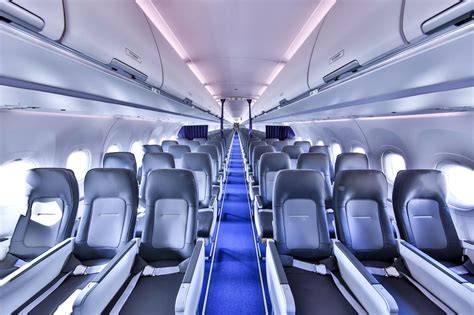
The financial logic is difficult to argue with. The neo burns roughly twenty percent less fuel than the A321-100, a saving that compounds across thousands of sectors every year, while its landing fees on a three-to-four-hour route are dramatically lower than those of a 270-seat quadjet. The savings in trip fuel and airport charges mean the A321neo yields far higher profit margins than an A340 ever could, and that margin is what allows Lufthansa to keep the fully paid-off A321-100s in service as well. Older airframes cost almost nothing to own; their penalty lies in fuel and maintenance, and on the routes where they still fly, that penalty is tolerable.
The SWISS Connection and the Wider Early A321 Story
Lufthansa’s affection for the early A321 is mirrored at Swiss International Air Lines, which inherited several A321-100s that originally flew for its predecessor, Swissair. The most celebrated of these was HB-IOC, built in 1995 and affectionately nicknamed the Olympic Plane because its registration marker mirrors the acronym of the International Olympic Committee. HB-IOC flew for over twenty-seven years, accumulated 73,000 flight hours and completed 47,000 takeoff and landing cycles, carrying roughly seven million passengers across Europe before retiring in 2023 to Castellón in Spain.
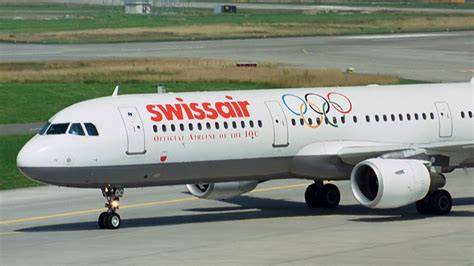
SWISS still operates a handful of active -100 series airframes on busy hub-to-hub routes, but the same pressures gathering in Germany are closing in on them. European emissions taxes and fuel costs weigh proportionally harder on 1990s-vintage narrowbodies, and SWISS is progressively introducing its own A321neos alongside smaller A220-300 regional jets. The departure of the A321-100 is one strand of a much broader narrowbody shake-up across the group’s regional network.
What Replaces the First A321s as Lufthansa Evolves
The transition away from the surviving A321-100s is shaping up as a gradual, quiet phase-out rather than an abrupt retirement. Lufthansa has already begun sending its oldest airframes to storage and dismantling facilities such as Teruel Airport in Spain, a destination familiar to anyone following the European retirement market. The pressures driving that movement are cumulative. Jet fuel costs have climbed sharply against a backdrop of geopolitical instability, and European aviation sustainability law requires airlines to surrender carbon allowances for every flight within the European Union, penalising older and less efficient aircraft more heavily than modern ones.
Under those conditions, the twenty percent fuel advantage of the A321neo can overcome the burden of financing a brand-new airframe, even though the debt carried by a factory-fresh delivery is very real. The mathematics that once made the A321-100 indispensable eventually reversed, and the remaining high-cycle aircraft have become obvious candidates for grounding as fuel and maintenance costs rise. These jets have proven themselves masterpieces of longevity, but longevity alone is not a business model in a market where carbon and kerosene both carry a price. When the last A321-100 finally leaves the Lufthansa register, it will close a chapter that began in Hamburg more than three decades ago, one in which a stretched regional airliner quietly outlasted the majestic four-engine giants that were supposed to represent the future of long-haul flying.