American Airlines has made headlines by announcing the launch of free in-flight Wi-Fi, signaling a pivotal shift in the airline’s digital transformation and customer loyalty strategy. Following the footsteps of its competitors, the airline has committed to providing complimentary high-speed internet access—but there’s a catch. While this move represents a significant leap toward enhancing passenger experience, the reality is more nuanced. Not all travelers will benefit equally, and some will still find themselves paying for connectivity in the skies.
A Loyalty-Driven Digital Leap Forward
American Airlines’ new offering is part of a broader trend among U.S. carriers aiming to reward customer loyalty with digital perks. The free Wi-Fi service is currently available to AAdvantage loyalty program members, reinforcing the airline’s long-term strategy of building customer retention through value-added digital experiences. Provided through a strategic collaboration with AT&T and Viasat, the service promises high-speed, satellite-based internet access across millions of domestic flights this year.
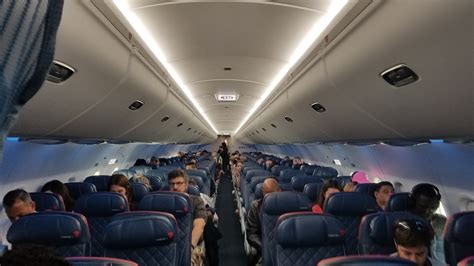
The rollout covers American’s entire domestic narrowbody fleet, including Boeing 737s and Airbus A320-family aircraft, as well as nearly 500 dual-class American Eagle regional jets. The goal is ambitious—100% coverage across these aircraft types by the end of the month, ensuring that most domestic travelers can stay connected gate-to-gate without paying extra.
According to Heather Garboden, American’s Chief Customer Officer, “Free high-speed Wi-Fi isn’t just a perk—it’s essential for today’s travelers.” This acknowledgment reflects the new reality of air travel in the digital age, where streaming, working remotely, and staying in touch with friends and family during flights is no longer optional but expected.
Long-Haul Flights Still Come With a Fee
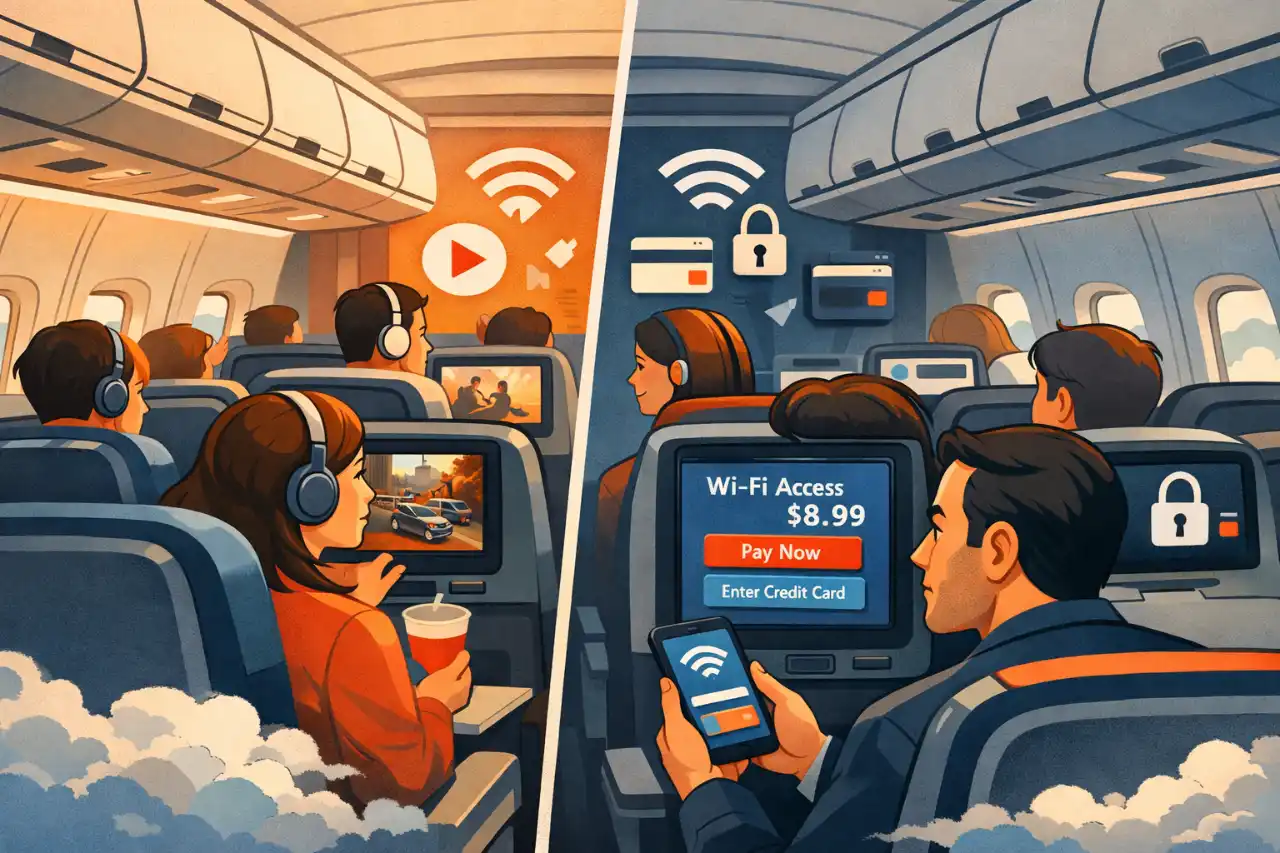
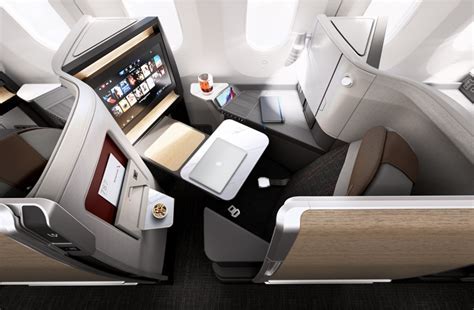
Despite the enthusiastic announcement, not all passengers will enjoy this new benefit—at least not yet. American Airlines has made it clear that the free Wi-Fi rollout is not universal. Passengers flying on long-haul international routes, particularly those aboard widebody aircraft such as the Boeing 777 and Boeing 787, will still need to pay for Wi-Fi access.
Currently, American’s widebody fleet includes more than 130 aircraft, many of which are still equipped with older Panasonic Avionics Ku-band satellite systems. Unlike the newer Ka-band Viasat technology used on narrowbodies, these legacy systems lack the bandwidth capacity to handle free, simultaneous connections for every passenger onboard. On a 777-300ER, for instance, which can seat over 300 passengers, attempting to provide free streaming capabilities would likely lead to network instability and poor user experience.
As a result, passengers on these flights will still face Wi-Fi fees ranging from $19 to $35, depending on the flight’s duration and route. American has announced its intention to upgrade these aircraft, stating that it is “actively working to offer free Wi-Fi across 100% of our fleet,” but full implementation will take months, if not years.
Aircraft Technology Disparity: A Fleet Divided
The technological divide between American Airlines’ aircraft is a direct result of inconsistent satellite connectivity infrastructure. While Viasat enables high-capacity Ka-band connections that support streaming and heavy data usage, the Panasonic Ku-band system was never designed with modern, high-demand use cases in mind.
The following aircraft still use the legacy Panasonic systems:
- Boeing 777-200 (47 aircraft, avg. age: 25.1 years)
- Boeing 777-300ER (20 aircraft, avg. age: 11.9 years)
- Boeing 787-8 and 787-9 (70+ aircraft combined, avg. age: ~6 years)
Although some newly delivered 787s feature Viasat integration and a few existing planes have been retrofitted, the majority remain outdated, and these are the jets that typically handle international and transcontinental routes. In contrast, domestic flyers on newer, smaller jets will feel the difference immediately—free, fast, and reliable Wi-Fi as a standard amenity.
Delta and United Set the Benchmark
American’s entry into free Wi-Fi puts it in line with competitors, but not at the top. Delta Air Lines has been a front-runner, rolling out free Viasat-powered Wi-Fi for all SkyMiles members across both its domestic and most international fleet. In partnership with T-Mobile, Delta has made Wi-Fi an integral part of its Delta Sync ecosystem, combining connectivity with personalized in-flight entertainment.
United Airlines, on the other hand, has taken a futuristic route by partnering with Starlink, the satellite division of SpaceX. Utilizing low-earth orbit satellites, United promises ultra-low latency internet to MileagePlus members. Though the service is still being rolled out, United expects full fleet coverage by year-end, placing it ahead of American in the global connectivity race.
Even JetBlue, a non-legacy airline, offers free Wi-Fi without any loyalty program requirement, a service it has provided since 2013. The carrier plans to become the first airline to adopt Amazon’s Project Kuiper satellite network starting in 2027, signaling an even more robust digital future.
The Economics Behind Selective Connectivity
American’s selective approach to rolling out free Wi-Fi reveals the economic and operational complexities of such an offering. Providing Wi-Fi at no cost to passengers isn’t just a software update—it involves hardware retrofitting, new service agreements, satellite leases, and significant investment in cybersecurity and infrastructure.
Moreover, airlines must balance customer satisfaction with network performance. Free access to poor or congested networks can quickly turn a benefit into a frustration. This is especially true for long-haul routes, where passengers expect uninterrupted streaming or VPN access for work. The cost of failing to deliver a high-quality experience can be greater than the value of offering it for free.
What This Means for Travelers in 2026
For now, domestic travelers stand to gain the most from American Airlines’ free Wi-Fi. Whether on short hops or cross-country flights, passengers enrolled in the AAdvantage loyalty program will enjoy consistent, complimentary access to the internet. This aligns with a broader trend of digitally enhanced flight experiences, where entertainment, productivity, and personalization converge at 30,000 feet.
International travelers, however, remain in a transitional phase. Until the widebody fleet is fully upgraded, these customers must either pay for access or endure inferior connectivity. Business travelers and digital nomads, in particular, may find this inconvenient, especially when rival carriers already offer fleet-wide free access.
Looking Ahead: A Connected Skies Future
American Airlines’ free Wi-Fi announcement marks a milestone in the race toward global airborne connectivity, but it also underscores how much infrastructure and investment are still needed. The competitive pressure from Delta, United, and JetBlue ensures that airlines can no longer afford to view Wi-Fi as a luxury—it’s an essential utility.
The evolution of satellite technology, from Viasat to Starlink to Amazon’s Project Kuiper, promises a future where free, seamless internet on every flight is the industry norm. Until then, passengers will continue to navigate a landscape where loyalty status, aircraft type, and route determine their digital experience in the sky.
For now, American Airlines’ partial rollout is a significant step forward but not the final destination. And for those flying internationally, it’s best to check your aircraft type—or keep that credit card handy.